
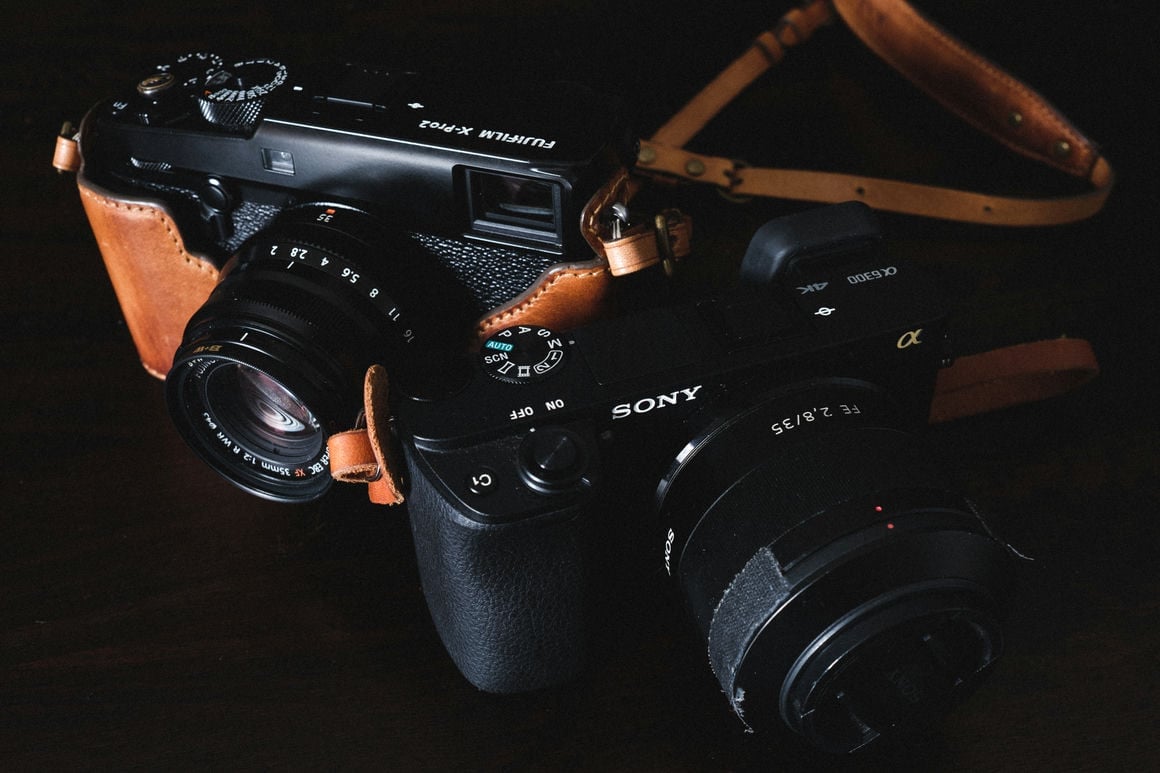
The Sony A6300 and Fujifilm X-Pro 2 are probably the two most interesting mirrorless APS-C cameras on the market. Although they seem similar because they both feature a 24-megapixel Sony sensor and an EVF off to the side, the cameras are very different. Not only in terms of ergonomics but the technology that powers them. With most review sites only fixating on high ISO performance, sensor sharpness, and autofocus, I wanted to take this time to point out that there is a lot more to a camera besides what the sensor can do.
Here is a quick comparison between the A6300 and the Fujifilm X-Pro 2.
Sony A6300 vs Fujifilm X-Pro 2 Stats
| Specs | Sony A6300 | Fujifilm X-Pro 2 |
| Sensor | 24.2 APS-C Exmor CMOS | 24.3 APS-C X-Trans III CMOS |
| Optical Low Pass Filter | Unknown | No |
| Processor | BIONZ X Image Processor | X-Processor Pro Engine |
| LCD Screen | 3″ 921.6k Dot | 3″ 1.62m-Dot |
| Tilt Screen | Yes | No |
| Memory Card Support | Single UHS-I | Dual UHS-II / UHS-I |
| Max Write Speed | 32 MB/s | 102 MB/s |
| FPS | 11 Continuous | 8 Continuous |
| EVF | 2.36m Dot | 2.36m Dot |
| EVF Framerate | Unknown | 85fps |
| OVF | No | Yes |
| On Camera Flash | Yes | No |
| Weather Sealed | Yes | Yes |
| Weight | 14.25 oz / 404 g mem card + battery | 15.70 oz / 445 g Body Only |
| Video | ||
| Resolution | 4k 30p-60p | 1080 60p |
| Bit Rate | 100M-60M | 36M |
| S-Log | Yes | No |
| Likely To Overheat | Yes | No |
| Lenses | ||
| Total APS-C Prime Lenses | 6 | 12 |
| Total APS-C Zoom Lenses | 8 | 7 |
| Totall Full Frame Lenses | 14 | 0 |
Sony A6300 vs XPro 2 Stat Comparison
The specs show huge differences between these two cameras. Both cameras outshine the other but in different ways.
Many review sites claim that the Sony A6300 has an optical low-pass filter, but I’m seeing many issues with moire patterns and no drop in sharpness, so they could be wrong. Sony has also never confirmed or denied this. Since Sony bakes its RAW files in mysterious ways, it’s tough to know, so I’m marking this as unknown.
The Sony A6300 uses the same old BIONZ Image processor as the A6000, whereas the X-Processor Pro on the Fujifilm X-Pro 2 is brand new.
When looking at the rear LCD screen, Sony still uses its old 921.6k Dot screen, while Fujifilm has a 1.62 million dot screen, which gives Fujifilm 55% more resolution.
Sony has a faster burst speed, at 11fps. It is also much lighter and has an on-camera flash, a tilt screen, and a 4 K video.
ISO, Detail, Moire and Noise Handling
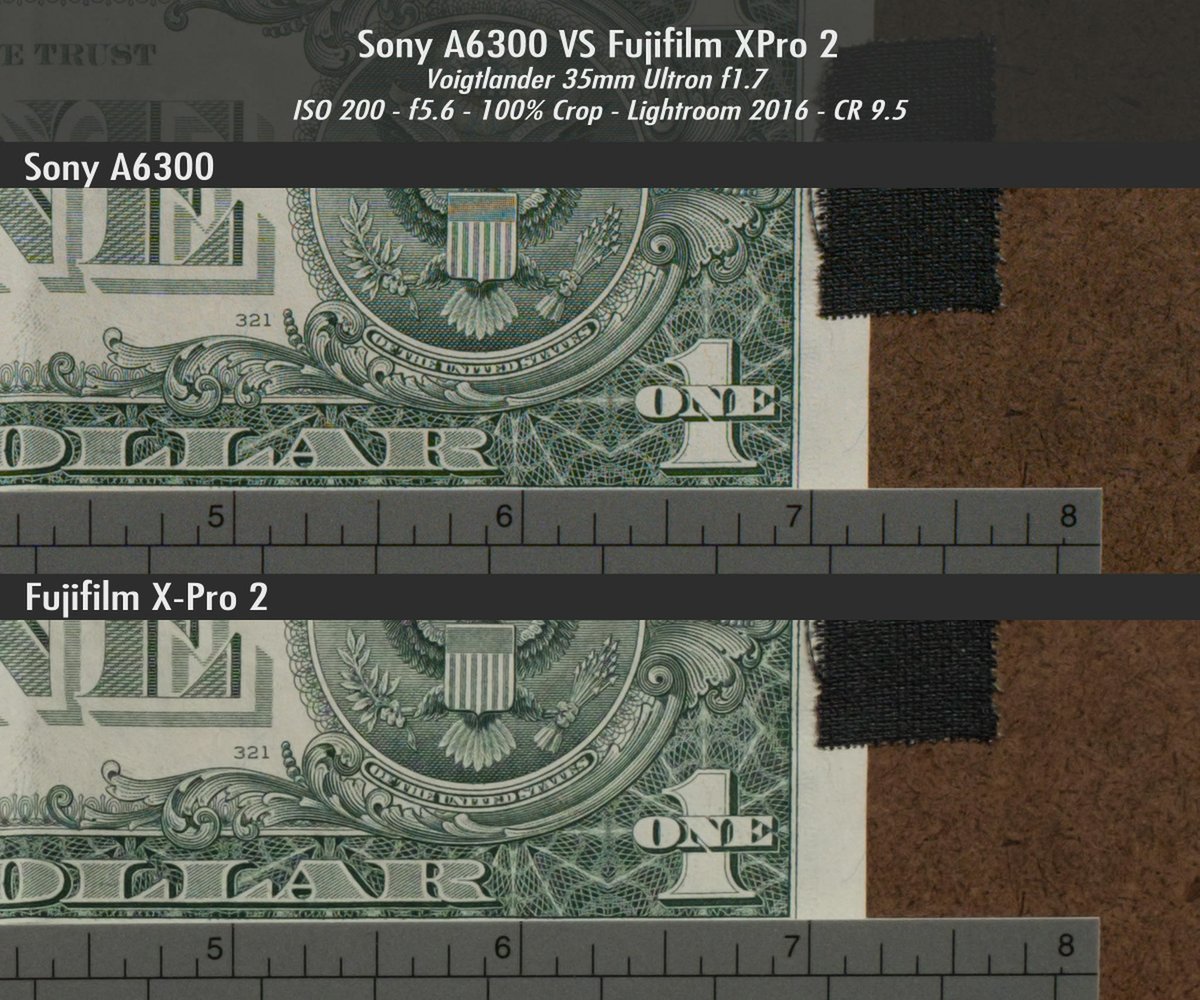
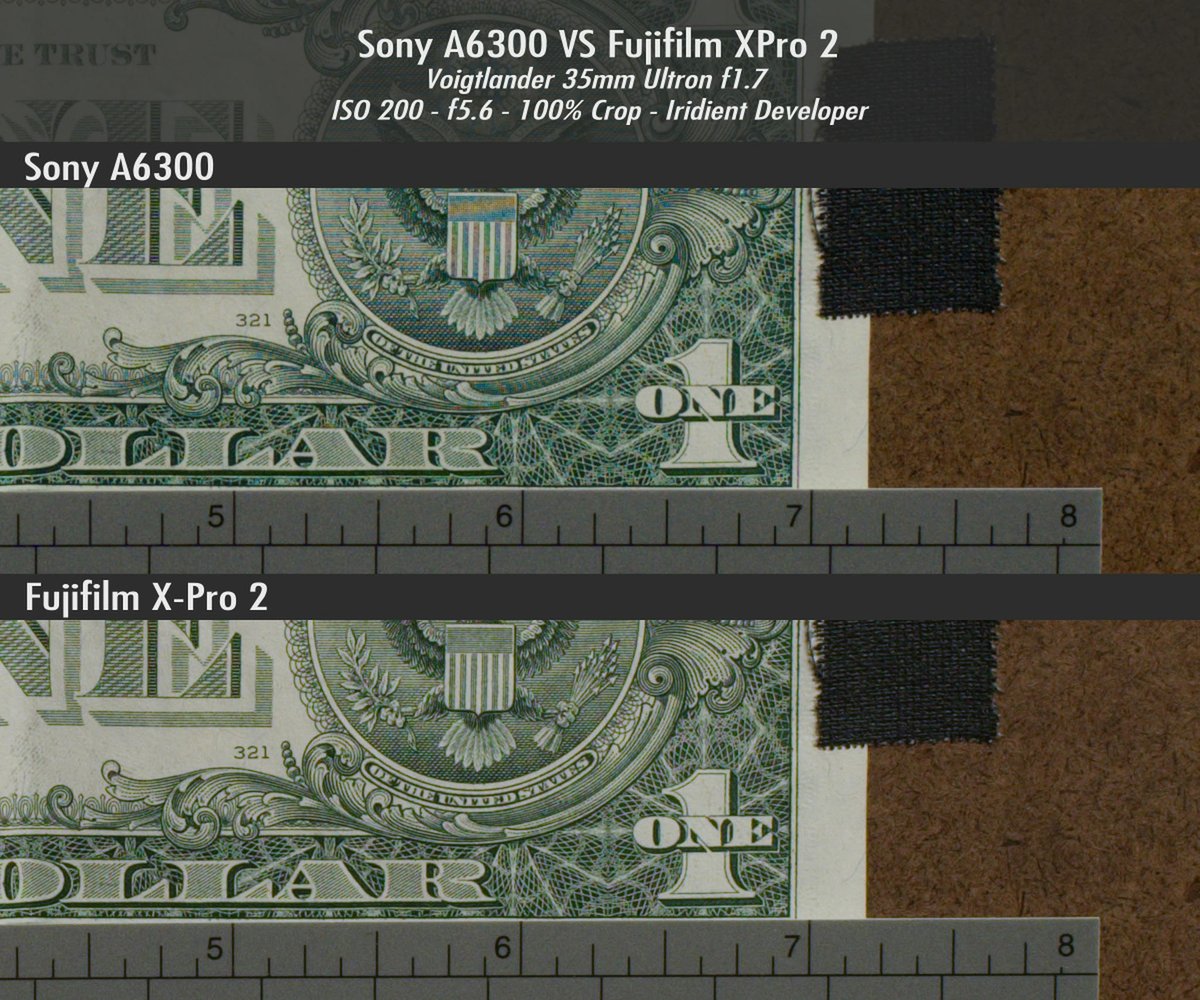
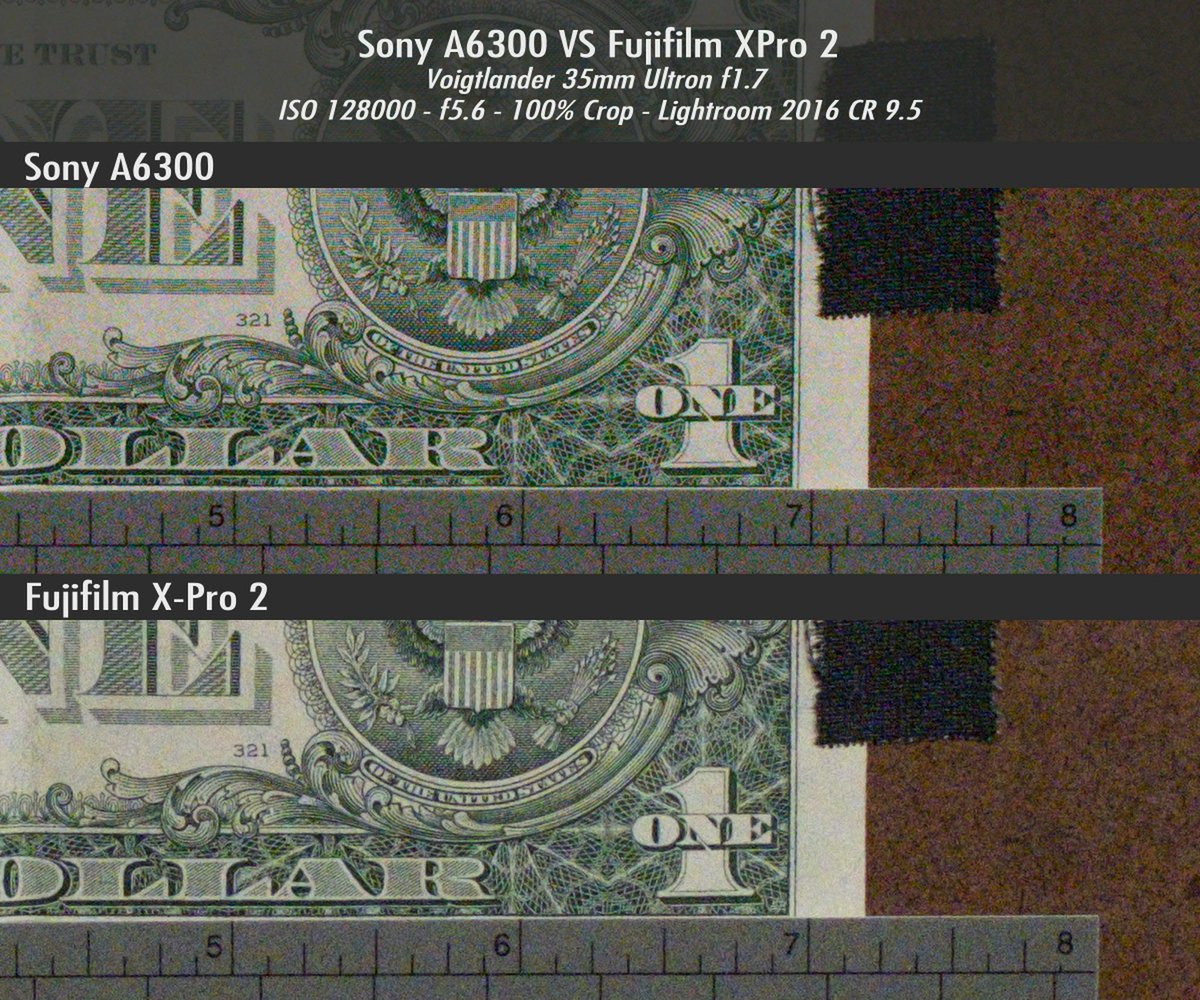
I shot with the Voigtlander f1.7 Ultron adapted to each camera for these tests. I initially tested the X-Pro 2 and kept track of the ISO, f-stop, and shutter to apply the same settings with the Sony A6300.
I shot at f5.6 and only changed the ISO and shutter speed to get the different results. Since Sony and Fujifilm balance their ISO setting slightly differently, I lowered the exposure on the Sony A6300 by -0.35 stops to get the same tonal exposure. I also turned off all sharpness and noise control settings in Lightroom and Iridient Developer.
It took me a while to get this right. Nailing focus is always challenging with manual lenses, and the A6300 does not have a manual focus assist that works with third-party manual lenses.
ISO 200 Lightroom
ISO 200 Iridient Developer
ISO 200 Results
The X-Pro 2 seems to be cooking the RAW data with more noise control, which may contribute to the softer look. The Sony A6300 seems to cook the RAW with slightly more sharpness.
It also looks like the Sony A6300 has a bit of an issue with Moire, creating some terrible chroma patterns. This only happens when I get perfect focus. If the focus is slightly off, this issue isn’t as severe, but the image is slightly softer. It probably won’t be much of an issue in real-world shooting unless you like to shoot $1 dollar bills from about 4 feet away. These results lead me to believe that the A6300 does not have an optical low pass filter because it performs a lot like the Nikon 7200.
Lightroom vs. Iridient
I tested with both Iridient and Lightroom, with all settings turned off. The X-Pro 2 didn’t notice any sharpness gains over Lightroom in Iridient, but the Sony A6300 had more issues with chroma in Iridient than it did with Lightroom.
ISO 128,000 Lightroom
ISO 128,000 Iridient Developer
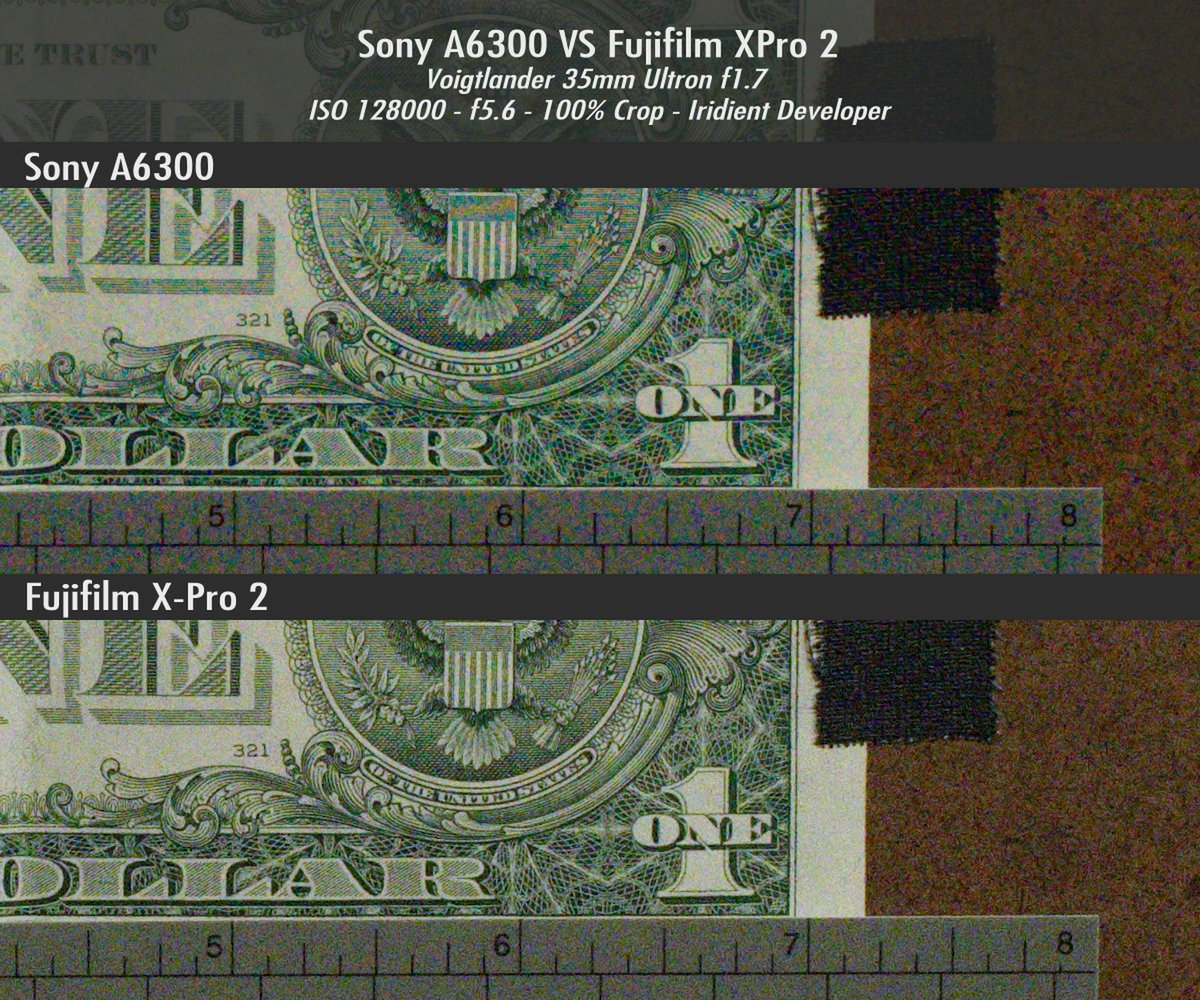
ISO 128,000 Results
Both cameras have amazing sharpness and high ISO capabilities. The X-Pro 2 at ISO 128,000 seems to resolve a bit more detail, while the A6300’s chroma gets pretty ugly. You may or may not notice this in real-world shooting, but either way, the cameras are very close. You would probably only shoot at ISO 128,000 in emergencies, as the images produced are borderline unacceptable unless converted to B&W.
While the X-Pro 2 does seem to have a slight advantage in low light with its sensor performance, the Fujifilm camera system gains even more of an advantage since it has more lenses that are faster and less expensive, which in turn means shooting at lower ISO values. Unless, of course, you go with third-party lenses.
Lenses
Quantity vs Quality
This is important and shouldn’t be overlooked. Sony produces 14 APS-C lenses, while Fujifilm produces 19, 12 of which are primes.
Your options for E-Mount lenses significantly exceed those for Fujifilm XF lenses. Still, you must consider that the best lenses are designed for the full-frame E-Mount system and are significantly more expensive.
Fujifilm is the leader in prime lenses when it comes to finding a good match for your camera. It offers twice as many less expensive APS-C options of significantly faster lenses.
Sony does have more zoom lenses, but most have variable apertures and are a bit slower than Fujifilm lenses. Regarding shooting in low light, Fujifilm offers more reasonably priced options for faster lenses.
Lenses And Low Light
Lenses are important when comparing low-light performance. If a camera platform offers faster lenses at a lower price, it won’t matter if one camera’s ISO outperforms another; the camera with the better lens wins.
As mentioned, you also have the option to use full-frame lenses in Sony shooters. They are going to be a lot more expensive and a lot heavier; some of them will also likely not balance well with your camera or will block your AF Illuminator, but they are great. I use the full-frame Zeiss 35mm f2.8 lens on my Sony A6300, and it works better as an APS-C lens than it does as a full-frame lens, but it was $900 vs. my 35mm f2 on my Fujifilm. That was $400.
See theSony APS-C Lens List or the Fujifilm XF Lens List
Sony A6300 vs Fujifilm X-Pro 2 -Which Camera Is Better?
After using both cameras for a while, I would say neither is better. I love my A6300, and it has some nice advantages over the X-Pro 2 that lend it more to being a better adventure camera. It’s weather-sealed, shoots 4k, is very light, is small, and has a tilt screen. This would be the camera I take with me on that cross-country bike ride or hiking trip.
But I also love my X-Pro 2. It’s all around classier. The camera itself is almost a fashion statement. I would choose studio shooting, landscape photography, or weddings. It’s a beautiful camera producing some of my best images. And if Photoshop and Lightroom are not your forte, then the film simulators produce some amazing JPEGs right out of the box.
Now, if I had to choose one camera to be stuck on a desert island, it might be the Sony A6300. It’s lighter, smaller, and has a tilt-screen, so it’s just slightly easier to handle overall.
Now if you want the best APS-C mirrorless camera on the market, check out the Fujifilm X-T2 Review.








Leave a Reply