
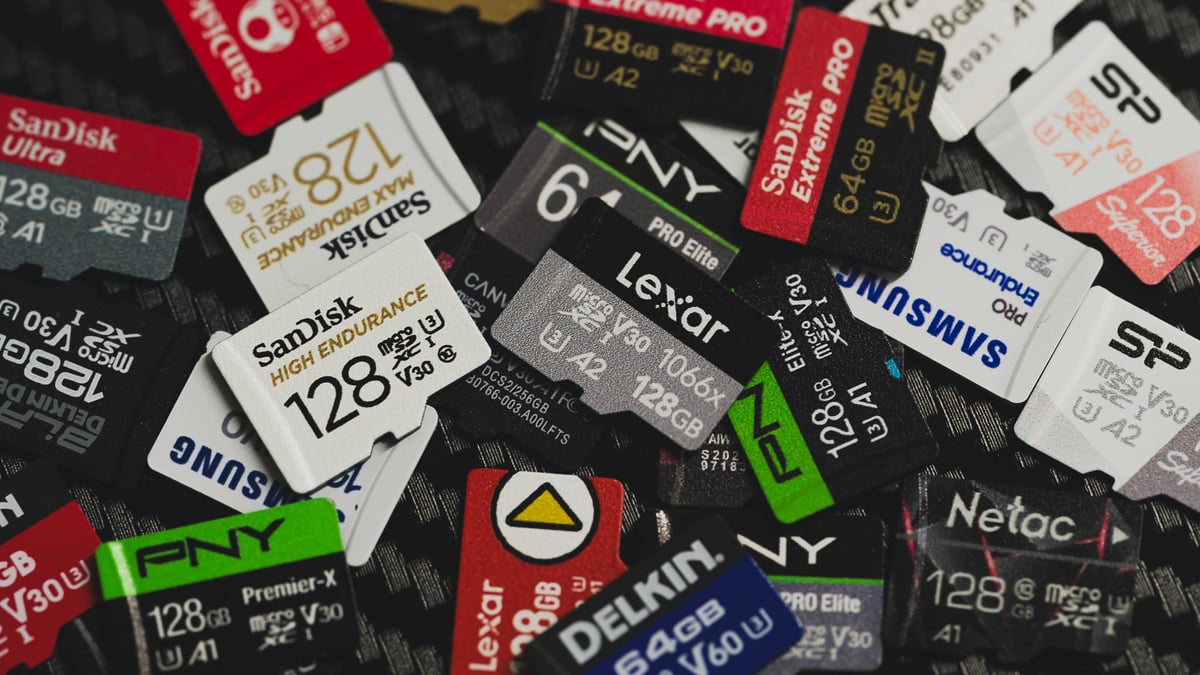
Not all microSD cards are equal, and the marketing numbers on the packaging rarely match real-world results. I’ve run 41 cards through sequential and random read/write benchmarks to find out what actually performs for action cameras, drones, handheld consoles, and photography. Here’s what the data shows.
Table of Contents
The Fastest MicroSD Right Now
The table below is sorted by sequential write speed — the number that actually matters for recording video. Sequential write determines whether a card can sustain the data rate your camera or action camera needs without dropping frames or throwing an error mid-clip. Read speed is largely irrelevant for recording; it only comes into play when transferring footage off the card.
A note on UHS-II cards: I’ve excluded them from this list — their main value is transfer speed when offloading footage to a computer, not for in-device recording. The Lexar 1800x hits 290 MB/s write speed, but only with a UHS-II card reader. No current action cameras or drones have UHS-II hardware, so in-device speeds are capped at UHS-I regardless of the card. The overall fastest UHS-I card in my tests, the Lexar Silver Plus, read at 177 MB/s and wrote at 151 MB/s — fast enough for everything these devices can shoot.
MicroSD Memory Card Benchmarks
| Memory Cards | Speed Class | RatedW | RatedR | SEQW | SEQR | RANDW | RANDR | Sus | Check Price | ||
|---|---|---|---|---|---|---|---|---|---|---|---|
| UHS-II | |||||||||||
| Lexar Gold V60 A1 | UHS-II | 180 | 280 | 103 | 280 | 1.88 | 4.68 | Amazon / B&H | |||
| ProGrade V60 | UHS-II | 130 | 250 | 137 | 198 | 0.9 | 5.19 | Amazon / B&H | |||
| Delkin Power V90 | UHS-II | 250 | 300 | 275 | 287 | 1.21 | 6.2 | Amazon / B&H | |||
| Angel Bird A1 V60 | UHS-II | 160 | 280 | 142 | 267 | 1.91 | 5.26 | Amazon / B&H | |||
| UHS-I | |||||||||||
| Sandisk Extreme Pro U3 A2 | UHS-I | 140 | 200 | 96 | 173 | 1.84 | 4.57 | Amazon | |||
| Sandisk Outdoors 4k V30 A2 | UHS-I | 90 | 190 | 97 | 175 | Amazon / B&H | |||||
| Sandisk Extreme U3 A2 256GB-1TB | UHS-I | 130 | 190 | 124 | 175 | Amazon / B&H | |||||
| Sandisk Extreme U3 A2 128GB | melted | UHS-I | 90 | 190 | 96 | 160 | 1.97 | 5.18 | 95 | Amazon / B&H | |
| Sandisk Ultra U1 A1 – 0ld | UHS-I | — | 90 | 50 | 93 | 1.57 | 5.36 | B&H | |||
| Sandisk Nintendo Switch V30 A1 | UHS-I | 90 | 100 | 95 | 158 | 2.07 | 4.65 | Amazon / B&H | |||
| Sandisk High Endurance V30 | UHS-I | 40 | 100 | 82 | 92 | 2.01 | 4.6 | Amazon / B&H | |||
| Sandisk Max Endurance V30 | UHS-I | 40 | 100 | 49 | 92 | 2.02 | 5.43 | Amazon / B&H | |||
| Samsung Pro Ultimate v30 A2 | UHS-I | 130 | 200 | 130 | 179 | 3.19 | 9.74 | 130 | Amazon / B&H | ||
| Samsung Pro Plus V30 A2 | UHS-I | 120 | 160 | 127 | 176 | 3.16 | 9.94 | 125 | Amazon / B&H | ||
| Samsung EVO Plus V30 A2 | UHS-I | 120 | 160 | 123 | 127 | 1.67 | 4.89 | Amazon / B&H | |||
| Samsung EVO Select V30 A2 | UHS-I | 30 | 160 | 124 | 126 | 1.97 | 7 | 124 | Amazon / B&H | ||
| Samsung Pro Endurance V30 | UHS-I | 40 | 100 | 61 | 93 | 1.78 | 6.94 | Amazon / B&H | |||
| Kingston Canvas Go! Plus V30 A2 256GB-1TB | UHS-I | 160 | 200 | ||||||||
| Kingston Canvas Go! Plus V30 A2 64GB-128GB | UHS-I | 100 | 200 | ||||||||
| Kingston Canvas Select Plus V30 A1 | cant find | UHS-I | 85 | 150 | 80 | 93 | 2.07 | 5.48 | Amazon / B&H | ||
| Kingston Industrial V30 A1 | UHS-I | 80 | 100 | Amazon / B&H | |||||||
| Lexar Silver Plus V30 A2 | UHS-I | 150 | 205 | 151 | 177 | 4.47 | 9.83 | 151 | Amazon / B&H | ||
| Lexar Silver1066x A2 | UHS-I | 120 | 160 | 118 | 146 | 1.86 | 7.37 | Amazon / B&H | |||
| Lexar Blue 633x V30 A1/A2 | UHS-I | 70 | 100 | 82 | 94 | Amazon / B&H | |||||
| Lexar FLY V30 A2 | UHS-I | 90 | 160 | 124 | 152 | Amazon / B&H | |||||
| Lexar PLAY U3 A2 512GB-1TB | UHS-I | 100 | 160 | Amazon / B&H | |||||||
| Lexar PLAY U3 A1 256GB | UHS-I | 30 | 150 | 102 | 152 | Amazon / B&H | |||||
| Lexar PLAY U1 A1 128GB | UHS-I | 30 | 150 | 20 | 144 | 1.89 | 6.14 | Amazon / B&H | |||
| Lexar E-Series Plus U3 A2 | UHS-I | 90 | 160 | Amazon | |||||||
| Lexar E-Series U3 A1 | UHS-I | 30 | 100 | Amazon | |||||||
| Delkin Black V30 | UHS-I | 90 | 90 | 86 | 93 | 1.76 | 5.82 | B&H | |||
| Delkin Hyperspeed V30 | UHS-I | 75 | 100 | 80 | 93 | Amazon / B&H | |||||
| Delkin Dashcard V30 | UHS-I | 85 | 95 | Amazon / B&H | |||||||
| Transcend 500S U3 | UHS-I | 60 | 95 | Amazon / B&H | |||||||
| Transcend 350V High Endurance U3 | UHS-I | 45 | 100 | Amazon / B&H | |||||||
| Transcend 340S Ultra Performance V30 A2 | UHS-I | 125 | 160 | Amazon / B&H | |||||||
| Transcend 330S High Performance V30 A2 | UHS-I | 85 | 100 | Amazon / B&H | |||||||
| Transcend 300s V30 A1 | UHS-I | 40 | 95 | 47 | 94 | 1.6 | 5.07 | Amazon / B&H | |||
| PNY Premier-X A2 V30 | UHS-I | 90 | 100 | 84 | 93 | 2.78 | 6.17 | Amazon / B&H | |||
| PNY PRO Elite U3 A2 | UHS-I | 90 | 100 | 83 | 93 | 1.67 | 1.15 | Amazon / B&H | |||
| PNY PRO Elite U3 | UHS-I | 90 | 95 | 31 | 91 | 0.92 | 7.06 | Amazon / B&H | |||
| PNY Elite-X V30 A1 | UHS-I | 90 | 100 | 48 | 94 | 2.81 | 7.08 | Amazon / B&H | |||
| Patriot EP PRO U3 | UHS-I | 80 | 90 | Amazon | |||||||
| Patriot EP A1 V30 | UHS-I | 80 | 100 | 49 | 94 | 1.9 | 7.73 | Amazon / B&H | |||
| Patriot High Endurance U3 | UHS-I | 30 | 95 | ||||||||
| Silicon Power Superior Pro | UHS-I | 80 | 100 | B&H | |||||||
| Silicon Power Superior V30 A2 | UHS-I | 80 | 100 | 41 | 94 | 2.33 | 7.79 | Amazon / B&H | |||
| Silicon Power Superior V30 A1 | UHS-I | 60 | 94 | 1.82 | 7.96 | ||||||
| Silicon Power 3D NanD V30 A1 | UHS-I | 30 | 80 | 54 | 94 | 2.66 | 7.75 | 54 | Amazon / B&H | ||
| Silicon Power GAME V30 A1 | UHS-I | 89 | 94 | 3.38 | 7.69 | 40 | Amazon / B&H | ||||
| Silicon Power High Endurance U3 | UHS-I | 80 | 100 | 87 | 94 | Amazon / B&H | |||||
| TeamGroup A2 Pro+ 256GB-1TB | UHS-I | 110 | 160 | Amazon | |||||||
| TeamGroup A2 Pro+ 128GB | UHS-I | 90 | 160 | Amazon | |||||||
| TeamGroup Go V30 A1 | UHS-I | 40 | 90 | Amazon | |||||||
| TeamGroup High Endurance V30 | UHS-I | 50 | 100 | Amazon | |||||||
| TeamGroup Ultra A2 V30 512GB-1TB | UHS-I | 170 | 200 | ||||||||
| TeamGroup Ultra A2 V30 256GB | UHS-I | 150 | 200 | ||||||||
| TeamGroup Ultra A2 V30 128GB | UHS-I | 80 | 200 | ||||||||
| TeamGroup ACE 8K V30 A2 256GB-1TB | UHS-I | 110 | 160 | ||||||||
| TeamGroup ACE 8K V30 A2 128GB | UHS-I | 90 | 160 | ||||||||
| Amazon Basics V30 A2 | UHS-I | 90 | 100 | Amazon | |||||||
| Ritz Gear V30 A1 | UHS-I | 60 | 90 | 82 | 93 | Amazon | |||||
| Gigastone 4k Camera Extreme Max | UHS-I | 100 | 160 | Amazon | |||||||
| Gigastone 4k Camera Extreme | not on website | UHS-I | 130 | 160 | Amazon | ||||||
| Gigastone 4k Camera Pro Max V30 A2 | yes | UHS-I | 50 | 100 | Amazon | ||||||
| Gigastone 4k Camera Pro V30 A2 | UHS-I | 50 | 100 | Amazon | |||||||
| Gigastone Camera Plus V30 A1 | yes | UHS-I | 120 | 150 | Amazon | ||||||
| Gigastone 4k Game Turbo A2 U3 | not on website | UHS-I | 130 | 160 | Amazon | ||||||
| Gigastone Game Pro Max V30 A2 | UHS-I | 80 | 120 | ||||||||
| Gigastone 4k Game Pro V30 A2 | not on website | UHS-I | 50 | 100 | Amazon | ||||||
| Gigastone Gaming Plus A1 V30 | not on website | UHS-I | 120 | 150 | Amazon | ||||||
| Gigastone 10x High Endurance V30 | yes | UHS-I | 30 | 95 | Amazon | ||||||
| Amplim 667X V30 A1 | UHS-I | 30 | 100 | 86 | 92 | 2.15 | 5.76 | Amazon | |||
| Netac Pro A1 U3 | UHS-I | 30 | 100 | 50 | 92 | 0.9 | 3.73 | ||||
| Lexar 1800x V60 | UHS-II | 120 | 290 | X | |||||||
| Lexar 1000x V60 | UHS-II | 0.4 | 5.53 | X | Amazon | ||||||
| Sandisk Extreme Plus U3 A2 | UHS-I | 90 | 170 | 107 | 174 | 2.12 | 5.21 | X | Amazon / B&H | ||
| Delkin Select V30 64GB | UHS-I | 50 | 100 | 83 | 93 | 2.12 | 6.05 | X | Amazon / B&H | ||
| Kingston Canvas Go! Plus V30 A2 | UHS-I | 90 | 170 | 128 | 173 | 3.03 | 7.69 | X | Amazon / B&H |
How I Test
Sequential benchmarks were run using AJA System Test on a Windows 11 machine with a ProGrade USB-C 10 Gbps card reader. I use a 5120×2700 5K Red 16-bit RGBA file target — the same format AJA uses for high-end video production workflows — which delivers consistent, repeatable results without being inflated by small file sizes.
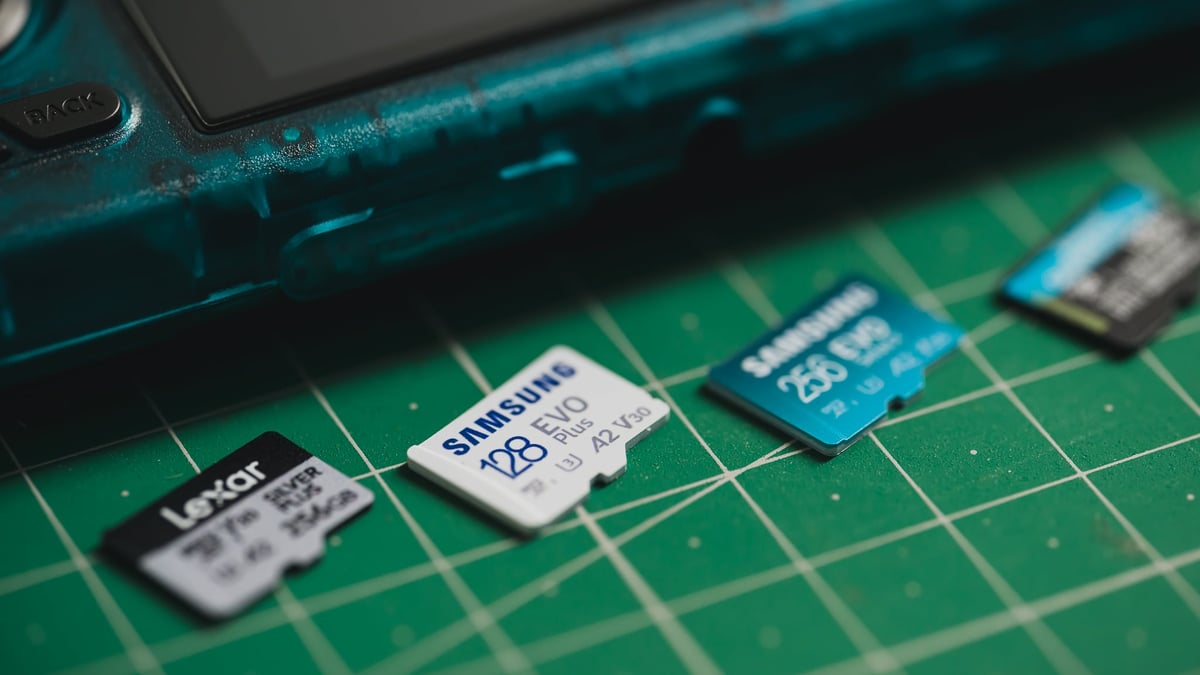
Random read and write speeds were tested separately on a Retroid Pocket 5 running Android 13, since it exposes the full range of IOPS data in a way most desktop tools don’t. This matters specifically for handheld console performance, where random read speed affects load times more than sequential throughput.
A note on capacity: most cards in this test are 128GB. Some manufacturers bin their NAND differently across capacities, meaning a 64GB and 256GB version of the same card can have meaningfully different write speeds. Where I’ve seen that in the data, I’ve broken those out separately. If you’re buying a different size than what I tested, check the spec sheet — the rated write speed on the packaging is the number to compare.
Every card was tested cold, formatted fresh, and run through at least three passes before recording results.
Best for Action Cameras and Drones
For action cameras and drones, sequential write speed matters — specifically, sustained sequential write speed, not burst. Video data is written to the card continuously in large blocks, so random read/write performance and IOPS are largely irrelevant here.
What You Actually Want
What you actually want is V30 (U3), which guarantees 30 MB/s sustained write. That’s the real-world ceiling for action cameras and drones, and it’s enough to handle 4K at the bitrates these devices shoot at. Anything rated V30/U3 from a reputable brand will do the job.
The strongest performer in this category from my tests is the Lexar Silver Plus — 151 MB/s write, consistent across multiple passes without throttling. For a budget option that still clears V30 reliably, the SanDisk Extreme writes at 96 MB/s and is widely available at most retailers.
One thing that matters more for this use case than card readers or cameras is durability. MicroSD cards in drones and action cameras take more physical abuse — from drops, water and temperature swings. All the cards I’d recommend here are rated for at least -25°C to 85°C and IP67 water resistance. Check that spec if you’re shooting in rough conditions.
What Not To Buy
Every action camera and drone on the market today uses a UHS-I slot. That’s an important point because it means V60 and V90 speed-class ratings are effectively irrelevant for these devices — those speeds require UHS-II hardware, and none of these cameras have it. A V60 UHS-II card will work in a GoPro or DJI drone, but it’ll run at UHS-I speeds. You’re paying for a performance the device can’t use.
Using MicroSD in a Camera With an Adapter
If you’re reading this because your camera uses a standard SD card slot and you’re wondering whether a microSD with an adapter will work — the short answer is yes, but with caveats worth knowing before you depend on it.
The adapter itself is passive — no active electronics, just a shell that holds the microSD card and exposes standard SD contacts. In principle, any microSD card fits in any SD adapter and behaves like a normal SD card. In practice, the connection between the card and adapter is a friction-fit with a small contact area, and that’s where the problem starts.
From my experience shooting with microSD adapters in cameras, they can lose connection mid-use. Not frequently, but unpredictably. A card that works fine for 20 minutes can suddenly disappear from the camera, causing a write error or a corrupted file. It’s not a constant problem, but it’s unpredictable enough that I wouldn’t use one for anything I can’t afford to lose — events, paid work, long video takes where a mid-clip drop would cost you the footage.
If You Do Use One
Use a name-brand adapter — SanDisk and Lexar both make adapters that hold the card more firmly than generic versions. Generic adapters tend to have looser tolerances, which increases the chance of the card shifting inside the adapter and losing contact.
Avoid hot-swapping the adapter repeatedly. Each insertion/removal cycle wears the contacts on both the card and the adapter. If you’re using a microSD as a semi-permanent workaround, leave the adapter in the slot and swap the microSD card inside it rather than pulling the whole assembly out each time.
On speed: a microSD in an SD adapter performs at the card’s rated speed — the adapter doesn’t add or subtract throughput. A V30 microSD in an adapter behaves like a V30 SD card. A UHS-II microSD in a UHS-II camera slot will run at UHS-II speeds. The adapter is purely a physical connector.
For low-stakes shooting — testing a card, traveling light, using up leftover cards from a drone — it’s usable. Just know the limitation before you’re in a situation where losing a file would be a problem.
MicroSD Express: For Nintendo Switch 2
The Nintendo Switch 2 requires MicroSD Express cards — standard UHS-I cards won’t work for game storage. Express cards use a PCIe/NVMe interface and are backward compatible with older devices, but the speed advantage only activates on Switch 2 hardware. For full benchmarks and recommendations, see the best MicroSD Express cards for Nintendo Switch 2.
Memory Card Ratings and Numbers: Speed Classes Explained
The ratings and letters on microSD packaging are genuinely confusing because they measure different things. Here’s what each one actually means and which ones matter for your use case.
EX
EX stands for Express, a new microSD card that offers significantly faster read and write speeds, making it ideal for console gamers on the Nintendo Switch 2.
A1 vs A2
A1 and A2 ratings describe minimum random read/write performance — relevant for running apps from the card, not for video recording. A1 guarantees 1500 IOPS random read and 500 IOPS random write. A2 raises that to 4000 IOPS read and 2000 IOPS write, with a caching system that benefits handheld consoles and Android devices more than cameras.
U1 / U3 / V30 / V60 / V90
These are minimum sustained sequential write speed guarantees. U1 and V10 = 10 MB/s minimum. U3 and V30 = 30 MB/s minimum. V60 = 60 MB/s minimum. V90 = 90 MB/s minimum. For action cameras and drones, V30/U3 is the target — anything above that is more than these devices can use.
UHS-I vs UHS-II
UHS-I and UHS-II refer to the bus interface, not the speed class. UHS-II adds a second row of pins and a second data lane, which significantly increases maximum transfer speeds — but only when the device also has UHS-II hardware. No current action cameras or drones have UHS-II slots. Where UHS-II matters: offloading footage to a computer via a UHS-II card reader.
Best Micro SD Memory Card Conclusion
For action cameras, drones, and most cameras with a microSD slot, the Lexar Silver Plus is the card I’d buy — fastest UHS-I write speed in my tests at 151 MB/s, well above what any of these devices actually need. If budget matters more than peak performance, the SanDisk Extreme at 96 MB/s write covers every action camera and drone on the market without overpaying. For handheld consoles where random read speed matters as much as sequential, check the random read column in the benchmarks table — that’s the number that affects load times. And if you’re buying for a Nintendo Switch 2, none of the UHS-I cards here will work — see the dedicated Switch 2 MicroSD Express guide instead.












Leave a Reply