Alik Griffin
San Clemente Sunset
Subscription Form
  • Reviews
    • Accessory Reviews
    • Calculators
      • Video Data Rate Calculator | Record Time Calculator
      • Diffraction Calculator
      • DoF Calculator | Lens Equivalent
      • Shutter Speed to Shutter Angle Calculator
    • Camera Reviews
    • Lens Reviews
    • Memory Cards Recommendations
      • Fastests SD Memory Cards
      • Fastest MicroSD Cards
      • Fastest CFExpress Type-B Card
      • Fastest CFExpress Type-A Cards
      • Best CFast Memory Card
    • List of Mics
      • Best Streaming & Podcast Mics
  • Camera Guides
    • List of all Blackmagic Cameras
    • List Of all Canon RF Cameras
    • List of all Fujifilm Cameras
    • List of all Nikon Z Cameras
    • List of all Panasonic Cameras
    • List Of all Sony E Cameras
  • List of Lenses
    • Canon RF Lenses
    • Fujifilm GFX Lenses
    • Fujifilm XF Lenses
    • L-Mount Lenses
    • Leica M Lenses
    • Micro Four Thirds Lenses
    • Nikon Z Lenses
    • PL Mount Cine Lenses
    • Sony E Lenses (FE and APS-C)
  • Store
  • My account
Alik Griffin
Alik Griffin
  • Reviews
    • Accessory Reviews
    • Calculators
      • Video Data Rate Calculator | Record Time Calculator
      • Diffraction Calculator
      • DoF Calculator | Lens Equivalent
      • Shutter Speed to Shutter Angle Calculator
    • Camera Reviews
    • Lens Reviews
    • Memory Cards Recommendations
      • Fastests SD Memory Cards
      • Fastest MicroSD Cards
      • Fastest CFExpress Type-B Card
      • Fastest CFExpress Type-A Cards
      • Best CFast Memory Card
    • List of Mics
      • Best Streaming & Podcast Mics
  • Camera Guides
    • List of all Blackmagic Cameras
    • List Of all Canon RF Cameras
    • List of all Fujifilm Cameras
    • List of all Nikon Z Cameras
    • List of all Panasonic Cameras
    • List Of all Sony E Cameras
  • List of Lenses
    • Canon RF Lenses
    • Fujifilm GFX Lenses
    • Fujifilm XF Lenses
    • L-Mount Lenses
    • Leica M Lenses
    • Micro Four Thirds Lenses
    • Nikon Z Lenses
    • PL Mount Cine Lenses
    • Sony E Lenses (FE and APS-C)
  • Store
  • My account
  • Pure Cinema
    Viltrox TCL-X100VI Review | A Budget-Friendly 50mm Upgrade
    • February 17, 2026
  • Thypoch Simera 75mm f1.4 Review
    Thypoch Simera 75mm f1.4 Review & Sample Photos
    • February 17, 2026
  • Kakurajima View
    Viltrox WCL-X100VI Review | A Budget-Friendly 28mm Upgrade
    • February 17, 2026
  • Viltrox 9mm f2.8 Air Review
    Viltrox 9mm f2.8 AIR Review & Sample Photos
    • January 14, 2026
  • Biker Bro
    Viltrox Spark Z3 Flash – Review & Sample Photos
    • February 16, 2026
  • Pure Cinema

    Viltrox TCL-X100VI Review | A Budget-Friendly 50mm Upgrade

    View Post
  • Thypoch Simera 75mm f1.4 Review

    Thypoch Simera 75mm f1.4 Review & Sample Photos

    View Post
  • Kakurajima View

    Viltrox WCL-X100VI Review | A Budget-Friendly 28mm Upgrade

    View Post
Trending Posts
  • Nikon Zf Official Announcement 1
    Nikon Zf – The Fujifilm Killer?
    • December 25, 2024
  • Nikon Z 50mm f1.8 S Lens Review 2
    Nikon Z 50mm f1.8 S Lens Review & Sample Photos
    • April 11, 2025
  • Kamlan 50mm f1.1 II Product Shot 3
    Kamlan 50mm f1.1 II Review & Sample Photos
    • January 18, 2025
0
  • Blog
  • Photo Tips

How to Shoot Better Photography with a Tripod

  • Alik Griffin
  • June 6, 2024
  • No comments

This website contains affiliate links. We will earn a small commission on purchases made through these links. Some of the links used in these articles will direct you to Amazon. As an Amazon Associate, I earn from qualifying purchases.

In the last few years, I’ve started shooting many more landscapes, long exposures, cityscapes, and ​HDR photos. Using a Tripod has taught me a great deal about why and how to use a tripod and other photography techniques.

Why You Need A Tripod For Landscape Photography

Lenses have a sweet spot. Most do not perform well at f2.8 but are designed to perform best optically around an aperture of f5.6 to f8 or even f16. Shooting at these high f-stops will give you a very nice, sharp image, which is very important with landscapes. However, it is very difficult to do it on your own since you’re significantly cutting down your light.

So, to accomplish this preferred aperture, I needed a tripod, which has its drawbacks. Taking photos now takes twice as long. You must adjust the head, move the legs, and expand or contract them when needed.

You should also shoot at an ISO of 100 or 200 for sharpness and your preferred F stop. For me, shooting landscapes is somewhere around an f8 to an f16.

Techniques for Photographers Shooting with a Tripod

  • HDR Photography. You can shoot three different shots at different shutter speeds to get different exposures then combine them with programs like Photomatix and get a really amazing high dynamic range.


  • Long Exposure Photography. You can shoot exposures up to 30 seconds long making waves and water look like smooth clouds.


  • Night Photography. You can shoot amazing sharp photos at night by combining a low ISO with a high aperture and long exposure. 


  • Time-lapse photography. If you have an Intervalometer, you can shoot several shots a minute or second for hours and combine them to make a time-lapse video.


  • Masking. If you’re shooting a family or group, some people smile in one photo, but not everyone. You can take several photos and replace just the faces from their good photo to have everyone smiling in one shot. 


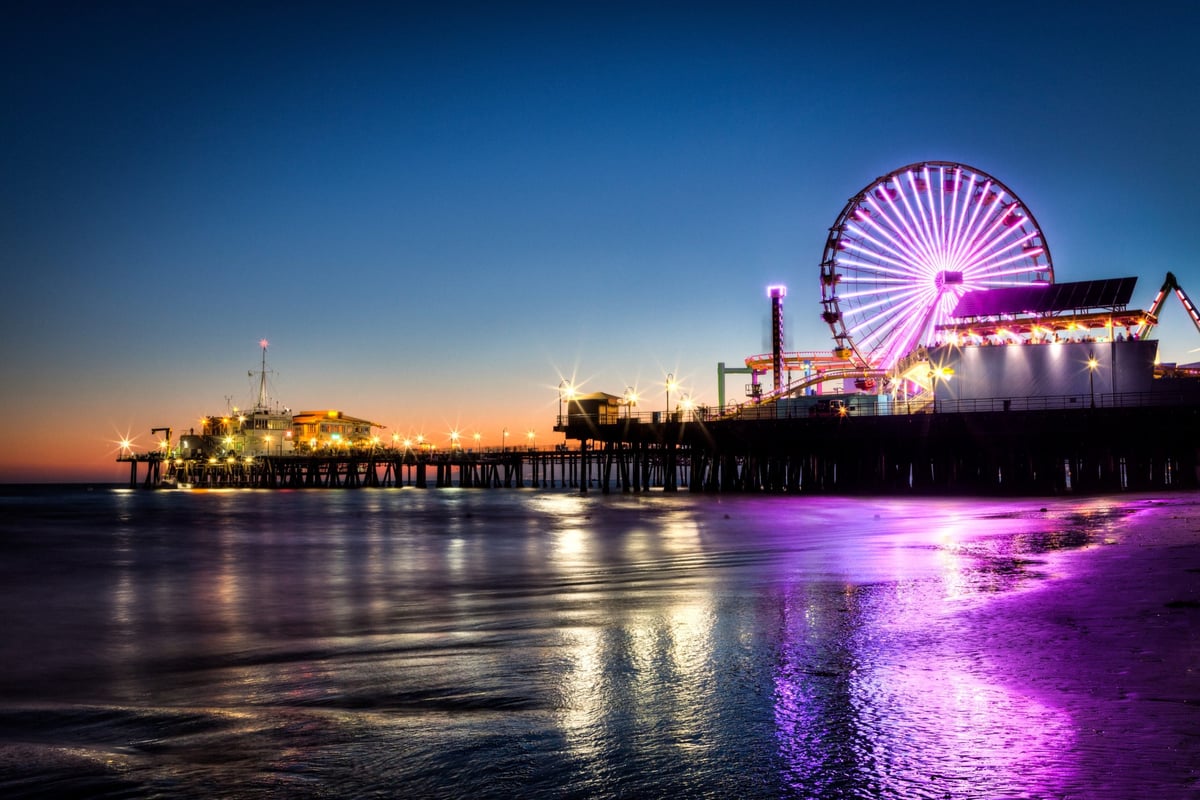
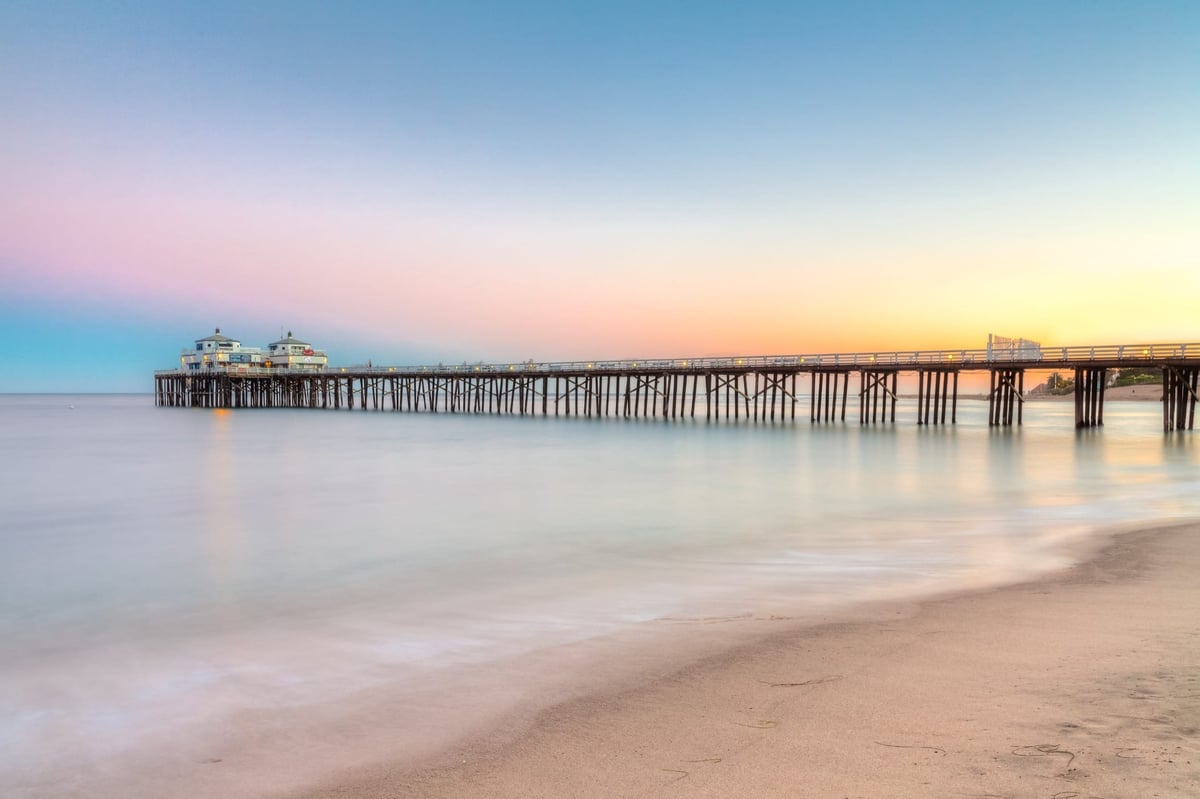
Here are some samples of some of my HDR Photography, Night Photography and Long Exposure Photography. I combined all three of these photos. 
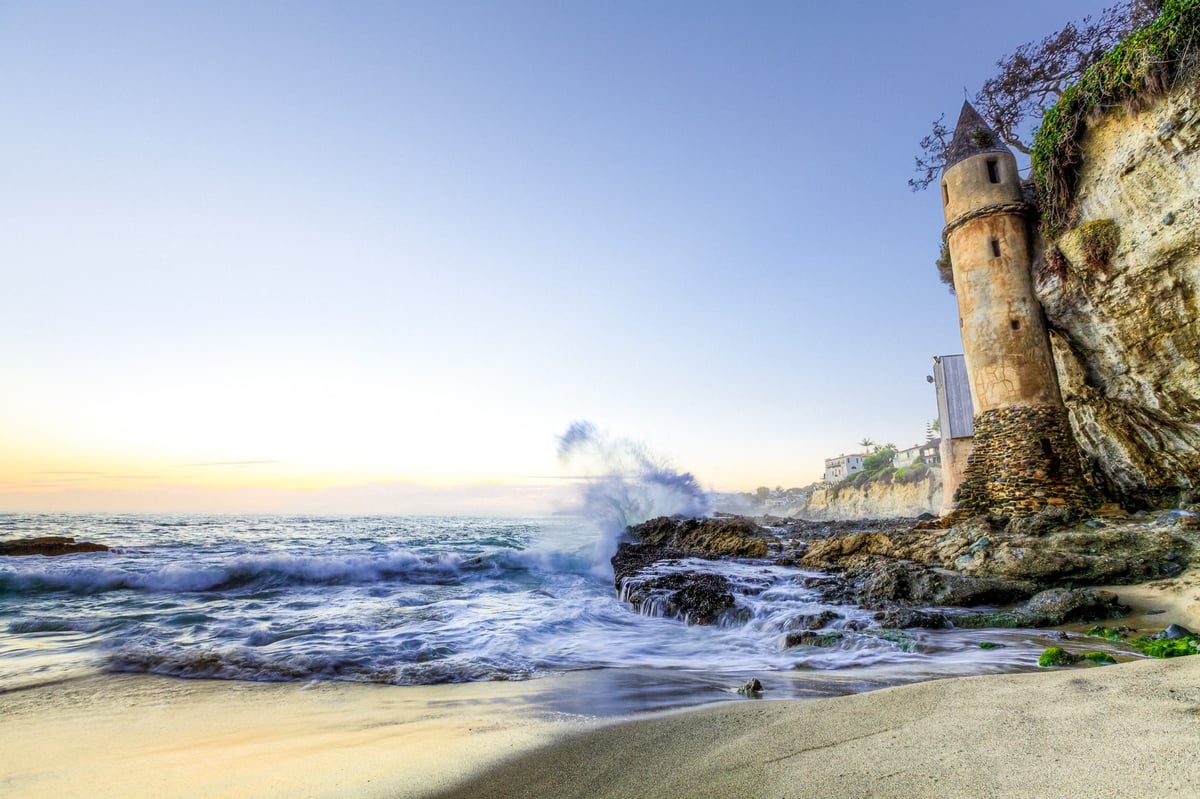
Victoria Beach Tower in Laguna Beach
Santa Monica Pier HDR
Malibu Pier HDR
Sunset at the Malibu Pier

Notice everything is sharp, but the water is silky smooth. This shot was a High-Dynamic-Range capture with a long exposure of about 30 seconds. 

Tips For Photographers Using a Tripod

  • Using the built-in Count-Down Timer. I find this useful when shooting on my lightweight tripod when I do not want the camera to move at all when pressing and depressing the button. Same with shots between HDR. This way I know the camera will not move and create any motion blur resulting in sharper images.
  • Position the legs of the tripod to support the weight of the lens. If you’re using a heavier lens, be sure to place one leg facing forward so the camera won’t fall forward in a strong wind or a slight bump. 
  • Keep the Tripod Level. If you’re on a hill, adjust the legs so that the leg higher up is a bit shorter. You always want to maintain balance and stability. 
  • Shoot a Low ISO. No reason to shoot any higher than an ISO of 200. Having a low ISO number will help you stay relatively free of grain which can cause softness. 
  • Know how to carry your tripod.  If you carry your tripod over your shoulder with the camera attached. Make sure the lens hangs to the right. Gravity will pull the lens down twisting the tripod tighter onto its plate vs looser if it was hanging the other way. You don’t want your camera loosening and falling off while you’re carrying it. 
  • Be aware of where you set your tripod. If your tripod is set up on soft grass, it may not give you very good results, as any movement you make might shift the ground the tripod is on, which will blur your image. 

Using a Tripod or Shooting Handheld

I’ve learned now that there is a balance. When I want a shallow depth of field and am running and gunning, I stay handheld. Or when I’m in an environment where anything can happen, and you need to be quick, or else you’ll miss the shot, I do not use a tripod. For example, if you’re shooting children, especially two-year-olds who can’t hold still for more than three seconds, I do not use a tripod.

I’ll now use a Tripod when I’m hunkered down at an epic sight like the Grand Canyon or some Temple, or even when doing night photography. I’ve regretted many moments in my traveling when I didn’t have one with me, which would have given me much cooler shots. For example, when I went to Niagra Falls, I could have set my camera on a tripod, used an ND filter, and shot at a slow shutter speed to give the waterfall that glowing, smooth water effect. Hopefully, I can go back to Niagra Falls one day and do it right.

Lightweight Tripods

Personally, I use a Lightweight tripod. It’s very nice for running around and traveling, and I can expand the legs and brace them against my arms to stabilize the camera when shooting video. The drawback to lightweight designs is that they are usually not as sturdy. So if you’re doing long exposures and it’s windy out, then the camera could move. Or if you’re doing HDR photography, the camera could move between shots. The heavier tripods don’t have this problem.

I use an older version of one of these, except with the old Aluminum Legs. I’d get this one if mine ever breaks. It won’t. I take it to the ocean and in the water. It’s a tank.

SLIK PRO 700DX Professional Tripod with Panhead: Amazon

It’s also good to have a head that allows you to adjust to different angles, and it’s even nicer when it has a bubble level. I love the handles on the head. They allow me to quickly and easily hang it from my backpack for short periods of time. 

Heavier Tripods

A heavier tripod really helps with Long Exposure and HDR Photography. If it’s windy outside, lightweight tripods can move slightly when fully expanded at their maximum height. 

Of course, you shouldn’t buy a tripod unless you test it out with your camera. I usually buy stuff like this from actual camera stores. 

Cool Toys

These Gorilla pods also allow you to mount the camera in some interesting places. I just got one and love playing around with it. It’s more of a toy than anything, but you can store it in your car or backpack just in case you ever need to shoot some emergency long exposures or HDR photos. 

Joby GP3 GorillaPod SLR-Zoom Flexible Tripod + BH1 Ball Head with Bubble Level: Amazon

That covers all my experience with using a tripod and how to use one. If you have any questions, you can leave them in the comments. And be sure to check back, as I am always posting great tips for photographers as I continue to grow and learn more techniques for my photography. Good luck!
0
0
0
0
0
Alik Griffin

A professional video editor, and photographer with a Bachelors in Film studies from UCSD. Based in Los Angeles, I have created commercials, trailers, and other video content for various clients and platforms since 2005. I also love to write about my passions and share my insights on my blog.

Related Topics
  • Photography Tips
Previous Article
HDR Photo of Hermosa Pier
  • Blog
  • Photo Tips

Beach Photography

  • Alik Griffin
  • October 2, 2025
View Post
Next Article
Laguna Mussels Beach With Bird
  • Blog

Two Seagulls in a sea of Mussels

  • Alik Griffin
  • April 13, 2024
View Post

Subscribe

Subscribe now to our newsletter

You May Also Like
Pure Cinema
View Post
  • Blog
  • Featured
  • Lens Reviews
  • Reviews

Viltrox TCL-X100VI Review | A Budget-Friendly 50mm Upgrade

  • Alik Griffin
  • February 17, 2026
  • No comments
Thypoch Simera 75mm f1.4 Review
View Post
  • Blog
  • Featured
  • Lens Reviews

Thypoch Simera 75mm f1.4 Review & Sample Photos

  • Alik Griffin
  • February 17, 2026
  • No comments
Kakurajima View
View Post
  • Blog
  • Featured
  • Lens Reviews

Viltrox WCL-X100VI Review | A Budget-Friendly 28mm Upgrade

  • Alik Griffin
  • February 17, 2026
  • 2 comments
Sony A7V Announcement
View Post
  • Blog
  • What's New

Sony A7V – They’re Back In The Game

  • Alik Griffin
  • December 30, 2025
  • 4 comments
Subscribe
Notify of
guest
guest
0 Comments
Inline Feedbacks
View all comments
San Clemente Sunset

Join The Newsletter

Featured
  • Kalina Flower FIeld
    Nikon Z 50mm f1.4 Review & Sample Photos
    • 24 comments
  • TTArtisan 27mm f2.8 AF Front of Lens
    TTArtisan AF 27mm f2.8 Review & Sample Photos
    • 5 comments
  • TTArtisan 23mm f1.8 Product Shots
    TTArtisan AF 23mm f1.8 Lens Review & Sample Photos
    • 3 comments
  • How To Edit Photos To Look Like Film
    • 4 comments
  • On Board
    Fujifilm X100VI Review & Sample Photo
    • 5 comments
  • Mud Face
    Nikon Z 35mm f1.4 vs Nikon Z 35mm f1.8 S – Sample Images
    • 28 comments
  • What is Micro Contrast
    Micro-Contrast, Is It Real? – Samples With Lens Comparisons
    • 17 comments
  • Nikon Z 26mm f2.8 Review – A Little Miracle
    • 24 comments

Subscribe

Subscribe now to our newsletter

Privacy Policy | Ethics Statement | Licensing | About Me | Contact

Copyright © Alik Griffin Inc. 2025

Input your search keywords and press Enter.

Manage Consent
To provide the best experiences, we use technologies like cookies to store and/or access device information. Consenting to these technologies will allow us to process data such as browsing behavior or unique IDs on this site. Not consenting or withdrawing consent, may adversely affect certain features and functions.
Functional Always active
The technical storage or access is strictly necessary for the legitimate purpose of enabling the use of a specific service explicitly requested by the subscriber or user, or for the sole purpose of carrying out the transmission of a communication over an electronic communications network.
Preferences
The technical storage or access is necessary for the legitimate purpose of storing preferences that are not requested by the subscriber or user.
Statistics
The technical storage or access that is used exclusively for statistical purposes. The technical storage or access that is used exclusively for anonymous statistical purposes. Without a subpoena, voluntary compliance on the part of your Internet Service Provider, or additional records from a third party, information stored or retrieved for this purpose alone cannot usually be used to identify you.
Marketing
The technical storage or access is required to create user profiles to send advertising, or to track the user on a website or across several websites for similar marketing purposes.
  • Manage options
  • Manage services
  • Manage {vendor_count} vendors
  • Read more about these purposes
View preferences
  • {title}
  • {title}
  • {title}