
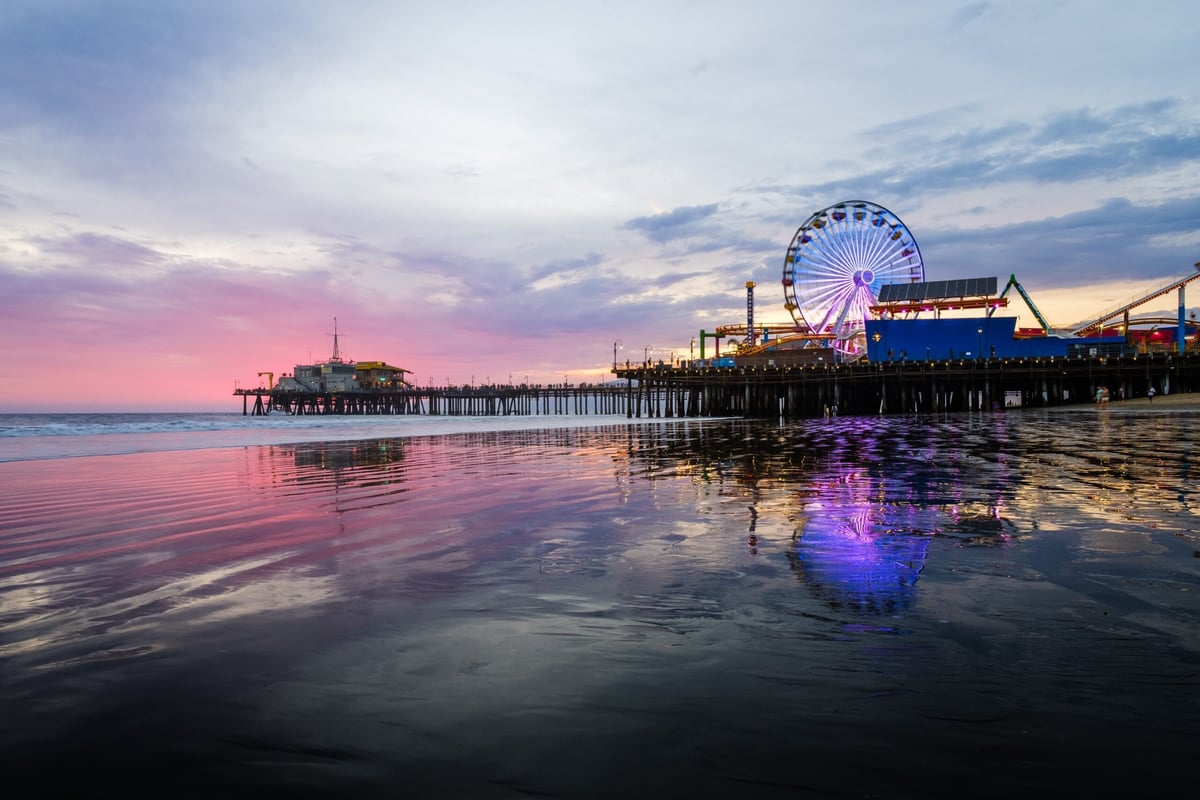
The Fujinon 14mm f2.8 is one of Fujifilm’s oldest (and most modern) lenses. It’s slow and noisy, with a stepping motor focus system, but optics are everything, and this 14mm captures some incredible images for landscape photographers or those just looking to have a little fun with an ultra-wide.
Fujinon 14mm Stats
Focal Length: 14mm equivalent to 21mm.
Aperture Blades: 7-Rounded
Front Element Filter Threads: ø58mm
Autofocus system: Stepping motor
Element Count: 10 elements 7 groups – 2 asph. & 3 abnormal dispersion elements
Fast Contrast AF Microcomputer: No although this lens does focus fast without it.
Fujinon 14mm f2.8 – Amazon / BHphoto
Fujinon 14mm f2.8 | First Impressions

By the time of this review, I had had this lens for almost two years, so I’ve used it quite a bit and have a lot of experience with it.
This lens isn’t mind-blowing for a wide-angle, but you have to consider it fairly small and compact for a wide. Also, consider what other options are out there. Nothing really, a few lenses from Rokinon that are inferior and a couple of lenses from Voigtlander that are slower and with much more vignetting, like this Voigtlander 15mm f4.5. So you’re left with this solid, reliable, and useful 14mm by Fujifilm.

I really like this lens and would buy it again without hesitation. It doesn’t really have any magical characteristics, but it’s sharp, has beautiful bokeh, and has great corner-to-corner detail with really beautiful color and contrast. All around, it produces some very nice, high-quality images for landscape or architectural photography.

This Fujifilm 14mm lens is also far superior to the 14mm on the 10-24mm lens, which is why I bought it. My 10-24mm wasn’t cutting it for landscape work. The 10-24 is nice, but it just doesn’t have that same level of color and micro-contrast you get from this lens.
The 14 mm construction is really nice. However, it shares the same sliding autofocus ring that toggles the camera between autofocus and manual focus found on other Fujinon lenses, so this can be confusing. You might have your camera set to autofocus, but the lens is too manual, and you get stuck wondering why your camera won’t autofocus—well, that’s why.

I would like to see Fujifilm make a faster version of 14mm for astrophotography and another wider prime; maybe 10mm would be perfect. Right now, if you want a wider prime that’s somewhat fast, you’re stuck with the 10mm Rokinon lens, which is . . . ok . . . I guess. Voigtlander also has a 12mm and a 10mm, but they are very slow. I also have the full-frame Rokinon 14mm f2.8 lens, but that thing is a hot mess. Then you can get faster, but not wider, with the slightly superior Fujinon 16mm f1.4 lens – more on that later.
I’ve been working on this huge list that shows all lenses for the Fujifilm X-Mount. So check that out before making your next purchase to see what is available.


Fujifilm 14mm F2.8 | Lens Characteristics

Like with this shot above, you can see the lens can produce some incredible corner-to-corner detail without any weird artifacts or color shifts.
The only thing that’s a little unfortunate is that it doesn’t have very pretty sun stars, so you don’t get very nice effects on the twinkly lights like you would with the Voigtlander 15mm.
Fujinon 14mm f2.8 Sharpness Chart
Starting with sharpness since that’s what people care about the most, this lens is sharp, especially in the center.
The sharpness drops off along the edges and corners, but still holds detail very well and without any smudging or strange distortion effects.
My X-T2 produces slightly sharper results on the right side vs the left side. It’s not the lens, it’s the camera, it does it with all my wides. So I posted samples that have 100% magnification on the left and right side.


Sweet Spot | Diffraction Chart
The sweet spot with any lens for Fujifilm’s 16-24 megapixel cameras will be somewhere between f4 and f8. I try not to shoot higher than f11 on an APS-C camera. You can get away with it on the X-Pro 1 or the XT1, but the tighter pixel pitch of the high megapixel Fujifilm sensors means you’ll start actually reducing the overall quality of your image by stopping down past f8 – f11 is my limit.


Flaring And Ghosting
I don’t get too much flaring or ghosting. I haven’t had a modern Fujifilm lens that flares much at all. Their latest coatings pretty much limit and control any ghosting and flaring issues.
You will see quite a bit of that red dot flaring when you stop at around f16. Red dot flaring occurs when the camera sensor reflects back onto the rear element of the lens. This is one of the many bad things about mirrorless cameras. The short flange distance between the lens and sensor makes this issue worse than on a DSLR, and this isn’t really a design flaw of the lens.


Chromatic Aberrations & Fringing
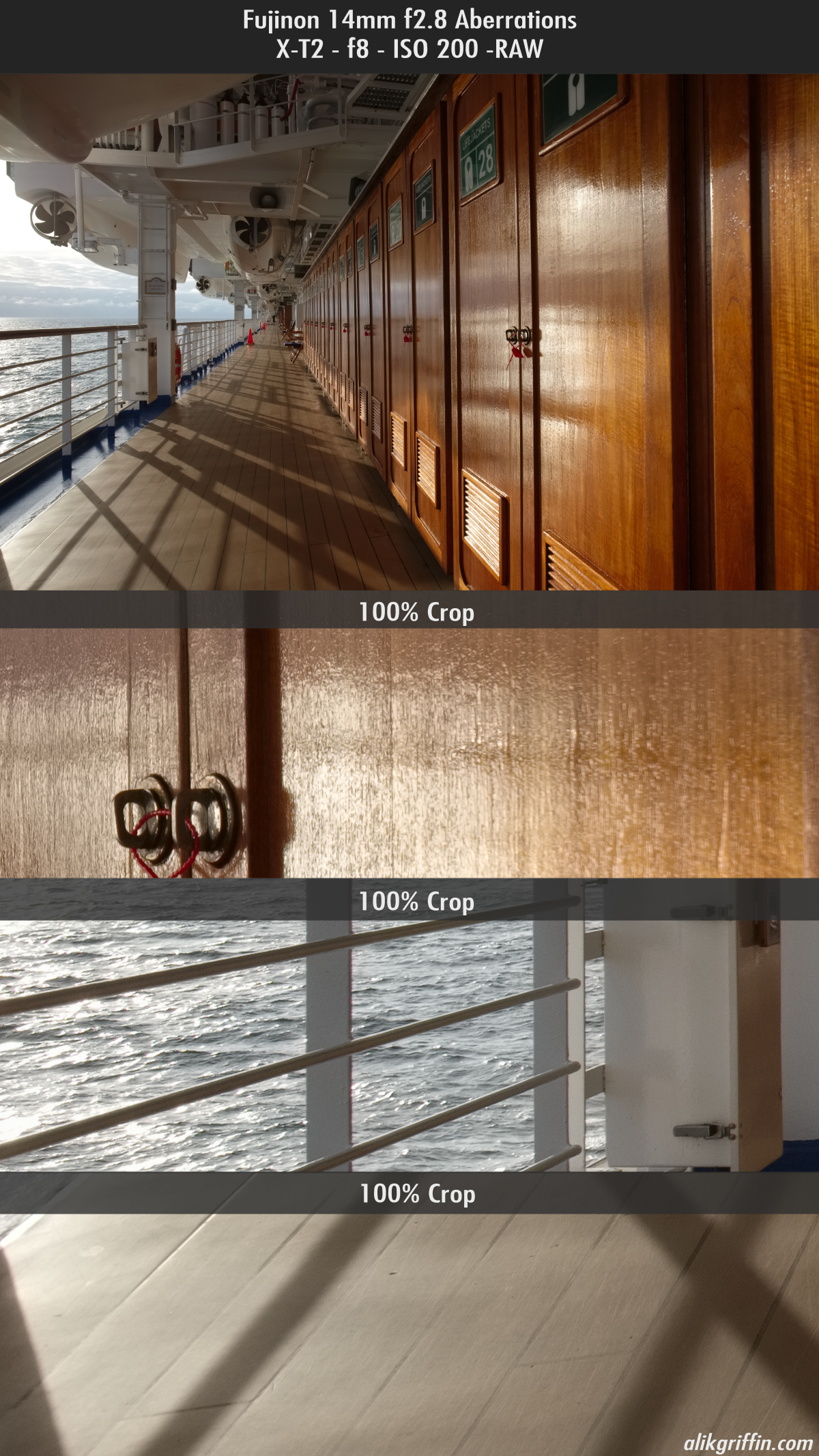
It’s always hard to test for aberrations because Fujifilm cameras are really good at correcting all aberrations in the JPEG and RAW files. Usually, aberrations are very well controlled in Fujinon lenses, and I haven’t had any problems with the 14mm yet.
This was one of the better images I could find, with a lot of contrast and sharp changes in light between the highlights and shadows. Even in Iridient Developer, with the lens profiles turned off, I could only find a little bit on the guard rail near the water. The X-T2 image processor is most likely stripping it from the image, or maybe this lens is so well-built that it has no issues with color chromatic aberrations.
DoF and Bokeh
Since this lens will primarily be a landscape or architecture lens for me, I don’t pay too much attention to bokeh since I want everything to be in focus. But, when I take the lens out and shoot the kids at f2.8, the bokeh is very creamy because of that rounded 7-blade aperture when wide open.
I’ve been having a lot of fun shooting my daughter with this lens, even though it’s so wide.


Fujifilm 14mm f2.8 Vignetting
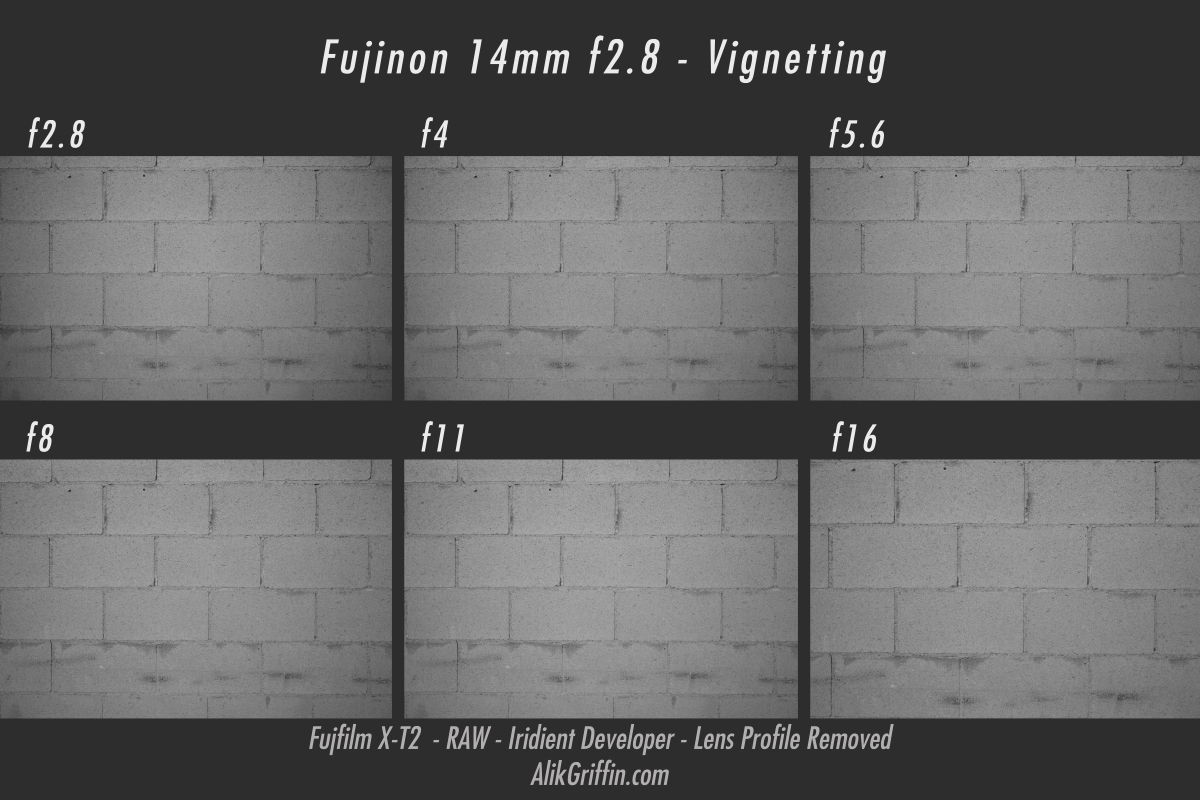
If you shoot JPEG or keep your images in Lightroom, you won’t see much vignetting. However, there is some at f2.8 up until about f8. It is hardly noticeable at f5.6. If you take your photo into Iridient Developer and strip the RAW lens profile correction, you’ll get vignetting across the entire aperture range; it’s the worst at f2.8.
While having vignetting automatically corrected in the camera seems like a good thing, you do have to realize that the camera is lifting the exposure around the edges, which will result in more noise and less dynamic range in the shadows around the corners and edges.
Fujinon 14mm Distortion
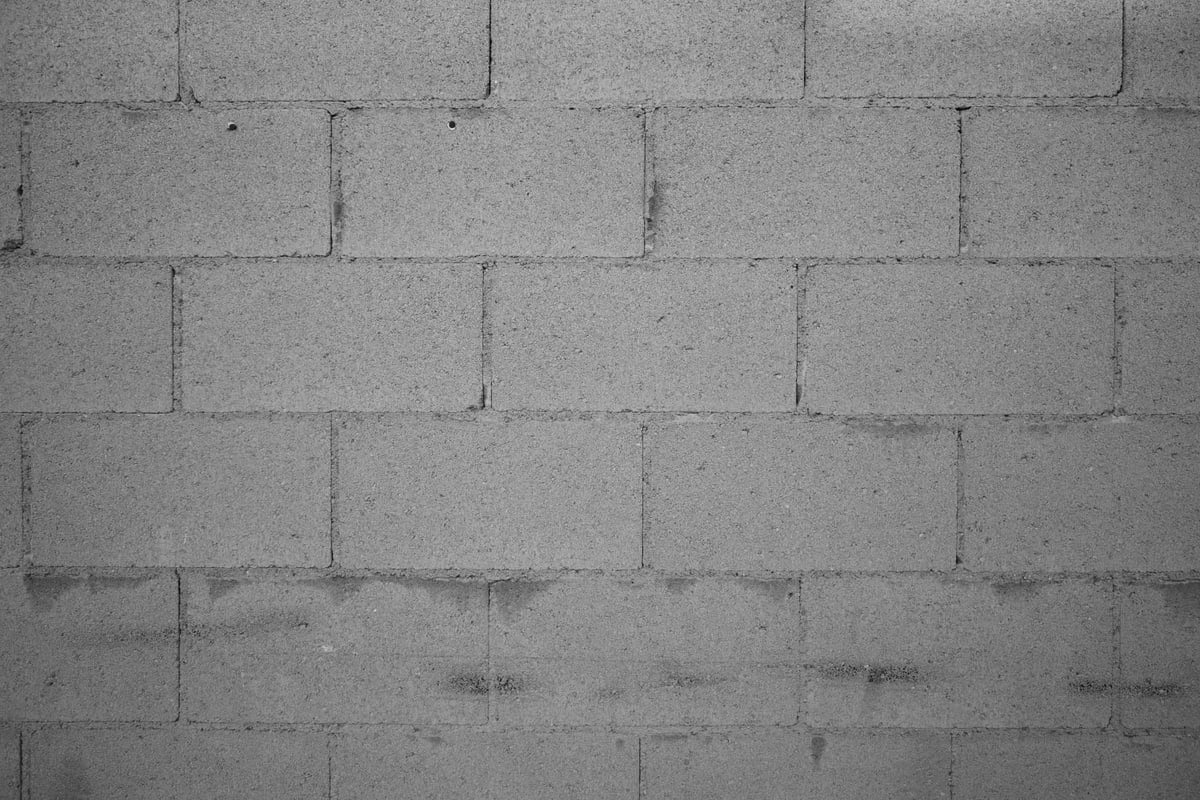
I’m not finding too much distortion on this lens in the Jpegs or Lightroom. However, if you go into Iridient Developer and strip off the Fujifilm RAW lens profile, you can see a subtle bulge. You will never see this since it’s very well-controlled on camera, and you probably wouldn’t notice it if you were shooting anything in nature.
One thing about many wide-angle lenses is the distortion, which can make people look crazy, especially near the corners and edges. This lens, because the distortion is so well controlled even along the edges, doesn’t stretch and bulge too much and keeps the images looking fairly normal.
Close Focus
The Fujifilm 14mm will focus very close, a few inches. It’s not going to give you the macro photography look you may think of when you stick a lens right up to something, but it does allow you to do some cool stuff.
Here is about as close as you can get and what that looks like.

Color Rendering & Contrast
One thing I really love about the Fujifilm 14mm f2.8 is how the colors pop. It produces warm, vibrant colors with beautiful contrast that doesn’t need much work. It also has some really nice micro-contrast, as you can see in the B&W brick wall above and also in this photo, where I didn’t really do much in post-processing.

Fujifilm 14mm F2.8 | Mechanical Characteristics


Fujinon 14mm Build Quality
I touched on this a bit already, but the Fujinon 14mm has that older Fujifilm design and feel, similar to the 23mm f1.4 or the 35mm f1.4. It has a sliding focus lock and a loose fly-by-wire aperture control ring.
Like all of Fujifilm’s modern lenses, the manual focus is a little laggy and isn’t quite as firm as some new designs, like the 35mm f2.
The lens hood is made from plastic, but it doesn’t rattle around and vibrate like it does in my 23mm f1.4.
Besides all that, the lens is built with a metal barrel and feels solid. It fits great and is well-balanced on both the X-Pro 2 and the X-T2.

Focus Speed & Technology
This old guy has Fujifilm’s older stepping motor. It’s fast at autofocus in daylight but slow in low light. It’s also fairly loud, so you won’t want to use it for video, but it’s not nearly as loud as the 23mm f1.4, which is a little chatterbox.
I personally haven’t had any issues with autofocus on this lens. Because it’s so wide and has a relatively deep depth of field, it finds focus almost instantly in sunlight.

Fujifilm 14mm vs 16mm
So, this is the tough question you have to ask yourself: Should you get the smaller and lighter Fujinon 14mm or go with the faster and slightly sharper Fujinon 16mm?
I hate that Fujifilm made that 16mm lens because it’s so good. It made the decision between the 14mm and the 16mm extremely difficult.
The 16mm is a slightly better all-around lens, but the 14 mm is noticeably wider, which is nice for landscapes.
I’ve had both lenses for quite some time now, so I’ll share my experience using them.
I personally think 14mm is better for landscape photography just because that extra 2mm makes a difference, and I usually like to shoot wider when I can. But 16mm is also great. It really depends on what you need for your shot.
Because the 16mm is so fast, it will also make for a better indoor wide lens. So, it’s like concerts, stadiums, friends and families, etc. However, I like the Bokeh on the 14mm better. The 16mm bokeh produces this sort of strange soap-bubble bokeh that I still sort of have mixed feelings about.
For astrophotography, you’ll want that 16mm f1.4.
For me, when shooting landscapes, I’ve found I always go for the 14mm first, then if I want tighter, I always go for the 23mm and end up skipping the 16mm. I often forget I have the 16mm for landscape and have to remind myself it’s there, but for street and day-to-day shooting, the 16mm (which will look more like a 24mm because of the APS-C crop), is a little easier to use.
In terms of comparing the two, the 16mm has a slightly bluer cast but also slightly better micro-contrast. It is also slightly sharper in the corners and edges, faster at autofocus, quieter, and weather-resistant.

Fujifilm 14mm vs Voigtlander 15mm
Another good option instead of this Fujifilm 14mm is the Voigtlander 15mm.
Both lenses are close in terms of sharpness, but the Voigtlander is slightly sharper in the center and a little towards the edges and corners. It also has better micro-contrast.
The Voigtlander has some pretty strong vignetting and color shifts. The Vignetting is easy to correct, but that blue shift is not.
The Voigtlander 15mm is also a little bit less expensive, so long as Fujifilm isn’t having one of its lens sales and only if you already have a Leica M to Fuji X adapter. Voigtlander doesn’t make its lenses in the X-Mount yet.
With the Fujinon 14mm, you will have full access to EXIF lens data and autofocus. I like Voigtlander lenses because I love the manual focus and how the lens feels (which is sometimes more important to me than image quality), but the 14mm is probably a better lens for the average Joe.

Fujinon 14mm f2.8 Review | Bottom Line
While some ultra wide-angle lenses are slightly better than the Fujinon 14mm with some of their characteristics, this 14mm is the widest by Fujifilm Prime and is still an all-around good lens. It’s also a lot smaller and lighter than the Fujinon 16mm, which, to me, is pretty important. This lens has better handling and is more fun to shoot with.
If you don’t need as wide as the 14mm or a small, I recommend the 16mm instead.
Fujifilm 14mm F2.8 Sample Photos




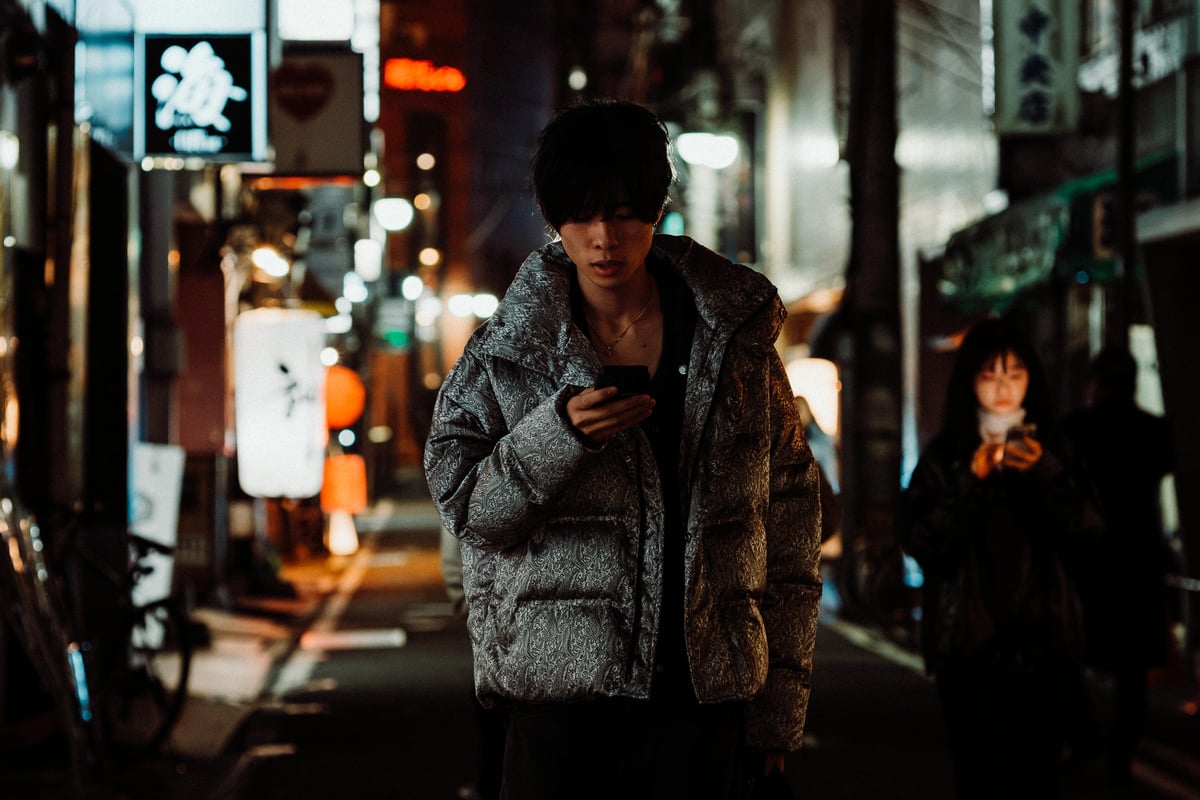
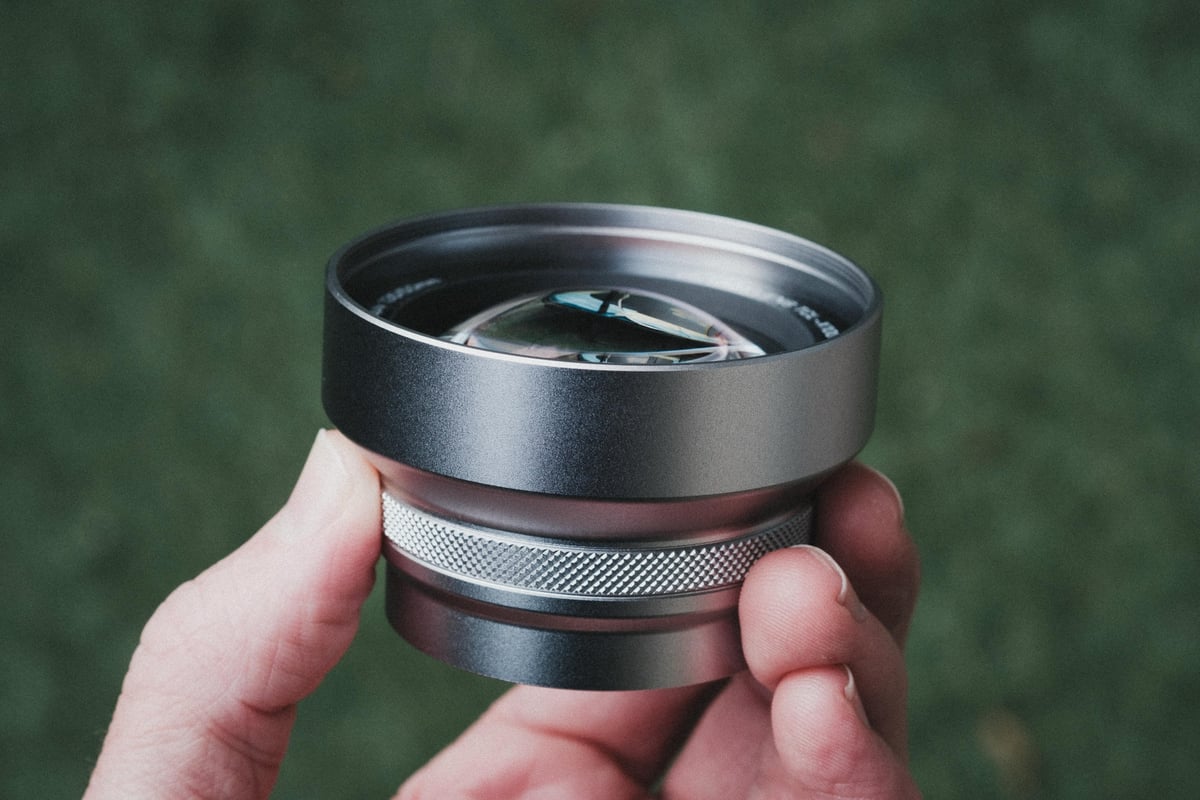

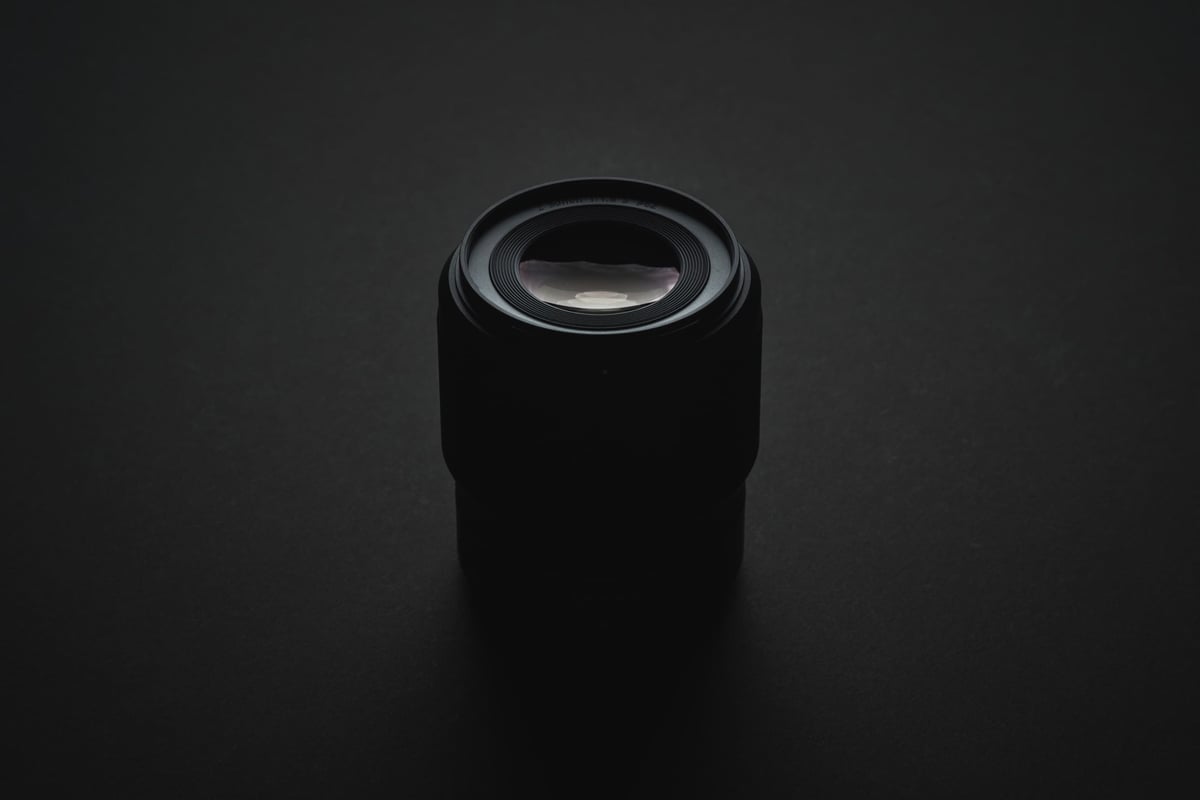

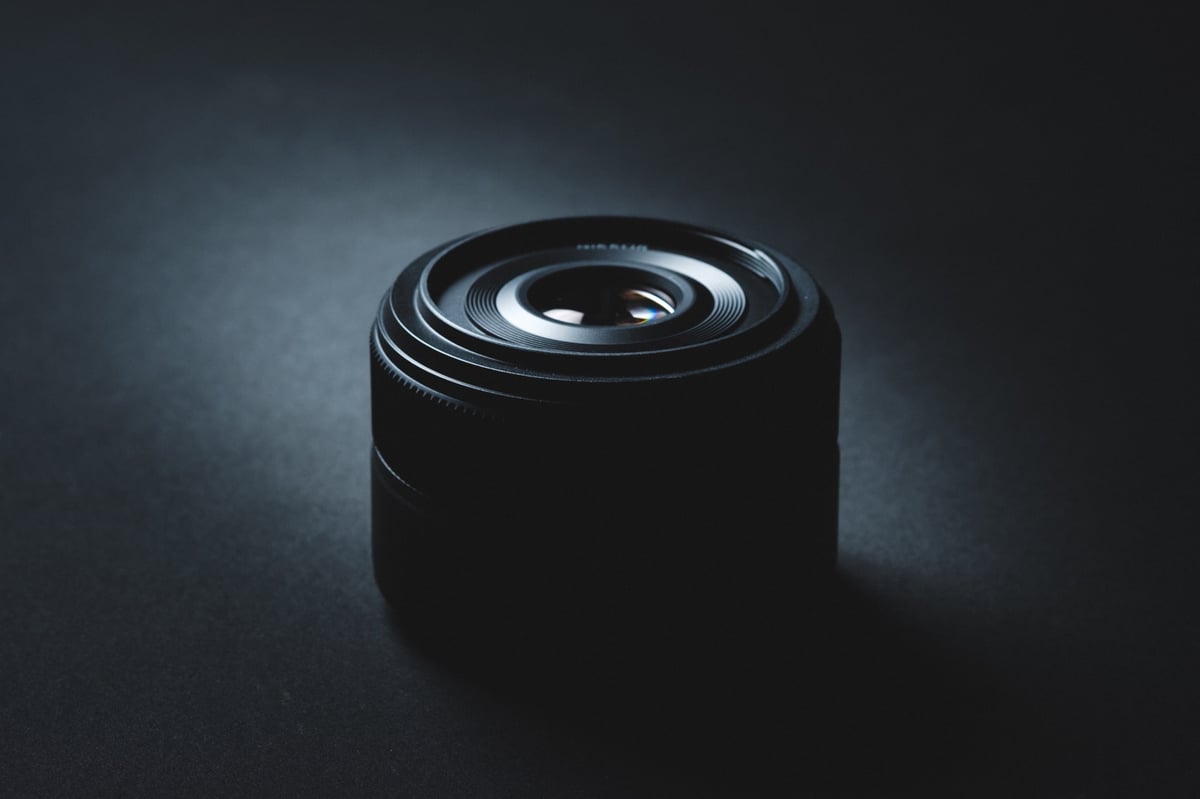


Leave a Reply to gilles Cancel reply