
The Fujifilm X-E5 has always been a relatively niche camera in the Fujifilm lineup, and it’s never really gotten the attention it deserves. Part of that is because the older version of this camera always felt much more limited than the bigger, more feature-rich cameras in the X-T or X-Pro series.
Today, with how powerful camera processors are and how good sensors are, camera companies are actually struggling to gimp their non-premium bodies, and Fujifilm’s new X-E5 actually feels really competitive, especially with the new XF 23mm lens. It pretty much has everything you could need or want for most situations, except for the absolute top-tier pro features, like dual memory card slots, 16-bit HDMI, or Pro Cinema features.
I absolutely love this camera. It’s quickly become my main; it is an absolute S-tier camera for its niche.
In this review, I’ll explain why I love this camera, why I think it’s very important to Fujifilm, and a few things that really bug me about it.
Table of Contents
1. Fujifilm X-E5 Review: A Return To Form
I haven’t bought an interchangeable-lens Fujifilm camera since the X-T3 back in 2018. Aside from the amazing X100 and GFX series, I haven’t really liked what Fujifilm has been doing over the last few years. Modern bodies like the X-H2 and X-T5—along with their newer lenses—have grown so large and expensive that switching to full-frame just made more sense. When an APS-C setup is just as heavy, large, and costly as a full-frame option, full-frame simply wins out on image quality and resolution.
For years, I’ve felt Fuji was missing a genuinely good, affordable compact body that could compete with Sony’s wildly popular a6000 series. I absolutely loved my old a6300, and until now, Fujifilm never quite nailed that rangefinder form factor or matched the speed and capabilities of a camera like the Sony A6700. The X-Pro3 tried, but it was just weird and expensive.
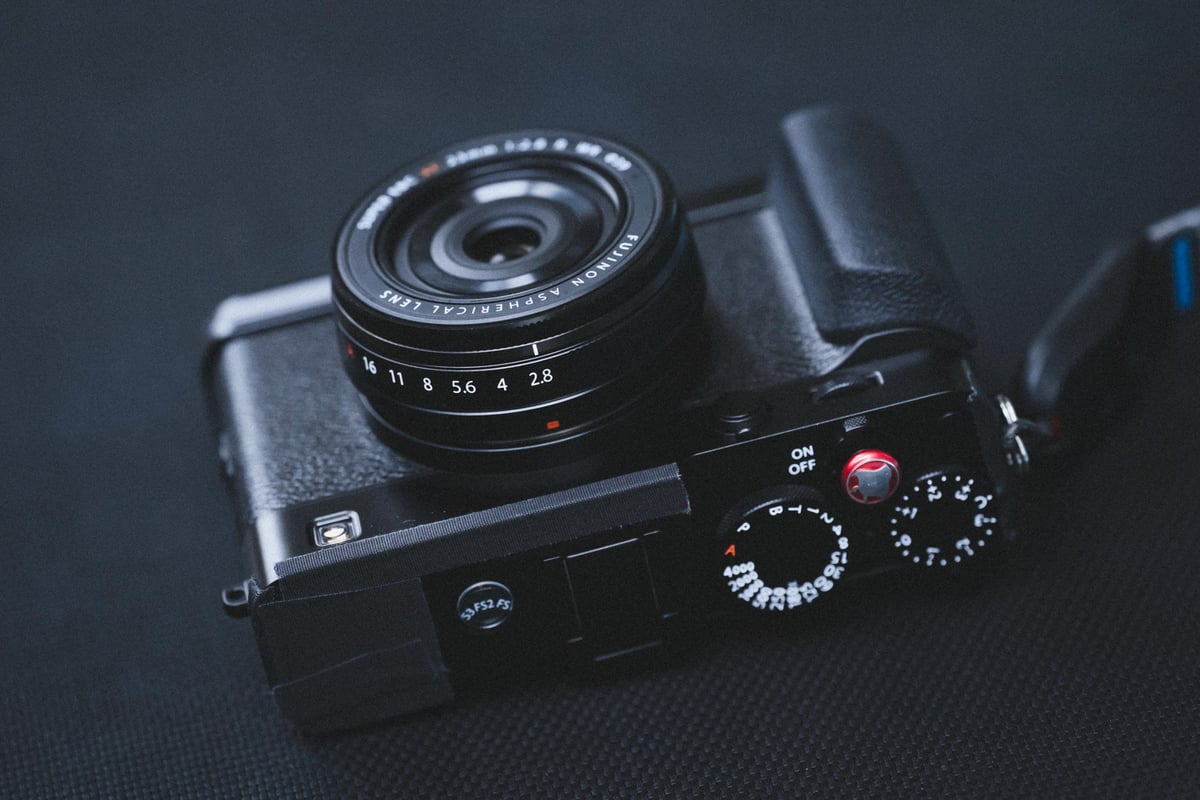
Now, we finally have a return to form with the Fujifilm X-E5.
This is Fujifilm’s first truly small camera with a premium, “non-plasticy” build and serious specs. It brings IBIS, great autofocus, UHS-II SD card support, and 200 Mbps, 6.2k, 10-bit, 4:2:2 video to a highly practical footprint. Because it’s an interchangeable system, it’s actually more versatile than the X100 series, especially for someone who likes to try out different lenses.


When you pair the X-E5 with Fuji’s compact primes—like the 23mm f2.8, 23mm f2, the updated 27mm f2.8, 35mm f2, or 50mm f2—you get a virtually perfect compact system. And the beauty of the ecosystem is that if you had to go more professional later and really didn’t want to go with full frame, you can always step up to the expensive f/1.4 lenses and the higher-end bodies like the X-H series.

For me, and for what APS-C is and should be, this camera is essentially perfect (with caveats, of course). I think the X-E5 is going to be really amazing once people start waking up to it. It is seriously my favorite camera right now. And this is the type of camera Fujifilm should be leading the system with.

2. Build Quality: A Solid Workhorse
Oftentimes, camera companies get a little carried away with adding consumer features and little gimmicks to their cameras, or they just feel too plasticy. I always felt like Fujifilm lost its mind with that weird flip screen on the X-Pro3, and I thought the Film Simulator dial would be lame, but it’s actually somewhat useful.
Here is why.
Cool Features: Film Simulator Dial Is Actually Useful
While I don’t usually use JPG film simulators with Fujifilm for my final edits, I do use them a lot in Lightroom on the RAW files. As with most images in this review, my presets are applied on top of Classic Chrome or Classic Neg.
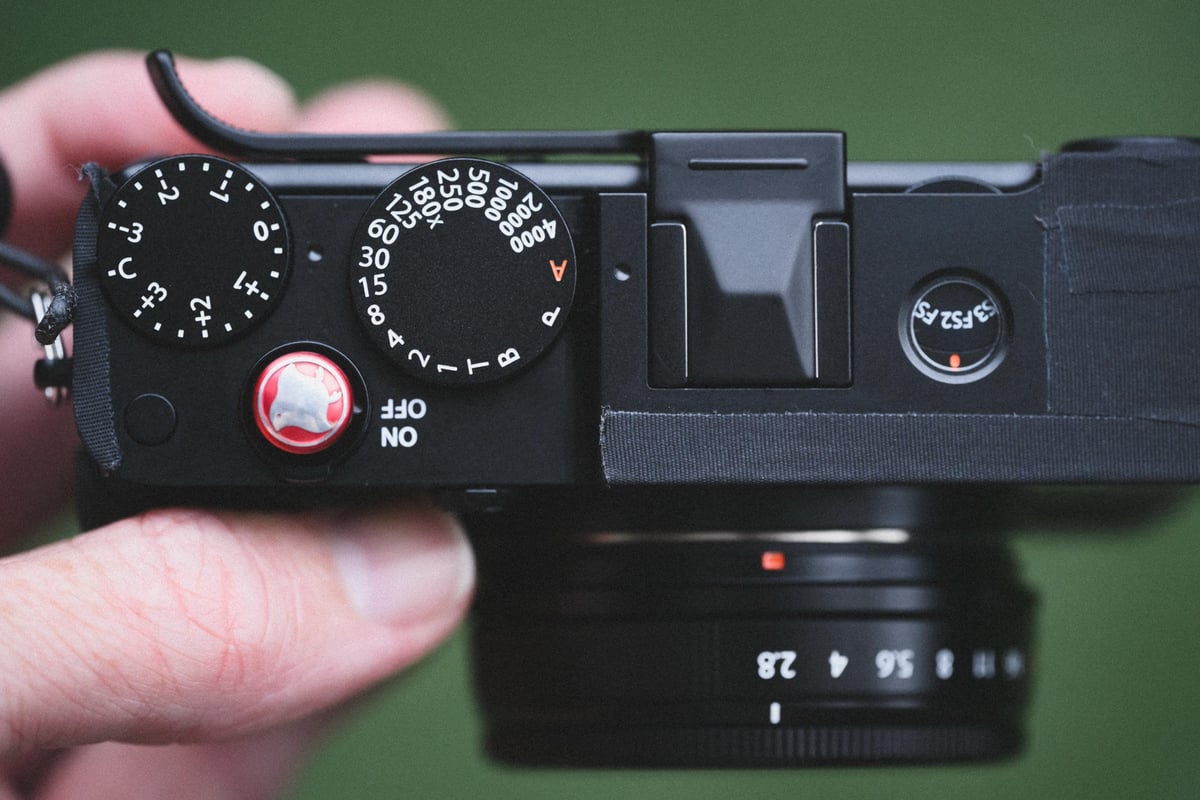
Even without using camera profiles, I still love tuning the looks as an on-screen reference while I’m shooting. And then I can save the JPGs as another reference to compare when editing my RAW files. So the film simulator lets me quickly switch between looks and settings for inspiration while shooting or editing.
This is especially great when shooting with manual-focus lenses, where I can quickly switch to the black-and-white Acros profile, which helps me see focus peaking.
Cool Features: The OVF/EVF Lever From The X100
Another great addition, the little switch we had on the X-Pro and X100 cameras is on this camera for the first time, and it’s so useful for customizing camera controls.
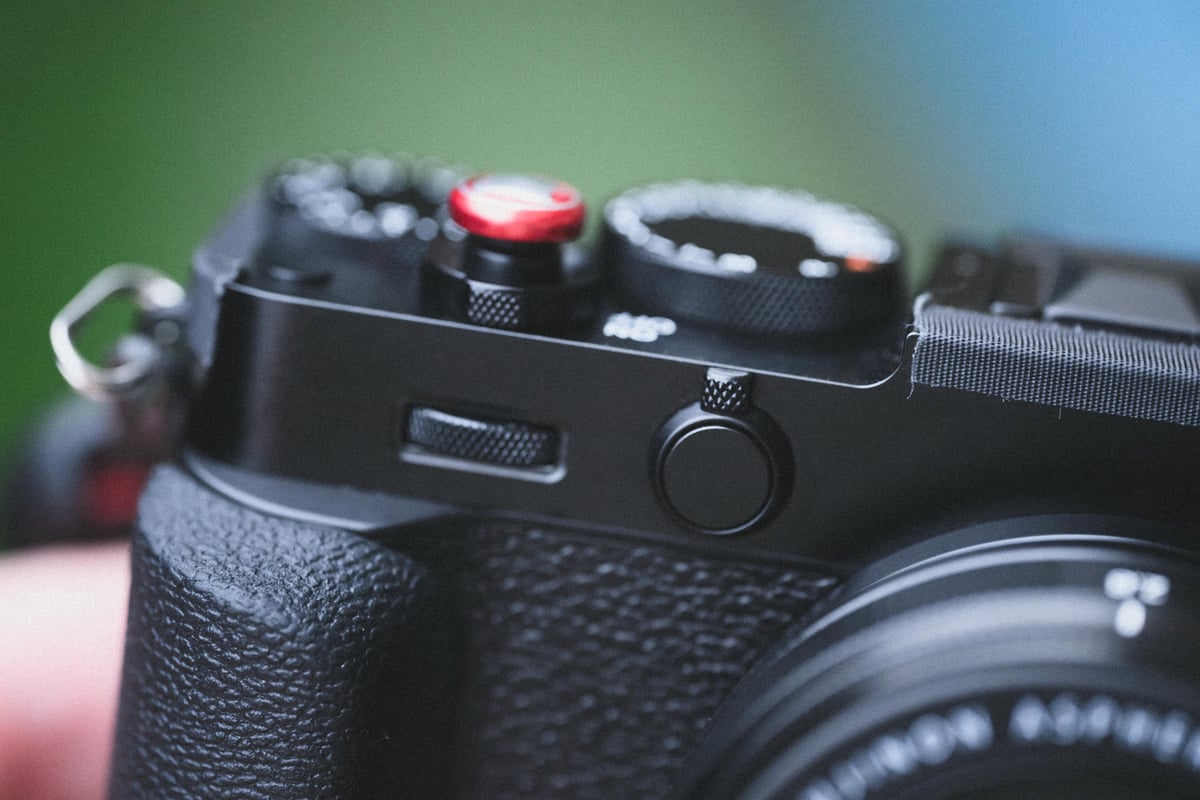
You basically have 5 different controls you can put on that level, which saves up space on the back of the camera. It’s genius, and I love it.
It works like this: there is a single button you can customize. Then the lever can flip in either direction for customizable controls. So I use it to toggle EYE/Face Detection on and off, and I use the other direction to change AF Modes.
Then long-press the lever in either direction to access another control, which I use for WB and ISO settings.
While the camera looks very simple, you get a ton of functionality thanks to how the button system has been configured, something entry-level or more consumer cameras often lack.
3. What I Love: All The Amazing Fujifilm Features
On this blog, I often discuss the differences between camera brands, their strengths and weaknesses, and, fundamentally, most of the cameras out there today are great and will give you great results. But there are a few things that I think Fujifilm does really well.
What I Love #1: Color Science
Today, most of the cameras have pretty good color. I really like where Canon is today. Nikon is probably my favorite right now, with Leica and Fujifilm in second place. That is, if you’re using their looks. If you’re just using Adobe Standard in Lightroom, it does a pretty good job of standardizing colors, but there are still some tonal differences.
Aside from that, Fujifilm has something really special with the film simulators. I really like their Classic Chrome, Classic Neg, Pro Neg, Nostalgic Neg or even Reala Ace. I often use one of those as my base look before applying my presets, and it just adds a little extra flavor and really expands the looks I can achieve.
I’m sure you’ve heard all about Fujifilm’s Film Simulators to death, so I won’t go too much into them anymore. Instead, I want to talk about this other, rarely mentioned feature.
What I Love #2: D Range Priority
Most cameras have some sort of Dynamic Range setting, but I’ve always really loved the look and feel of how Fujifilm’s works, and I’m almost always leveraging it when shooting. If you’re a Landscape Travel shooter, I highly recommend you start leveraging this feature.
With D Range Priority, you pretty much have two settings, Strong and Weak, or you can do Auto. And what this does is it applies a basic HDR effect to the image. It looks amazing right out of the gate if you’re shooting JPG. But even if you’re shooting RAW, this will give you a preview of how your highlights and shadows can look after post-processing. This is especially nice when you are previewing your images on the camera to make sure everything looks good, since you can see the whole frame.
Without this, sometimes your highlights will look blown out even though they aren’t, and sometimes your shadows will look too crushed. With this turned on, it automatically adjusts your ISO (assuming it’s set to auto) to give you the best dynamic range for the scene.
What I Love #3: IBIS Is Game Changing
This is my first Fujifilm Camera with IBIS. I did borrow a friend’s camera for several months—which you can read about in my full Fujifilm X100VI review—and I loved its IBIS as well.
Since you can change lenses on the X-E5, it becomes an absolutely amazing pocketable landscape beast. Throw something like a Viltrox 9mm on this thing, or the Fujifilm 9mm if you can afford it, and you’ve got so much potential with such a small footprint.

I can usually comfortably get away with a shutter speed of around 1/8 with IBIS on this camera.
While I know the 40MP APS-C sensor doesn’t truly offer you a ton of resolution, pairing the X-E5 with AI noise reduction and image enhancement features in Lightroom or other software like Topaz makes your post-production capabilities insane. We’ve never been able to do so much with such a small camera before.
The Hidden Superpower: Adapting Leica M Lenses
One of my absolute favorite things to do with Fujifilm bodies—and the X-E5 in particular, thanks to its rangefinder styling—is adapt manual M-mount lenses. If you are curious about what glass is actually out there, I keep a constantly updated and complete list of Leica M lenses here. If you haven’t tried adapting these lenses yet, I highly recommend checking out my full guide on adapting Leica M lenses to Fujifilm. It completely changes the camera experience.
There are a few massive benefits to putting full-frame M-mount glass on an APS-C body. First, you are only using the dead center of the lens’s image circle. This means you are completely bypassing the soft corners and heavy vignetting that some of these lenses show on full-frame cameras. You are getting the absolute “sweet spot” of the glass.
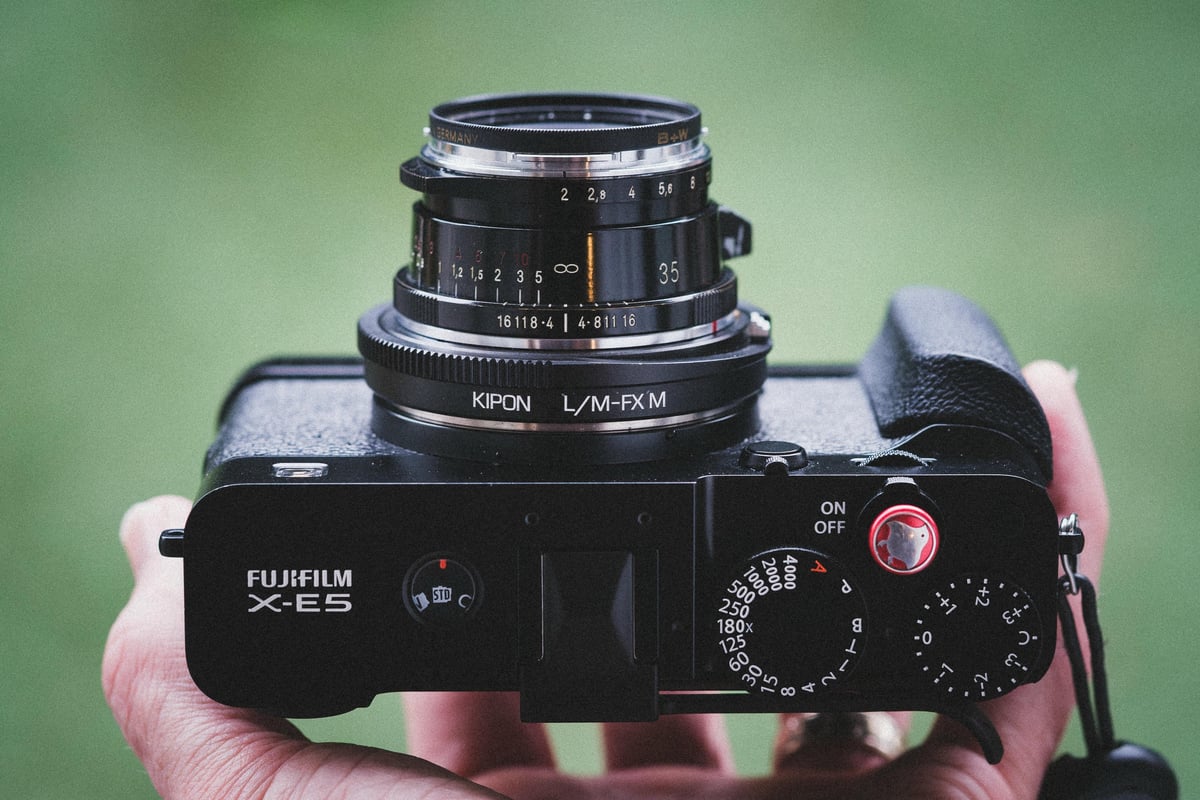
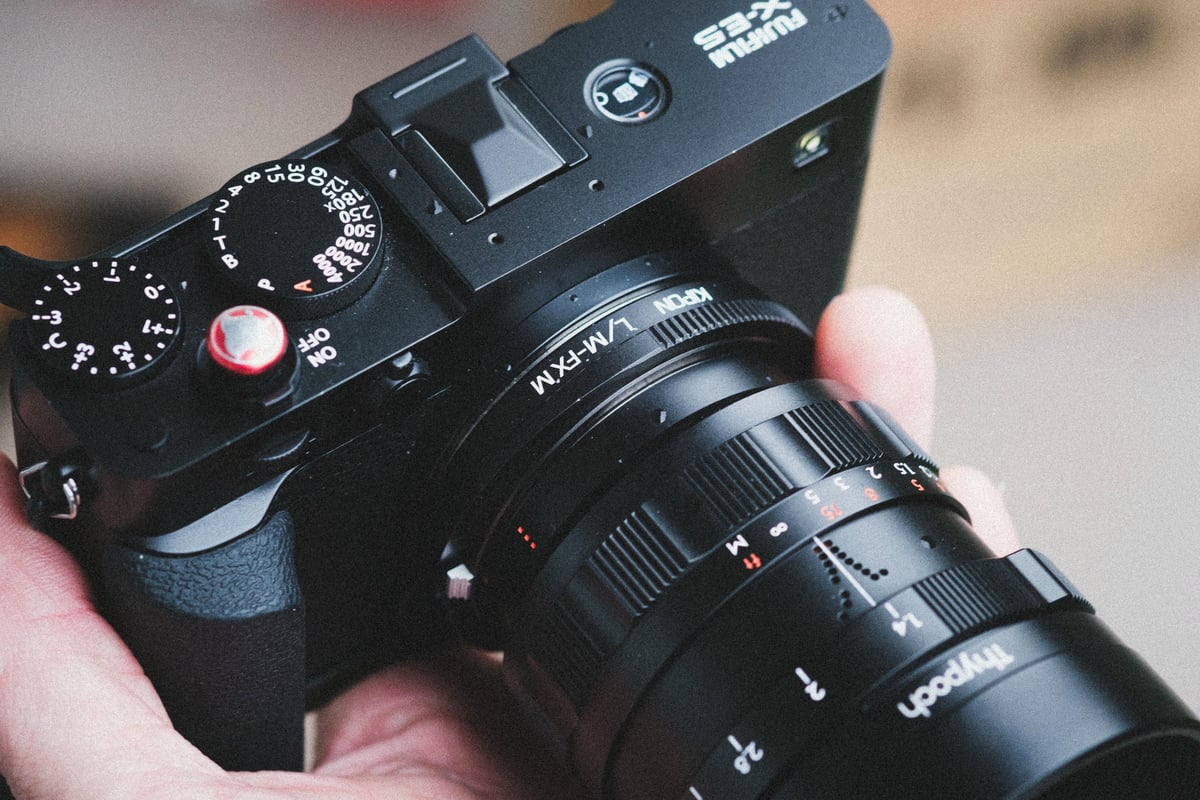
Second, if you pick up a close-focus adapter with a built-in helicoid—like the Kipon adapters I use—you can bypass the inherently long minimum focus distances of rangefinder lenses. You essentially turn every M-mount lens into a macro lens. I recently reviewed the Thypoch Simera 75mm f/1.4, and throwing a lens with that kind of character onto the X-E5 with a close-focus adapter is just incredibly fun.
Finally, Fujifilm makes the manual focusing experience completely frictionless. They have some of the best manual focus assist tools in the industry, and their focus peaking is incredibly accurate and easy to read. To top it all off, you can manually code your adapted lens’s focal length directly into the camera’s settings. The camera reads the focal length and calibrates the IBIS specifically for that lens, meaning you get 3-Axis-stabilized, tack-sharp shots with vintage or third-party manual glass.
4. The Complaints (Quirks & Bugs)
Operations are a little slow. It does something strange, and some might just be firmware issues. But here are the issues I have.
Complaint #1: Front Control Wheel Is Dangerous
I haven’t really figured out what to use the front control wheel for. It’s set to control the ISO by default, but since you end up bumping it so much, you have to turn it off.
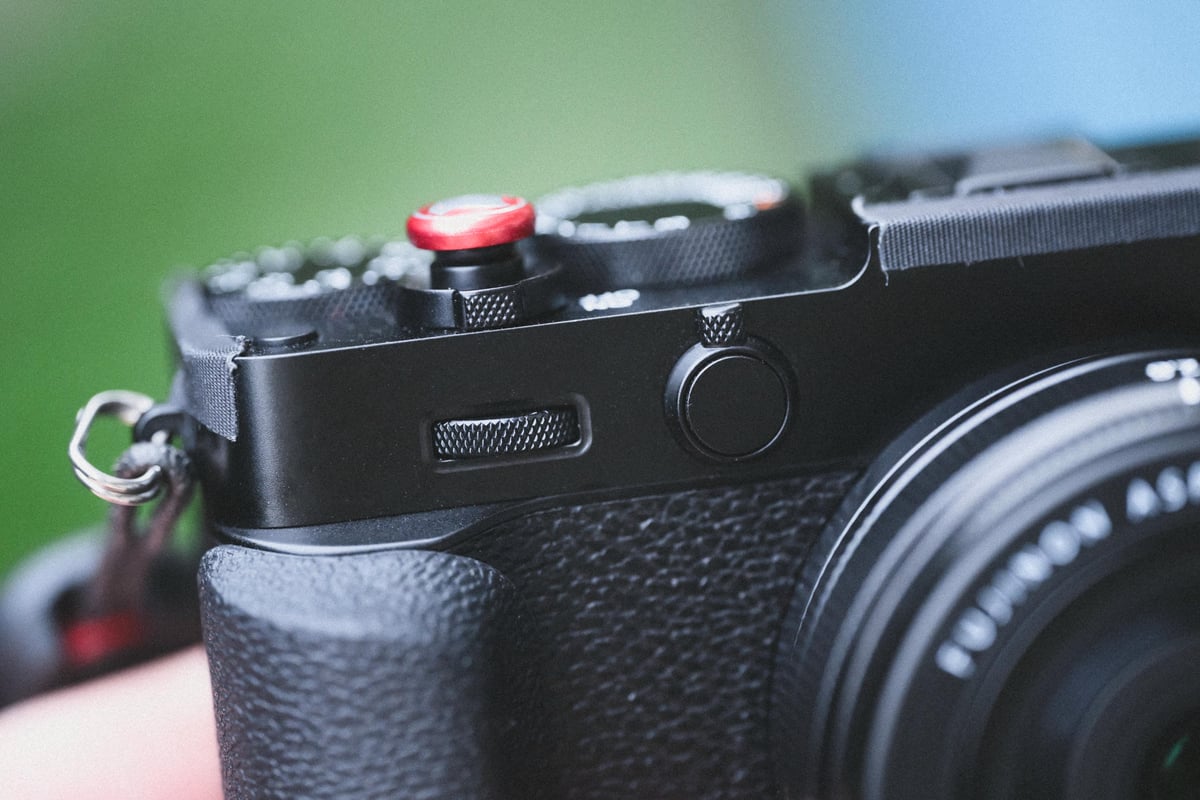
I wish there were a way to toggle the two control wheels on and off – I think, since the control wheel also functions as a button, Fujifilm should include an option to use the control wheel button as a toggle on/off switch for the wheel itself, so you don’t accidentally make adjustments without realizing.
I know the other Fujifilm cameras have the same setup, but with the X-E5’s smaller, more compact body, you have less room and tend to accidentally hit that wheel a little more often.
Complaint #2: Inconsistent And Sometimes Long Bootup Times
The camera sometimes goes to sleep, and it’s super annoying.
You sometimes turn the camera on, and nothing happens. So then you have to start spam pressing the shutter button to get it to wake up. I think the camera remembers its sleep state when you turn it off, so when you turn it back on, it’s still asleep. So it requires pressing buttons to wake it up. It’s a huge problem.
Complaint #3: Very Slow Image Review Time
Next, pressing play to review images has a huge lag, unlike any other Fujifilm camera I’ve used. I’ve tried a few different memory cards, but it still has this issue. Again, it could just need some firmware tuning, or maybe the card reader is using some ghetto tech. The camera is listed as UHS-II-capable, so this poor performance doesn’t make sense.

Complaint #4: Fujifilm AF is still not Perfect
As it is right now, Fujifilm AF is really, really good compared to where it used to be. I’m coming from the X-Pro2 and X-T3, and by comparison, this camera is a dream. Subject detection and eye detection are amazing.

I shoot a lot on the Nikon Z8, which is amazing, and the only little hiccup I get now, where I feel Fujifilm is maybe a touch behind, is that the AF still sometimes doesn’t quite prioritize closer subjects. It still will favor a background subject if the eye or face criteria are met.
This is something I feel like Sony got years ago, and Nikon maybe got a few years ago with new firmware updates. I’m confident Fujifilm will get there. But I wouldn’t hesitate to buy into Fujifilm because of these little complaints. It’s an incredible AF experience.
Complaint #5: No Subject Detection With Face/Eye Detection At The Same Time
I can’t really figure out how to use subject detection alongside human/face/eye detection.
My kids were running around playing with some deer in Nara, and I had to constantly switch between animal subject detection and human face-and-eye detection, which seemed like a pretty big limitation to me.
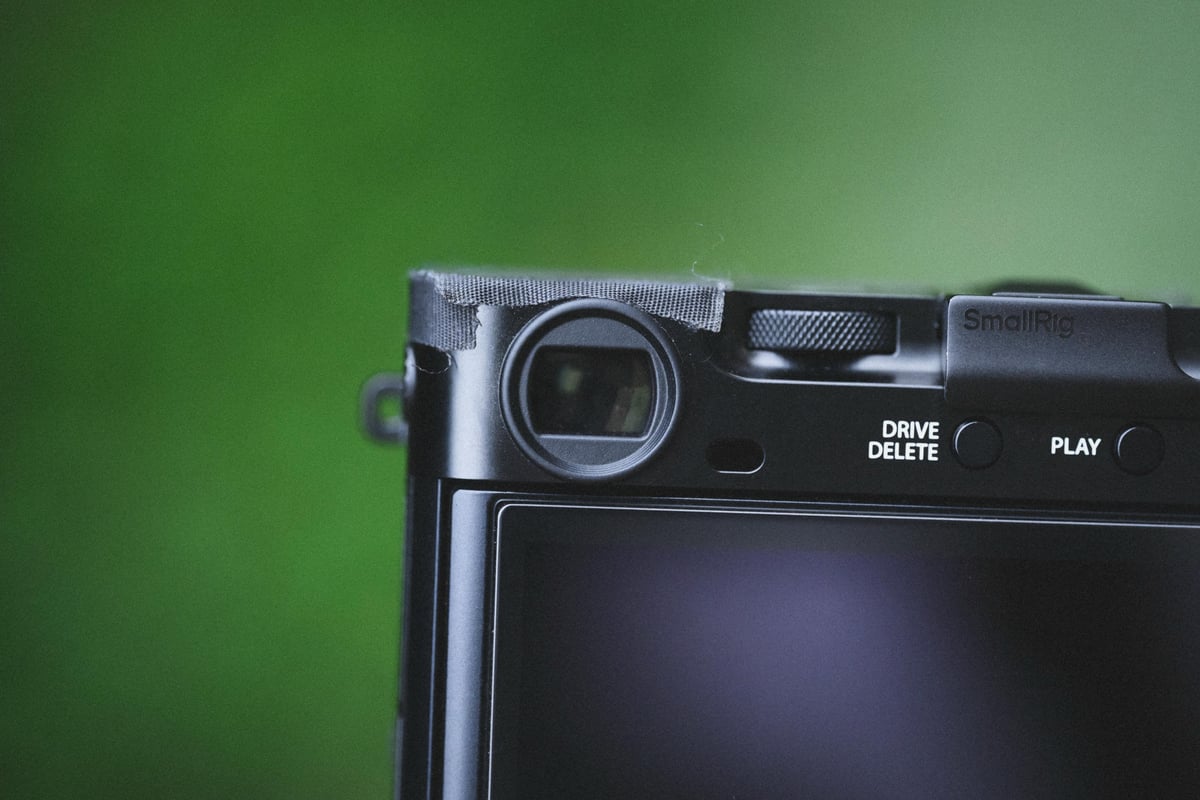
Complaint #6: EVF Is Very Small, But It’s Fine
The EVF is pretty small, but I don’t use it much, except in very bright conditions or when I want to play back images.
This is not really a sports/action/wildlife camera, so you’re not primarily shooting out of the EVF.
I do still need an EVF, which is why the Ricoh GRIV is a no-go for me. I’m old now, and when I have my contact lenses in, I can’t see things up close without reading glasses, so yeah, I have to use the EVF to check focus on the run.
Complaint #7: Memory Cards Are Difficult To Get Out
This is a weird complaint you’ve probably never seen before, but I think it’s valid. I benchmark memory cards in almost every camera I test—in fact, you can see my guide to the best memory cards for the Fujifilm X-E5—and this camera gave me one of the more physically challenging experiences. The memory cards are just tight when they sit in this camera, and Fujifilm did the thing so many camera companies do: they put the memory card slot right next to the battery door hinge, leaving you with absolutely no room to grip the card to pull it out.

5. Image Quality: The Reality of 40MP on APS-C
Before we talk about pure resolution, let’s talk about technique. When shooting with high-resolution APS-C sensors, you generally want to be careful with AF-C for critical work like landscapes and still life.
While the X-E5’s continuous autofocus is fantastic for tracking moving subjects or people, if you are walking around shooting static scenes—especially with the 23mm f/2.8—you really want to be in AF-S mode. This locks the focus and keeps the lens elements completely still while the shutter fires. If you leave it in AF-C for landscapes, the micro-adjustments will cause your pixel-level sharpness to take an immediate hit. Save AF-C strictly for moving subjects.

Now, about that 40MP sensor. I’ve written about this in other articles, but to summarize: on APS-C, you simply aren’t getting a true 40MP of resolution. When I compare the 40MP files from the X-E5 to the 50MP files from my Nikon Z8, the clarity isn’t even in the same ballpark. Yes, the Nikon has 10 extra megapixels, but the difference is staggering. In reality, the X-E5’s sensor yields something closer to 30MP of actual resolving power.
This mostly comes down to diffraction. Unless you have an incredibly sharp lens and shoot wide open, general run-and-gun apertures like f/5.6 or f/8 push you straight into the diffraction zone. You just won’t squeeze 40MP of resolution out of it, especially at f/8 with the new 23mm f/2.8. For the absolute best image quality with that lens, try to limit it to around f/5.6.

What’s Great About That 40MP sensor
If we aren’t getting a massive bump in raw resolution, why bother? What this 40MP sensor does is dramatically improve the grain structure.
It also eliminates that dreaded “plastic skin” effect caused by X-Trans noise reduction, and it stops fine details—like hair—from getting eaten away in your JPGs. Moiré is handled much better, and the color information, especially in the shadows, looks noticeably cleaner.
So, while we don’t get a huge bump in sheer resolution, the sensor does so many other things beautifully that it’s absolutely worth the upgrade over the older 26MP generation. I’m incredibly happy Fujifilm put it in the X-E5, especially since they skipped it on other recent bodies like the X-M5 and X-T30 III.

The Real Game Changer: AI RAW Enhancement
If you really want to see this 40MP sensor come to life, and how it really bridges that APS-C to Full Frame gap, you have to look at how it interacts with modern editing software. Historically, packing 40 megapixels onto an APS-C sensor meant dealing with a heavier noise penalty, especially when shooting in low light or lifting shadows. But the recent explosion of AI noise reduction and RAW enhancement tools—like those in Lightroom, Topaz, or DxO—has completely rewritten the rules for crop sensors.
When you run these high-density X-E5 RAW files through AI Denoise, the results are genuinely mind-blowing. The software cleans up the high-ISO grain structure without turning your images to mush, effectively neutralizing the biggest historical drawback of a high-megapixel APS-C camera. It recovers micro-details and keeps the textures looking natural and organic.
You get the rich color data, the improved moiré control, and the extra cropping leeway of 40MP files, but with the clean, smooth shadows you’d traditionally expect only from a much larger sensor. This software evolution is arguably one of the biggest game-changers in the APS-C ecosystem, making the X-E5 an absolute powerhouse for post-production.
Fujifilm X-E5 Vs. Fujifilm X100VI
The X-E5 is actually smaller than the X100 series, and with the latest kit lens, I can fit it in most of my Jacket pockets, but not in my pants pockets.
It’s missing a few things that the X100V or X100VI had. Mainly, it’s missing the EVF/OVF, which is fine. I only ever used the OVF when my battery was really low. Even on my X-Pro2, I never really used it. It’s also missing the flash, which is fine; I almost always use an external flash like the Viltrox Z3 Spark or Viltrox Z2.
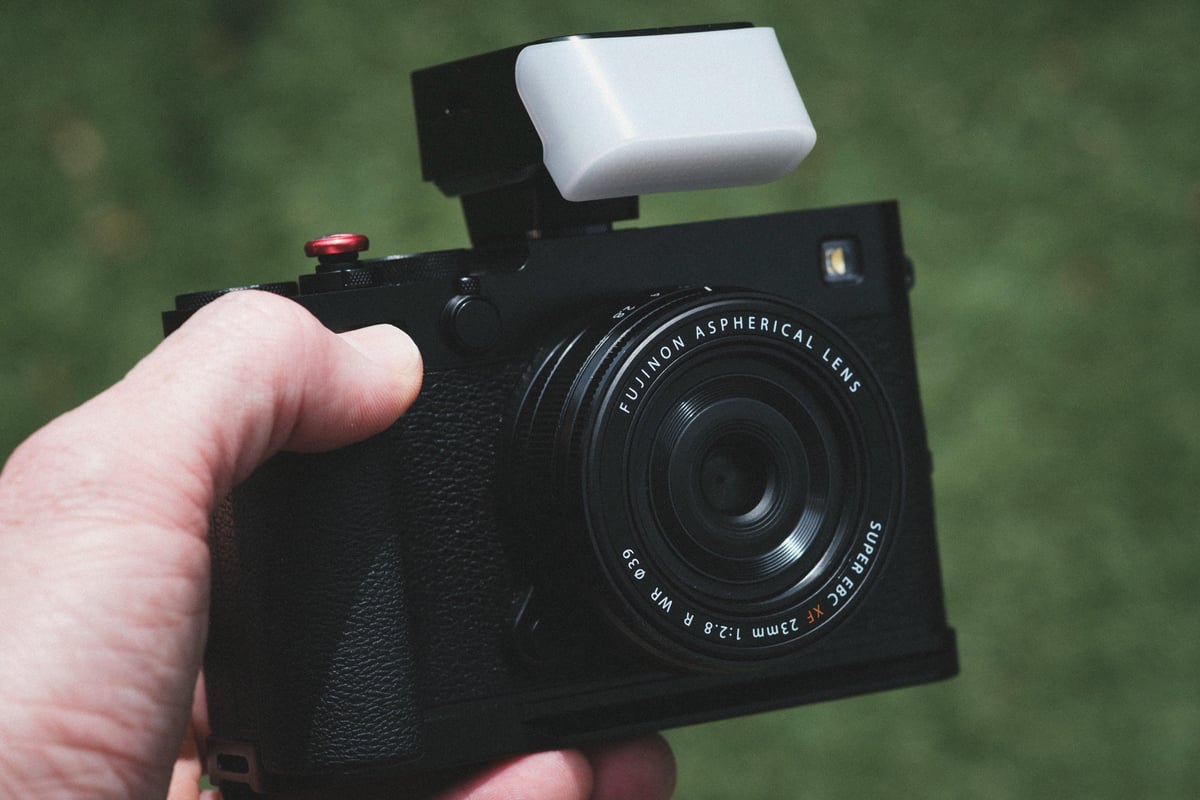
Also, unlike the X100VI, the X-E5 is not weather-sealed.
The Fujifilm X100VI also has a 23mm f2 leaf-shutter lens, whereas with the X-E5, we are limited to a 23mm f2.8 lens as our only compact option. But there are other options if you don’t mind going with a slightly larger lens.
One nice feature of the X100 that I will miss is its leaf shutter, which lets you achieve ridiculous flash sync speeds. Pair that with the built-in ND filter, and you can do some really nice flash work with the X100 that you can’t really do with any of Fujifilm’s interchangeable lens cameras.
What you get instead of the EVF/OVF or a Flash and leaf shutter is the ability to change lenses, which, for me, is huge. The ecosystem is massive—you can see the complete list of Fujifilm X-mount lenses here—so having this versatility in a smaller camera body than the X100VI is very nice, especially now that there is finally a pancake 23mm lens.
Plus, there are a lot of new flashes on the market that are super compact and complement the system very nicely, like the latest Viltrox Z2.
Fujifilm X-E5 Review – Bottom Line
If you’re shooting APS-C lifestyle or street photography, this is the camera to have right now, in my opinion.

The Fujifilm X-Pro2 was one of my all-time favorite cameras, and I think now this camera is taking that crown. I’m liking the smaller body over the X-Pro series, especially now that this camera feels like a little tank. It really has everything I need and want for a daily camera, and all the compact Fujifilm lenses are really good.
Paired with the XF23mm f2.8 lens, it’s kind of the perfect street camera, especially since you can also throw on an 18mm or 27mm lens as well, giving you way more versatility.

Through a practical lens, I just can’t think of a better general-purpose camera than this right now.
The only big complaints I have are the slow bootup times and the slow image preview. Well, also, the memory cards are hard to get out. But those little hiccups are not deal-breakers by any means, and overall, the shooting experience with this camera is amazing.
Fujifilm X-E5 Sample Images
Images are all shown with the Fujifilm X-E5 using various lenses, such as the Thypoch 75mm, the XF 23mm f2.8, and the Viltrox 9mm f2.8.
Colored with the Core Presets.









































Leave a Reply