We use minimal analytics to improve the site. Is that okay?

Alik Griffin
San Clemente Sunset
Subscription Form
  • Reviews
    • Accessory Reviews
    • Calculators
      • Video Data Rate Calculator | Record Time Calculator
      • Diffraction Calculator
      • DoF Calculator | Lens Equivalent
      • Shutter Speed to Shutter Angle Calculator
    • Camera Reviews
    • Lens Reviews
    • Memory Cards Recommendations
      • Fastests SD Memory Cards
      • Fastest MicroSD Cards
      • Fastest CFExpress Type-B Card
      • Fastest CFExpress Type-A Cards
      • Best CFast Memory Card
    • List of Mics
      • Best Streaming & Podcast Mics
  • Camera Guides
    • List of all Blackmagic Cameras
    • List Of all Canon RF Cameras
    • List of all Fujifilm Cameras
    • List of all Nikon Z Cameras
    • List of all Panasonic Cameras
    • List Of all Sony E Cameras
  • List of Lenses
    • Canon RF Lenses
    • Fujifilm GFX Lenses
    • Fujifilm XF Lenses
    • L-Mount Lenses
    • Leica M Lenses
    • Micro Four Thirds Lenses
    • Nikon Z Lenses
    • PL Mount Cine Lenses
    • Sony E Lenses (FE and APS-C)
  • Store
  • My account
Alik Griffin
Alik Griffin
  • Reviews
    • Accessory Reviews
    • Calculators
      • Video Data Rate Calculator | Record Time Calculator
      • Diffraction Calculator
      • DoF Calculator | Lens Equivalent
      • Shutter Speed to Shutter Angle Calculator
    • Camera Reviews
    • Lens Reviews
    • Memory Cards Recommendations
      • Fastests SD Memory Cards
      • Fastest MicroSD Cards
      • Fastest CFExpress Type-B Card
      • Fastest CFExpress Type-A Cards
      • Best CFast Memory Card
    • List of Mics
      • Best Streaming & Podcast Mics
  • Camera Guides
    • List of all Blackmagic Cameras
    • List Of all Canon RF Cameras
    • List of all Fujifilm Cameras
    • List of all Nikon Z Cameras
    • List of all Panasonic Cameras
    • List Of all Sony E Cameras
  • List of Lenses
    • Canon RF Lenses
    • Fujifilm GFX Lenses
    • Fujifilm XF Lenses
    • L-Mount Lenses
    • Leica M Lenses
    • Micro Four Thirds Lenses
    • Nikon Z Lenses
    • PL Mount Cine Lenses
    • Sony E Lenses (FE and APS-C)
  • Store
  • My account
  • Pure Cinema
    Viltrox TCL-X100VI Review | A Budget-Friendly 50mm Upgrade
    • February 21, 2026
  • Thypoch Simera 75mm f1.4 Review
    Thypoch Simera 75mm f1.4 Review & Sample Photos
    • February 18, 2026
  • Kakurajima View
    Viltrox WCL-X100VI Review | A Budget-Friendly 28mm Upgrade
    • February 17, 2026
  • Viltrox 9mm f2.8 Air Review
    Viltrox 9mm f2.8 AIR Review & Sample Photos
    • February 18, 2026
  • Biker Bro
    Viltrox Spark Z3 Flash – Review & Sample Photos
    • February 16, 2026
  • Pure Cinema

    Viltrox TCL-X100VI Review | A Budget-Friendly 50mm Upgrade

    View Post
  • Thypoch Simera 75mm f1.4 Review

    Thypoch Simera 75mm f1.4 Review & Sample Photos

    View Post
  • Kakurajima View

    Viltrox WCL-X100VI Review | A Budget-Friendly 28mm Upgrade

    View Post
Trending Posts
  • Nikon Zf Official Announcement 1
    Nikon Zf – The Fujifilm Killer?
    • February 18, 2026
  • Nikon Z 50mm f1.8 S Lens Review 2
    Nikon Z 50mm f1.8 S Lens Review & Sample Photos
    • February 18, 2026
  • Kamlan 50mm f1.1 II Product Shot 3
    Kamlan 50mm f1.1 II Review & Sample Photos
    • January 18, 2025
0
Helios-44-2 Prod Shots
  • Blog
  • Lens Reviews

Helios 44-2 58mm f2 Review | A King Of Character

  • Alik Griffin
  • February 16, 2026
  • 14 comments

This website contains affiliate links. We will earn a small commission on purchases made through these links. Some of the links used in these articles will direct you to Amazon. As an Amazon Associate, I earn from qualifying purchases.

If you’re interested in building a vintage lens collection from the ’80s and ’90s, the Helios 44 series is an excellent starting point, known for its stunning, large, swirling bokeh.

The series encompasses several variants, each with unique characteristics. I personally own the 44M, 44-2, and 44-4, all built to emulate the Zeiss Biotar lens.

Overall, these lenses offer impressive quality and performance for the price, making them an excellent non-radioactive vintage lens option.

In this particular review, I will focus solely on the 44-2.

Santa Monica Street Art

You can buy these lenses on eBay or even on Amazon. I’ve bought a few from Amazon and a few from eBay. I prefer Amazon personally, but sometimes it’s harder to find there.

I also don’t buy UV filters for these old lenses since it’s sometimes almost just as cheap to buy a new lens if anything happens.

You’ll also need an adapter, depending on your camera. I use the Fotasy adapters.

Lens

  • Helios 58mm f2 44-2 M42 Mount Lens – Amazon 

This lens is not radioactive.

Adapters

  • M42 to Sony E-Mount – Amazon
  • M42 to Fujifilm X-Mount – Amazon
  • M42 to Canon EFM – Amazon
  • M42 to Nikon 1 – Amazon
  • M42 to M43 Mount – Amazon
  • M42 to G-Mount – Amazon

Helios 44-2 Filter Size

The Helios 44-2 filter size is 49mm.

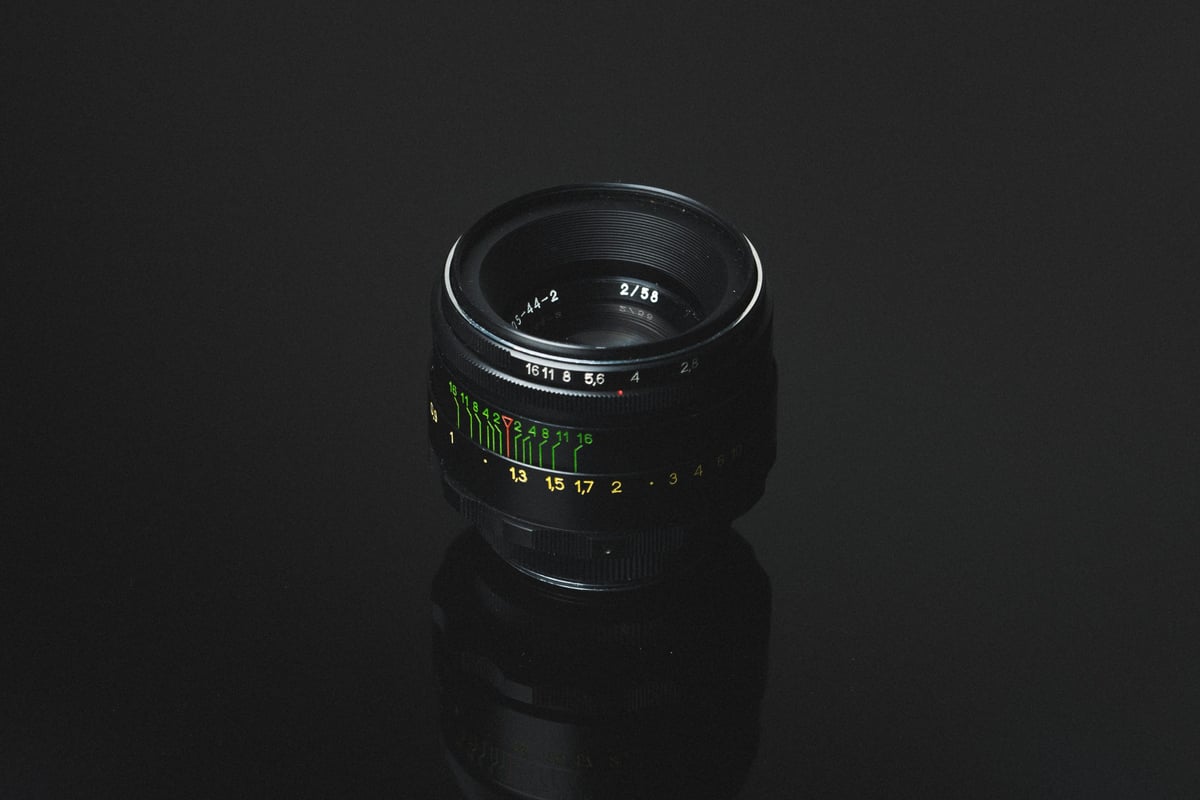
Helios-44-2 Prod Shots
Shot with the X-T2

Helios 44-2 First Impressions

While the Helios lens series offers many options, the 44M-2 ranks low on my favorites list. Nonetheless, it produces some of the most striking renderings I’ve seen.

The main drawback of this lens is its “preset aperture,” which can make aperture selection a nuisance. Essentially, the aperture has two rings: one for setting the aperture limit and another for adjusting it within that limit. If you set the aperture limit at f5.6, the secondary ring allows you to shoot between f2 and f5.6 without ever passing f5.6. While this feature may seem cool, the secondary ring doesn’t indicate the actual aperture value within that range, making aperture adjustments unnecessarily complicated.

However, if you’re filming a video and need a de-clicked aperture with a preset limit, the 44M-2 may be an ideal choice. Some companies even repack these optics into cine housings for this very purpose.

ISO 800, f2 1/160

Like other vintage lenses, achieving optimal results with the Helios 44-2 requires careful attention to detail. While this lens has decent sharpness and stunning bokeh, it flares excessively compared to many modern lenses and is prone to spherical aberrations.

Shot with the X-Pro 2.

For this shot, I was at about the minimum focus distance from my daughter in her car seat, focusing on her eyelids. I was somewhere around f5.6. 

Corner To Corner Sharpness

Center Sharpness is possible on the Helios 44M-2, but the edge performance is pretty bad, and the corners are even worse. 

This is not unusual for old 35mm lenses being engineered to accommodate the microlenses found in modern digital sensors, especially full-frame ones. Perhaps curved sensors will eventually solve this problem.

On an APS-C camera, the crop eliminates the worst of it, but you’ll still notice it in the extreme edges.

The soft edges in images captured with the Helios 44-2 are not necessarily due to the lens’s inability to produce sharp details at the edges and corners. Rather, they are slightly out of focus due to the lens’s significant spherical aberrations. While it’s possible to focus on the edges, doing so will cause the center to be out of focus.

Increasing the f-stop increases the depth of field, resulting in sharper corners. However, it’s essential to note that using a higher f-stop can also lead to diffraction, potentially resulting in a loss of overall resolution. Thus, aperture adjustments are necessary to mitigate this effect, and you’ll generally find a sweet spot at around f5.6 to f8 with most cameras.

The issue with soft edges is less pronounced the farther the subject is from the lens, as a greater distance results in a greater depth of field at infinity. Here’s an example of an image taken with the Helios 44-2, straight out of the camera, on an APS-C XT2 at f/5.6. Considering the price point of under $100, the image quality is decent for an APS-C camera.
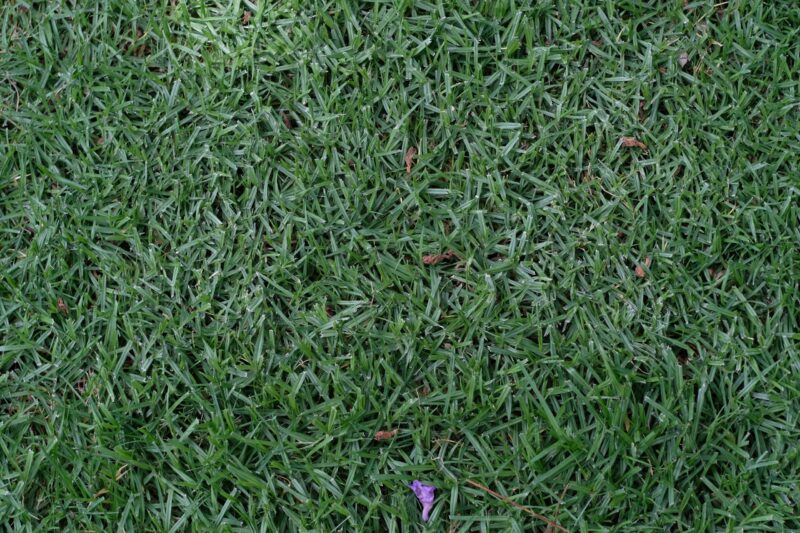
Below is a sample that focuses on the edges of f2. You can see the center falls out of focus, and there is very little distortion. This was a full-frame shot on the A7rII.

Helios 44-2 Sharpness Review

In terms of overall sharpness, I’ve yet to get an image that has blown me away as the Fujinon 56mm f1.2 does, especially wide open. However, it still can produce some very nice detail at the right f-stop (around f4-f8) and at the right distance. What’s really nice about this lens is the smooth rendering.

Diffraction & The Sweet Spot

I like to do these diffraction tests because they always help me find the lens’s sweet spot. Typically, diffraction is influenced by the camera sensor’s pixel pitch; however, some lenses still perform better than others.

At f/2, even several feet from the wall, the lens is hardly usable unless you’re willing to sacrifice sharpness for a big bubble bokeh and shallow depth of field.

F2.8 is a significant improvement over F2, and between F4 and F8, the lens seems to give the sharpest results.

Helios 44-2 Diffraction Test
Fujifilm X-T2 with the Helios 44-2 | FBI building, Westood Los Angeles

Bokeh / Swirling Cat Eye Effect

The Helios 58mm f/2 lens is known for its swirling bokeh, especially the 44M-2. This, of course, won’t appear in every image; you sort of have to get the distance and focus just right to get the out-of-focus area to swirl this crazy. 

You also won’t get as much of the swirly effect if you’re shooting on an APS-C camera. Below is a sample from the Sony A7R II’s full-frame sensor.

Helios 44-2 Swirling Bokeh Sample.

Here are full lens bokeh samples using the Mitakon M42-Fuji FX Speed Master. This allows for a full-frame circle of projection on an APS-C sensor. The speed master adds four elements, slightly reducing clarity and contrast.

Helios 44-2 Bokeh Sample with Mitakon Speed Master

Flaring & Ghosting

Flaring and ghosting on these retro lenses is usually quite the spectacle, and the 44M-2 is no exception. My lens doesn’t specify whether it’s multi-coated, but honestly, I don’t mind what it’s doing here.

What’s cool is that you get that classic ring pattern lens flares that modern lenses typically don’t produce. 

I was somewhere around F5.6 on the left. On the right, you can see what flaring becomes at f16.

The flaring is very interesting compared to other lens models. The 44M seems to bloom and glow more, and the 44-4 maintains a bit more clarity.

Helios 44-2 Flaring Sample.
Helios 44-2 Flaring Sample
Flaring Sample
Flaring Sample
Flaring Sample
Flaring Sample
Flaring Sample

Helios 58mm F2 44M-2 Review | Bottom Line

These old Helios lenses are by no means amazing compared to what you get with some of the new stuff; this mainly comes down to the build quality.

Obviously, we’re not seeing modern coatings, and you’ll have to work with the flaring these lenses produce. Corner-to-corner sharpness isn’t that great, but you can get some nice results in the center of the image. What really makes this lens special is its buttery-smooth rendering at the faster apertures.

That doesn’t mean the Helios 44M-2 sucks. They don’t, far from it actually, and they can be a lot of fun on APS-C cameras where you’re cropping for only the best parts of the lens.

Fujifilm X-Pro 2 with the Helios 44-2.

The 44-2 lens exhibits impressive center sharpness and adequate micro-contrast, while its corners can resolve details when shooting subjects from a distance and using a stopped-down aperture. Additionally, the lens creates beautiful, usable patterns through flaring, enhancing its overall appeal.

Overall, the lens offers unique image rendering characteristics that are not easily found in modern lenses, all for a reasonable price of approximately $60.

However, the lens’s preset aperture can be a drawback, as it is a design flaw from the early ’80s that makes it difficult to determine the current aperture setting. As a result, the 44M-4 or 44M is often preferred. Despite this, the 44-2 looks slightly different from the other two lenses.

Is the 44-2 the best Helios lens?

Although I currently own only three Helios lenses, I can already tell that the 44-4 lens produces sharper images and better contrast than the 44-2. This difference is particularly apparent at higher apertures, and I have tested it across three separate copies of the 44-2.

While I am still testing and comparing the 44-4 to the 44-2, I plan to write a full review eventually. It is possible that the 44-4 may have other flaws absent in the 44-2, but at present, I would recommend the 44-4 over the 44-2 unless one desires a de-clicked aperture or anamorphic conversion.

Moreover, I have heard that the 44-7 lens is quite remarkable if one can acquire a copy.

Helios 58mm F2 44-2 Sample Images

Many of the images here are colored with the Core Color Presets.

Helios
Fujifilm X-T2, Helios 44m-2
0
0
19
0
0
Alik Griffin

A professional video editor, and photographer with a Bachelors in Film studies from UCSD. Based in Los Angeles, I have created commercials, trailers, and other video content for various clients and platforms since 2005. I also love to write about my passions and share my insights on my blog.

Related Topics
  • Fujifilm X-Pro2
  • Fujifilm X-T2
  • Helios 44-2
  • Lens Reviews
  • m42
  • Reviews
  • Sony A7rII
  • Vintage
Previous Article
  • Blog

Mastering Manual Focus | Fujifilm XT2

  • Alik Griffin
  • April 24, 2025
View Post
Next Article
Best SD memory card for the Canon SL2 / 200D
  • Memory Card Buffer Tests

Fastest Memory Cards For The Canon SL2 (EOS 200D)

  • Alik Griffin
  • March 24, 2024
View Post

Subscribe

Subscribe now to our newsletter

You May Also Like
Pure Cinema
View Post
  • Blog
  • Featured
  • Lens Reviews
  • Reviews

Viltrox TCL-X100VI Review | A Budget-Friendly 50mm Upgrade

  • Alik Griffin
  • February 21, 2026
  • No comments
Thypoch Simera 75mm f1.4 Review
View Post
  • Blog
  • Featured
  • Lens Reviews

Thypoch Simera 75mm f1.4 Review & Sample Photos

  • Alik Griffin
  • February 18, 2026
  • No comments
Kakurajima View
View Post
  • Blog
  • Featured
  • Lens Reviews

Viltrox WCL-X100VI Review | A Budget-Friendly 28mm Upgrade

  • Alik Griffin
  • February 17, 2026
  • 2 comments
Sony A7V Announcement
View Post
  • Blog
  • What's New

Sony A7V – They’re Back In The Game

  • Alik Griffin
  • December 30, 2025
  • 4 comments
14 comments
  1. Cheese_pop says:
    June 28, 2019 at 11:21 am

    what film preset do you use for this photos? it’s look like old 35mm film camera ;D

    Reply
    1. Alik Griffin says:
      June 28, 2019 at 4:03 pm

      Some were VSCO, some where just Classic Chrome which I gave some adjustments to and faded.

      Reply
  2. Dominik says:
    July 24, 2019 at 4:05 am

    I use this Helios 44-2 with an MTF body and consider buying either Meike 35mm f1.7 or 7Artisans 35mm f1.2 because 35mm seems more suitable to portrait photography. How does the Helios stack up against these two Chinese lenses when it comes to center sharpness? I do not care about the edges or corners but the center is essential. Many thanks in advance.

    Reply
    1. Alik Griffin says:
      July 24, 2019 at 5:58 am

      The 7Artisans 35mm f1.2 is not sharp at all. The Meike is decently sharp and some of their lenses are very sharp, I think it depends a little on copy to copy variations. I can’t remember how sharp the Helios is. I don’t remember it being very sharp wide open. The Meike might be the winner there.

      Reply
      1. Dominik says:
        July 25, 2019 at 1:32 am

        Thanks a lot! I will go with the Meike.

        Reply
        1. PaulC says:
          February 19, 2020 at 8:48 am

          If you have followed to this part of the thread – you may see very different answers to the question today – compared to the answers you would have got only 5 years ago. Just rememeber this if you have come here after looking at older postings elsewhere.

          Over the last 3-4 years, the arrival of fast, modern, inexpensive Chinese and Korean lenses with native mounts for M4/3 and Fuji APS mirrorless from Mieke, 7-Artisans, Kamlan, Cheecar/Fujian and others in the $30-120 USD range have been a game changer over adapting old film camera lenses. You get a compact modern lens, with multicoating, free of fungus and dust – as well as avoiding the need for a lens adapter which increases rigidity in the system. This means a lighter weight, smaller size piece of kit – and to me, means that I can carry more lenses in my camera bag than before. It also means – no long evenings searching eBay for dubious quality 40 year old film lenses !!

          I have one of theses new lenses in 8mm f2.8, 25mm f1.8, 35mm f1.6 and 50mm f1.8; giving me a prime les that covers the film-era “full-frame” perspective from 16mm to 100mm. All share the same image quality of old lenses – in that without expensive & complex internal lens arrangements and high density of aspheric glass of new lenses from Olympus, Panasonic and Fuji, they have central sharpness and moderate edge softness when at wide aperture. I see these faults as their positive “characters” to be used creatively, rather than their flaws . However are all certaily good enough for full field sharpness in 10×8 prints or HD computer screens when the aperture is closed to between f5.6 and f8. They are all small, and take up the room of 2 legacy film era lenses.

          As with legacy lenses, and indeed all lenses, the contrast and colour in your pictures is helped significantly by using the correct geometry lens hoods.

          I agree with Alik – The “ultra fast” new lenses for M4/3 and APS Fuji with apertures of F0.95 to F1.4 look fun – but they all make too much of a sacrifice in acuity and contrast or colour rendition to get such wide apertures. And – you can have such a thing as “too little” depth of field in a composition ! This is just the same issue as in film era lenses – where the “basic” F2.0 standard lenses were often sharper than the expensive F1.2 and F1.4 models.

          Each of the new lens makers has a “signature” quality factor: Meike and 7-Artisans have great mechanical build, and compete very closely on price. Personally, I like the Meike approach in favouring high microcontrast in the image with “film style colour balance” because, to save time later, I like to shoot JPEGs and get the picture right “in camera” (keeping RAW images only for low light or obviously challenging lighting). But since post-processing can fix near anything today, don’t let this unduely sway your choice.

          The only thing I miss about my old “film-era” lenses – is that they had “click-stop” aperture rings. You could adjust them without taking the camera from your eye. Modern lenses are built to help film-makers and so have smooth “clickless” aperture rings – so you may need to take the camera from your eye before shooting. Personally – this is no hardship – since if I wanted fast shooting I would be using my dedicated AF / stabilised zoom lenses.

          This is why I like Alik’s website – because we get to read about these newer lenses tested in the real world – and see the results as photographs too. Just remember – any lens has “faults” if you zoom in to see each pixel – so read any reviewer’s comments from the photographic standpoint – not that of an optometrist. Given the wide range of inexpensive lenses now on offer – we really need good reviewers to try these lenses out to help make choices —- so keep up the good work Alik !

          Reply
          1. Alik Griffin says:
            February 22, 2020 at 10:13 am

            Thanks Paulc I was actually talking about this in a review I recorded. These little lenses are usually better than adapting. I’ve gone through 5 helios lenses and of those 5 only 2 are still usable. They just have too many issues but those Chinese lenses are great.

  3. Maksim says:
    November 14, 2019 at 4:23 am

    Lens Helios 44-2 With adapter for camera

    Reply
  4. Michael Vanevenhoven says:
    April 5, 2022 at 8:36 pm

    I have a Helios 58mm f2 on the way. A gift from a friend. I need an m42 to Nikon F converter. Hopefully something that will allow focus to infinity. Suggestions?
    Thank you

    Reply
    1. Alik Griffin says:
      April 13, 2022 at 4:15 am

      I’m not sure if there are adapters that will work with infinity on a Nikon F system. Might have to do some searching for that. I used to use the Fotodiox on my Canon 5D and it worked well.

      Reply
  5. Retro Mech says:
    October 3, 2022 at 10:05 am

    Really Great Work, Awesome Article and Review of The Helios 44-2.

    Reply
  6. Doug Waugh says:
    April 15, 2024 at 7:57 am

    Hi, Alik. Terrific write-up. Question about the 44-2. Using it on a Sony A6600 to film a podcast in a controlled light environment. The camera is 11 feet from the talent, and the talent is seated approx 6 feet in front of a fireplace background. Trying to find the best settings on the 44-2 to focus the talent’s face but adequately blur the fireplace. Just wondering which of the aperture presets you’d start with to achieve these desired results. I don’t mind blurred edges at all, and I have a bumper sticker framed above the fireplace in the center that I’d like to be blurred but still legible. That’s been my biggest challenge working with this lens: Getting the talent razor sharp while blurring the background just enough where viewers can still make out what the bumper sticker says. I keep toying with the preset aperture, but keep getting frustrated with the results. And let’s just say that the problem isn’t the lens. It’s quite impressive and has the look I’m going for. I just think I’m not getting the best out of it because of these damned preset aperture settings. Blessings.

    Reply
    1. Alik Griffin says:
      April 16, 2024 at 5:51 pm

      I’ll usually set the preset between f2 and f2.8 or f4. But it’s tricky because once you preset the aperture, the numbers don’t line up; it’s very unintuitive. But you could also just set the preset to be at f2 and leave it. But you might want f2.8 for sharper images.

      Reply
  7. NickTrop says:
    July 6, 2025 at 1:22 pm

    I have the 44-4 version of the Helios. I paid a little more for it because it was converted to fit a native F-mount lens in Russia. However, I didn’t trust the mod, thought it might mess up the mount on my DSLR (which is also why I didn’t sell the lens—didn’t want to mess up someone else’s camera) and it was a shelf queen for years until I recently bought an FF mirrorless and now use it with an F-L mount adapter. I really like this lens paired with the modern Lumix S 50mm I have. That one is technically great but also clinical (in fact, I leave a 1/8 black mist on it like a UV to take the edge off it.) The Helios is, errr, not “clinical,” almost too much character, note “almost.” So one “clinical” lens and one “character” lens in the 50mm range. As far as the delimiter is concerned, I don’t see why this bugs people so much. Years ago, when I still shot film, I had a Jupiter 9. Awesome portrait lens. I preset the aperture to what f-stop I wanted to shoot at in advance, say f4. I would open it up wide for framing and focusing because the viewfinder was dark at f4. Then I would just rotate the aperture until it hard stopped where the delimiter was set–“f4” or whatever, then “click.” I thought it was a rather useful and clever way to get around dark viewfinders for focus and framing on film cameras with dim viewfinders. Modern mirrorless cameras negate this need as the viewfinder is always bright. (I guess I see now, as I type, why this bugs people today…) I didn’t mess with any in-between stops between what the delimiter was set to and wide open to let the light in for focus/framing. Enjoyed reading your article. Thank you.

    Reply

Leave a Reply to Alik Griffin Cancel reply

Your email address will not be published. Required fields are marked *

San Clemente Sunset

Join The Newsletter

Featured
  • Thypoch Simera 75mm f1.4 Review
    Thypoch Simera 75mm f1.4 Review & Sample Photos
    • No comments
  • Kalina Flower FIeld
    Nikon Z 50mm f1.4 Review & Sample Photos
    • 24 comments
  • Biker Bro
    Viltrox Spark Z3 Flash – Review & Sample Photos
    • 3 comments
  • Mud Face
    Nikon Z 35mm f1.4 vs Nikon Z 35mm f1.8 S – Sample Images
    • 28 comments
  • Nikon Z 28mm f2.8 Review & Sample Photos
    • 18 comments
  • What is Micro Contrast
    Micro-Contrast, Is It Real? – Samples With Lens Comparisons
    • 17 comments
  • Nikon Z 40mm f2 Review | The New Compact King
    • 26 comments
  • Nikon Z 26mm f2.8 Review – A Little Miracle
    • 24 comments

Subscribe

Subscribe now to our newsletter

Privacy Policy | Licensing | About Me | Contact

Copyright © Alik Griffin Inc. 2025

Input your search keywords and press Enter.