
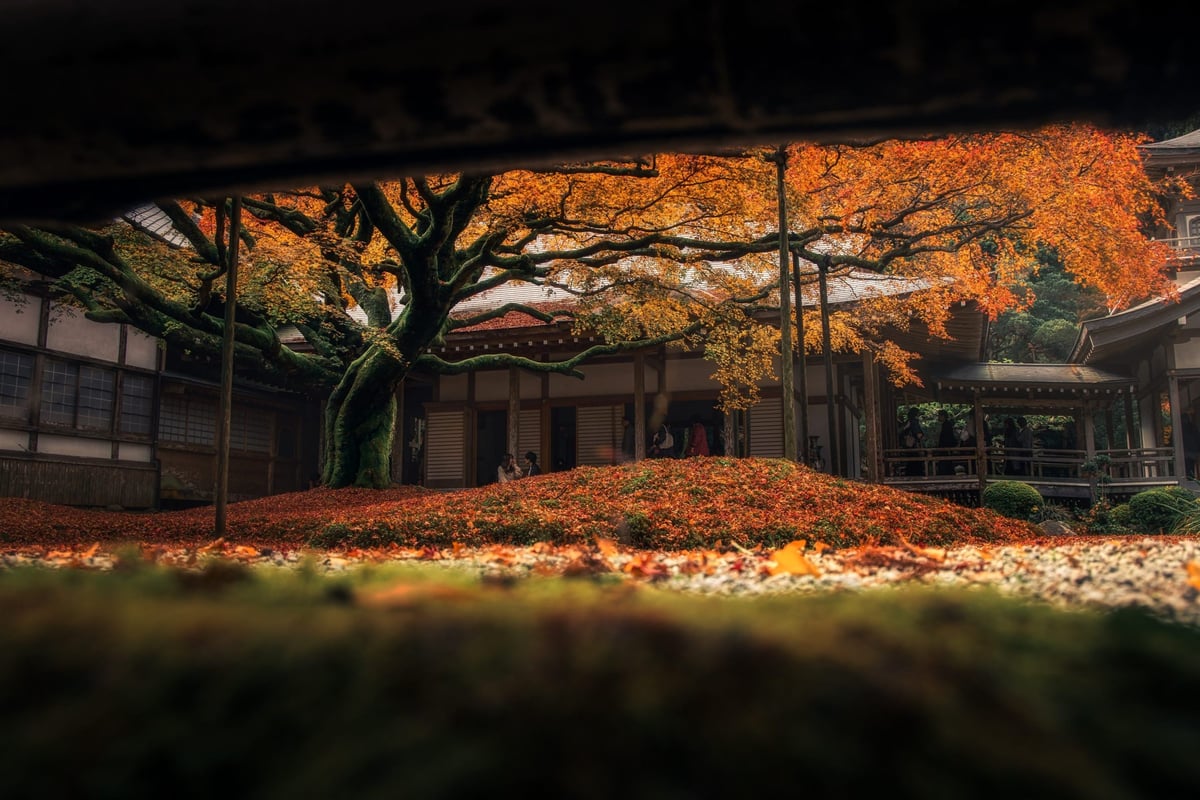
The Canon 24-105mm f4 is a true master of versatility. Its 24mm focal length is incredibly useful on the wide end, and it offers some really nice reach at 105mm on the telephoto end.
You can use this lens in just about any situation, whether you’re walking around, shooting landscape photography, travel photography, HDR, or events. The build quality is nice, and the color, contrast, and sharpness are very good. There are no serious flaws, aside from minor chromatic aberrations in the corners and some distortion. It’s the perfect high-end kit lens.
Lens Stats
Focal Length: 24-105mm Full Frame
Aperture Blade: 9-Blade Rounded
Aperture: f4-f22
Elements: 18 Elements in 14 Groups
Coatings: Super Spectra Coatings
Minimum Focus Distance: – 1.48′ / 45 cm
Focus: USM AF System
Stabilization: IS
Construction: Metal and Plastic / Weather Sealed
Filter Threads: 77mm
Pros: Price, Sharp, Versatile, Nice color and contrast, Fairly fast autofocus, Really good IS, Decent pop, Made in Japan.
Cons: Mustache barrel distortion at 24mm, pincushion distortion at 50mm and 105mm, vignetting at 24mm, vignetting at f4 at all focal lengths, and some chromatic aberrations at 24mm and 105mm.
Order Links
Canon RF 24-105mm f4L IS USM – Amazon / B&H
Complete List of Canon RF Lenses
Canon RF 24-105mm f4L Review | First Impressions
It’s been a while since I’ve experienced the greatness of Canon Zoom lenses. I own the trinity of zoom lenses for the EF mount, but the older editions are the 24-70 mm f2.8L I, the 70-200 f2.8 L II, and the 16-35mm f2.8L II.
All those lenses have been updated with the latest Canon coatings and optics, calibrated and tuned using the latest software, so I’m not exactly sure where this 24-105mm sits compared to the latest lenses. But man, compared to my older EF zooms, this lens is so much better. Sharpness is great, and chromatic aberrations are kept to a minimum, but the biggest thing—and most important to me—is that the color and contrast are outstanding. I don’t use zoom lenses for anything other than landscape photography, but I’m finding the 24-105mm versatility so good that it’s hard to leave it behind. Especially considering the beautiful color and contrast.
I also want to let you know that I shoot more with Nikon these days and have the Nikon 24-120mm f/4 lens. It’s a great lens, but I prefer the Canon 24-105mm because it renders colors and contrast better.

The Canon 24-105mm RF solves many of the issues I didn’t like with the older 24-70mm and the 70-200mm. The 24-70 always seemed to distort and stretch what was along the edges when at 24mm, and the 70-200 just lacked micro-contrast. The image always felt dead and boring. Bokeh, color, and sharpness were always nice, but there was no punch, no life. This lens is different.
24mm might not seem wide enough for landscape photography, but Lightroom has made stitching panoramas so easy that I often tilt the camera into portrait mode to get a wider vertical field of view. Then, I can shoot a panorama across the scene. This gives me a look similar to the ultra-wide lenses I’m used to shooting, and it’s easy to do.
Also, in situations where you’re not using ND filters and it’s not late enough for a tripod, the IS makes shooting those panoramas by hand incredibly easy, with very reliable results, as long as you don’t drop below 1/30 on the wide end of the lens.

The lens is still fantastic for situations other than landscape photography. It focuses very fast, has great color and contrast, and has nice bokeh if you can get your subject close enough to the lens.
Let’s get into the features and characteristics because it’s not all candy and sunshine with this lens.

Build Quality

The build quality is nice. Canon uses thinner plastic for the exterior shell to keep the lens lighter, but it still feels solid. It feels nice for plastic. It feels nicer than my Sony Zeiss zooms or even my Fujifilm lenses, which have aluminum shells.
If you’re concerned about the RF 24-105mm feeling like lightweight, cheap plastic like many cheaper lenses or Canon APS-C kit lenses, don’t be. This is a very high-quality lens, and it feels like an appendage of Robocop.


On Lens Switches
The lens has two switches, one for IS and one for manual focus. You have only one type of IS: either on or off. You don’t get the multiple modes as you do with the 70-200mm lenses.
The manual focus switch is incredibly useful when switching to manual for quick panoramas or landscape shots with ND filters.
A lock switch also keeps the lens set to 24mm while walking around.


On Lens Rings
The lens features three rings: one for zoom, one for focus, and one for custom configuration.
The zoom ring is the closest and largest ring to the camera. The next ring is for focus, and the furthest ring is the custom control ring, which I haven’t yet figured out a good use.
Auto Focus
This lens’s autofocus is quick, but it’s not the fastest lens I own. Still, it’s quick, and it won’t let you down. The best part about the autofocus is that it’s silent, making this lens outstanding for videographers.
There is a bit of aperture chatter, so if you have an on-camera mic, you likely won’t want to change the aperture while recording.

Focus-By-Wire Manual Focus
The 24-105mm uses a fly-by-wire system for manual focus shooting. If you’re coming for Fujifilm or Sony, this might seem horrible, but Canon has figured out how to make this system work perfectly. You don’t feel the focus steps as you do with the Sony and Fujifilm lenses; it’s buttery smooth, and you feel like you’re focusing on a manual lens.
I was concerned about this when ordering this lens, as the stepping you often get with manual-focus fly-by-wire lenses gives me anxiety when trying to fine-tune my focus, but this Canon is fantastic. Manual focus also works very well with the EOS R three-peg manual focus assistance, which is incredibly useful. I believe only Canon’s cinema cameras had that feature in the past, and they moved it over to the EOS R.
Focusing occurs internally, so there are no external moving elements when focusing from close to infinity.
Image Stabilization
Image Stabilization is good with this lens, and you notice it.
Canon claims it’s a 5-stop, but IS doesn’t work that way.
The IS in the RF 24-105mm works a little differently than many other stabilization systems I’ve used. If you’re used to an IBIS system, this Canon IS system works differently: it doesn’t lock the shot in place. Instead, it completely removes micro-shake while still allowing natural drifting.
While the locking IS is great for photography, it’s not so great for videography. The IS constantly fights you as you naturally pan or move the camera, which really ruins the shot when shooting video because you get all these jumps. The 24-105mm doesn’t fight you like this; it lets the natural drift happen.
As of 2025, I’m noticing more cameras taking this approach with their IBIS systems, allowing for more natural movement and reducing the need to fight so hard with pans and tilts.
I’m still finding that I can shoot at 1/30 comfortably, even at the long end of the lens, if everything is still. I could probably go slower on the wide end, but I don’t really like to, since no IS system is 100% reliable, and the purpose of IS was never really to shoot 1-second exposures handheld.

If you want reliably sharp shots at the long end (105mm), especially when shooting moving subjects or when you’re moving, you’ll need a shutter speed of at least 1/100, most likely faster, even with IS.
What IS on the 24-105 allows me to shoot handheld landscapes and panoramas without pushing my ISO too high, and shoot portraits on the long end without needing high shutter speeds. So you get a few more keepers when shooting at slower shutter speeds, but not 5 stops like advertised.

If you were a Buddhist monk who just finished a meditation session and immediately grabbed the camera to shoot a landscape photo, you might be able to pull off a 1-second shutter speed with image stabilization. But for the normal folks like you and me, at 24mm for landscape photos, you won’t want to drop below 1/30.


Canon 24-105mm F4L | Technical Overview

Sharpness
Corner-to-corner sharpness with the Canon RF 24-105mm f4 is nice. You get consistent performance across the frame at the lens’s different ends. You will see some minor sharpness falloff in the corners, but the lens performs best overall at 50mm.
This lens is very sharp, but I think the EOS R is holding it back. It could be sharper if it were put on a higher-megapixel camera without a low-pass filter. When I test other sharp lenses on my EOS R, they are about as sharp as this, so I see a cap on sharpness based on the performance of the EOS R sensor, which, by the way, is very good.
With higher-megapixel Canon bodies, you could see better center sharpness with the RF 24-105mm when using a higher-megapixel sensor without any optical filters. That could indeed be good news. However, the corners will likely not improve as they drop in sharpness compared to the center on the EOS R.
Center Sharpness
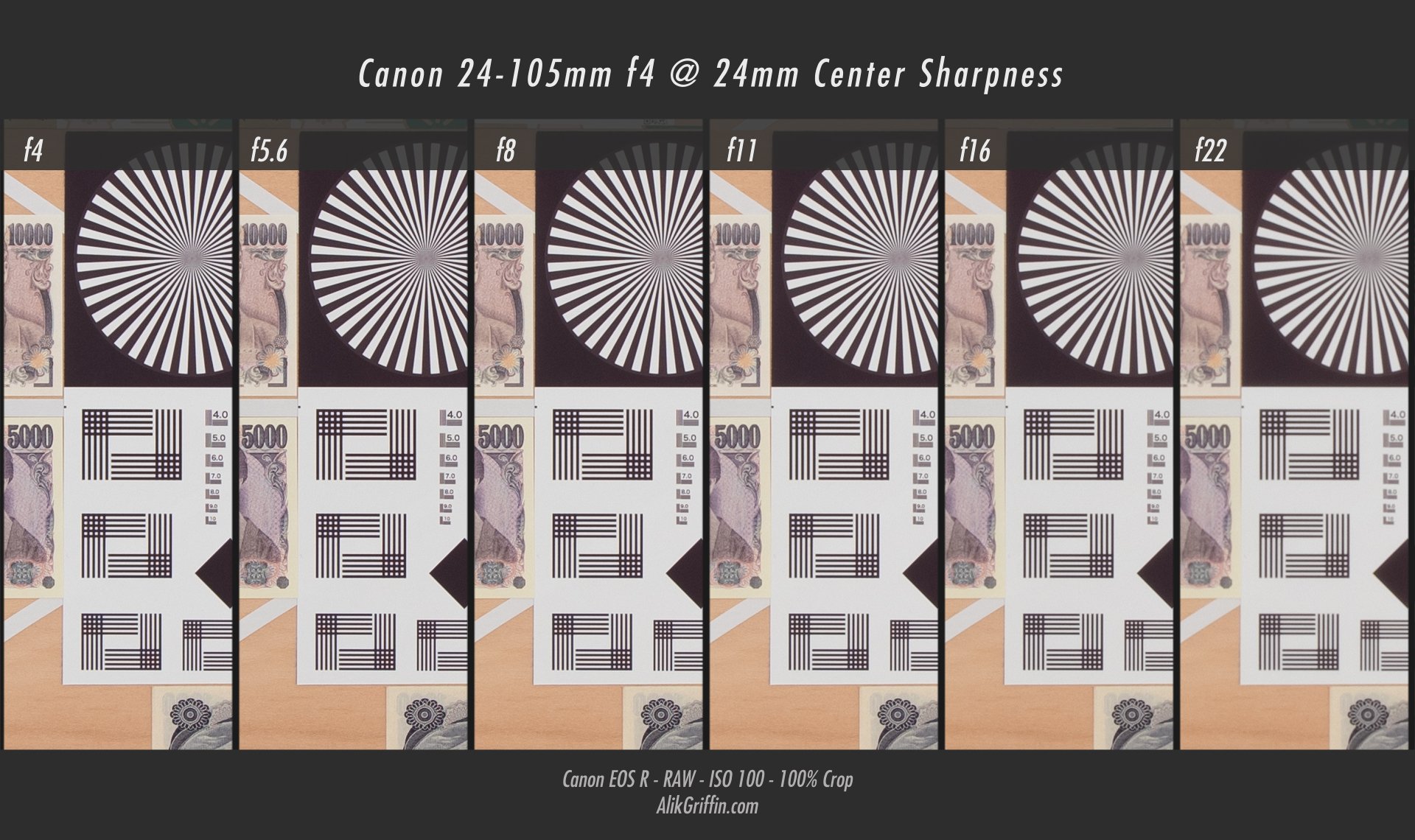
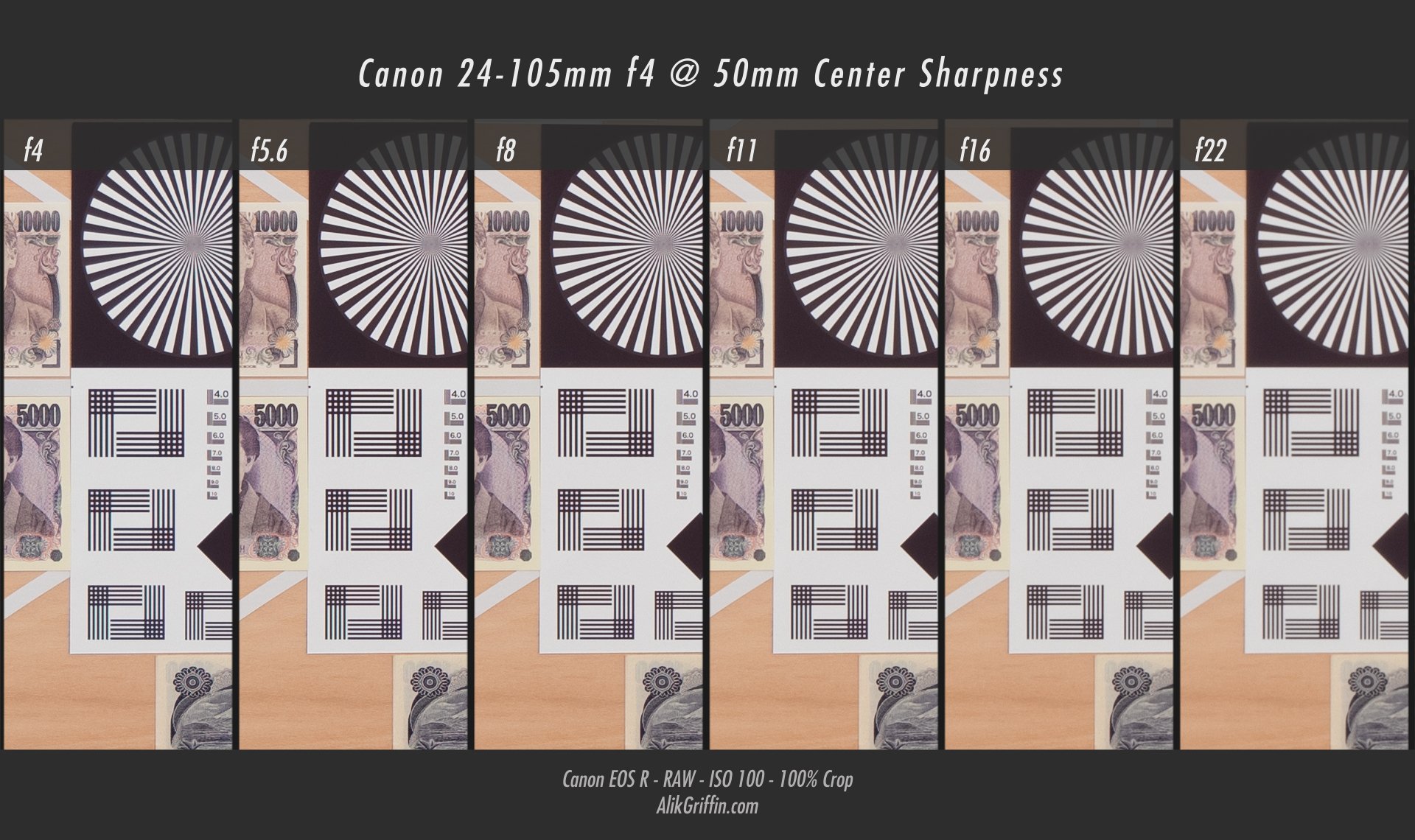
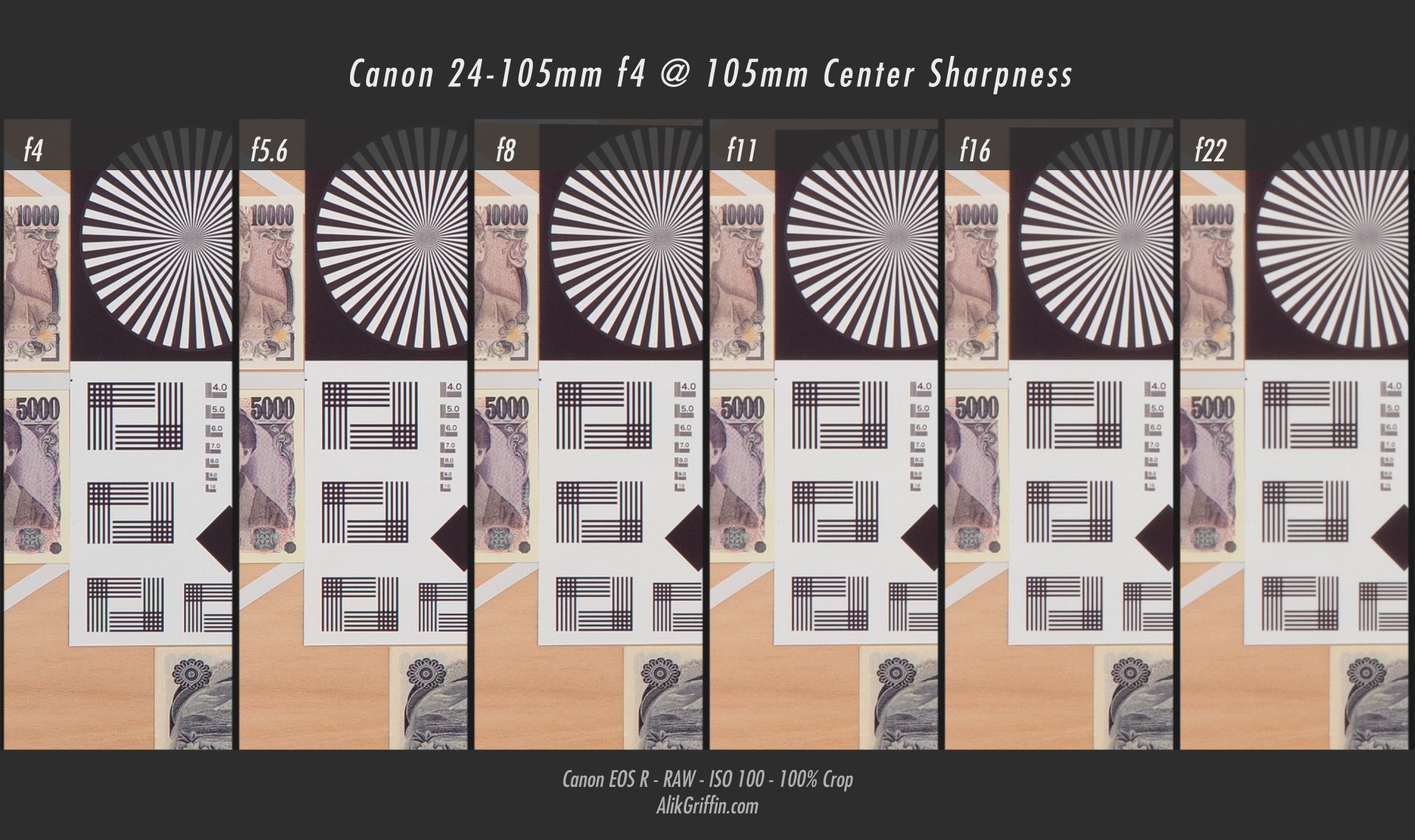
Center sharpness is really nice with this lens. I spent quite a bit of time comparing side-by-side shots in Lightroom to see which focal length was sharpest, and it’s all very close. I would say 50mm is a hair sharper than 24mm and 105mm, but it’s very difficult to tell. Maybe when we get higher-resolution cameras, it will be easier to see the difference.
Sharpness Sample at 24mm
Sharpness Sample at 50mm
Sharpness Sample at 105mm
Corner Sharpness
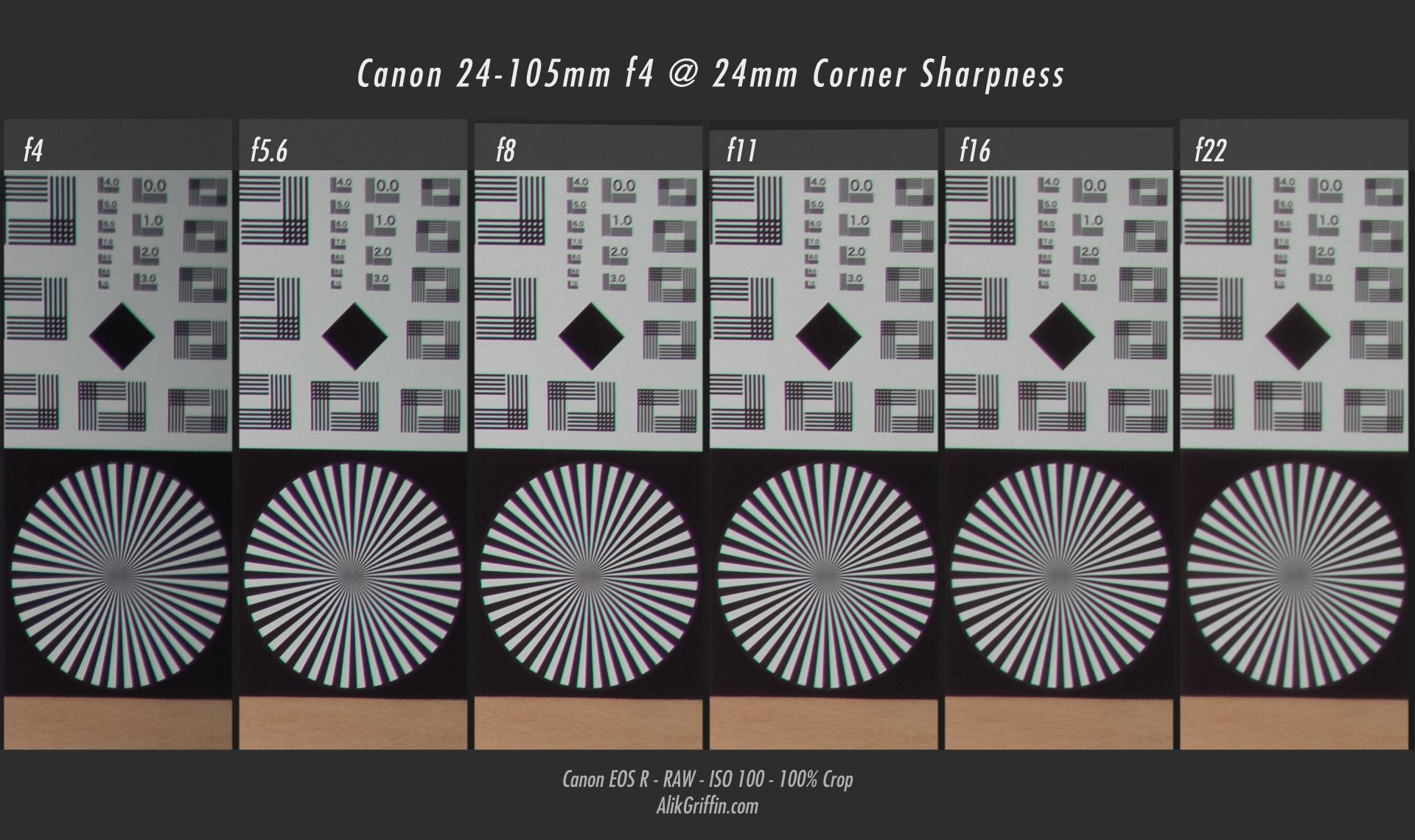
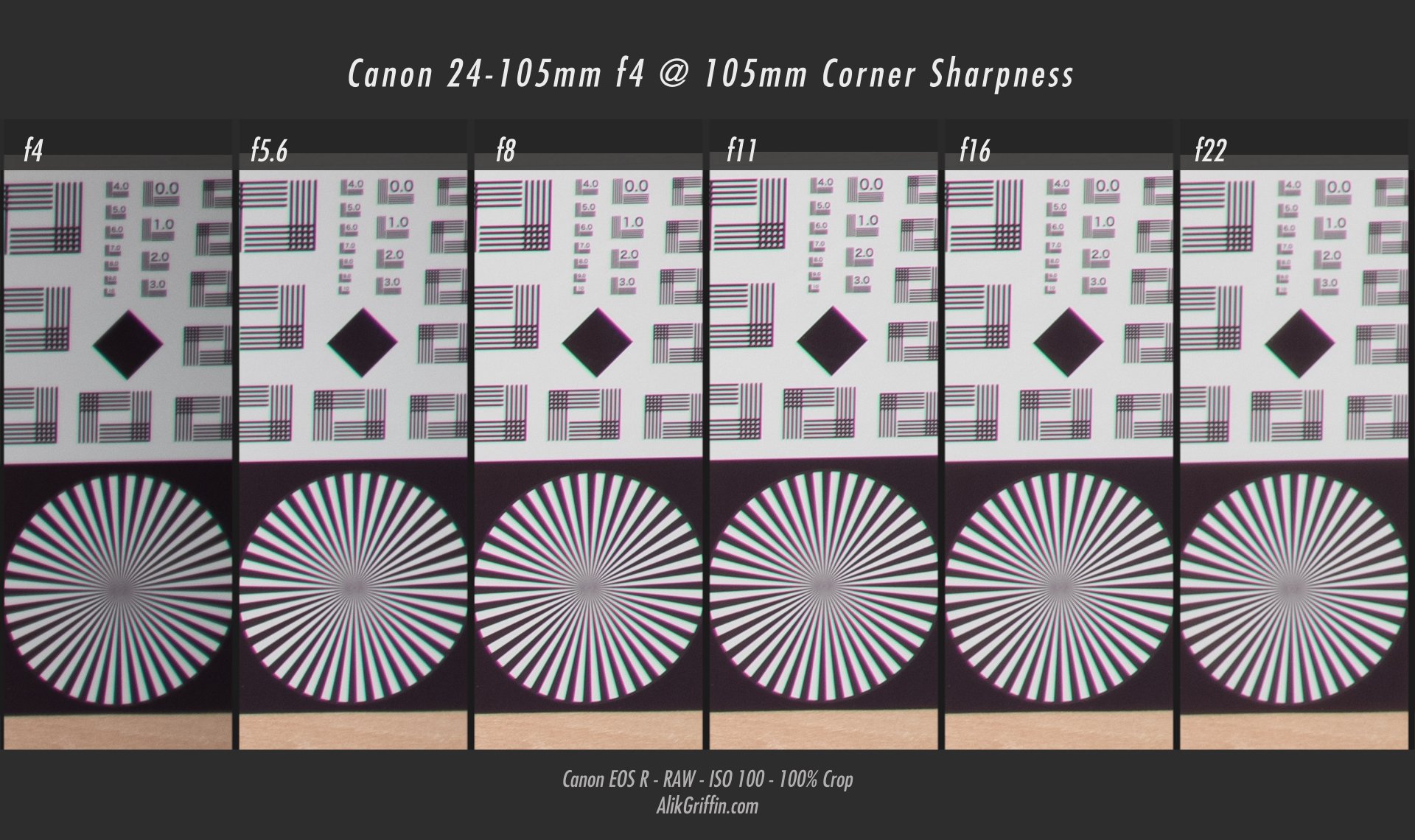
Looking at the corners, the 24mm is a hair sharper than the 105mm, but it’s also darker due to vignetting.
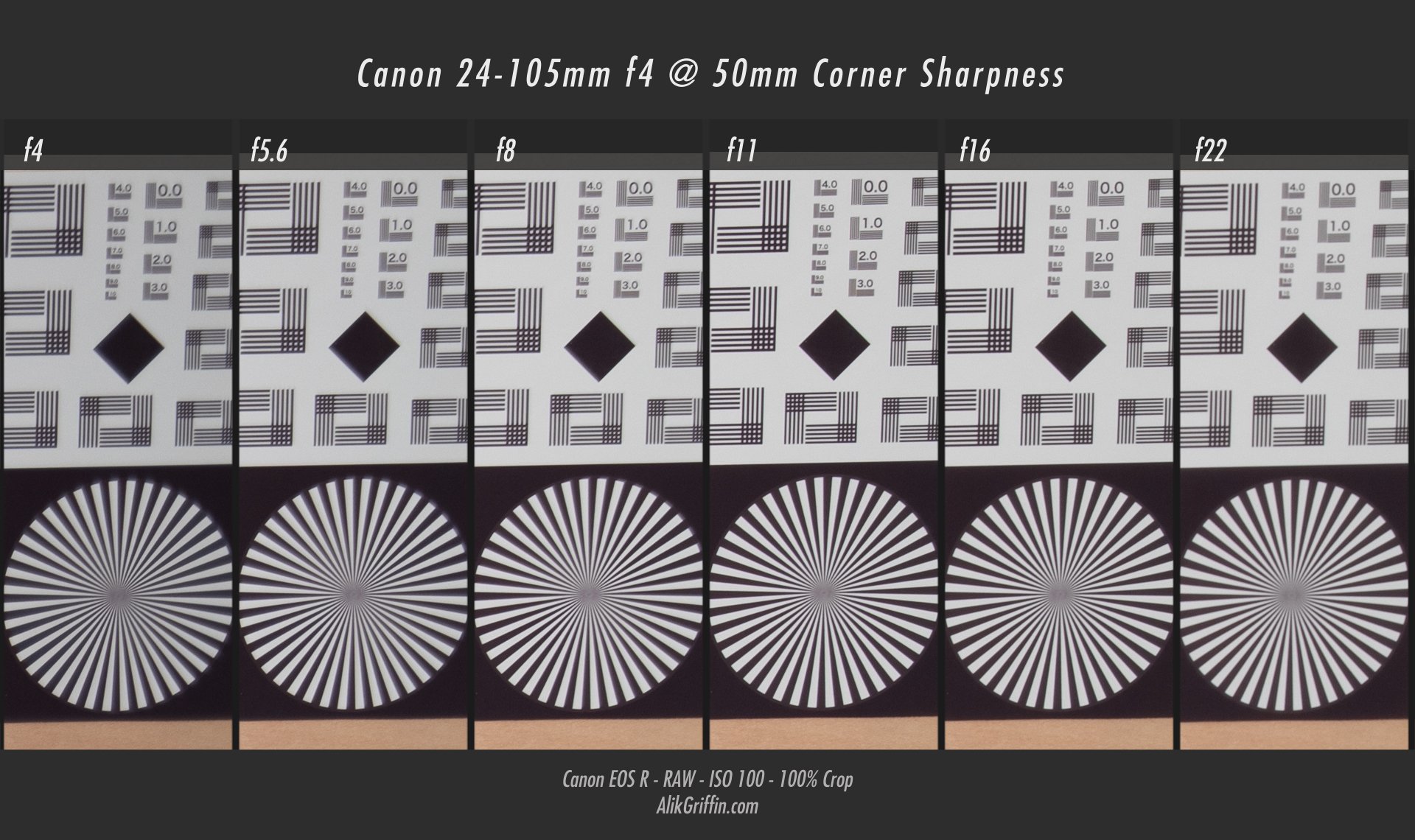
The corners are the best at 50mm. No chromatic aberrations, and you get the most detail.
The Canon 24-105mm f4 performs the best overall at 50mm. You get the best corner sharpness, the least amount of chromatic aberrations, and little vignetting and distortion. Regarding center sharpness, it’s extremely difficult to see a difference across focal lengths, but the closer you are to 50mm, the better the corners and edges will perform.
Corner Sharpness Sample at 24mm
Corner Sharpness Sample at 50mm
Corner Sharpness Sample at 105mm
Distortion
Distortion is all over the place with the 24-105mm. It’s only really noticeable at 24mm, where you get some pretty noticeable barrel distortion with a subtle mustache shape. You will need to use Lightroom or Adobe Camera Raw’s built-in lens profile corrections to remove this correctly.
At 50mm, the lens begins to show some pincushion distortion, and by 105mm, this becomes more pronounced. Again, Lightroom lens profile corrections fix it without any problem.
I’ve been shooting a lot of landscape panoramas at 24mm and have still been able to stitch them together in Lightroom without any issues, even without selecting a profile to remove distortion and vignetting. Possibly, Lightroom fixes these issues automatically during stitching, so it’s not yet a problem.
Distortion Sample at 24mm

Distortion Sample at 50mm

Distortion Sample at 105mm

Vignetting
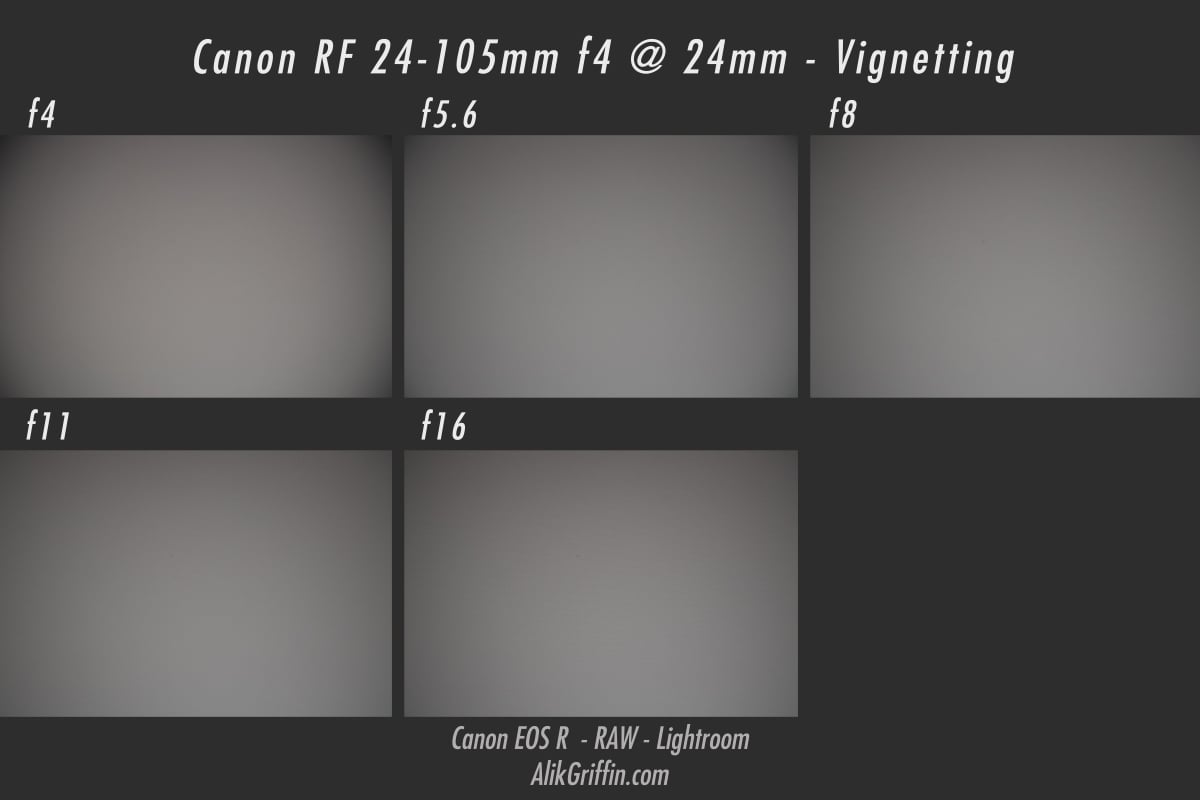
There is vignetting at all focal lengths of the 24-105mm lens up to f/4. You will see the most vignetting at the 24mm end, where it never really clears up unless you apply a lens profile correction. From around 50mm to 105mm, you still get some vignetting at f5.6, but it’s mostly gone by f8.
If you shoot a JPG, the camera will mostly correct for this.
Vignetting Sample at 24mm
Vignetting Sample at 50mm
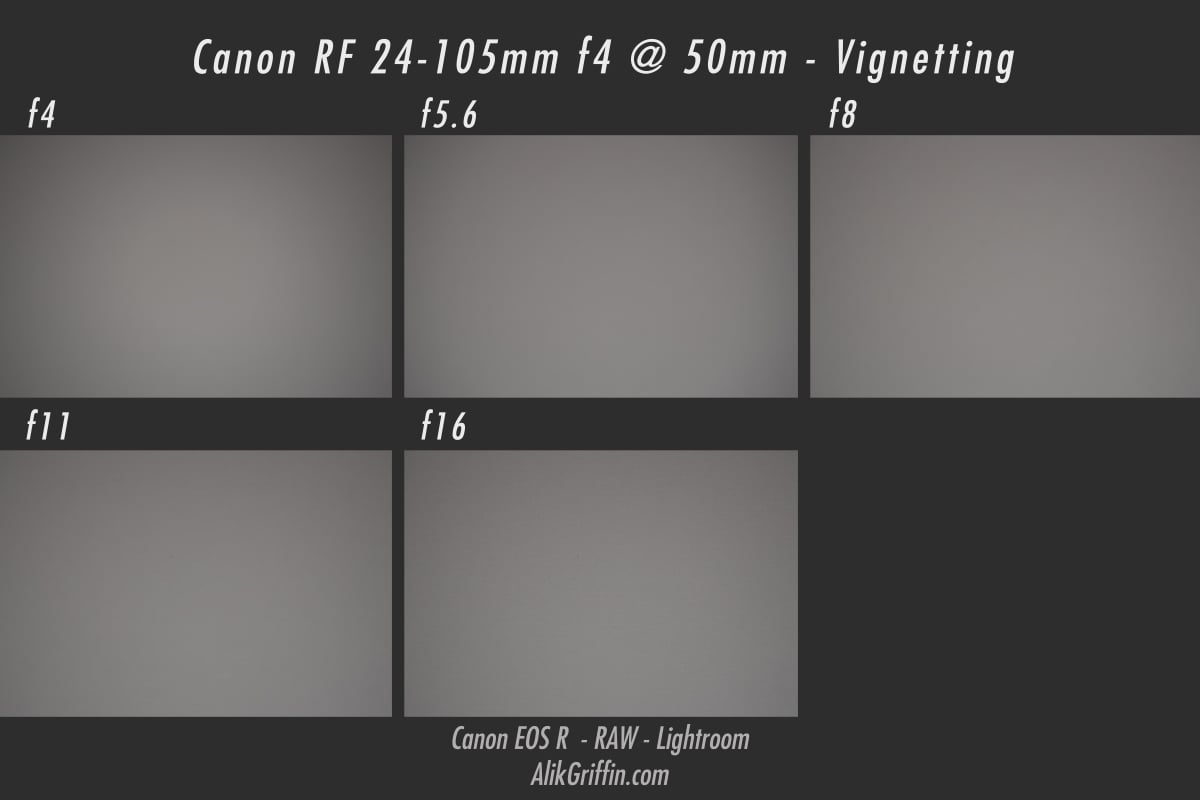
Vignetting Sample at 105mm
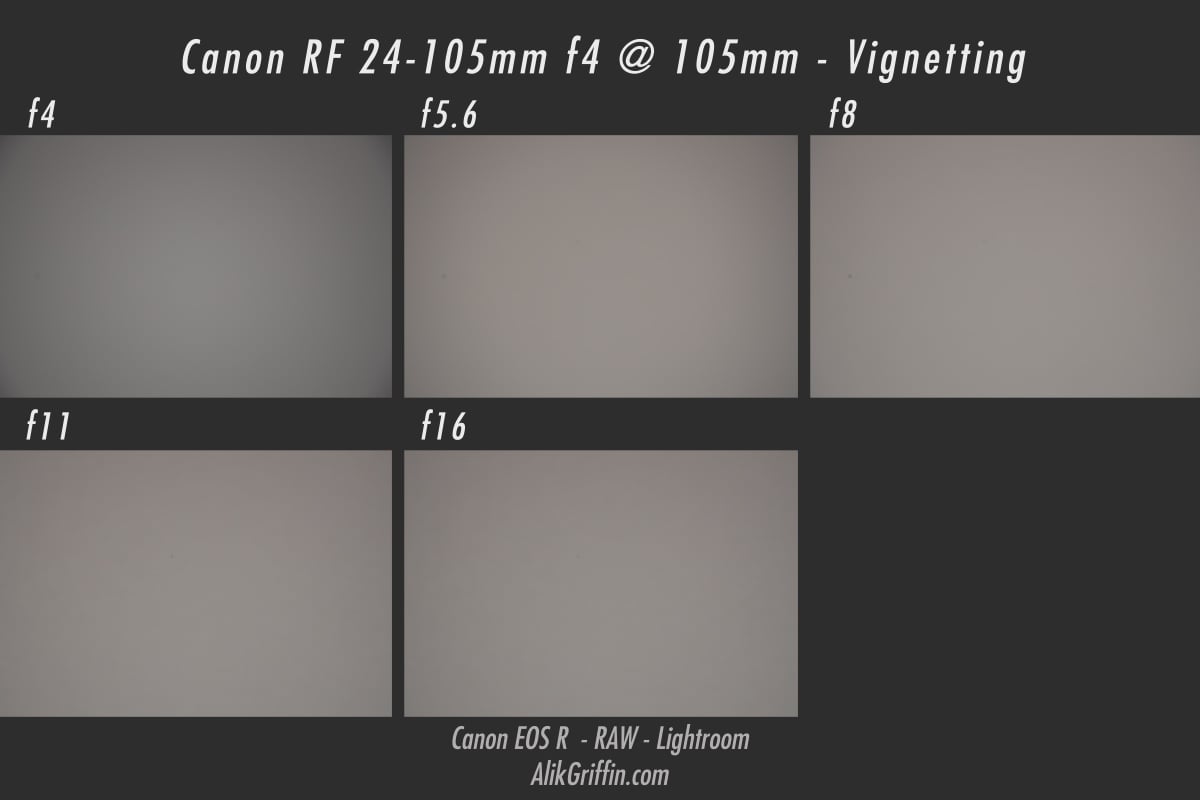
Chromatic Aberrations
There are some chromatic aberrations, mostly in the corners at both the wide and tele ends of this lens. At 50mm, there is almost no edge fringing on my charts.
To see how the corners fringe, check out the sharpness charts above.
I’ve noticed chromatic aberrations and fringing in my landscape photos at higher apertures when shooting tree branches against the bright sunset. It’s not very extreme, and usually, simply clicking the “Remove Chromatic Aberrations” correction in Lightroom gets rid of it.
So you will have to deal with some chromatic aberration as you move away from the center of the frame, but it’s not severe and is pretty standard for a zoom of this range.
Wide open, you will see some spherical aberrations that look like contrast smearing or ghosting. They are mostly confined to the corners and edges, and are more pronounced at 24mm and 105mm. Closing the aperture down to f8 pretty much cleans things up.
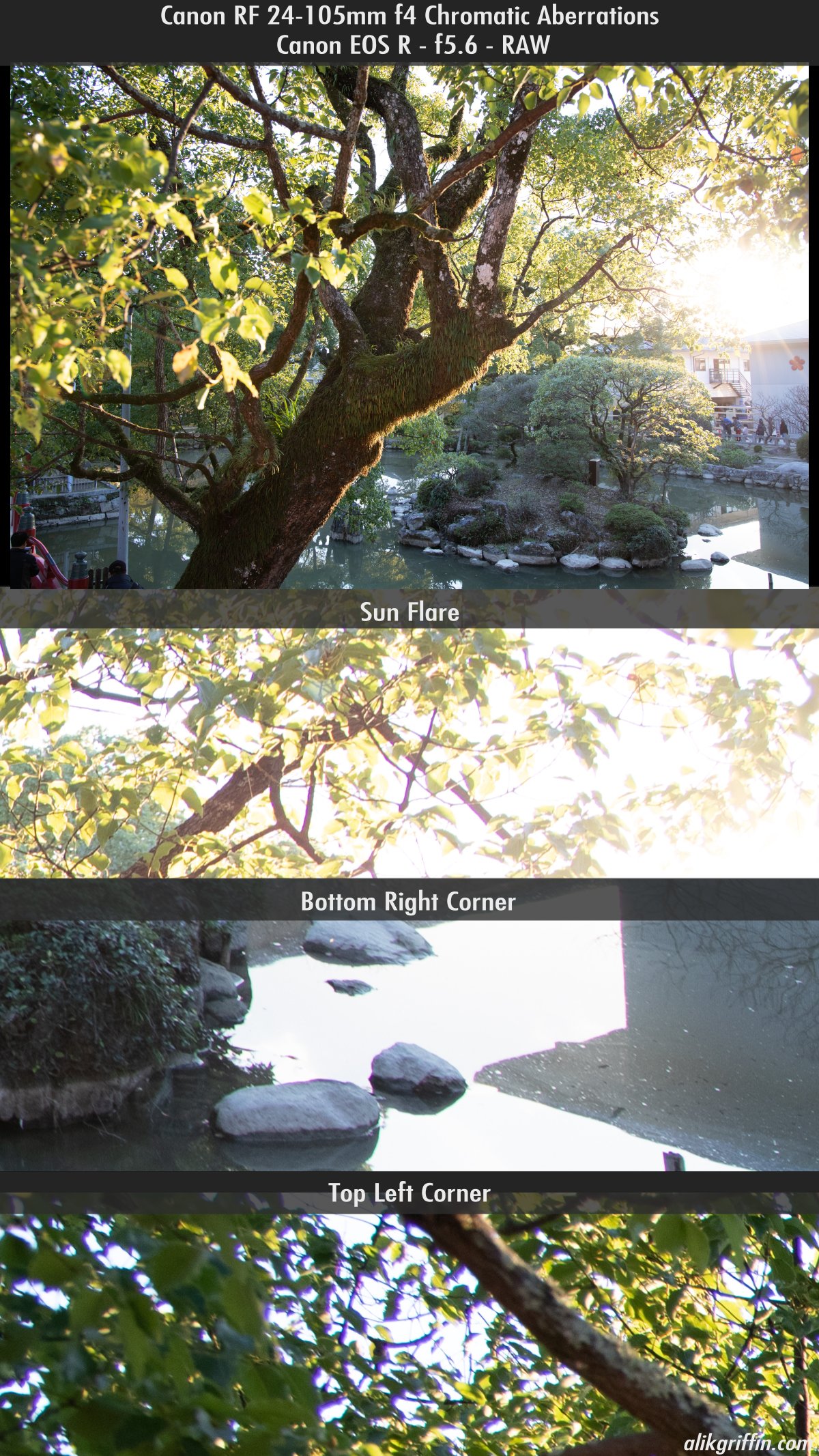
It’s been hard for me to find good examples of Chromatic Aberrations in my real-world photos. This is the worst, or I guess the best, example of CA issues with this lens. It’s pretty insignificant, but in this sample, clicking “Remove Chromatic Aberrations” did not remove the purple fringing. So, you would have to use the manual sliders to remove it. Adding +2 with the defringe slider in Lightroom removed this without any issues.
Art & Character
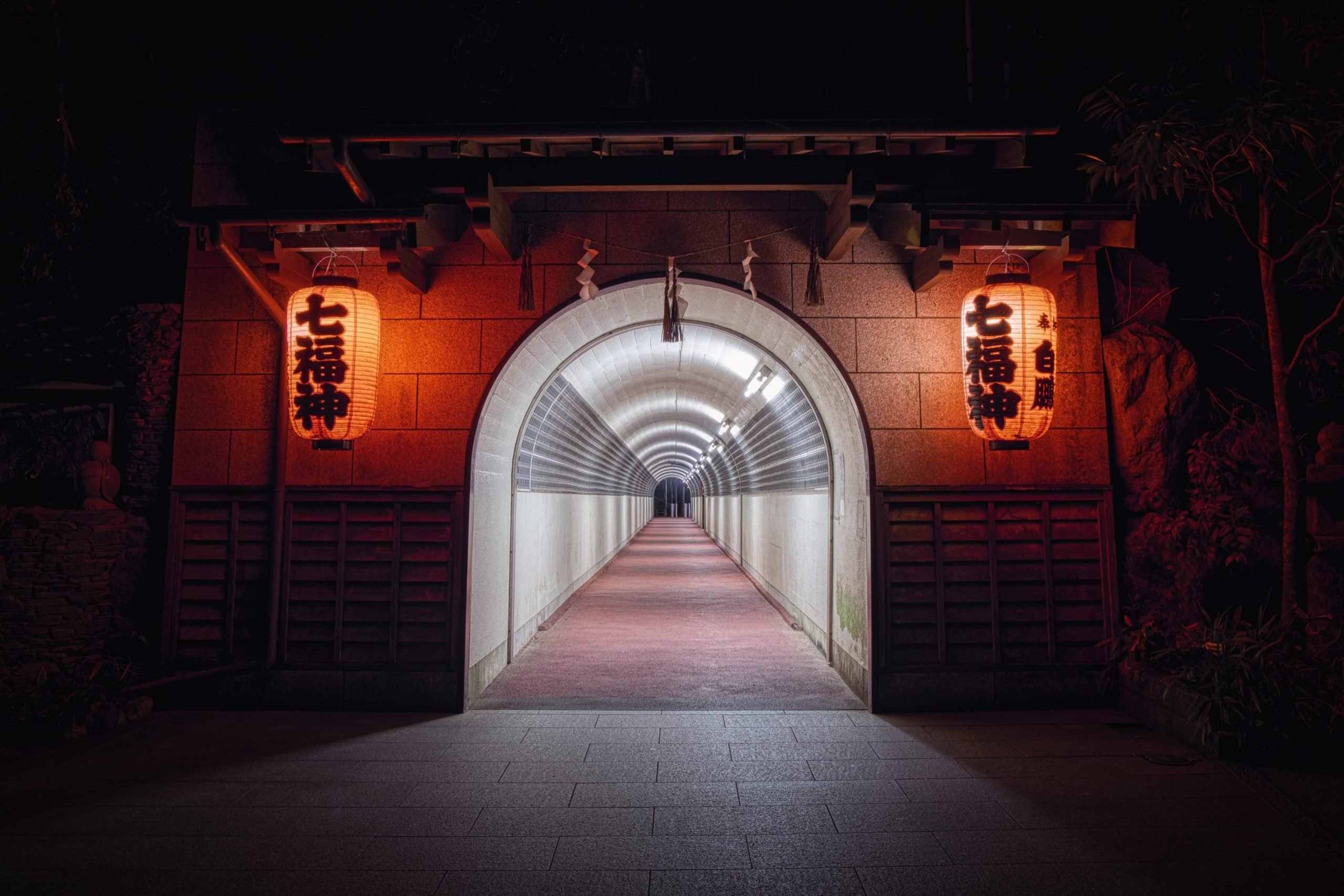
The color and contrast, combined with the buttery-smooth bokeh, surprised me. I went into this lens thinking it would be boring and lifeless, given the 24-105mm focal length and f/4 aperture. That is not the case at all.
Canon has found the perfect balance between contrast, color, pop, and attribute corrections. This lens actually performs better than many of my cheaper prime lenses, albeit it’s only f/4. It’s the first time I’ve shot with a zoom, and I can’t tell right away that I’m using one, especially at 50mm.

Bokeh
The 24-105mm f4 RF is only an f4 lens, so it’s not really a bokeh beast, but you can still get some really nice bokeh if you’re close enough to your subject.
As with any lens, the quality of the bokeh changes with distance. Up close, it’s buttery smooth and very creamy. Further back, it starts to get a little edgy with some minor soap bubbles on the highlights. Some would say it’s a bit nervous. But keep in mind, bokeh changes dramatically with distance, and there is definitely a sweet spot. The closer your subject, the better. This is really true with any lens.


Bokeh Balls
The bokeh balls look nice, with no onion rings and no serious cat’s eye bokeh. In some situations, you might see more pronounced soap bubbles, but it’s difficult to find yourself without looking at a 100% crop since all the variables need to be perfect. Even when everything lines up to produce those soap bubbles, they are small and insignificant. I wouldn’t consider this a soap-bubble lens, so I don’t know why I mentioned it.


Flaring & Sun Stars
The Canon RF 24-105mm f4 is resistant to flaring and ghosting, and you can shoot directly into the sun without blooming or killing your contrast.
When stopped down to a higher aperture of something like f11 to f16, you will see messy sun stars, but ultimately, it’s a little difficult to produce epic and very defined sun stars.


Contrast / Micro Contrast & Color Rendering
As always, the contrast and color are nice with a Canon L lens. Microcontrast is actually very nice for a zoom lens as well, but that seems to be the case when going with slower lenses. Less glass and thinner elements are always better for image pop.
I’ve been very impressed by this as someone who almost exclusively shoots primes.
Canon is using Super Spectra Coating, a legacy coating that has been around for some time, and the colors and contrast are still nice.
These are some straight-out-of-camera RAW samples taken with the Canon EOS R. They are untouched, except for scaling and export to JPG for presentation here.
Straight Out Of Camera RAW


Here are some B&W samples. There is some decent pop to this zoom lens. The images feel natural and don’t look like they’ve been shot through 20 UV filters on a car’s windshield. Something that often happens with high-element zoom lenses.


Canon RF 24-105mm f4L Review | Bottom Line

The Canon RF 24-105mm f4 is very sharp, with great image stabilization, outstanding contrast and color rendering, and a nice pop, though it has some minor yet easily correctable flaws. The build quality is solid, and the lens isn’t too heavy. The best part is the price.

For the landscape travel photographer, the Instagrammer who wants to shoot a reflection of the Golden Gate Bridge through a chain-link fence off his smartphone, or whatever the case may be, this lens is outstanding.


The lens’s main weakness is the f/4 aperture. Most of the photos in this article are landscapes and travel photos. I just haven’t been in love with any portraits I’ve shot. It’s fine to shoot portraits with an awesome backdrop of the environment. Still, when it comes to shooting beauty portraits, you’ll most likely want a faster lens (f2.8 or f2, something like that).
However, if you’re in a studio shooting models against a backdrop where it’s all about fashion, production design, and hair & makeup and less about bokeh, f4 is great. You’ll even get a little more pop with strobes, resulting in stunning, high-contrast, punchy images. I haven’t tested it yet, but I can almost bet you this lens has more pop than the 28-70mm f2, which will need massive glass to produce that aperture – something to consider if you plan on only shooting at f4 or f5.6 anyway.
Canon RF 24-105mm f4L IS USM – Amazon / B&H
I love this lens, and it’s the first zoom lens I’ve used in a long time that doesn’t make me feel like I’m compromising quality for versatility. I usually don’t say this in my reviews, but if you’re stepping into the EOS R system and don’t have the EF 24-105mm f4, you should seriously consider this lens!










Leave a Reply to Patrick McNeill Cancel reply