
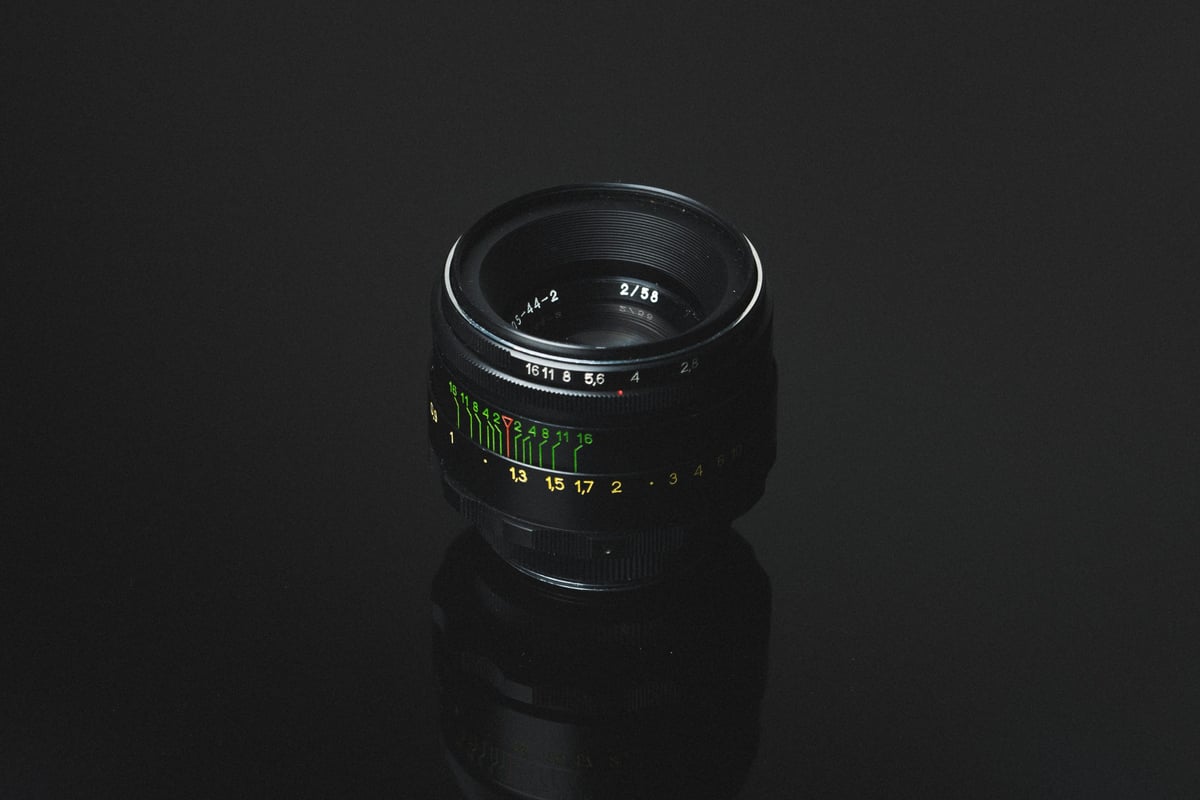
If you’re interested in building a vintage lens collection from the ’80s and ’90s, the Helios 44 series is an excellent starting point, known for its stunning, large, swirling bokeh.
The series encompasses several variants, each with unique characteristics. I personally own the 44M, 44-2, and 44-4, all built to emulate the Zeiss Biotar lens.
Overall, these lenses offer impressive quality and performance for the price, making them an excellent non-radioactive vintage lens option.
In this particular review, I will focus solely on the 44-2.

You can buy these lenses on eBay or even on Amazon. I’ve bought a few from Amazon and a few from eBay. I prefer Amazon personally, but sometimes it’s harder to find there.
I also don’t buy UV filters for these old lenses since it’s sometimes almost just as cheap to buy a new lens if anything happens.
You’ll also need an adapter, depending on your camera. I use the Fotasy adapters.
Lens
- Helios 58mm f2 44-2 M42 Mount Lens – Amazon
This lens is not radioactive.
Adapters
- M42 to Sony E-Mount – Amazon
- M42 to Fujifilm X-Mount – Amazon
- M42 to Canon EFM – Amazon
- M42 to Nikon 1 – Amazon
- M42 to M43 Mount – Amazon
- M42 to G-Mount – Amazon
Helios 44-2 Filter Size
The Helios 44-2 filter size is 49mm.


Helios 44-2 First Impressions
While the Helios lens series offers many options, the 44M-2 ranks low on my favorites list. Nonetheless, it produces some of the most striking renderings I’ve seen.
The main drawback of this lens is its “preset aperture,” which can make aperture selection a nuisance. Essentially, the aperture has two rings: one for setting the aperture limit and another for adjusting it within that limit. If you set the aperture limit at f5.6, the secondary ring allows you to shoot between f2 and f5.6 without ever passing f5.6. While this feature may seem cool, the secondary ring doesn’t indicate the actual aperture value within that range, making aperture adjustments unnecessarily complicated.
However, if you’re filming a video and need a de-clicked aperture with a preset limit, the 44M-2 may be an ideal choice. Some companies even repack these optics into cine housings for this very purpose.

Like other vintage lenses, achieving optimal results with the Helios 44-2 requires careful attention to detail. While this lens has decent sharpness and stunning bokeh, it flares excessively compared to many modern lenses and is prone to spherical aberrations.

For this shot, I was at about the minimum focus distance from my daughter in her car seat, focusing on her eyelids. I was somewhere around f5.6.
Corner To Corner Sharpness
Center Sharpness is possible on the Helios 44M-2, but the edge performance is pretty bad, and the corners are even worse.
This is not unusual for old 35mm lenses being engineered to accommodate the microlenses found in modern digital sensors, especially full-frame ones. Perhaps curved sensors will eventually solve this problem.
On an APS-C camera, the crop eliminates the worst of it, but you’ll still notice it in the extreme edges.


The soft edges in images captured with the Helios 44-2 are not necessarily due to the lens’s inability to produce sharp details at the edges and corners. Rather, they are slightly out of focus due to the lens’s significant spherical aberrations. While it’s possible to focus on the edges, doing so will cause the center to be out of focus.
Increasing the f-stop increases the depth of field, resulting in sharper corners. However, it’s essential to note that using a higher f-stop can also lead to diffraction, potentially resulting in a loss of overall resolution. Thus, aperture adjustments are necessary to mitigate this effect, and you’ll generally find a sweet spot at around f5.6 to f8 with most cameras.
The issue with soft edges is less pronounced the farther the subject is from the lens, as a greater distance results in a greater depth of field at infinity. Here’s an example of an image taken with the Helios 44-2, straight out of the camera, on an APS-C XT2 at f/5.6. Considering the price point of under $100, the image quality is decent for an APS-C camera.
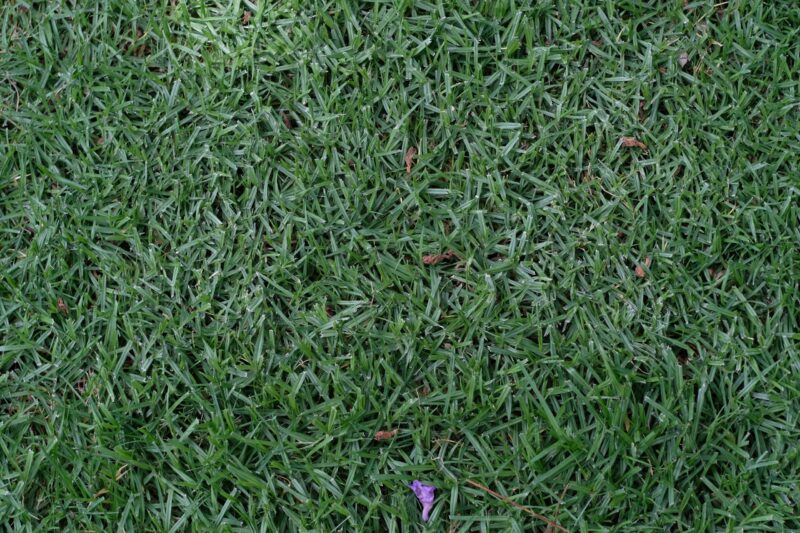
Below is a sample that focuses on the edges of f2. You can see the center falls out of focus, and there is very little distortion. This was a full-frame shot on the A7rII.
Helios 44-2 Sharpness Review
In terms of overall sharpness, I’ve yet to get an image that has blown me away as the Fujinon 56mm f1.2 does, especially wide open. However, it still can produce some very nice detail at the right f-stop (around f4-f8) and at the right distance. What’s really nice about this lens is the smooth rendering.


Diffraction & The Sweet Spot
I like to do these diffraction tests because they always help me find the lens’s sweet spot. Typically, diffraction is influenced by the camera sensor’s pixel pitch; however, some lenses still perform better than others.
At f/2, even several feet from the wall, the lens is hardly usable unless you’re willing to sacrifice sharpness for a big bubble bokeh and shallow depth of field.
F2.8 is a significant improvement over F2, and between F4 and F8, the lens seems to give the sharpest results.


Bokeh / Swirling Cat Eye Effect
The Helios 58mm f/2 lens is known for its swirling bokeh, especially the 44M-2. This, of course, won’t appear in every image; you sort of have to get the distance and focus just right to get the out-of-focus area to swirl this crazy.
You also won’t get as much of the swirly effect if you’re shooting on an APS-C camera. Below is a sample from the Sony A7R II’s full-frame sensor.

Here are full lens bokeh samples using the Mitakon M42-Fuji FX Speed Master. This allows for a full-frame circle of projection on an APS-C sensor. The speed master adds four elements, slightly reducing clarity and contrast.


Flaring & Ghosting
Flaring and ghosting on these retro lenses is usually quite the spectacle, and the 44M-2 is no exception. My lens doesn’t specify whether it’s multi-coated, but honestly, I don’t mind what it’s doing here.
What’s cool is that you get that classic ring pattern lens flares that modern lenses typically don’t produce.
I was somewhere around F5.6 on the left. On the right, you can see what flaring becomes at f16.
The flaring is very interesting compared to other lens models. The 44M seems to bloom and glow more, and the 44-4 maintains a bit more clarity.


Helios 58mm F2 44M-2 Review | Bottom Line
These old Helios lenses are by no means amazing compared to what you get with some of the new stuff; this mainly comes down to the build quality.
Obviously, we’re not seeing modern coatings, and you’ll have to work with the flaring these lenses produce. Corner-to-corner sharpness isn’t that great, but you can get some nice results in the center of the image. What really makes this lens special is its buttery-smooth rendering at the faster apertures.
That doesn’t mean the Helios 44M-2 sucks. They don’t, far from it actually, and they can be a lot of fun on APS-C cameras where you’re cropping for only the best parts of the lens.


The 44-2 lens exhibits impressive center sharpness and adequate micro-contrast, while its corners can resolve details when shooting subjects from a distance and using a stopped-down aperture. Additionally, the lens creates beautiful, usable patterns through flaring, enhancing its overall appeal.
Overall, the lens offers unique image rendering characteristics that are not easily found in modern lenses, all for a reasonable price of approximately $60.
However, the lens’s preset aperture can be a drawback, as it is a design flaw from the early ’80s that makes it difficult to determine the current aperture setting. As a result, the 44M-4 or 44M is often preferred. Despite this, the 44-2 looks slightly different from the other two lenses.
Is the 44-2 the best Helios lens?
Although I currently own only three Helios lenses, I can already tell that the 44-4 lens produces sharper images and better contrast than the 44-2. This difference is particularly apparent at higher apertures, and I have tested it across three separate copies of the 44-2.
While I am still testing and comparing the 44-4 to the 44-2, I plan to write a full review eventually. It is possible that the 44-4 may have other flaws absent in the 44-2, but at present, I would recommend the 44-4 over the 44-2 unless one desires a de-clicked aperture or anamorphic conversion.
Moreover, I have heard that the 44-7 lens is quite remarkable if one can acquire a copy.
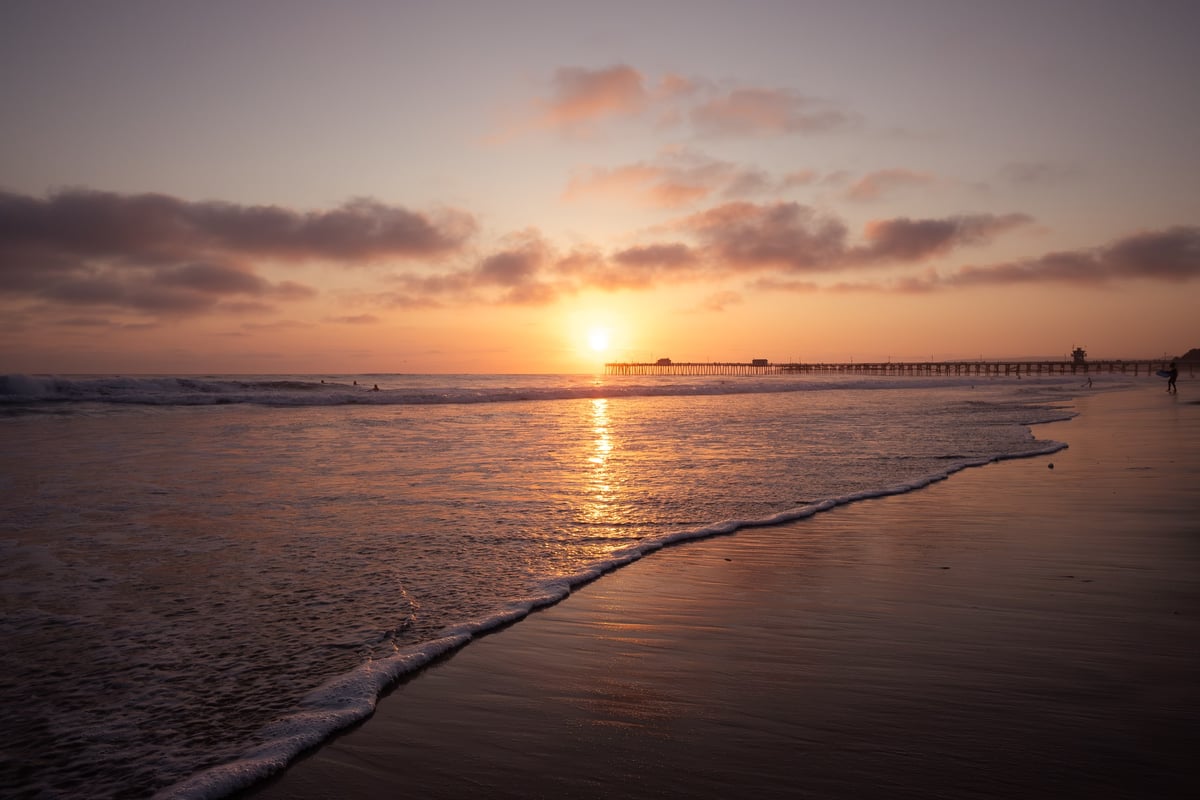
Helios 58mm F2 44-2 Sample Images
Many of the images here are colored with the Core Color Presets.








Leave a Reply