We use minimal analytics to improve the site. Is that okay?

Alik Griffin
San Clemente Sunset
Subscription Form
  • Reviews
    • Accessory Reviews
    • Calculators
      • Video Data Rate Calculator | Record Time Calculator
      • Diffraction Calculator
      • DoF Calculator | Lens Equivalent
      • Shutter Speed to Shutter Angle Calculator
    • Camera Reviews
    • Lens Reviews
    • Memory Cards Recommendations
      • Fastests SD Memory Cards
      • Fastest MicroSD Cards
      • Fastest CFExpress Type-B Card
      • Fastest CFExpress Type-A Cards
      • Best CFast Memory Card
    • List of Mics
      • Best Streaming & Podcast Mics
  • Camera Guides
    • List of all Blackmagic Cameras
    • List Of all Canon RF Cameras
    • List of all Fujifilm Cameras
    • List of all Nikon Z Cameras
    • List of all Panasonic Cameras
    • List Of all Sony E Cameras
  • List of Lenses
    • Canon RF Lenses
    • Fujifilm GFX Lenses
    • Fujifilm XF Lenses
    • L-Mount Lenses
    • Leica M Lenses
    • Micro Four Thirds Lenses
    • Nikon Z Lenses
    • PL Mount Cine Lenses
    • Sony E Lenses (FE and APS-C)
  • Store
  • My account
Alik Griffin
Alik Griffin
  • Reviews
    • Accessory Reviews
    • Calculators
      • Video Data Rate Calculator | Record Time Calculator
      • Diffraction Calculator
      • DoF Calculator | Lens Equivalent
      • Shutter Speed to Shutter Angle Calculator
    • Camera Reviews
    • Lens Reviews
    • Memory Cards Recommendations
      • Fastests SD Memory Cards
      • Fastest MicroSD Cards
      • Fastest CFExpress Type-B Card
      • Fastest CFExpress Type-A Cards
      • Best CFast Memory Card
    • List of Mics
      • Best Streaming & Podcast Mics
  • Camera Guides
    • List of all Blackmagic Cameras
    • List Of all Canon RF Cameras
    • List of all Fujifilm Cameras
    • List of all Nikon Z Cameras
    • List of all Panasonic Cameras
    • List Of all Sony E Cameras
  • List of Lenses
    • Canon RF Lenses
    • Fujifilm GFX Lenses
    • Fujifilm XF Lenses
    • L-Mount Lenses
    • Leica M Lenses
    • Micro Four Thirds Lenses
    • Nikon Z Lenses
    • PL Mount Cine Lenses
    • Sony E Lenses (FE and APS-C)
  • Store
  • My account
  • Pure Cinema
    Viltrox TCL-X100VI Review | A Budget-Friendly 50mm Upgrade
    • February 21, 2026
  • Thypoch Simera 75mm f1.4 Review
    Thypoch Simera 75mm f1.4 Review & Sample Photos
    • February 18, 2026
  • Kakurajima View
    Viltrox WCL-X100VI Review | A Budget-Friendly 28mm Upgrade
    • February 17, 2026
  • Viltrox 9mm f2.8 Air Review
    Viltrox 9mm f2.8 AIR Review & Sample Photos
    • February 18, 2026
  • Biker Bro
    Viltrox Spark Z3 Flash – Review & Sample Photos
    • February 16, 2026
  • Pure Cinema

    Viltrox TCL-X100VI Review | A Budget-Friendly 50mm Upgrade

    View Post
  • Thypoch Simera 75mm f1.4 Review

    Thypoch Simera 75mm f1.4 Review & Sample Photos

    View Post
  • Kakurajima View

    Viltrox WCL-X100VI Review | A Budget-Friendly 28mm Upgrade

    View Post
Trending Posts
  • Nikon Zf Official Announcement 1
    Nikon Zf – The Fujifilm Killer?
    • February 18, 2026
  • Nikon Z 50mm f1.8 S Lens Review 2
    Nikon Z 50mm f1.8 S Lens Review & Sample Photos
    • February 18, 2026
  • Kamlan 50mm f1.1 II Product Shot 3
    Kamlan 50mm f1.1 II Review & Sample Photos
    • January 18, 2025
0
  • Blog
  • Featured
  • Lens Reviews
  • Reviews

Nikon Z 26mm f2.8 Review – A Little Miracle

  • Alik Griffin
  • July 23, 2024
  • 24 comments

This website contains affiliate links. We will earn a small commission on purchases made through these links. Some of the links used in these articles will direct you to Amazon. As an Amazon Associate, I earn from qualifying purchases.

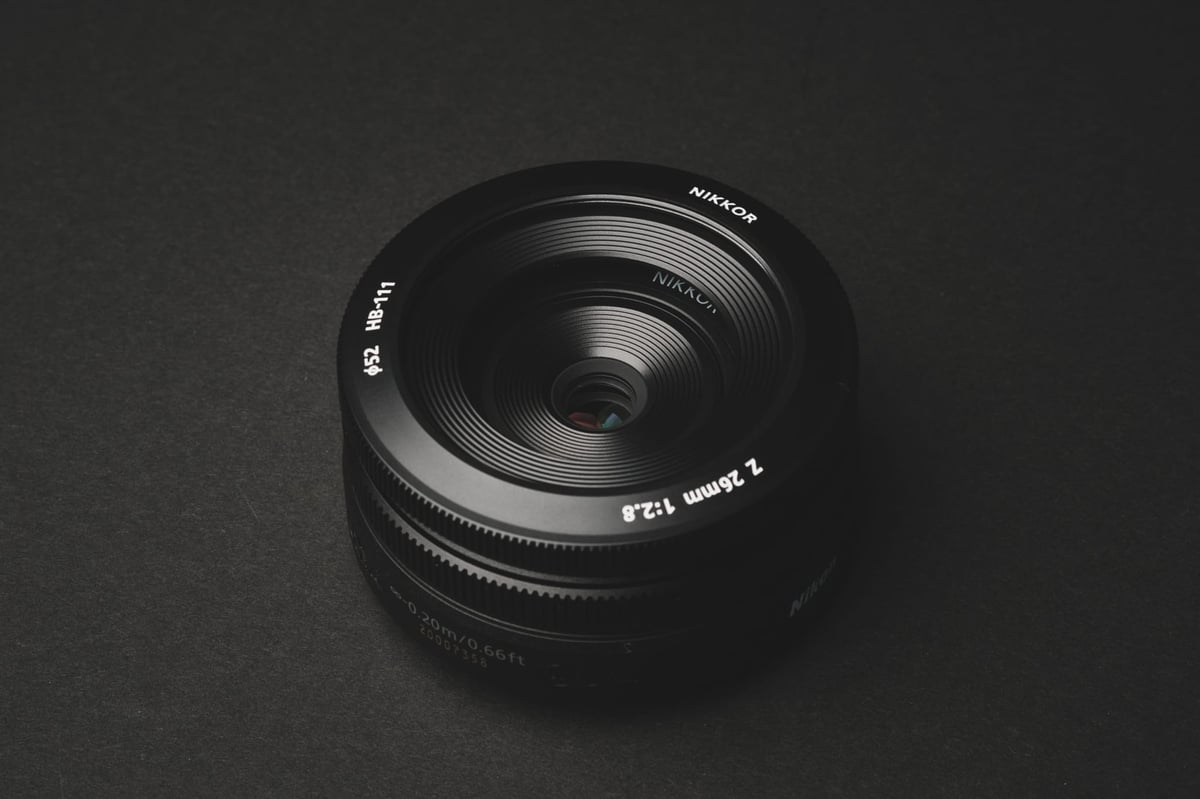
Nikon Z 26mm f2.8 is a full-frame compact wide-angle prime lens for the Z Mount mirrorless system.

At launch, this lens was a little confusing, as we already had a very similar lens, the 28mm. However, after closer inspection, these two lenses are quite different.

I won’t compare the two lenses too much in this review, but I will discuss some of the key points that make this lens unique.

Nikon Z 26mm f2.8 – Amazon / Adorama / B&H

Presets are available, Core v3.0 has been released. If you own V1 or V2 go log in and download the latest.

Lens Specs

Focal Length: 26mm
Aperture Blade: 7R
Aperture: f2.8 – f16
Elements: 8/6
Coatings: Multi
Aspherical: Three
Weather-Sealed: Yes – Dust and Drip
Minimum Focus Distance: 7.9″ / 20 cm
Filter Threads: 52mm
Weight: 4.4 oz / 125 g

Pros: Very compact, Sharp even at close distances due to the all-element focus system, decent corner-to-corner sharpness, decent flare control, fairly smooth rich bokeh, good contrast and saturation, good pop/micro-contrast.

Cons: Slow and noisy autofocus, not-so-great sun stars, vignetting wide open.

Editor Notes: Overall a very good lens, you will just have to be careful about the in-camera profiles correcting the vignetting when shooting wide open, as you’ll still see extra noise in the corners. Also, the lens is audible when focusing and is a little slow with focus, but still very usable for most situations.

I keep a list of all available Nikon Z Lenses.
ISO 64, f2.8, 1/800

Nikon Z 26mm f2.8 Review – Overview

You notice this lens is different from many of the other mid-range lenses from Nikon right away. It has some pretty fancy tech, including the all-element focusing system that improves sharpness when close focusing. The downside is that the focus is significantly slower than most or almost all of the Z lenses.

On the back of the lens, we have a metal mount, and on the front, we have a protruding element, so you’ll likely want to throw on a UV filter onto that front lens hood to keep any dust from getting sucked into the lens, even though the lens is technically weather sealed.

For the most part, this is a really good pancake lens—one of the best ones I’ve used, aside from the slow autofocus system. It really feels like the Nikon engineers were shooting to make this an S lens, but it just fell short in a few areas, which caused branding to say no. What you’re left with is an almost S lens.

And that’s how you should consider this lens compared to the 28mm. The 28mm is a less expensive midrange lens, with significantly faster autofocus and a slightly more classic rendering with some extra chatter to the bokeh, and think of the 26mm f2.8 as an S lens, or very close to one with very clean rendering and very sharp center focus.

Compared to the 28mm, the 26mm f2.8 is the better travel lens, landscape lens, and close-focusing lens. Overall, it’s just a better lens, except, as mentioned, it has a pretty slow and audible autofocus system, which shouldn’t be a deal breaker for most shooters. However, videographers may want a lens with a smoother and quieter focus system.

The extreme corners are not going super crisp and the edges are not quite as sharp as the center, but for a pancake lens, it’s still very good and we see enough improvements over the 28mm to justify the price.

ISO 220, f2.8, 1/160

The 26mm and the 28mm don’t really overlap; there are enough differences between the two to make owning both may be justifiable.

For one, I prefer the field of view of 28mm over 26mm.

Videographers and street photographers would probably like the fast quiet focus on the 28mm lens despite it having slightly busier bokeh and not being as sharp, and landscape and travel photographers would probably like the 26mm lens. I find myself switching between both frequently as they do also produce very different rendering. With the 28mm feeling a little more classic in my opinion.

Tiffen Glimmer Glass Filter Sample Image
ISO 110, f4, 1/250

Build Quality

The 26 mm shines above the rest in terms of build quality compared to the 40mm f2.8 and the 28mm. This makes me believe they were pushing for this to be an S lens, but it just fell short in a few other areas.

We have a metal mount, a slide-on lens cap, a lens hood that snaps on firmly, and overall a much smaller and tougher feel.

Aside from that, there are only a few other little differences to the build. First, it’s an all-element focusing system. First of its kind? This allows you to still get razor-sharp images even when focusing on close subjects, something the 28mm cannot do.

The downside of the all-element focus system is when throwing focus from close too far; it’s probably about 1/4 the speed of the 28mm lens. So, in fast-paced situations, where close focus sharpness isn’t a requirement (street photography), photographers might prefer the less expensive 28mm for the faster focus.

Also, the 26mm makes a little noise when focusing. It’s not super loud, but you will notice it, and it will be something you have to deal with if you’re using an on-camera mic while shooting video.

The 26mm is also weather-sealed (dust and drip), but we do have a retractable front barrel, so you should throw a filter over the front of the hood.

Internally we have 8 elements in 6 groups and then we have a 7R blade aperture.

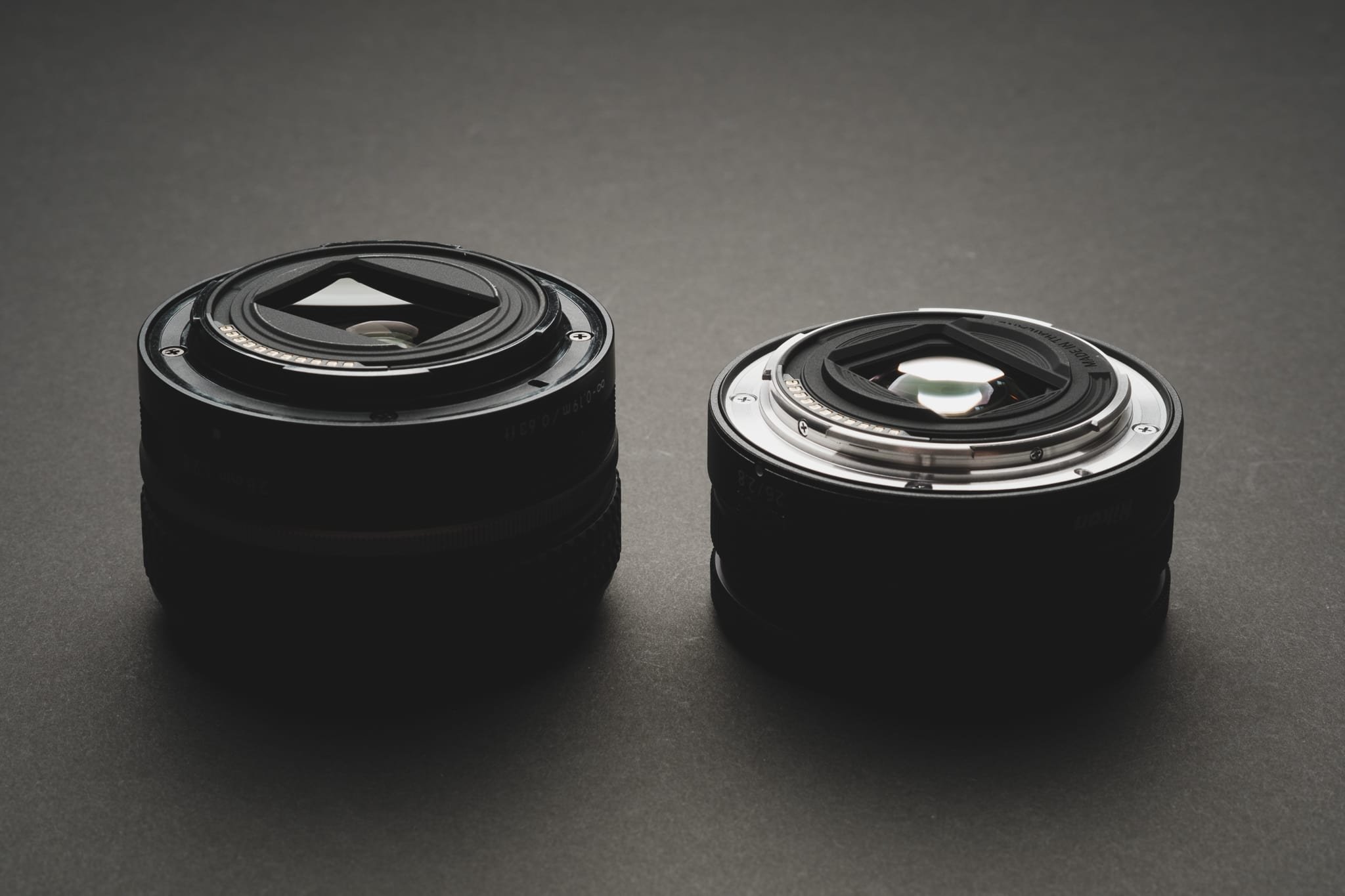
Size comparison, Nikon 40mm f2, 28mm f2.8 and 26mm f2.8.

Technical Overview

This lens performs very well, considering how small it is. I’m actually not sure I know of any other pancake lens that performs as well as this while also being this small. This might just be the best tiny lens optically out there right now, although you can still get a smaller build size with some of the Voigtlanders, but they lack autofocus.

Sharpness is very impressive, especially in the center, with some falloff along the edges of the frame and corners. Even wide open it performs well, but it really comes together at around f4 on the higher resolution cameras like the Nikon Z8.

Sharpness General
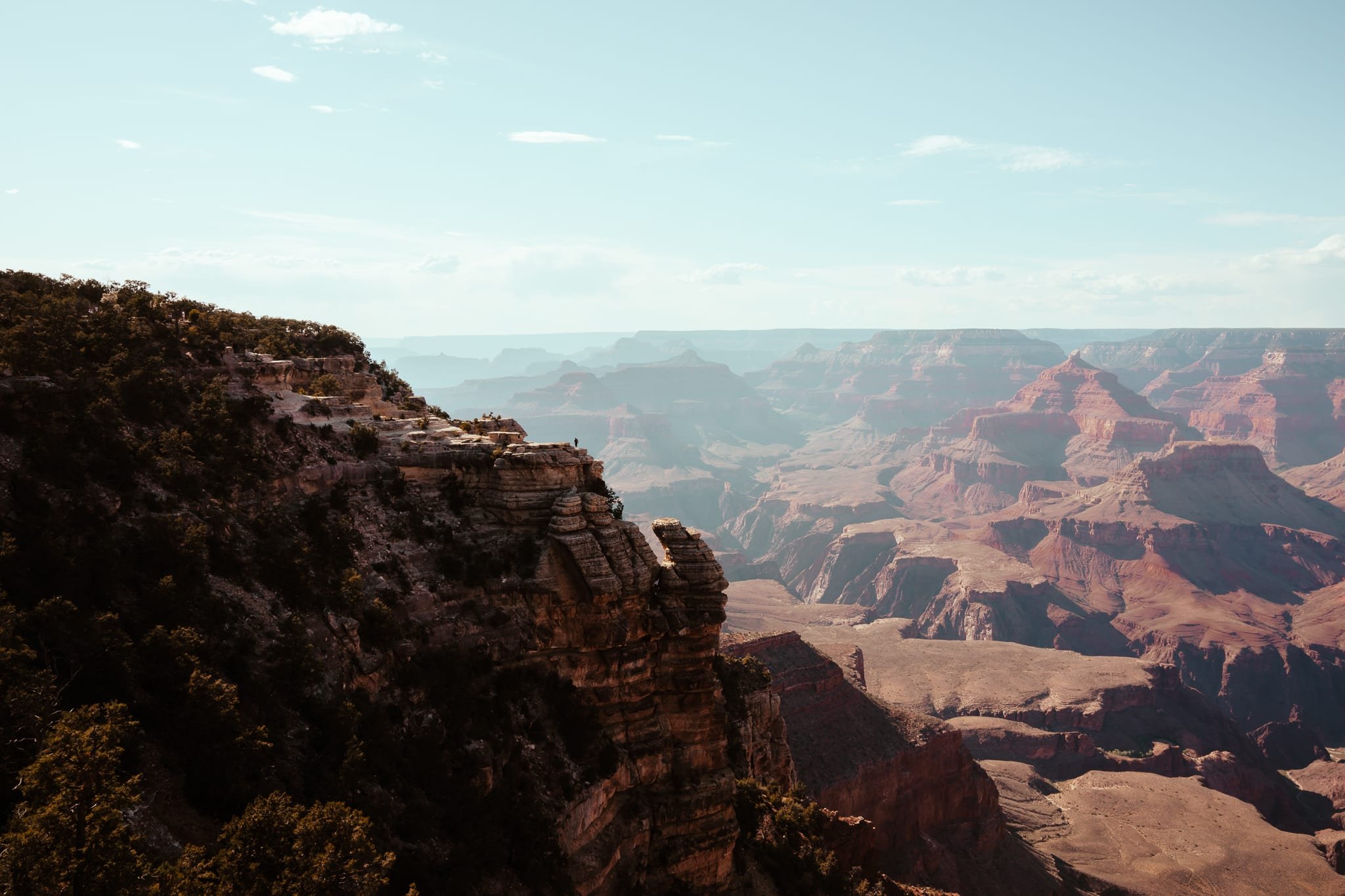
Grand Canyon Mathers Point
ISO 200, f11, 1/250

My lens is ever so slightly softer on the right side. Not enough to worry about or to replace the lens especially since I’m not using this as a landscape lens, even then it’s still fine.

This I believe is a recurring theme with non-S lenses Nikon allows for some looser tolerances. I can hardly notice except for the 50MP Z8. Keep that in mind when ordering new lenses and maybe double-check it when you first get a lens like this.

Something I also wanted to mention is that it seems like I get varying levels of sharpness depending on how far away the subject is. So it feels like I hit these sweet spots where the lens can be sharper than at other distances with the corners and edges, but it’s hard to actually test.

Here are a few samples in a Landscape situation one at f2.8 and one at f8.

These are 50% crops so you can see more of the scene in a smaller slice. You should still be able to compare the edges to the center. I’m focused slightly below the center of the frame towards the middle of the rice fields, so not quite infinity.

You can actually see some slight field curvature in this sample, so the edge samples are actually a little above where the focus is.

Nikon Z 26mm f2.8 Sharpness @f2.8

Not bad for f2.8, considering that the bottom corners are much closer to us, but there is a slight loss in edge detail because it sits well above the area of focus due to the bend in field curvature. What’s interesting is I don’t really see much field curvature when focusing close, I only first realized it when shooting the above sample. So this makes me realize that the lens behavior, maybe because of the all-element focus system, changes depending on where the subject is.

You can also see the vignetting at play here.

Sample at f8

At f8 those edges clean up a little bit more but still not perfect. The corners are much nicer due to the deeper depth of field, the bottom left corner does very well.
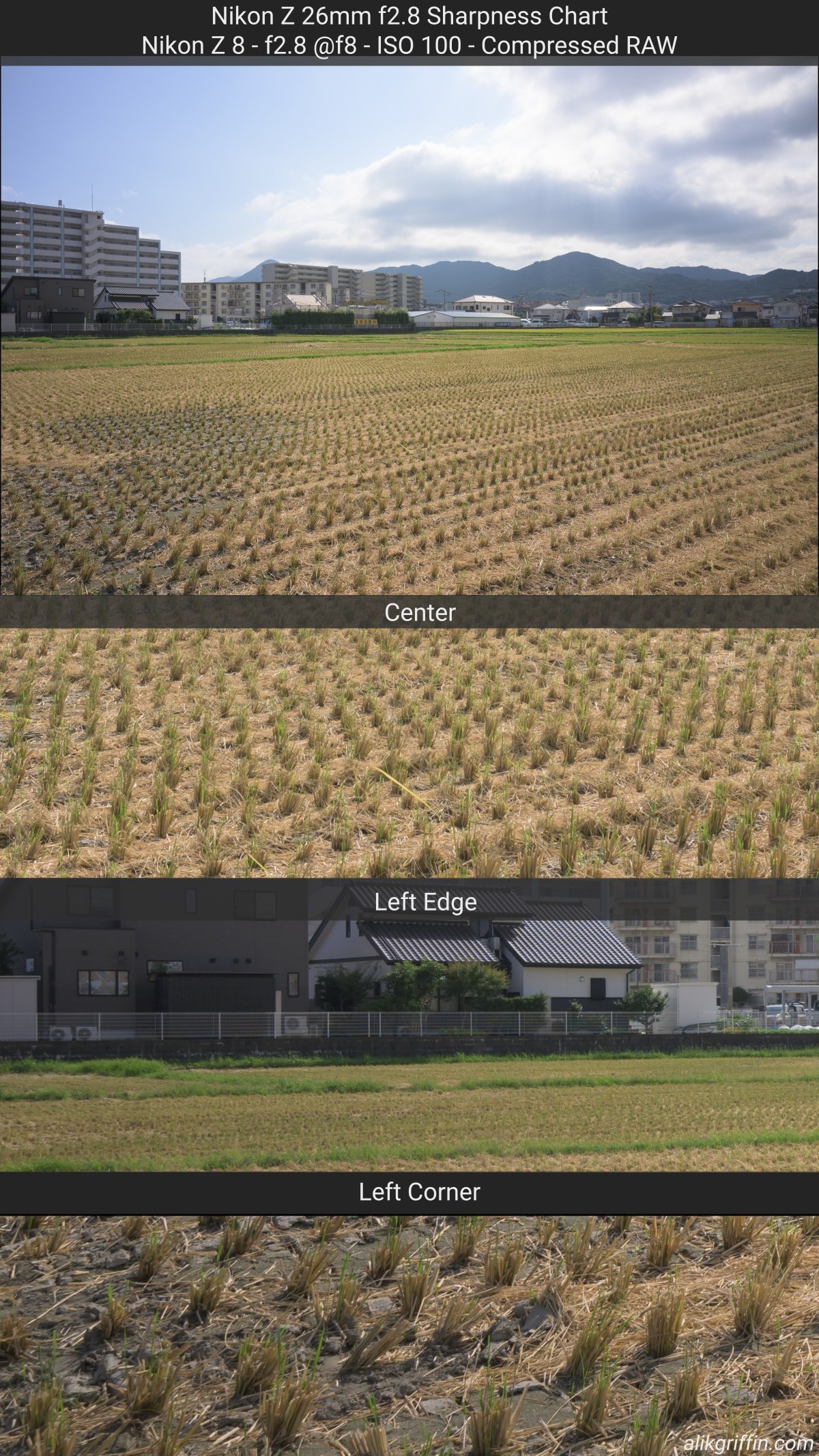
Nikon Z 26mm f2.8 Sharpness @f8

I took the sharpness charts to f8 and shot a little closer than I should have for these samples. But it shows us a few things – there is some field curvature and as long as you’re in that curvature the edges and corners can be very sharp.

Close Sharpness f2.8

This is maybe two feet off the ground – very Impressive.

Nikon Z 26mm f2.8 Close Sharpness @f2.8


Nikon 26mm f2.8 vs Nikon 28mm f2.8

The following charts give us a look at the difference between the 26mm and 28mm when looking at close-focus sharpness. Corners and edges are often difficult to compare perfectly since it’s very difficult to get the camera on the exact perfect tilt axis when hand-held or even on a tripod close to a subject. So you would have to focus on the edges and corners, but nobody does that in the real world and it’s a bit of a time-sink for me to get into that.

However, this test does at least allow us to see the center sharpness and what’s happening with the edges.

Mainly you can see that the center is significantly sharper.

These are at about a 75% crop taken on the Nikon Z8.

Center Frame

Quite a bit more detail with center sharpness on the Nikon Z 26mm compared to the 28mm.

Center Sharpness 26mm vs 28mm

Left Edge

The field curvature softens the edges and corners on both lenses. Basically, this means that they are slightly out of focus since the focus plane in the edges and corners is not the same as the center and it’s exaggerated here since I’m only about two feet and a half from the grass.

The 28mm edge seems to be about the same or maybe slightly better than the 26mm with this close-up test, but I’ve never seen the 28mm edges perform as well as the 26mm when shooting stopped down with landscapes. This leads me to believe that this softness is mostly a bend in the focal plane so don’t pay too much attention to it here in these samples.

I also did these samples handheld, so not a super scientific comparison – just a general look to see what’s going on. It does seem like the 26mm has more aggressive field curvature than the 28mm at this focus distance but is still mild compared to other lenses I have.

Left Edge Sharpness 26mm vs 28mm

Left Corner

Corners perform a little better on the 26mm, and you can see it improve even more in the extreme corners as they bend back into focus.
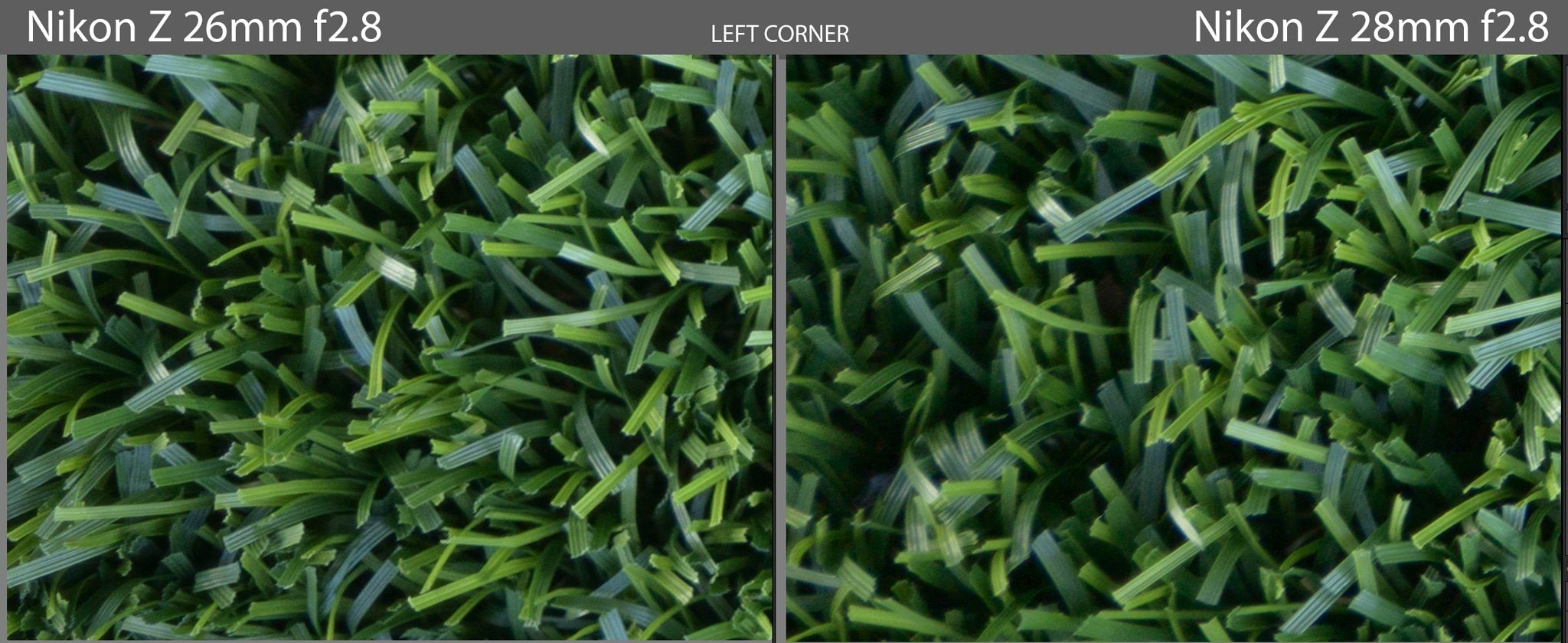
Left Corner Sharpness 26mm vs 28mm

Sharpness Conclusions

This is a lens you might want to take up to f11, but on a Z8 you will get some noticeable reduction in center sharpness due to diffraction. On the Z6 or Zf, you could easily shoot f11 without seeing too much diffraction and you’ll get that much deeper depth of field which is what this lens needs/wants. I personally just accept the diffraction at f11, then sharpen in post.

Overall performance with the 26mm is very impressive, especially with that close focus center sharpness. For travel and landscapes, you should give great results if you stick to infinity subjects like the Grand Canyon shots I’ve posted. This lens with those scenes behaved very well.

Distortion

The lens comes with a built-in profile correction that fixes distortion and vignetting and there is no way to turn off the distortion correction. But as is, there is very little distortion.
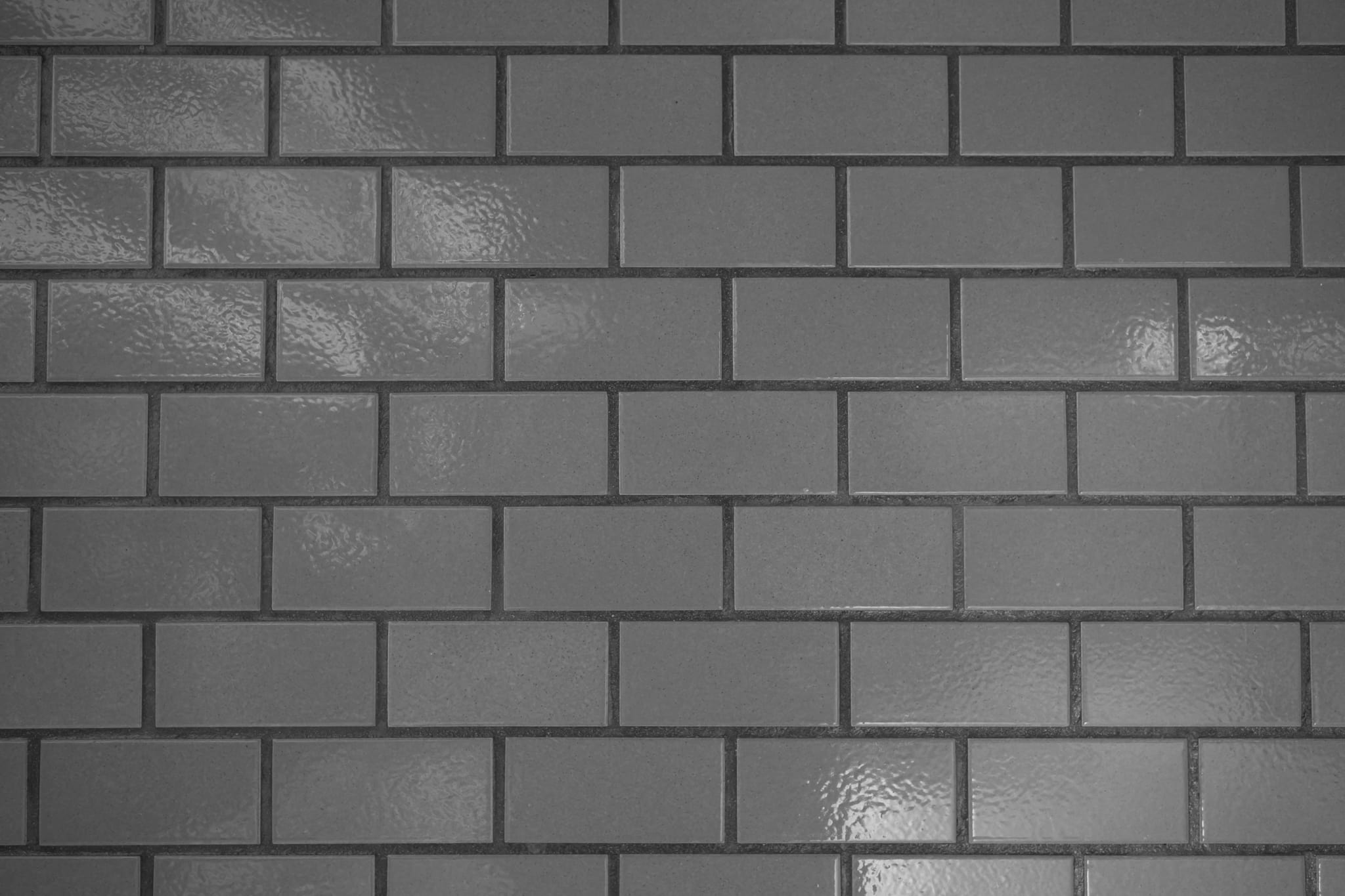
Nikon Z 26mm f2.8 Distortion Sample
ISO 560, f4.5, 1/250

Vignetting

Vignetting is maybe its greatest weakness. If you turn off the vignetting control in the camera you can get some pretty heavy vignetting. I don’t have any third-party software right now that can strip the Build-In Lens Profile corrections, so most of the time you’ll get a fairly controlled image.

Here is a straight-out-of-camera sample. You get a nice image, however, when you’re wide open like this, you will notice a lot more noise in the edges and corners than in the center. One of the downsides of hiding lens flaws behind lens profiles.

Here is a sample with all vignetting controls turned off in-camera at f2.8.

Sample at f2.8
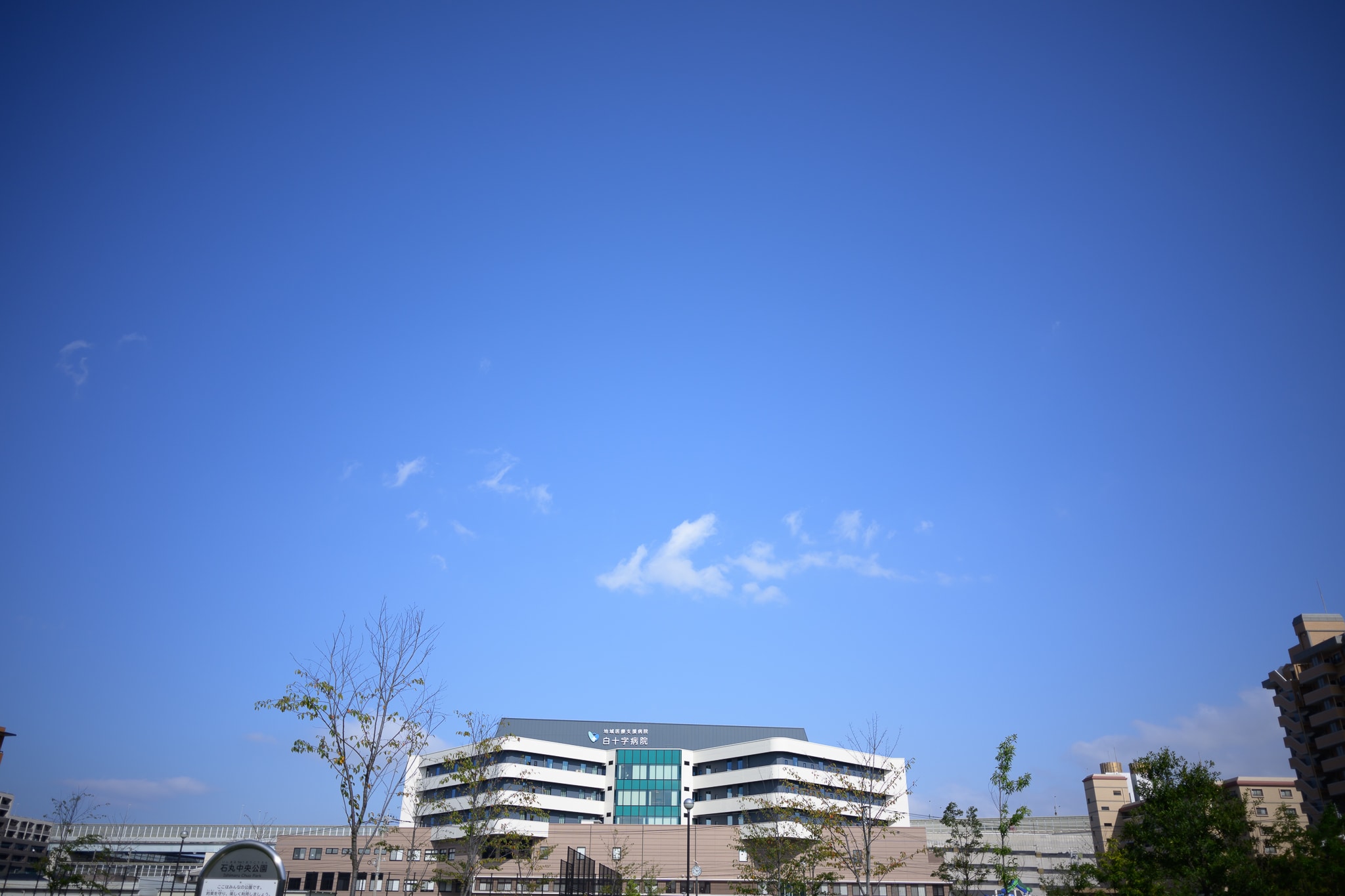
Vignetting f2.8
ISO 100, f2.8, 1/1600

Sample at f5.6

Nikon 26mm f2.8 Vignetting Sample

Chromatic Aberrations

I’ve been shooting with this lens for several months now and really haven’t had any issues with any type of CA. I’m sure some exist if I were to stress test the lens, but for the most part, it’s performing very well.

Flaring / Sunstars

Sometimes you do get some flaring. It’s not bad, but there are some angles where the lens is susceptible to a little flare.

Sun stars are not great.
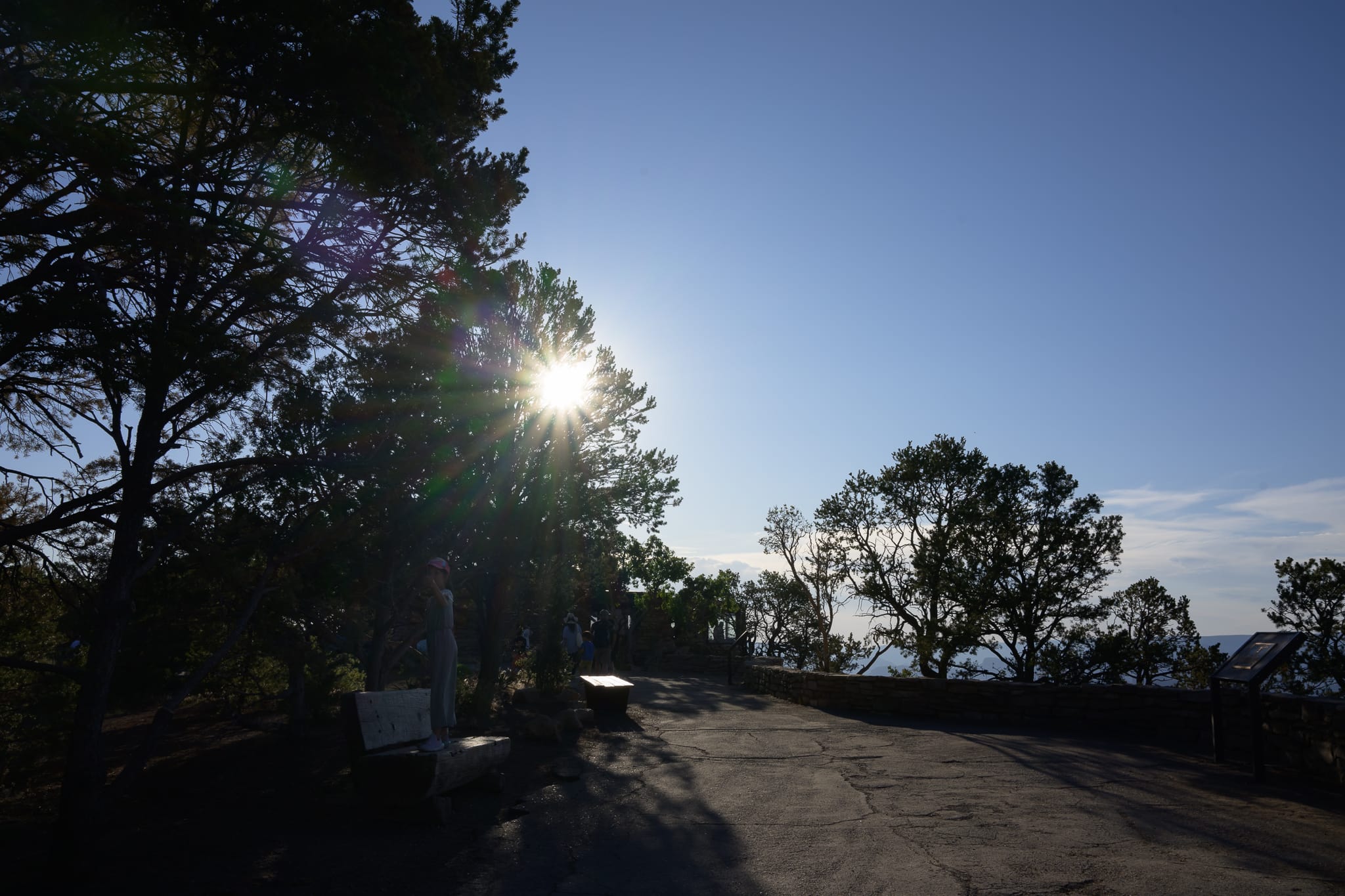
Sunstars and Flaring
ISO 72, f11, 1/250

Art & Character

Fireworks with the Nikon Z 26mm
ISO 800, f2.8, 1/250

The character of this lens is somewhat clinical but also very clean so there are rarely any distractions. The images produced have great contrast and saturation and actually pretty good micro-contrast. So even though the images are super clean, the rendering can still be very lively with some nice tonal depth.

So I’d hate to call it clinical because there is so much pop, it’s almost surreal.

The 28mm on the other hand does produce more swirl and chatter to the bokeh and seems to have a bit of a consistent field curvature which can sometimes add a classic feel, but then sometimes it’s super distracting.

The Nikon 26mm is pretty much always consistent with bokeh and is pretty much going to give you great images no matter the environment.

There are not really any outstanding negative characteristics to the 26mm other, but maybe the sun stars are a bit of a letdown.

Color & Contrast – Micro Contrast

The 26mm like pretty much all of Nikon’s new prime lenses has very nice contrast and very good saturation. You do get some pretty nice micro-contrast, as well. Nikon’s pancake lenses are good in this regard, the 26mm, the 28mm, and especially the 40mm. They’ll be fun for Nikon Zf and Zfc shooters looking for a bit more of a classic rendering to go for their classic cameras. But I’d say the 28mm has even more of a classic rendering than this 26mm, and the 26mm is cleaner with the bokeh.

Here is a good example of lens pop/micro-contrast. Luka comes to life in stunning detail and almost jumps out of the image, but the background is still buttery smooth. It looks super sharp when displayed on this blog, but this image is slightly blurry from motion blur. It’s impressive, considering it’s a 26mm lens with only f2.8.

I know people these days love their smartphones, but you’ll never get this magic with a smartphone photo.

Micro Contrast Sample
ISO 560, f2.8, 1/200

B&W photography is just amazing with this lens.

Kalian Getting Drink
ISO 800, f2.8, 1/250

The 3D effect here is unreal. You can see how the bokeh gets a little chatty on the right edge.

Tsubasa Chan
ISO 100, f2.8, 1/640

Bokeh

Bokeh is maybe not super buttery smooth, but it’s still decently smooth and vibrant while holding rich colors. A lot of the higher element lenses that correct for better optical performance often get bokeh that’s a little less saturated and mistier or aetherial.

Very few distractions in the bokeh and very little swirl or cat’s eye effects.

Here you can see a straight-out of the camera sample at f2.8. There is some bubbly bokeh in the highlights and it does hold its shape pretty well in the bottom right corner.

Bokeh SOOC Sample Nikon 26mm
ISO 64, f2.8, 1/640

You can actually pull almost everything you need to know about this lens from this one sample. Punch contrast and colors, pretty smooth bokeh with some nice vibrancy. Very controlled CA, although you do see some slight teal fringing in the top sunshade, which is not outside of normal. Then of course it’s very sharp in the mid-frame at a close focus distance.

Here is another sample from later in the day so you can see how the bokeh performs under calmer lighting – It gets a little rougher in that bottom right corner, but I wouldn’t say it’s distracting.

Nikon Z 26mm f2.8 Bokeh SOOC
ISO 2800, f2.8, 1/250

Nikon Z 26mm f2.8 Bottom Line

This might be the best tiny lens I’ve seen so far. Small lenses usually come with a ton of compromises, but this is the first time I’ve seen one that’s just so consistent. It’s not a perfect lens, but it’s pretty close to the areas that matter.

The only significant flaw that would make me grab the 28mm instead is the slower and louder autofocus.

A serious landscape photographer would also want to pick up a lens with a little better corner-to-corner consistency and sharpness. Wide-open landscape shooters might not like the extra noise in the corners and edges from the hidden vignetting. This was the same problem we saw in the 14-30mm f4; however, it’s fine for daytime shooters at higher apertures.

The lens is really good for most forms of photography. Still, I would probably grab a 28mm for street photography or videography if the on-camera sound is used because of the better-focusing system. 4 K video and high-motion blur from street shooting or videographers using the 180-degree rule wouldn’t see a difference in the optical performance between the two lenses, except for the different bokeh profile.

For all other situations, the 26mm f2.8 is amazing, but it won’t always be the best option for everyone since the use case matters here. This is likely why it didn’t make it as an S lens, but it’s so close. It’s truly an exciting lens. I get why it’s more expensive, and the price is justified.

See the Nikon 40mm f2.8 Lens Review

See the Nikon 28mm f2.8 Lens Review

I will go back and clean up those reviews a bit since now we have this 26mm to compare, and I have a high res Z8 camera.

Nikon Z 26mm f2.8 Sample Images

Sample Images are shot with the Nikon Z8. Some of the street photos are using a Glimmerglass filter with 1/4 power. Colored with Color Color Presets.

Here are a few street shots using the Glimmer Glass 1/4. With the right presets applied, you can get a very classic, almost film vibe.

Tiffen Glimmer Glass Filter Sample Image
ISO 110, f4, 1/250
ISO 220, f4, 1/320
Rain Crossing
ISO 360, f4, 1/320
Rain Bow
ISO 100, f4, 1/320
ISO 320, f4, 1/320

These photos shot on the Z8 have no filters over the lens but have been colored with presets.

ISO 64, f2.8, 1/800
ISO 64, f2.8, 1/320
ISO 400, f8, 1/250
ISO 72, f2.8, 1/250
ISO 360, f2.8, 1/250
Kalian Getting Drink
ISO 800, f2.8, 1/250
Ono B&W Samples
ISO 220, f2.8, 1/160
ISO 900, f2.8, 1/200
ISO 64, f3.2, 1/500
ISO 64, f4, 1/400
Lake Mead
ISO 64, f8, 1/320
Grand Canyon
ISO 125, f11, 1/250
Grand Canyon Mathers Point
ISO 200, f11, 1/250
ISO 720, f11, 1/250
Landscape Photography with the Nikon 26mm f2.8
ISO 200, f11, 1/250
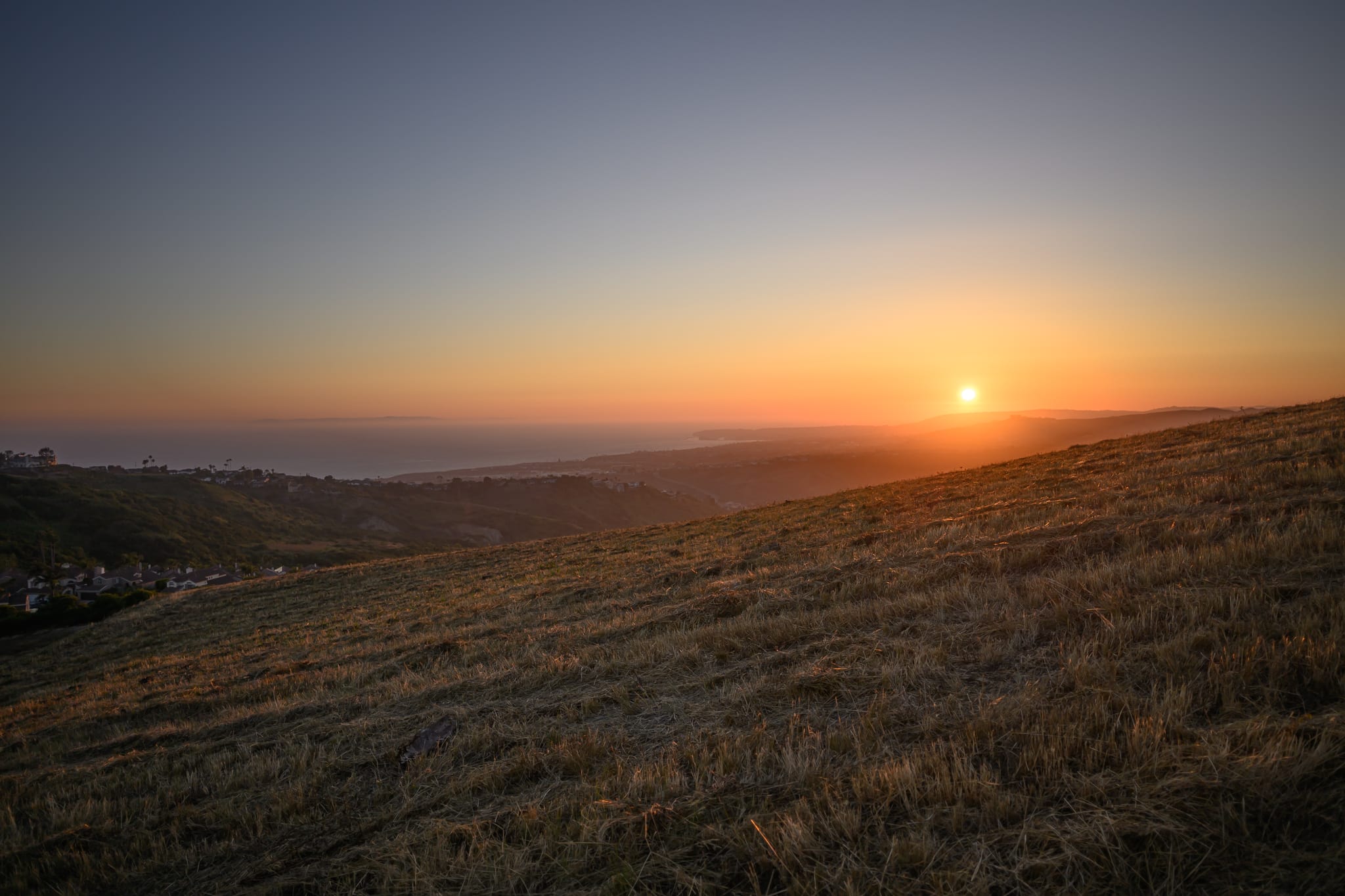
Sunset San Clemente
ISO 64, f8.0, 1/320
Angels Game Fireworks
ISO 9000, f2.8, 1/250
0
0
0
0
0
Alik Griffin

A professional video editor, and photographer with a Bachelors in Film studies from UCSD. Based in Los Angeles, I have created commercials, trailers, and other video content for various clients and platforms since 2005. I also love to write about my passions and share my insights on my blog.

Related Topics
  • Lens Reviews
  • Nikon
  • Nikon Z 26mm f2.8
Previous Article
Nikon Zf Official Announcement
  • Blog

Nikon Zf – The Fujifilm Killer?

  • Alik Griffin
  • February 18, 2026
View Post
Next Article
GoPro Hero 12 Black Memory Card Recommendations
  • Memory Cards For GoPro

Best Memory Card GoPro Hero 12 Black

  • Alik Griffin
  • February 4, 2025
View Post

Subscribe

Subscribe now to our newsletter

You May Also Like
Pure Cinema
View Post
  • Blog
  • Featured
  • Lens Reviews
  • Reviews

Viltrox TCL-X100VI Review | A Budget-Friendly 50mm Upgrade

  • Alik Griffin
  • February 21, 2026
  • No comments
Thypoch Simera 75mm f1.4 Review
View Post
  • Blog
  • Featured
  • Lens Reviews

Thypoch Simera 75mm f1.4 Review & Sample Photos

  • Alik Griffin
  • February 18, 2026
  • No comments
Kakurajima View
View Post
  • Blog
  • Featured
  • Lens Reviews

Viltrox WCL-X100VI Review | A Budget-Friendly 28mm Upgrade

  • Alik Griffin
  • February 17, 2026
  • 2 comments
Sony A7V Announcement
View Post
  • Blog
  • What's New

Sony A7V – They’re Back In The Game

  • Alik Griffin
  • December 30, 2025
  • 4 comments
24 comments
  1. Chris says:
    October 15, 2023 at 5:54 am

    Always enjoy reading your reviews. Between the 26 and 28, which one do you think is better for taking family pictures with kids? Focal length vs image quality vs af speed?

    Reply
    1. Alik Griffin says:
      October 15, 2023 at 6:47 pm

      Personally I would go with the 26mm, with family kid activities. It will be a lot sharper at close distances and overall has a cleaner look. AF should be fast enough as well.

      Reply
      1. Chris says:
        October 16, 2023 at 2:29 am

        Thank you. I already have the 28, but I am tempted by the 26. I really like the 40 from nikon, so the 26 might also complement it better for travel.

        Reply
        1. Alik Griffin says:
          October 16, 2023 at 8:03 pm

          Yes, the 26m is actually a very good lens, so if you have the cash it’s worth the upgrade as long as you’re not in a situation where you need quiet super-fast AF, then the 28 will be a nicer option.
          The 2mm is a different look but realistically if you just crop it like 5% and you’re at 28mm. Straight out of camera I like 28mm look more as a field of view, but 95% of the time I crop my photos at least a little bit, so it doesn’t really matter.

          Reply
          1. Chris says:
            October 19, 2023 at 3:15 am

            Thank you for your opinion. I always enjoy reading your reviews.

        2. skyrunr says:
          November 2, 2023 at 5:02 am

          I think you might enjoy the 40mm perspective more than the 28mm. You’ll get more bokeh and more detail, especially eye details. While the 28mm is optically a little better, the 40mm focal length provides more detail.

          For $100 more (new MSRP) you can get the 24-70F4S (used mint) which offers a whole level higher AF and image quality experience. Even the 24-50 ($200 used) is sharper than the compact primes; even both stopped down to F4. The 70mm F4 with close focusing is almost a macro lens. I can’t see having a Z camera and not having this lens, but I also get the unlocking/storage mode being inconvenient. You get used to it. 😉

          I tried the 26mm, I love the rendering, but I think this review understates how noisy it is for a 2023 lens. Unacceptable for the cost IMO.

          Reply
          1. Ben R says:
            November 2, 2023 at 4:25 pm

            At least with my copies, at close focusing distances, the 26mm is significantly sharper. This makes a huge difference when I’m taking photos of my toddler.

  2. Tanya Mills says:
    October 31, 2023 at 9:46 am

    I appreciate your opinion and enjoyed reading your take on the 26mm. This tiny lens comes with me everywhere. Since I don’t have a car, we walk, bike, bus or train and the 26mm makes it so much easier for me to bring my camera with me. It’s perfect for capturing everyday moments at home as well as out and about with my family. I pull out my S lenses for professional shoots, but for everyday moments, the 26mm is just right. I also often carry the 40mm with me. I got that lens based on your review and I love it, too!

    Reply
    1. Alik Griffin says:
      November 1, 2023 at 10:37 pm

      Thanks for the comment Tanya! I also shoot with the 26mm or 28mm 90% of the time these days for casual fun.

      Reply
  3. Andy says:
    January 1, 2024 at 7:17 am

    Thanks for the great review. Tempted by this as a long time Fuji user who has recently jumped to Nikon (blaming reading this site too much, and zf release). Interested in how you find this lens compared to the Fuji 27mm pancake in terms of sharpness and fun factor?

    Reply
    1. Alik Griffin says:
      January 6, 2024 at 9:21 pm

      Hmm, I’ve never thought about looking at them side by side. I only have the older 27mm version without the new aperture ring. But I also don’t have an APS-C Nikon camera so I would have to shoot the 28mm in crop mode for it to be comparable.

      Reply
  4. Warren says:
    April 7, 2024 at 7:41 pm

    Thanks Alik for this excellent review and the great samples. I was pondering getting this lens having read some confusing reviews elsewhere but this sounds perfect for me and I found one like new at decent price on Map Camera so am looking forward to using it soon.

    Reply
    1. Alik Griffin says:
      April 7, 2024 at 8:17 pm

      Thanks Warren, This is slowly becoming one of my favorite Nikon lenses, the more I use it the more I like it. I was going back and forth between this and the 28mm, and I find myself these days mostly going for the 26mm.

      Reply
  5. Rado says:
    June 2, 2024 at 11:34 pm

    I think if I buy a Nikkor z 28mm f2.8 for half the price, I will get more for the money than with this lens. As for the range, 26mm and 28mm are indistinguishable. But I’ll think about it because I already have 28mm 🙂

    Reply
    1. Alik Griffin says:
      June 3, 2024 at 5:44 pm

      This is true; the 28mm is a great deal and still a great lens for the price.

      Reply
  6. Morgan says:
    October 15, 2024 at 4:50 pm

    Hey Alik. Great review as always, you’re definitely one of the best.

    I see the great contrast and saturation, but I feel the almost clinically digital look defies or maybe masks some of what might be better micro-contrast. I’m almost getting rendering that reminds me a little of when I shot with the D3300, and man, I do not want that at all haha. Saying this is in no way a knock on the images you take, not at all, but seemingly a knock on the inability to escape something’s strangely interesting about this lens, no matter who is using it. I felt this way about the 50 1.8 S, which is brilliant, but there were images where I felt like no matter what I did, I could not avoid some rendering characteristics that simply would never appeal to me like other lenses do no matter what situation it shot.

    This lens makes me remember why I shot with Voigtlander and Zeiss when I stepped up to the D610 and then D750, I just didn’t want the boring Nikon render.

    Reply
    1. Alik Griffin says:
      October 29, 2024 at 6:11 pm

      Thanks for the comment Morgan. I’m still waiting for an amazing 28mm lens, ideally an f1.8.

      I know Viltrox has one, but it would be great if Nikon made one.

      These 26mm and 28mm are just pancake lenses so we get what we get with them, they are essentially just little pocket lenses. From a technical perspective the 26mm is absolutely amazing for how small it is, but yeah, it doesn’t have a ton of character. The 28mm has a lot more character with the way the bokeh swirls and has a slightly more classical design. But these lenses do lack the advanced Nano Crystal Coatings which does seem like it adds a little more punch to the contrast.

      I would say the micro contrast is decent on the 26mm and 28mm but shadows are a little flat, so you kind of need to adjust that with some aggressive curves. Whereas if I’m shooting with a Zeiss 28mm f2.8 biogon, those T* coatings have such deep shadows that it really adds a ton of punch to the contrast straight out of camera.

      Also, the Canonrumors guy was telling me that Essilor (an optics company that owns a stake in Nikon now), often provides the elements for the cheaper Nikon lenses. So maybe there is a little less magic with some of the non S lenses because of that. The S lenses with the Nano coatings do seem to have a bit more bite, but maybe that’s also coming from the elements as well.

      Reply
  7. Philip Sutton says:
    December 22, 2024 at 6:25 pm

    Hey Alik, thanks for taking the time to do this review – I got a lot out of it. I’ve been on a quest for a ‘proper’ 28mm, and though I’ve spent a fortune, the hunt is still on. I bought the Z28mm plastic lens in Japan last year on my travels. I fell in love with the focal length – it was perfect. My Z24-70 2.8s, that I use on all my paid and professional shoots is too big for travel, my Z24mm 1.8s is too wide, and the 35mm Z1.8s, is not wide enough. The plastic 28 in Japan was disappointing being only 2.8 (can’t separate subject from background), and I did’t like the sharpness (or lack of), and rendering etc. Ditto for the 40mm F2, quite a very ordinary and not spectacular lens.

    I paid a fortune recently and bought on ebay from Japan (to Australia), for the AFS 24mm 1.4E lens with the FTZ. What a gorgeous lens. The rendering, fall-off, bokeh, sharpness are from another planet. I can also isolate my subject – magic stuff. It cost me 2,500AUD, and though I love it, it is mostly unusable, because of the size and weight with the adapter. It’s not really useable on my paid shoots, and certainly no good for travel. I’m in New Zealand now for Xmas hol’s, and out of desperation, bought the 26mm before I flew out and paired it on my Z7ii. So far the images are quite lovely. This is only a backstop, until Nikon get off their butts and make a beautiful Z28mm 1.4s, that is not huge or heavy. I don’t care about the price, I will pay.

    I don’t care about the chatter on this lens, because I NEVER shoot video. It is sharp, the vignette or corners don’t bother me (I only ever shoot people), and the micro-contrast, rendering, colours are quite beautiful. Shame that it is only 2.8, and you forgot to mention Alik, that it is so close to 24mm, that it’s not funny. As we know, all lenses are a compromise, so this will have to do until Nikon get going or Viltrox beat them to it!

    Reply
    1. Alik Griffin says:
      December 26, 2024 at 4:05 pm

      I’m with you, I want a fast 28mm from Nikon so bad. There is one by Viltrox, they make a f1.8. That’s really the only fast 28mm out right now.

      Reply
  8. Mani says:
    October 15, 2025 at 11:05 am

    Really nice review!
    Great comparison with the 28.

    Reply
  9. James says:
    November 6, 2025 at 7:17 pm

    Probably too late to get a response here, but taking price and size out of the equation, which pairs up nicer with the 40mm as far as rendering goes?

    Thank you!

    Reply
    1. Alik Griffin says:
      November 8, 2025 at 5:03 pm

      Probably the 28mm would pair better with the 40mm, since they both feel a little more classic in their rendering. But the 28 does get a bit wilder than the 40mm, in terms of character. So it almost feels like 40mm sits somewhere between the 28mm and 26mm in terms of character.

      Reply
      1. James says:
        November 9, 2025 at 7:54 pm

        Thank you so much for your reply. I’m still a bit torn and imagine I will end up with both at some point, but knowing the 40 straddles them both makes me feel I will likely be satisfied either way. Thanks again!

        Reply
        1. Alik Griffin says:
          November 10, 2025 at 4:20 pm

          Yeah, pretty much. That 26-28mm is really the look you’re going for; the little differences in sharpness, bokeh or AF when casually shooting won’t be game-changing. It only really matters if you’re doing something specialized, like video or landscapes.

          Reply

Leave a Reply to Chris Cancel reply

Your email address will not be published. Required fields are marked *

San Clemente Sunset

Join The Newsletter

Featured
  • TTArtisan 23mm f1.8 Product Shots
    TTArtisan AF 23mm f1.8 Lens Review & Sample Photos
    • 3 comments
  • San Clemente Sunkiss
    Viltrox 15mm f1.7 Air Lens Review & Sample Photos
    • 6 comments
  • Nikon Z 26mm f2.8 Review – A Little Miracle
    • 24 comments
  • Thypoch Simera 75mm f1.4 Review
    Thypoch Simera 75mm f1.4 Review & Sample Photos
    • No comments
  • Kalina Picking Sakura
    Nikon Z 85mm f1.8 S Review & Sample Photos
    • 20 comments
  • Kakurajima View
    Viltrox WCL-X100VI Review | A Budget-Friendly 28mm Upgrade
    • 2 comments
  • Mud Face
    Nikon Z 35mm f1.4 vs Nikon Z 35mm f1.8 S – Sample Images
    • 28 comments
  • Zeiss Planar 50mm f2 on the Leica M11
    Zeiss Planar 50mm f2 Review & Sample Photos
    • 5 comments

Subscribe

Subscribe now to our newsletter

Privacy Policy | Licensing | About Me | Contact

Copyright © Alik Griffin Inc. 2025

Input your search keywords and press Enter.