We use minimal analytics to improve the site. Is that okay?

Alik Griffin
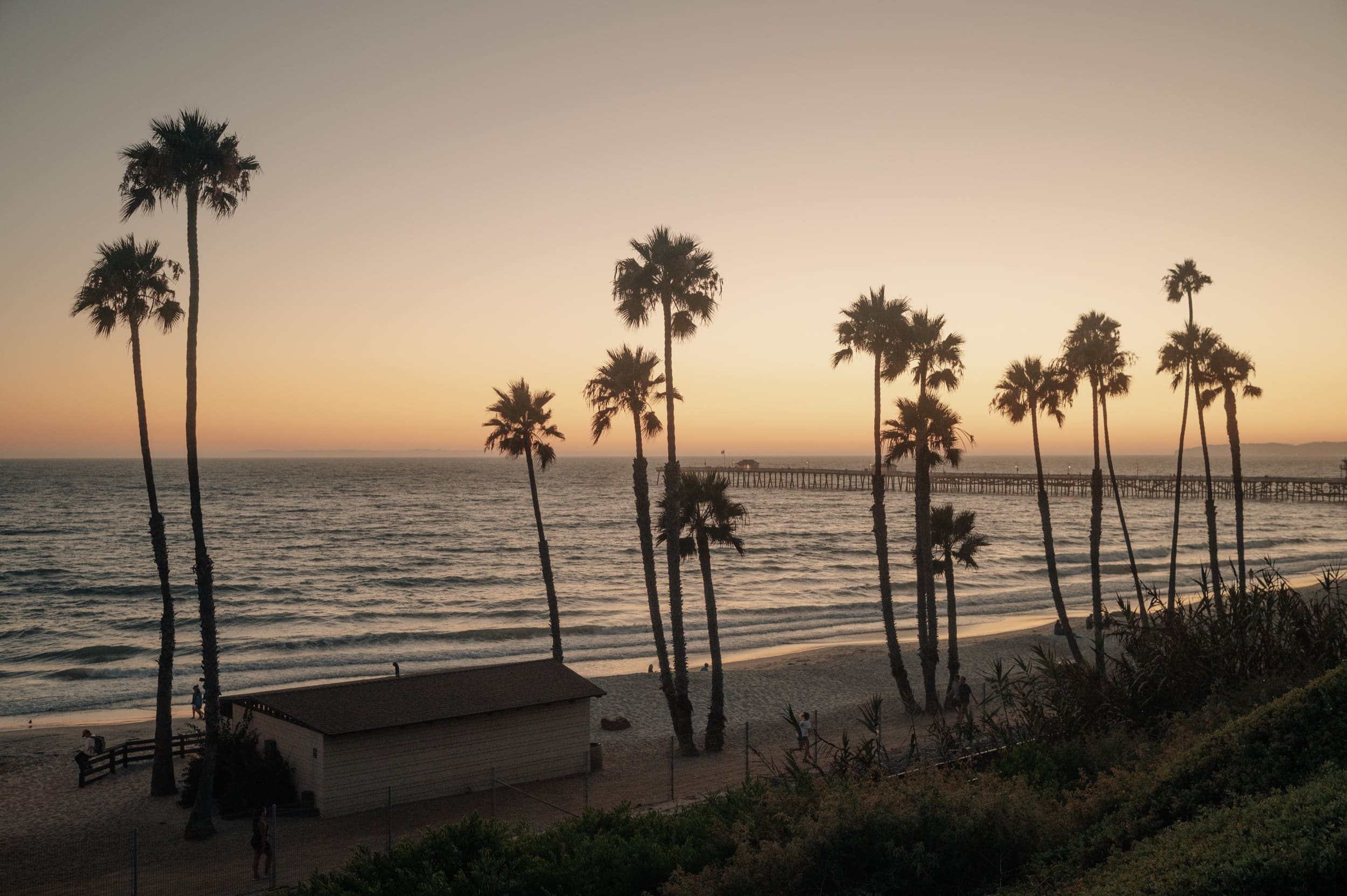
San Clemente Sunset
Subscription Form
  • Reviews
    • Accessory Reviews
    • Calculators
      • Video Data Rate Calculator | Record Time Calculator
      • Diffraction Calculator
      • DoF Calculator | Lens Equivalent
      • Shutter Speed to Shutter Angle Calculator
    • Camera Reviews
    • Lens Reviews
    • Memory Cards Recommendations
      • Fastests SD Memory Cards
      • Fastest MicroSD Cards
      • Fastest CFExpress Type-B Card
      • Fastest CFExpress Type-A Cards
      • Best CFast Memory Card
    • List of Mics
      • Best Streaming & Podcast Mics
  • Camera Guides
    • List of all Blackmagic Cameras
    • List Of all Canon RF Cameras
    • List of all Fujifilm Cameras
    • List of all Nikon Z Cameras
    • List of all Panasonic Cameras
    • List Of all Sony E Cameras
  • List of Lenses
    • Canon RF Lenses
    • Fujifilm GFX Lenses
    • Fujifilm XF Lenses
    • L-Mount Lenses
    • Leica M Lenses
    • Micro Four Thirds Lenses
    • Nikon Z Lenses
    • PL Mount Cine Lenses
    • Sony E Lenses (FE and APS-C)
  • Store
  • My account
Alik Griffin
Alik Griffin
  • Reviews
    • Accessory Reviews
    • Calculators
      • Video Data Rate Calculator | Record Time Calculator
      • Diffraction Calculator
      • DoF Calculator | Lens Equivalent
      • Shutter Speed to Shutter Angle Calculator
    • Camera Reviews
    • Lens Reviews
    • Memory Cards Recommendations
      • Fastests SD Memory Cards
      • Fastest MicroSD Cards
      • Fastest CFExpress Type-B Card
      • Fastest CFExpress Type-A Cards
      • Best CFast Memory Card
    • List of Mics
      • Best Streaming & Podcast Mics
  • Camera Guides
    • List of all Blackmagic Cameras
    • List Of all Canon RF Cameras
    • List of all Fujifilm Cameras
    • List of all Nikon Z Cameras
    • List of all Panasonic Cameras
    • List Of all Sony E Cameras
  • List of Lenses
    • Canon RF Lenses
    • Fujifilm GFX Lenses
    • Fujifilm XF Lenses
    • L-Mount Lenses
    • Leica M Lenses
    • Micro Four Thirds Lenses
    • Nikon Z Lenses
    • PL Mount Cine Lenses
    • Sony E Lenses (FE and APS-C)
  • Store
  • My account
  • Pure Cinema
    Viltrox TCL-X100VI Review | A Budget-Friendly 50mm Upgrade
    • February 21, 2026
  • Thypoch Simera 75mm f1.4 Review
    Thypoch Simera 75mm f1.4 Review & Sample Photos
    • February 18, 2026
  • Kakurajima View
    Viltrox WCL-X100VI Review | A Budget-Friendly 28mm Upgrade
    • February 17, 2026
  • Viltrox 9mm f2.8 Air Review
    Viltrox 9mm f2.8 AIR Review & Sample Photos
    • February 18, 2026
  • Biker Bro
    Viltrox Spark Z3 Flash – Review & Sample Photos
    • February 16, 2026
  • Pure Cinema

    Viltrox TCL-X100VI Review | A Budget-Friendly 50mm Upgrade

    View Post
  • Thypoch Simera 75mm f1.4 Review

    Thypoch Simera 75mm f1.4 Review & Sample Photos

    View Post
  • Kakurajima View

    Viltrox WCL-X100VI Review | A Budget-Friendly 28mm Upgrade

    View Post
Trending Posts
  • Nikon Zf Official Announcement 1
    Nikon Zf – The Fujifilm Killer?
    • February 18, 2026
  • Nikon Z 50mm f1.8 S Lens Review 2
    Nikon Z 50mm f1.8 S Lens Review & Sample Photos
    • February 18, 2026
  • Kamlan 50mm f1.1 II Product Shot 3
    Kamlan 50mm f1.1 II Review & Sample Photos
    • January 18, 2025
0
  • Blog
  • Lens Reviews

Nikon Z – The Best System For Manual Lenses?

  • Alik Griffin
  • December 26, 2024
  • 6 comments

This website contains affiliate links. We will earn a small commission on purchases made through these links. Some of the links used in these articles will direct you to Amazon. As an Amazon Associate, I earn from qualifying purchases.

There are quite a few manual focus third-party lenses for the Nikon Z system now, and one that I have always liked is the Kipon 35mm f2.4.

I have this lens in a Leica M-Mount, but it is available in a Z mount. I keep the M mount because I can use it on any mirrorless camera system with an adapter. Which I also have for every brand of camera.

This lens does still come in the Z mount and if you buy this lens in a Nikon Z Mount, Sony E Mount, or Canon RF mount, you will get an improved minimum focus distance significantly. If you need a better minimum focus distance but want to keep your M lenses, you would need to get an M-mount adapter with a helicoid. Hawks makes one and also now Voigtlander makes one, but they are expensive.

Having the M mount lens is nice though because it means I have one lens that will work on every system for when I’m testing different cameras as I travel.

This is kind of cool because if you’re a Leica M shooter and love manual focus, you can switch camera brands as you please without having to buy all new lenses.

Lifestyle photo of little girl at T Street Beach
ISO 320, f2.4, 1/1600

Using Manual Focus Lenses On The Nikon Z6

What’s it like using manual focus lenses on the Z6? 

Pretty good actually. I always like shooting manually the most on Fujifilm cameras because they have such nice focus peaking compared to my Sony cameras. But the Z6 has an even bigger advantage over any Sony or Fujifilm cameras that makes it even better. Bigger, and higher quality LCD screens, plus at the time the Nikon Z6 had one of the best EVFs so it’s incredibly easy to see what you’re doing.

By the way, a trick to tuning your focus peaking is to turn up or down the camera sharpness in the profile settings. Make sure you only shoot RAW doing this though so it doesn’t affect your sharpness on the actual image. This allows me to get a nicer focus peaking on my Sony cameras that are more comparable to Fujifilm.

Like the Panasonic S1 cameras, the superior displays of the Nikon Z system are so nice for using Manual focus lenses. Plus the Z6 has great focus peaking. All of this together gives you nice visual feedback that lets you really see what you’re doing.

Also, 

I haven’t been very vocal about this because I haven’t done as much testing as I should. But, the Nikon Z system is one of the best systems for adapting third-party lenses because of the sensor.

Why?

I think it has to do with the sensor stack and the micro-lens design on the sensor.

Sony has a very aggressive micro-lens design to compensate for that small mount, this causes a lot more corner softness and sometimes vignetting or other issues along the edges when adapting some lenses.

The Canon RF system often produces a purple vignetting on some third-party lenses. So far I’m seeing it mostly on 35mm lenses, like the Anthy 35mm and the Voigtlander 35mm f1.7 Ultron. 

Of all the systems that I’ve tested (excluding Panasonic), the Nikon Z system produces the best results when using third-party manual focus lenses or adapting Leica M lenses. Best corner performance and no color shifts or strange vignetting patterns.

Why the Kipon 35mm f2.4?

Nothing particular, other than I like the lens. I own a lot of lenses but this one just calls to me.

It’s a very small manual focus 35mm lens, it looks cool, it has some overall nice attributes in terms of the way it renders the image and it’s fun to use for that classic high micro-contrast look.

There are actually two full-frame Kipon lenses I like for this, the 35mm f2.4 IBERIT, and the 75mm f2.4 IBERIT. The 75mm is a true gem, but the Kipon 35mm is also a lot of fun. I just like the way it renders even though the IQ is not really up there with the prestigious Nikon lenses or Sony GM lenses.

It has a little magic that I always find very pleasing. And honestly a lot of times for shooting incidental stuff with my kids, I sometimes like the sort of classic look even more than the look I get with the NIKKOR Z 35mm f1.8S. 

Little Girl Playing In Sand
ISO 320, f-, 1/4000

New Colors

After launching my Core Color presets which took me almost three years to make, I’ve started focusing more attention on another preset pack. 

While Core is based on everyday usable film looks, this new pack, Solaris, is based more on mid-century looks. Like Kodachrome. It pushes the fades and colors shifts a lot harder than Core.

These photos are based on one of the looks in the set with an Orange and Teal formula. While I know orange and teal can be a bit overdone, I always find it works really well at the beach since the colors naturally tend to lean in that direction anyway. All it takes is a little push.

Pair it up with a lens that has some nice classic rendering and you get a winning combo.

Why Most Of These Photos Are Shot At ISO 320

There is a setting in the Nikon Z6 called active D-Lighting. Most cameras have something similar, with Fujifilm it will be under the DR settings, like DR100 or DR200. Canon has highlighted tone priority.

What this does is it will limit the ISO to pretty much preserve highlights, so you get a little bit more dynamic range on the top end.

Now that all these cameras are so good with their dynamic range, I like to turn them on when shooting casually to limit the highlights from blowing out. Sometimes you get a little more grain but I like a little grain so that’s not a problem for me.


T Street Beach
ISO 320, f-, 1/2000
T Street Beach
ISO 320, f-, 1/2000
Kalina Sunset
ISO 320, f2.4, 1/4000
Girl Sunset
ISO 250, f2.4, 1/8000
Luka eating snack
ISO 320, f2.4, 1/5000
Kipon 35mm f2.4 sample photo of Luka
ISO 320, f2.4, 1/6400
Kipon 35mm sample photo
ISO 500, f-, 1/80
Kipon 35mm sample landscape photo
ISO 320, f5.6, 1/800
Kipon 35mm lens on the Nikon Z6 in San Clemente
ISO 900, f–, 1/80
Lone Palm Tree
ISO 320, f-, 1/1250
Sunset girl
ISO 320, f-, 1/4000
0
0
0
0
0
Alik Griffin

A professional video editor, and photographer with a Bachelors in Film studies from UCSD. Based in Los Angeles, I have created commercials, trailers, and other video content for various clients and platforms since 2005. I also love to write about my passions and share my insights on my blog.

Related Topics
  • Beach Photos
  • Incidental
  • Kipon 35mm f2.4
  • Nikon
  • Nikon Z6
  • San Clemente
Previous Article
  • Accessory Guides
  • Camera Guides

Top 7 Best Accessories For The Sony A7sIII

  • Alik Griffin
  • February 12, 2026
View Post
Next Article
  • Blog
  • Lens Reviews

Nikon Z 35mm F1.8 S Review & Sample Photos

  • Alik Griffin
  • July 23, 2024
View Post

Subscribe

Subscribe now to our newsletter

You May Also Like
Pure Cinema
View Post
  • Blog
  • Featured
  • Lens Reviews
  • Reviews

Viltrox TCL-X100VI Review | A Budget-Friendly 50mm Upgrade

  • Alik Griffin
  • February 21, 2026
  • No comments
Thypoch Simera 75mm f1.4 Review
View Post
  • Blog
  • Featured
  • Lens Reviews

Thypoch Simera 75mm f1.4 Review & Sample Photos

  • Alik Griffin
  • February 18, 2026
  • No comments
Kakurajima View
View Post
  • Blog
  • Featured
  • Lens Reviews

Viltrox WCL-X100VI Review | A Budget-Friendly 28mm Upgrade

  • Alik Griffin
  • February 17, 2026
  • 2 comments
Sony A7V Announcement
View Post
  • Blog
  • What's New

Sony A7V – They’re Back In The Game

  • Alik Griffin
  • December 30, 2025
  • 4 comments
6 comments
  1. Yuriy Naidyon says:
    August 29, 2020 at 1:07 am

    Good stuff! Thanks for sharing this.
    Btw Nikon also has this Highlights Priority exposure mode which also helps to avoid the highlights clipping. I usually use it with EV+1, because otherwise it almost pushes the highlights in the mid-tone range.

    Reply
    1. Alik Griffin says:
      August 29, 2020 at 1:34 am

      Thanks man, I never knew that setting was there. Took me awhile to find it, it’s under the Metering section in the i menu. It might be a better method that what I was doing here.

      Reply
  2. michal says:
    September 3, 2020 at 12:19 pm

    Nice.. However I think the colors/ tonality is sooo different compared with the Fuji files.. I found your pictures from Fuji cameras much nicer..

    Reply
    1. Alik Griffin says:
      September 3, 2020 at 1:55 pm

      Yes, I agree. The Fujifilm RAW files are a little more neutral so it’s easier to push the colors around. These are also some crazy new presets I’m working on though so it might take me awhile to dial them in.

      Reply
  3. muhammed says:
    October 14, 2020 at 4:00 pm

    I think the combination of colour grading and the way you shot these photos gives me the feel of a BMPCC4k. Maybe the aperture on this lens gives the feel of a m4/3 sensor? Either way I love it!

    Reply
  4. John Dospesos says:
    October 30, 2020 at 10:55 am

    Hi Alik
    I actually use both 50mm f1.8 and a Voigtlander 21mm f1.4 on the Z . The manual experience is really nice. As i was looking for a 35mm, i read your reviews of Kipon and Yahuhara. I was wondering wich one could be best ? Maybe the 35mm z mount is the best… but i sometimes like the rendering of manual lenses. There is also the possibility of a 35mm by Voigtlander 🙂

    Reply

Leave a Reply to muhammed Cancel reply

Your email address will not be published. Required fields are marked *

San Clemente Sunset

Join The Newsletter

Featured
  • Kalina Flower FIeld
    Nikon Z 50mm f1.4 Review & Sample Photos
    • 24 comments
  • TTArtisan 27mm f2.8 AF Front of Lens
    TTArtisan AF 27mm f2.8 Review & Sample Photos
    • 5 comments
  • Viltrox 9mm f2.8 Air Review
    Viltrox 9mm f2.8 AIR Review & Sample Photos
    • 2 comments
  • What is Micro Contrast
    Micro-Contrast, Is It Real? – Samples With Lens Comparisons
    • 17 comments
  • On Board
    Fujifilm X100VI Review & Sample Photo
    • 5 comments
  • Thypoch Simera 75mm f1.4 Review
    Thypoch Simera 75mm f1.4 Review & Sample Photos
    • No comments
  • Zeiss Planar 50mm f2 on the Leica M11
    Zeiss Planar 50mm f2 Review & Sample Photos
    • 5 comments
  • Tiffen Black Pro Mist Filter At Night. Streets Of Tenjin Japan
    Tiffen Black Pro Mist Review – Is This The One?
    • 10 comments

Subscribe

Subscribe now to our newsletter

Privacy Policy | Licensing | About Me | Contact

Copyright © Alik Griffin Inc. 2025

Input your search keywords and press Enter.