
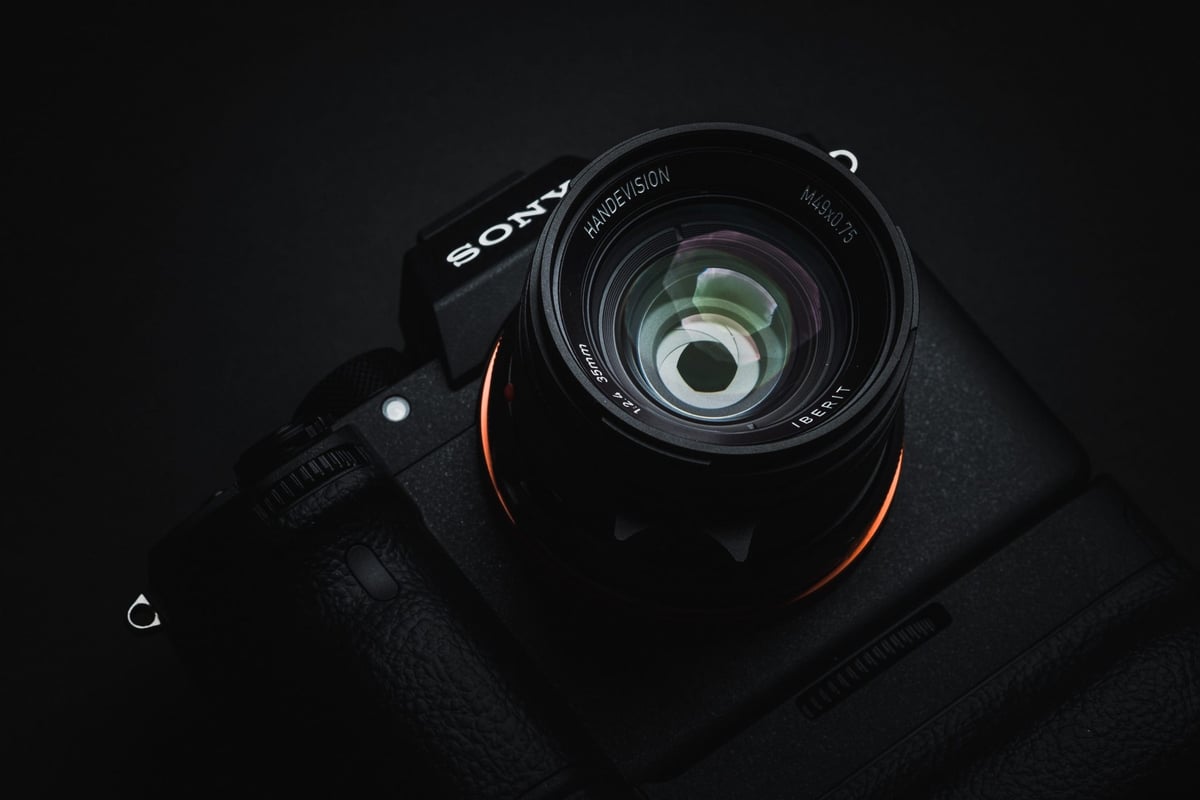
A massive list of all Full Frame and APS-C Lenses for Sony E-Mount. If you’re a regular on this list, I’ve combined both and have given the tables the ability to sort by Full Frame (FE Lenses) and APS-C (E Lenses).
Alternatively, for those looking for even more Cine lenses for their Sony cameras, see the list of PL-mount Cine lenses. You can easily adapt PL or LPL mounts to the E mount
Table of Contents
Sony E-Mount Lenses List
While third-party options have closed the gap in image quality, native Sony lenses still hold a monopoly on specific camera features. If you use a high-performance body like the Sony A1 or A9 III, native glass is often required to unlock the camera’s full potential.
- Maximum Burst Rates: Only native Sony lenses support the full 30fps (A1) or 120fps (A9 III) burst shooting. Third-party lenses are generally capped at 15fps.
- Focus Breathing Compensation: This video-centric feature, which digitally crops the image to hide focus breathing, only works with native Sony lenses.
- Active Stabilization: Sony’s “Active Mode” stabilization works best when the lens and camera can communicate precise focal length and gyro data, which is most effective with native glass.
- Teleconverters: Sony 1.4x and 2.0x teleconverters are exclusively compatible with select native Sony telephoto lenses.
Understanding the Sony Lens Hierarchy
- G Master (GM & GM II) The “Gold Master” line represents Sony’s distinct vision for the future of optics. Unlike older designs that prioritized center sharpness, GM lenses are engineered for extreme resolution (to resolve 60MP+ sensors) and creamy bokeh simultaneously.
- Sony G Series: The “G” series is the workhorse line. These lenses balance mobility with professional performance. In recent years, Sony has blurred the line between G and GM, with lenses like the 20-70mm f/4 G offering optical quality that rivals top-tier glass, just with a slower aperture.
- Sony Zeiss (ZA) Before G Master, there was Sony Zeiss. These lenses were designed in partnership with Zeiss and are famous for their “3D Pop” and high micro-contrast.
- Sony Standard (FE) The entry-level line. These are often unlabelled (no G or GM badge) and plastic-fantastic.
- Cinema Line (FE C): Specialized video lenses like the FE C 16-35mm T3.1 G. These combine full autofocus with cine-standard 0.8 pitch gears and de-clicked aperture rings for professional film sets.
- Hidden Gem: The Sony 85mm f/1.8 is widely considered the best value in the entire E-mount ecosystem, offering near-GM sharpness for a fraction of the price. I also personally like the Sony 50mm f1.8 for its more classic rendering.
Sony FE (Full Frame) Lenses
Sony E (APS-C) Lenses
This list includes all Sony E-mount lenses that work on an APS-C sensor.
Sony Lens Codes
Sony lens codes can be confusing, but here is a simple guide to help you understand what they mean.
- OSS – Optical Steady Shot. Or IS it if you’re a Canon user? This means the lens has built-in image stabilization.
- T* – This is Zeiss’ unmatched multi-layer lens coating code. Often referred to as T coating. This will be like their L lenses if you’re a Canon shooter.
- ZA – Mean Zeiss Alpha. Lenses by Zeiss for the Alpha cameras. Or E-Mount cameras.
- G – This is the code Sony uses to distinguish top-quality lenses like the Zeiss T* or the Canon L. It means it’s good.
- FE – Full Frame E mount
Third-party Lenses For Sony E Mount
Third-party lenses for the Sony E-Mount have come a long way, with many tapping into Sony’s protocols for seamless autofocus and electronic controls—great for budget-conscious photographers.
That said, they skip in-camera firmware updates and built-in lens profiles, so you’ll need to manually fix vignetting or distortion in post. Plus, IBIS performance often lags compared to Sony’s own glass. For casual travel shots, they’re solid, but for precision work like architecture, stick to native lenses.
American Lenses
Lensbaby stands out among third-party lens makers for Sony cameras, offering quirky designs that break the mold. Unlike standard lenses, they’re built for creative experimentation, delivering photos with a distinct, artistic flair.
Lensbaby Lenses
Lensbaby is not about clinical sharpness; it is about breaking the rules. Their lenses are designed to create specific optical “effects” in-camera, saving you hours of Photoshop work.
Sol 45: A fixed 45mm f/3.5 tilt lens. It is a cheaper, “always-ready” alternative to the Composer Pro, featuring a fixed “Sweet Spot” of focus.
- The “Optic Swap” System (Composer Pro II): This is their core product. It is a tilting housing (the Composer Pro II) that sits on your camera. You insert different “Optics” into it to change the effect.
- Sweet Optic (35, 50, 80): Creates a sharp “Sweet Spot” of focus surrounded by a streaky blur.
- Edge Optic (35, 50, 80): Creates a sharp “slice” of focus through the image (miniature effect).
- Twist 60: A Petzval-style optic that creates extreme swirly bokeh.
- Velvet Series (Standalone): These are traditional lenses (28mm, 56mm, 85mm) that do not tilt. They produce a “glowy” soft-focus effect at wide apertures (great for ethereal portraits) but sharpen up when stopped down. They also offer 1:2 Macro capabilities.
Canadian Third-Party Lenses
Simmod Cine Lenses
Simmod Lenses is a premier Canadian manufacturer of cine-mod components and cinema lenses, with a strong focus on empowering users of Sony E-Mount cameras like the FX3, FX6, and A-series bodies.
Their primary mission is to transform still photography lenses, particularly vintage glass, into cinema-ready tools. For Sony users, this means:
- Cine Mod Kits provide precision-machined parts—such as seamless follow-focus gears and cine front rings—to make vintage lenses mechanically ready for a professional workflow.
- LPL and PL Adapters: They offer high-quality, shimmable LPL-to-Sony E-Mount and PL-to-Sony E-Mount adapters. These products allow Sony filmmakers to reliably mount high-end LPL/PL cinema glass or their own LPL-converted vintage lenses onto their E-Mount cameras.
- Apsara Lumière Lenses: Their own line of full-frame cinema prime lenses, designed to deliver a vintage, character-rich image, is available in native Sony E-Mount (among other mirrorless mounts), making them a plug-and-play solution for the Sony ecosystem.
German Third-Party Sony Lenses
If you want high-quality lenses for your Sony E-mount camera from Germany, you have three options: Meyer Optic Goerlitz, Voigtlander, and Zeiss. These are all respected brands that make German optics. Zeiss also makes some excellent autofocus lenses. Even though Zeiss is now owned by a Japanese company, Cosina, some of their lenses are still made in Germany.
Meyer Optik Görlitz (E-Mount)
These are modern remakes of legendary vintage German lenses, now with native Sony E-mounts. They are not about sharpness; they are about Character.
- Trioplan: The Trioplan 100mm f/2.8 II is famous for “Soap Bubble Bokeh,” creating distinct, sharp-edged circles of light in the background.
- Biotar: The Biotar 58mm f/1.5 II is the king of “Swirly Bokeh,” creating a vortex-like effect around your center subject.
Voigtlander / Cosina Sony Primes Lenses
My Take on Voigtländer If you’ve read my reviews, you know I have a lot of Voigtländer lenses, usually in the Leica M mount. These are manual-focus lenses, but they are fully chipped for Sony, so you still get 5-axis IBIS and focus distance data in your viewfinder.
- APO-Lanthar: The “optical perfection” line. Lenses like the 50mm f/2 APO-Lanthar are apochromatic, meaning they have zero chromatic aberration and are among the sharpest lenses ever tested.
- Heliar: Vintage-inspired designs (like the 40mm f/2.8) that prioritize compact size and unique rendering over clinical sharpness. Generally, slower lenses.
- Color-Skopar: Prioritizes compact size and portability. These “pancake” or near-pancake lenses feature moderate apertures but are razor-sharp and small enough to fit in a jacket pocket.
- Nokton: The “character” line. These are ultra-fast lenses (often f/1.2 or f/1.4) designed for low light and dreamy bokeh.
- Sunstars: Voigtlander is famous for its straight-aperture blades, which create distinct, sharp 10-point or 12-point sunstars even at moderate apertures.
Zeiss Lenses For Sony
Before the G Master era, Zeiss was the gold standard for E-mount. While Sony has technically surpassed them in autofocus speed and edge-to-edge sharpness, many photographers (myself included) still believe Zeiss offers a unique “3D Pop” and micro-contrast that modern lenses struggle to replicate.
- Batis (Autofocus): These unique, curvy lenses feature an OLED screen on the barrel that displays focus distance and depth of field. They are weather-sealed and known for rich color saturation.
- Touit: An older autofocus line designed specifically for APS-C cameras (Sony A6000 series).
- Loxia (Manual Focus – Legacy): Note: As of late 2025, the Loxia line (21mm, 25mm, 35mm, 50mm, 85mm) has been largely discontinued. However, they remain highly sought after on the used market for their “classic” rendering, distinct 10-point sunstars, and mechanical de-click feature for video.


Japanese Third-Party Sony FE Lenses
Sony photographers and videographers can benefit from Japanese third-party lenses, which offer quality build and optics at a reasonable price. Some of the big names in Japan that make these lenses are Sigma, Tamron, and Tokina. They have great designs that use the latest lens technology.
Fujifilm Cinema Lenses For Sony
Fujifilm is making Cine lenses for the E-Mount and the Fujifilm X-Mount. Fujifilm has been known for its legendary lenses. It’s nice to see them taking a consumer approach to the cine lenses.
These lenses also only cover Super 35mm. So you must crop down your full-frame cameras to Super 35mm.
Gizmon Lenses
Gizmon (Toy Lenses) Gizmon creates ultra-slim pancake lenses that bring the “Disposable Camera” look to your high-tech Sony A7.
- Wtulens (17mm f/16): An ultra-wide version that uses two disposable camera elements. On a full-frame sensor, it produces extreme vignetting (a tunnel effect), which is perfect for gritty, artistic street photography.
- Vivilens (22mm): Inspired by the “Vivitar Ultra Wide and Slim” toy camera. It provides a slightly wider perspective with soft edges and flares that digital sensors usually try to eliminate.
- Note: These are fixed-aperture (f/16) and fixed-focus. You just point and shoot.
Sigma E Mount Lenses
Sigma Lenses for Sony E-Mount: Sigma is widely considered the top third-party lens manufacturer for Sony E-mount cameras. Their modern DG DN (Digital Native) lenses are designed specifically for mirrorless cameras, replacing the older, heavier DSLR adaptations.
- Sigma Art: Known for uncompromising optical quality. Lenses like the Sigma 85mm f/1.4 DG DN Art often rival or beat native Sony GM lenses in sharpness for a significantly lower price.
- Sigma Sports: Heavy-duty telephoto lenses with robust weather sealing, designed for wildlife and action.
- Sigma Contemporary: Compact, lightweight, and sharp. The “I-Series” primes (like the 35mm f/2) feature all-metal builds and aperture rings, making them a favorite for street photographers.
- Sigma Cine (High Speed): Sigma re-houses its acclaimed “Art” glass into fully manual cinema housings. These feature standard 0.8 pitch gears, 95mm front diameters, and T-Stop markings (e.g., 18-35mm T2) for precise exposure matching on set.


Tamron E Mount Lenses
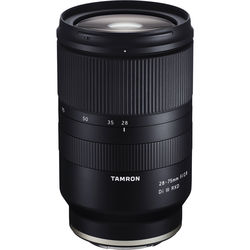
Tamron Lenses for Sony E-Mount. Tamron revolutionized the Sony system with their “Holy Trinity” f/2.8 zooms. They are famous for unique focal lengths (like the 35-150mm f/2-2.8) that replace multiple prime lenses.
- G2 (Generation 2): Look for “G2” in the lens name (e.g., 28-75mm f/2.8 G2). These updated models feature the faster VXD focus motors and improved build quality compared to the original RXD versions.
- Video Features: The “G2” lenses (like the 28-75mm f/2.8 G2) use VXD motors that are silent and smoothly track fast-moving subjects, with minimal focus breathing.
- Macro Capability: Many Tamron zooms offer “1:2 macro” focusing distances at the wide end, adding versatility for detail shots.
- Uniform Filter Size: Almost all Tamron mirrorless lenses use a 67mm filter thread. This is a huge advantage for videographers, allowing them to use a single set of ND filters across their entire kit.
Tokina Lenses For Sony
Tokina FE Lenses Tokina’s presence on Sony is smaller than on DSLRs, but they offer the FíRIN line specifically for full-frame mirrorless.
- FíRIN 20mm f/2: This lens is available in two versions: manual focus and autofocus. It is known for its high resolution and clean optics, making it a solid alternative to Sony’s 20mm G lens for landscape photographers.
- atx-m: While most “atx-m” lenses are for crop sensors, the 85mm f/1.8 FE is a straightforward, budget-friendly portrait lens for full-frame users.


Yasuhara Lenses
Yasuhara FE Lenses Yasuhara is a boutique Japanese manufacturer known for experimental optical designs.
- Anthy 35mm f/1.8: This is their primary Full-Frame lens. It is designed with a deliberate “vintage” optical formula to replicate the rendering of 1960s rangefinder lenses (soft corners, lower contrast) but housed in a modern metal body with a unique retractable lens hood.
Korean Third-Party Lenses For Sony FE
Samyang / Rokinon Lenses
Samyang (branded as Rokinon in North America) has matured significantly. In the early days, their lenses were known for being sharp but suffering from inconsistent autofocus and a slight color cast. The new “Series II” (Gen 2) lenses have largely solved these issues.
- Gen II: Samyang has recently updated their popular primes (like the AF 50mm f/1.4 II) to include faster autofocus motors and weather sealing, addressing the main complaints of their older lenses.
- Astro-Focus: Many Samyang lenses now feature an “Infinity Focus Hold” button, making them excellent choices for astrophotography.
- The “Tiny” Series: Lenses like the Samyang 35mm f/2.8 and 45mm f/1.8 are incredibly small and light, perfect for travel or gimbal work.
- Cine DSX: The entry-level cine standard. These are manual focus photo lenses re-housed with de-clicked apertures and focus gears. The “DSX” update adds weather sealing and rounded aperture blades.
- XEEN & XEEN CF: Their professional cinema line. The “CF” (Carbon Fiber) models are ultra-lightweight, featuring luminous markings and unified gear positions for easy lens swaps on gimbals/drones.
- V-AF Series: A unique hybrid line. These are Autofocus Cine Lenses that feature a “Tally Lamp” on the front (to show when recording) and unified size/weight across the entire set for gimbal use.
Russian Third-Party E Mount Lenses
The shortlist of available Russian lenses for the Sony E-Mount.
Zenit Lenses / Lomography
Lomography isn’t just for film cameras; they produce native E-mount versions of their famous “Art Lenses.” These are typically brass-bodied, manual focus lenses designed to replicate 19th-century optics.
- Petzval Art Lenses: Lenses like the Petzval 55mm f/1.7 MKII feature a dedicated “Bokeh Control Ring” (1-7 levels) that allows you to mechanically adjust the intensity of the background swirl.
- Waterhouse Aperture: Some of their lenses use “drop-in” aperture plates (stars, hearts, etc.) to change the shape of your bokeh balls—a fun, creative tool for specific projects.
UK Third-Party Lenses
The United Kingdom has few options for third-party lenses that are compatible with Sony Cameras. Only a handful of UK-based lens manufacturers, such as Cooke and Reflex, produce lenses for the Sony E mount. These lenses are primarily cine lenses designed for video production, featuring manual focus and aperture control. They are also quite expensive and bulky compared to native Sony lenses.
Cooke Lenses
Yes, that Cooke. The legendary British manufacturer used on countless Oscar-winning films now produces a line specifically for mirrorless cameras.
- The Cooke Look: Why pay $4,000+ for a prime lens? For the “Cooke Look”—a warm, smooth rendering of skin tones and a unique edge fall-off that gives images a distinct “filmic” dimensionality. They are also color-matched to their bigger Hollywood siblings (Panchro/i Classic).
- Cooke SP3 Series: These are full-frame cinema primes (25mm to 100mm) that come with a user-interchangeable Sony E-Mount. They are based on the legendary Speed Panchro design from the 1920s-50s.
Reflex Lenses
A boutique British brand that started on Kickstarter with a mission to bring vintage character to modern mechanics.
- Model I (40mm f/1.8): This is their flagship. It is a fully manual, full-frame prime lens. The optics are designed to mimic the “imperfections” of vintage glass (flares, lower contrast), but the housing is modern metal with standard cinema gears (0.8 mod) for follow focus systems.
- Availability: Reflex lenses are produced in small batches. They are often sought after by music video directors who want a unique, dreamy aesthetic without dealing with the fragile mechanics of 50-year-old antiques.
Swiss Third-Party Lenses
Irix Lenses
Irix specializes in robust, weather-sealed manual focus lenses that bridge the gap between photography and cinema.
- 150mm Macro 1:1: The Irix 150mm f/2.8 Macro is a unique long-telephoto macro lens. It offers a 1:1 reproduction ratio and a greater working distance than the Sony 90mm Macro, making it ideal for shooting skittish insects without scaring them away.
- Dragonfly Series: Their photo lenses feature the “Dragonfly” finish—a mix of magnesium alloy and composite that is scratch-resistant and fully weather-sealed.
Chinese Third-Party E Mount Lenses
Many third-party Chinese lenses are compatible with Sony cameras, but not all are of the same quality. Some of them can match or even exceed the performance of some Japanese and German brands, while others are just mediocre and uninspiring. To choose the best lens for your camera, research the lens and its manufacturer before buying.
7Artisans Lenses
7Artisans While similar to TTArtisan, 7Artisans differentiates itself with a heavy focus on dedicated cinema glass and ultra-fast manual primes.
- Vision & Spectrum Cine: A comprehensive line of T1.05 and T2.0 cinema lenses known for their stepless apertures and long focus throws.
- Photoelectric AF: They have recently launched full-frame autofocus lenses, such as the AF 50mm f/1.8, focusing on extreme value for entry-level shooters.
- Pancake Primes: Famous for “body cap lenses” like the 18mm f/6.3—tiny, fun lenses that turn your camera into a point-and-shoot.
AstrHori
AstrHori democratizes “specialty” photography by offering budget versions of usually expensive technical lenses.
- Tilt-Shift: The 85mm f/2.8 Tilt Macro is one of the few native E-mount lenses that let you control the plane of focus for product photography without an adapter.
- Probe Macro: The 18mm f/8 and 28mm f/13 are waterproof “Probe” lenses designed to slide inside products or liquids. They are full-frame compatible (though with some vignetting on the 18mm in certain modes).
Astra Labs
ArtraLab is a design-focused brand that builds modern manual focus lenses with a heavy 1960s/70s industrial aesthetic.
- “Nonikkor” Series: Their flagship lenses (like the 50mm f/1.2 and 35mm f/1.4) are unapologetically styled to resemble vintage Nikon (Nikkor) AI-S lenses. They feature deep, scalloped metal focus rings and a dense, all-metal construction that feels incredibly tactile.
- The Look: Unlike modern clinical lenses, ArtraLab optics are designed for “Character.” They are reasonably sharp but allow for flaring and lower contrast wide open, giving your Sony digital sensor a distinct “film era” vibe without an adapter.
Brightin Star
A budget manufacturer that occasionally produces optical marvels.
- Slim/Pancake: They produce several “cap lenses” (like the 28mm f/2.8) that are almost flat against the camera body, turning your A7 into a pocketable street camera.
- 9mm f/5.6: This is currently the widest rectilinear (non-fisheye) lens available for Sony Full Frame. It is tiny, manual focus, and allows for incredibly dramatic architectural angles.
Chiopt Lenses
Chiopt specializes in producing professional cine lenses that are directly available for Sony E-mount cameras.
- Cine Ready: They feature industry-standard 0.8 MOD focus and iris gears for seamless use with external follow-focus systems and professional video rigs.
- Cinematic Look: Their lenses are designed to deliver a “poetic cinematic look” with vivid color reproduction and soft, beautifully rounded bokeh at very fast apertures (like T1.5).
- Full-Frame Coverage: The lenses fully cover your Sony full-frame sensor (like on an A7S III or FX-series camera) and work well on Super 35 (APS-C) sensor bodies.
DZOFilm FE Lenses
DZOFilm has revolutionized the “Mid-Tier” cinema market, bridging the gap between budget plastic lenses and $50k Hollywood glass.
- Catta Zoom (E-Mount): The Catta 35-80mm and 70-135mm are native E-mount full-frame cinema zooms. They are Parfocal (focus stays sharp while zooming) and possess minimal breathing. Unlike converted photo lenses, these are built from the ground up for video productions.
- Vespid Primes: While usually sold in PL/EF mount, DZOFilm offers Interchangeable Mounts to convert these to Sony E. They are famous for their “Vespid” look—sharp but with a gentle roll-off in the highlights, avoiding the harsh “video look” of cheap lenses.
- Gnosis Macro: A specialized line of T2.8 cinema macro lenses (32mm, 65mm, 90mm) designed for commercial product work.
Funleader Lenses
Funleader makes lenses that barely look like lenses. They specialize in the “Caplens” form factor.
- 18mm f/8 Caplens: This lens is so thin it looks like a body cap. It has a fixed f/8 aperture and is focus-free (everything from 0.8m to infinity is in focus). It turns a full-frame Sony A7 into a “snapshot” camera, perfect for candid street photography where you don’t want to look like a pro photographer.
Great Joy Anamorphic Lens
Great Joy (recently rebranding under Blazar) is shaking up the cinema world by offering Full-Frame Anamorphic lenses that don’t cost as much as a car.
- Coverage: These are designed to cover the Full-Frame sensor (33x24mm), allowing you to shoot open-gate video on cameras like the Sony FX3 or A7S III without heavy cropping.
- 1.8x Anamorphic Series: Most budget anamorphic lenses are 1.33x (which doesn’t look very “stretched”). Great Joy offers a 1.8x squeeze (35mm, 50mm, 85mm T2.9), which gives you the true, skinny “CinemaScope” look with oval bokeh and blue streak flares.
Higizmos Anamorphic Lens
Higazmos made a 60mm 1.33x anamorphic lens for the full-frame Sony E system. More information soon.
KamLan Lenses
Kamlan is known almost exclusively for APS-C lenses, but they have one specific model that covers a full-frame sensor.
- Buyer Beware: Be extremely careful when shopping. Kamlan packaging often looks identical. Unless the box explicitly says “Full Frame” (or specifically the 55mm f/1.4 model), assume it is for crop sensors.
- 55mm f/1.4: This is the exception in their lineup. While most Kamlan lenses (like the 50mm f/1.1) will crop your image, the 55mm f/1.4 is designed for Full-Frame. It is a simple, manual-focus standard prime that offers a soft, pleasing rendering for portraits.
Kase Lenses
Kase is primarily a filter manufacturer that has solved one of the biggest headaches for Sony mirrorless users: sensor dust.
- Clip-In Filters: These are not lenses, but they sit inside the lens mount, directly in front of the sensor. They allow you to add Neutral Density (ND) or Light Pollution reduction to any lens, even ultra-wide-angle lenses like the Sony 12-24mm GM that cannot take front filters. They also double as a protective barrier, keeping dust off your sensor when you change lenses.
- 200mm f/5.6 Reflex: Kase’s unique entry into the lens market. This is a modern Mirror Lens (Catadioptric) that uses internal reflection to fit a 200mm telephoto focal length into a body the size of a standard prime. It covers the full-frame sensor and produces distinct “donut bokeh,” now sharpened up for modern high-resolution cameras.
Kipon Kipon (Iberit / Handevision) Primes For Sony E-Mount
is best known for its lens adapters; it produces a line of lenses under the “Iberit” (sometimes branded as Handevision) brand.
- Build Quality: Unlike many cheap lenses, these feature anodized aluminum and brass construction, giving them a dense, premium feel similar to Leica optics.
- Iberit Series: This is a set of manual focus primes (24mm, 35mm, 50mm, 75mm, 90mm) that all share a maximum aperture of f/2.4. They are designed to be small, light, and vintage-styled—perfect for matching with the compact body of a Sony A7C or A7.


Meike Lenses
Meike has graduated from making cheap accessories to producing serious “Pro” glass.
- Cine Line: Meike produces a popular set of affordable S35 and Full Frame Cine Primes (T2.1) that indie filmmakers widely use for their neutral color and consistent gear positions.
- Pro Series (AF): This is the line to watch. Lenses like the Meike 55mm f/1.8 Pro and 85mm f/1.8 Pro are full-frame autofocus lenses that include advanced features like Aperture Rings and Custom Buttons on the barrel—features usually reserved for Sony G lenses.
Mitakon Zhongyi E Lenses
Famous for one thing: Speed. They produce the “Speedmaster” line, which offers extreme apertures that are usually impossible to find at these price points.
- The “Dreamy” Look: Unlike modern GM lenses that are clinical, Mitakon lenses have a distinct “glow” wide open (spherical aberration). They aren’t perfect, but they render portraits with a soft, ethereal look that many fine-art photographers love.
- Speedmaster f/0.95: The 50mm f/0.95 III is their flagship. It is a massive, manual focus chunk of glass designed to give you an incredibly thin depth of field and superior light-gathering capability.
McoPlus Lenses
| Lens Name | Sensor | FF Equiv | Elements | Iris | Filters | E Links | |
|---|---|---|---|---|---|---|---|
| McoPlus 14mm f3.5 | APS-C | 21 | 7/6 | — | Ø52mm | ||
| McoPlus 35mm f1.6 | APS-C | 52.5 | 7/6 | — | Ø49mm | — | E |
| Cine | |||||||
| McoPlus 16mm T2.2 | APS-C | 24 | 13/10 | — | Ø77mm |
Neewer Lenses For Sony
Neewer Lenses are extremely popular, low-budget prime lenses. I love their light stands and reflectors.
NiSi Lenses For Sony
NiSi has entered the lens market with a focus on consistency for hybrid shooters.
- Sunstar Photo Lenses: Their photo primes (like the 15mm f/4) are engineered with straight aperture blades to create massive, sharp 10-point sunstars at any f-stop.
- Athena Prime (Full Frame): A set of cinema lenses (14mm to 135mm) that all share the same weight and size. This allows videographers to swap lenses on a gimbal without re-balancing. They cover the full-frame sensor at T1.9.
You can check the Price at NiSi Filters.
Opteka Lenses
Opteka (often found under similar names like Jintu or Kelda) is the go-to brand for “Super Telephoto” reach on a budget.
- 85mm f/1.8: A manual focus portrait lens. Unlike the crop-sensor options often sold nearby, this model covers the full frame, offering shallow depth-of-field for portraits.
- 420-800mm f/8.3-16: You will recognize this as the long, white, push-pull zoom lens. It covers the Full-Frame sensor completely. While it is dark (slow aperture) and requires manual focus, it is the cheapest way to get 800mm reach on a Sony A7 for moon or distant wildlife photography.
- 500mm f/8 Mirror: A classic “Catadioptric” lens. It uses mirrors (like a telescope) to fold the light, making it incredibly short and light for a 500mm lens. It covers full-frame and produces distinct “donut-shaped” bokeh highlights.
Oshiro Lenses
Oshiro specializes in older, classic optical designs housed in modern metal bodies. These are fully manual lenses that cover the full sensor.
- 35mm f/2 LD: A full-frame wide-angle prime. It lacks the electronic contacts of modern lenses, but it serves as a rugged, throw-around lens for street photography that utilizes the full resolution of your sensor.
- 135mm f/2.8 LD: This is a classic “Portrait Telephoto” spec. It offers the compression and background blur needed for headshots at a rock-bottom price. It covers the full 35mm image circle.
Pergear E Lenses
While Pergear produces many crop-sensor lenses, they have a specific gem for Full-Frame shooters.
- 14mm f/2.8 II: This is the specific model to look for. It is a fully manual Full-Frame ultra-wide prime. For the price, it is an accessible way to get into astrophotography or wide landscape work on an A7 body.
- Important Note: Be careful when shopping for Pergear. Many of their popular primes (like the 25mm or 35mm f/1.6) are APS-C only. Ensure the listing explicitly says “Full Frame” or “A7” compatibility, as the 14mm is one of their few true FE options.
Rock Star
Rockstar Lenses (Legacy) Important Note: “Rockstar” was the original brand name for what is now AstrHori.
- Recommendation: For true Full-Frame options (like the 85mm Tilt-Shift or 12mm Ultrawide), look for the newer AstrHori branding listed in section #16 above.
- Full Frame Availability: Most lenses branded explicitly as “Rockstar” (like the 10mm f/8 pancake or 27mm f/2.8) were designed for APS-C sensors. If you put them on a Sony A7, you will get heavy vignetting or a circular image.
SIRUI Lenses
While famous for their crop-sensor cinema lenses, Sirui has aggressively expanded into Full-Frame Sony E-mount.
- Aurora Series (AF): Sirui’s first autofocus full-frame photo lens, the Aurora 85mm f/1.4, targets the portrait market with extremely smooth bokeh and a price far below Sony’s GM.
- Full-Frame Anamorphic: Sirui produces the Saturn and Venus anamorphic lines. We have included only the 1.6x Full Frame versions here, which let you shoot wide-screen, cinematic footage using the full width of your sensor.
- Sniper Series: Note: The popular “Sniper” f/1.2 autofocus lenses are generally APS-C. We have excluded them from this list unless a specific Full-Frame version is released.
SLR Magic Cinema Lenses
SLR Magic is a long-time player in the indie filmmaking scene. SLR Magic offers native E-mount cine lenses that are significantly smaller than the competition.
- Cine-Style Focus: They are fully manual with a long focus throw, designed for smooth rack focusing.
- MicroPrimes (Cine): These are full-frame cinema lenses (e.g., 50mm T1.2) that are designed to be compact and lightweight. They feature standard 0.8 pitch gears but are sized more like photo lenses, making them ideal for gimbal work.
Thypoch FE Lenses (Manual Focus)
Thypoch (pronounced “tie-pock”) is a new premium manual focus brand that rivals Voigtländer in build quality.
- Simera Series: They feature a unique “Automatic Depth of Field Indicator” (a visual scale that changes as you stop down), inspired by vintage Alpa lenses.
- Full Frame: These lenses cover the full sensor with high resolution.
- Note: Unlike Voigtländer, Thypoch lenses currently do not have electronic contacts. You will need to manually set your focal length in the camera menu for IBIS to work correctly.
Use code ALIKGRIFFIN for an extra 5% off when ordering from their website: Thypoch
TTArtisan Lenses
Originally known for ultra-cheap manual primes, has successfully pivoted into the Autofocus market.
- Note on Branding: Often confused with 7Artisans, TTArtisan is distinct for its “Retro” aesthetic (zebra-striped rings) and slightly more aggressive push into autofocus technology.
- AF Series: Their new autofocus lineup (including the AF 27mm f/2.8, 35mm f/1.8, and 56mm f/1.8) offers fast stepping motors and metal build quality for prices often under $150.
- Tilt-Shift: One of the few budget brands producing a 100mm f/2.8 Tilt-Shift 2x Macro, giving photographers control over the plane of focus without spending thousands on Canon/Nikon equivalents.
Venus (Optics Laowa)
Laowa is the “King of Specialties.” They build lenses that no other manufacturer dares to make.
- Zero-D (Zero Distortion): Their ultra-wide angle line (e.g., 12mm f/2.8 Zero-D) is engineered to have virtually no barrel distortion, making them essential for real estate and architectural photographers.
- Nanomorph: A series of tiny, budget-friendly 1.5x Anamorphic lenses that cover Super35 sensors, available with Blue, Amber, or Silver flare options.
- 2x Ultra Macro: Unlike standard “1:1” macro lenses, Laowa’s macros (like the 90mm f/2.8) go to 2x magnification, allowing you to capture microscopic details invisible to the naked eye.
- Probe Series: The famous “weird long lens” used in product commercials to shoot inside liquids and small objects.
Viltrox
My Take on Viltrox: A few years ago, Viltrox was a “budget only” option. Today, they are a serious threat to the big brands. I’ve been incredibly impressed by their recent Pro and LAB series.
- LAB Series: The absolute flagship line. These are massive, ultra-premium lenses designed to beat Sony’s G Master line. The AF 135mm f/1.8 LAB features their “HyperVCM” motors and optical performance that rivals lenses costing 3x as much.
- Air Series: The lightweight, daily-carry line. These lenses (like the 20mm f/2.8 Air or 56mm f/1.7 Air) prioritize compact size and low weight over extreme apertures. They are perfect for travel vlogging or gimbal work where balance is key.
- Cine Line (EPIC): Viltrox also produces the EPIC Series of Anamorphic lenses (1.33x), bringing the “Hollywood Look” (oval bokeh, horizontal flares) to independent filmmakers at an accessible price.
Viltrox Official Website: Viltrox.com. You can check the official Viltrox website for new products and current deals, and use code ALIKGRIFFIN for 5% off.
Yongnuo E Lenses
Once known only for cheap flash triggers, Yongnuo has successfully pivoted into producing legitimate Full-Frame autofocus lenses.
- Performance: In my experience, these offer about 90% of the performance of Sony’s “FE 85mm f/1.8” for a significantly lower price. They are sharp, though the autofocus motors are slightly louder than Sony’s native linear motors.
- DF DSM Series: This is the specific label to look for (“DF” = Digital Full-frame, “DSM” = Digital Stepping Motor). The YN 85mm f/1.8S DF DSM and YN 50mm f/1.8S DF DSM are their standouts.
- Smart Features: Surprisingly, these budget lenses often feature a Custom Function Button (AFL) and a USB-C port directly on the barrel for firmware updates—features usually reserved for expensive pro glass.
Sony E-Mount Adapters
When you want to use lenses from other brands or older models with your Sony E-Mount camera, you need to use adapters to make them compatible.
Some of the adapters many users prefer are the Metabones, which is reliable but expensive; the Novoflex, which is more affordable and works well for most users; and the Voigtlander, which is ideal for Leica M lenses.
| Metabones E-Mount Adapter | Autofocus | Aperture Control | Check Price |
| T Canon EF to E IV | Yes | Yes | B&H |
| Canon EF to E IV | Yes | Yes | Amazon |
| Nikon F to E | No | No | Amazon / B&H |
| Nikon G to E | No | No | Amazon / B&H |
| Leica M to E | No | No | B&H |
| Metabones Speed Booster Adapter | |||
| Canon EF Speed Booster Ultra II .71x | Yes | Yes | B&H |
| Canon EF Speed Booster Ultra | Yes | Yes | Amazon |
| Canon EF T Speed Booster Ultra 0.71x | Yes | Yes | Amazon / B&H |
| Nikon F Speed Booster Ultra | No | No | Amazon / B&H |
| Sigma E-Mount Adapter | |||
| MC-11 Canon EF to E Adapter | Yes | Yes | Amazon / B&H |
| Fotodiox E-Mount Adapter | |||
| Canon EF to E Pro Fusion | Yes | Yes | Amazon / B&H |
| Canon EF to E ND Throttle | Yes | Yes | B&H |
| Canon EF to E Iris Control | No | Manual | Amazon / B&H |
| Canon EF to E | No | No | Amazon |
| Canon FD to E | No | No | Amazon |
| Nikon F to E | No | No | Amazon |
| Nikon G to E | No | No | Amazon |
| Nikon F(G-Type) to E DLX | No | Manual | B&H |
| Nikon F(G-Type) to E DeClick | No | Manual | B&H |
| Leica M to E Pro | No | No | Amazon / B&H |
| Leica M to E | No | No | Amazon |
| Leica M to E Helicoid | No | No | B&H |
| Leica L39 to E | No | No | B&H |
| M42 to E Pro | No | No | B&H |
| M42 to E | No | No | B&H |
| Commlite E-Mount Adapter | |||
| Nikon F to E | Yes | Yes | — |
| Novoflex E-Mount Adapter | |||
| Nikon F to E-Mount | No | No | Amazon / B&H |
| Canon FD to E-Mount | No | No | Amazon / B&H |
| Pentax-K to E-Mount | No | No | B&H |
| Leica M to E-Mount | No | No | Amazon / B&H |
| Leica R to E-Mount | No | No | Amazon / B&H |
| PL to E-Mount | No | No | B&H |
| M42 to E-Mount | No | No | B&H |
| Contax/Yashica to E-Mount | No | No | B&H |
| Minolta MD/MC to E-Mount | No | No | B&H |
| Voigtlander E-Mount Adapter | |||
| Leica M to E-Mount | No | No | Amazon |
| Leica M to E-Mount Close Focus | No | No | Amazon / B&H |
| Mitakon Zhongyi | |||
| M42 to E-Mount Turbo Mk II | B&H |
Kipon Adapters for Sony E-Mount
Kipon offers a wide range of Sony E-mount adapters, compatible with nearly every lens available. They’ve also started producing Helicoid adapters and some Tilt adapters, which should be available for the Sony E Mount soon.
Kipon has also created a Baveyes adapter, which serves as a focal reducer for larger-format lenses. These adapters feature built-in optics and offer full electronic and autofocus capabilities.
Sony Lens Lineup | Conclusions
Common Questions About Sony Lenses
What is the difference between Sony FE and E lenses?
FE stands for Full-frame E-mount. These lenses are designed to cover the larger sensors found in cameras like the Sony A7 IV, A7R V, and A9 III. E (without the F) generally refers to lenses designed for APS-C (cropped) sensors, like the Sony A6700 or ZV-E10.
- Note: You can use FE lenses on APS-C cameras (they work great!), but using E lenses on Full-Frame cameras will force the camera into “Crop Mode,” significantly reducing your resolution.
Can I use third-party lenses (Sigma, Tamron) on Sony cameras?
Absolutely. Sony’s E-mount is an “open” system, meaning third-party manufacturers like Sigma, Tamron, Viltrox, and Samyang can legally produce high-quality autofocus lenses for Sony. In 2026, lenses like the Sigma 24-70mm f/2.8 DG DN II or the Tamron 28-75mm G2 often provide 95% of the performance of native Sony GM lenses for half the price.
Do I need a G Master (GM) lens?
Sony G Master (GM) lenses are Sony’s top-tier professional line, featuring the best optical coatings, weather sealing, and fastest autofocus motors.
- Buy GM if: You are a working professional who needs dependable autofocus in extreme conditions or the absolute highest resolution for high-megapixel bodies like the A7R V.
- Skip GM if: You are a hobbyist. Sony’s “G” series and standard lenses (or third-party options) are often more than sharp enough for print and web use.
What is the best all-around lens for Sony full-frame?
For most users, a 24-70mm f/2.8 zoom is the standard “do-it-all” lens. However, if you want something lighter for travel, the Sony 20-70mm f/4 G has become a modern favorite because it goes wider (20mm), which is incredibly useful for vlogging and wide landscapes.










Leave a Reply