We use minimal analytics to improve the site. Is that okay?

Alik Griffin
San Clemente Sunset
Subscription Form
  • Reviews
    • Accessory Reviews
    • Calculators
      • Video Data Rate Calculator | Record Time Calculator
      • Diffraction Calculator
      • DoF Calculator | Lens Equivalent
      • Shutter Speed to Shutter Angle Calculator
    • Camera Reviews
    • Lens Reviews
    • Memory Cards Recommendations
      • Fastests SD Memory Cards
      • Fastest MicroSD Cards
      • Fastest CFExpress Type-B Card
      • Fastest CFExpress Type-A Cards
      • Best CFast Memory Card
    • List of Mics
      • Best Streaming & Podcast Mics
  • Camera Guides
    • List of all Blackmagic Cameras
    • List Of all Canon RF Cameras
    • List of all Fujifilm Cameras
    • List of all Nikon Z Cameras
    • List of all Panasonic Cameras
    • List Of all Sony E Cameras
  • List of Lenses
    • Canon RF Lenses
    • Fujifilm GFX Lenses
    • Fujifilm XF Lenses
    • L-Mount Lenses
    • Leica M Lenses
    • Micro Four Thirds Lenses
    • Nikon Z Lenses
    • PL Mount Cine Lenses
    • Sony E Lenses (FE and APS-C)
  • Store
  • My account
Alik Griffin
Alik Griffin
  • Reviews
    • Accessory Reviews
    • Calculators
      • Video Data Rate Calculator | Record Time Calculator
      • Diffraction Calculator
      • DoF Calculator | Lens Equivalent
      • Shutter Speed to Shutter Angle Calculator
    • Camera Reviews
    • Lens Reviews
    • Memory Cards Recommendations
      • Fastests SD Memory Cards
      • Fastest MicroSD Cards
      • Fastest CFExpress Type-B Card
      • Fastest CFExpress Type-A Cards
      • Best CFast Memory Card
    • List of Mics
      • Best Streaming & Podcast Mics
  • Camera Guides
    • List of all Blackmagic Cameras
    • List Of all Canon RF Cameras
    • List of all Fujifilm Cameras
    • List of all Nikon Z Cameras
    • List of all Panasonic Cameras
    • List Of all Sony E Cameras
  • List of Lenses
    • Canon RF Lenses
    • Fujifilm GFX Lenses
    • Fujifilm XF Lenses
    • L-Mount Lenses
    • Leica M Lenses
    • Micro Four Thirds Lenses
    • Nikon Z Lenses
    • PL Mount Cine Lenses
    • Sony E Lenses (FE and APS-C)
  • Store
  • My account
  • Pure Cinema
    Viltrox TCL-X100VI Review | A Budget-Friendly 50mm Upgrade
    • February 21, 2026
  • Thypoch Simera 75mm f1.4 Review
    Thypoch Simera 75mm f1.4 Review & Sample Photos
    • February 18, 2026
  • Kakurajima View
    Viltrox WCL-X100VI Review | A Budget-Friendly 28mm Upgrade
    • February 17, 2026
  • Viltrox 9mm f2.8 Air Review
    Viltrox 9mm f2.8 AIR Review & Sample Photos
    • February 18, 2026
  • Biker Bro
    Viltrox Spark Z3 Flash – Review & Sample Photos
    • February 16, 2026
  • Pure Cinema

    Viltrox TCL-X100VI Review | A Budget-Friendly 50mm Upgrade

    View Post
  • Thypoch Simera 75mm f1.4 Review

    Thypoch Simera 75mm f1.4 Review & Sample Photos

    View Post
  • Kakurajima View

    Viltrox WCL-X100VI Review | A Budget-Friendly 28mm Upgrade

    View Post
Trending Posts
  • Nikon Zf Official Announcement 1
    Nikon Zf – The Fujifilm Killer?
    • February 18, 2026
  • Nikon Z 50mm f1.8 S Lens Review 2
    Nikon Z 50mm f1.8 S Lens Review & Sample Photos
    • February 18, 2026
  • Kamlan 50mm f1.1 II Product Shot 3
    Kamlan 50mm f1.1 II Review & Sample Photos
    • January 18, 2025
0
  • Blog
  • Hardware Reviews
  • Reviews

How To Protect Your Lenses From Moisture

  • Alik Griffin
  • May 29, 2023
  • No comments

This website contains affiliate links. We will earn a small commission on purchases made through these links. Some of the links used in these articles will direct you to Amazon. As an Amazon Associate, I earn from qualifying purchases.

How to protect your lenses from fungus
Silica Gel Packets

Did you know one of the main killers of old lenses is fungus and haze?

Haze comes from heat evaporating the greases in the lenses which will condensate on the inner elements. Not much you can do about that other than keep you lenses out of the heat as much as possible.

Fungus is fed by moisture and there is something you can do about that, it’s also super easy and cheap.

How To Protect Your Lenses From Fungus

If you live in a humid climate, you know how quickly mold and fungus can consume everything. The same is true of your lenses and camera gear.

Humidity is a killer, feeding any mold spores that may have made their way into your lenses, creating fuzzy spots that will ruin your glass. I’ve even had it happen to one of my lenses when living in Los Angeles and it’s not even that humid there. It was an old lens, a Helios 44-4 so it may have already been contaminated. All it needed was a little moisture. I also have an old Olympus camera that has been completely eaten by fungus. I wish I could show you but it’s currently quarantined deep in the bowels of my storage unit in Los Angeles.

Now that I’m in Japan with humidity regularly reaching 80%+ in the summer, I’m not taking any chances.

Here are some really cool and inexpensive tricks to protect your lenses from humidity.

Method #1 – Silica Gel Beads + Ziploc Bags
How to protect your lenses from moisture
Silica Gel Packets

Silica Beads (Upgraded) – Amazon

Silica Beads Food Grade – Amazon

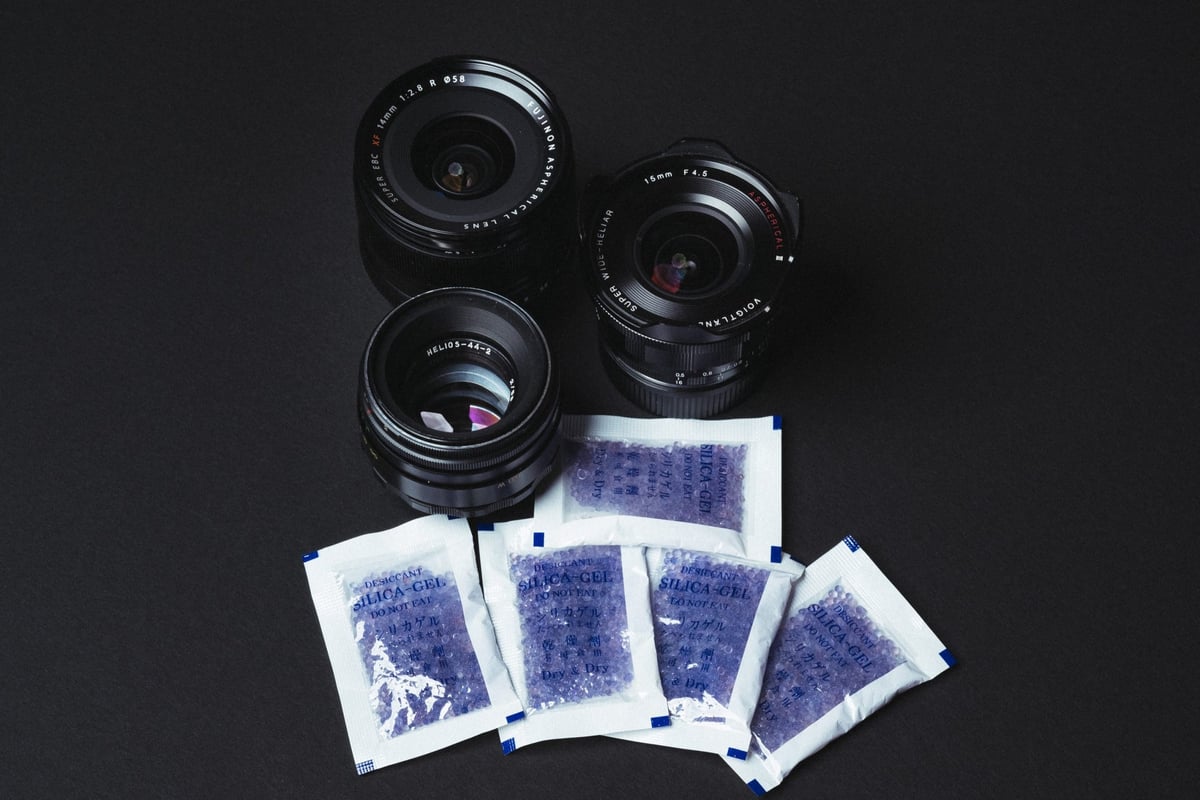
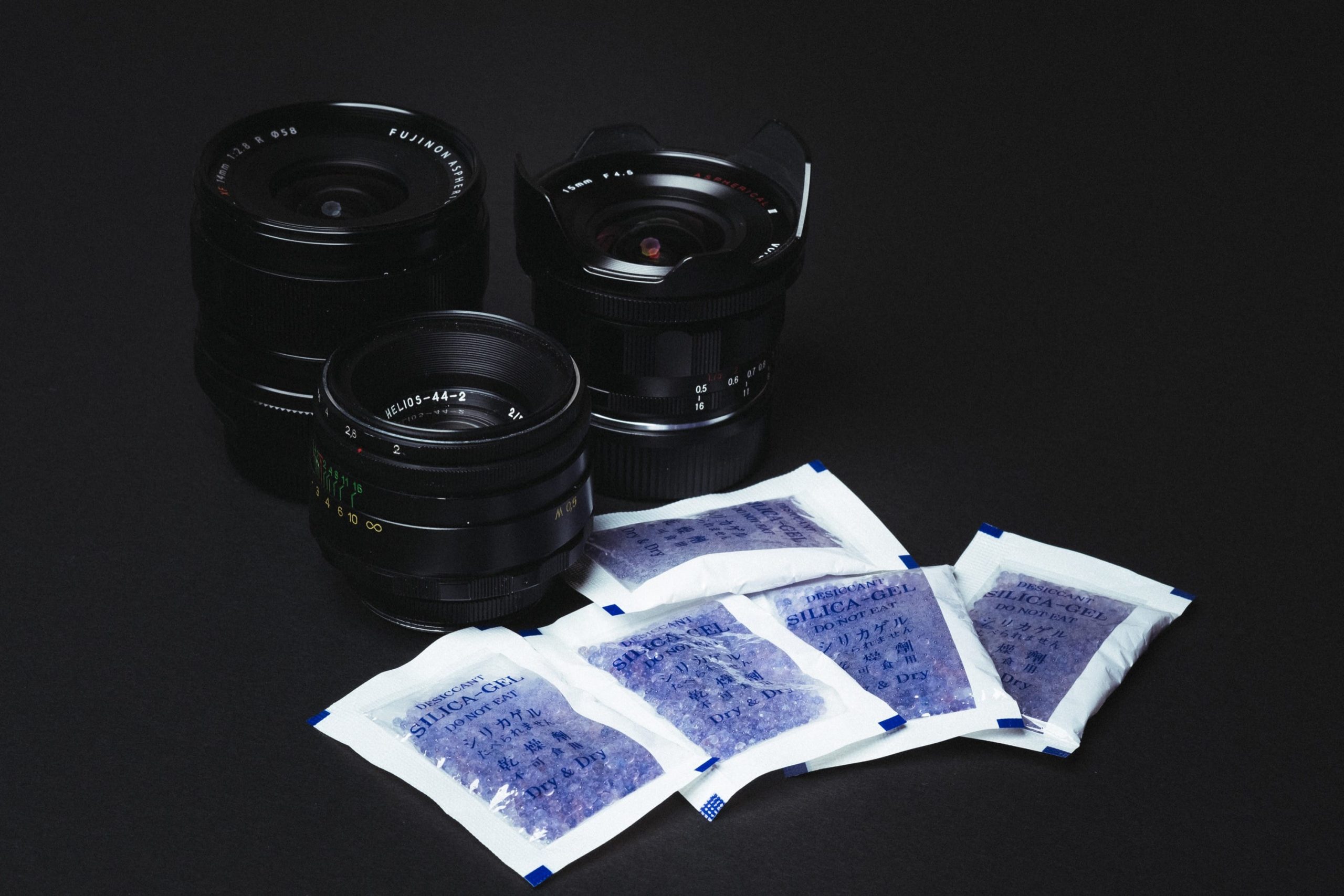
You’ve seen these silica packs packaged with almost every lens, camera, backpack, or even bag of beef jerky. What you probably didn’t know is that they are rechargeable and some have color indicators to let you know when they are fully saturated with moisture.

The beads I use have color in them, a Chlorine Cobalt substance that causes the silica to change from purple to pink color as they absorb moisture.
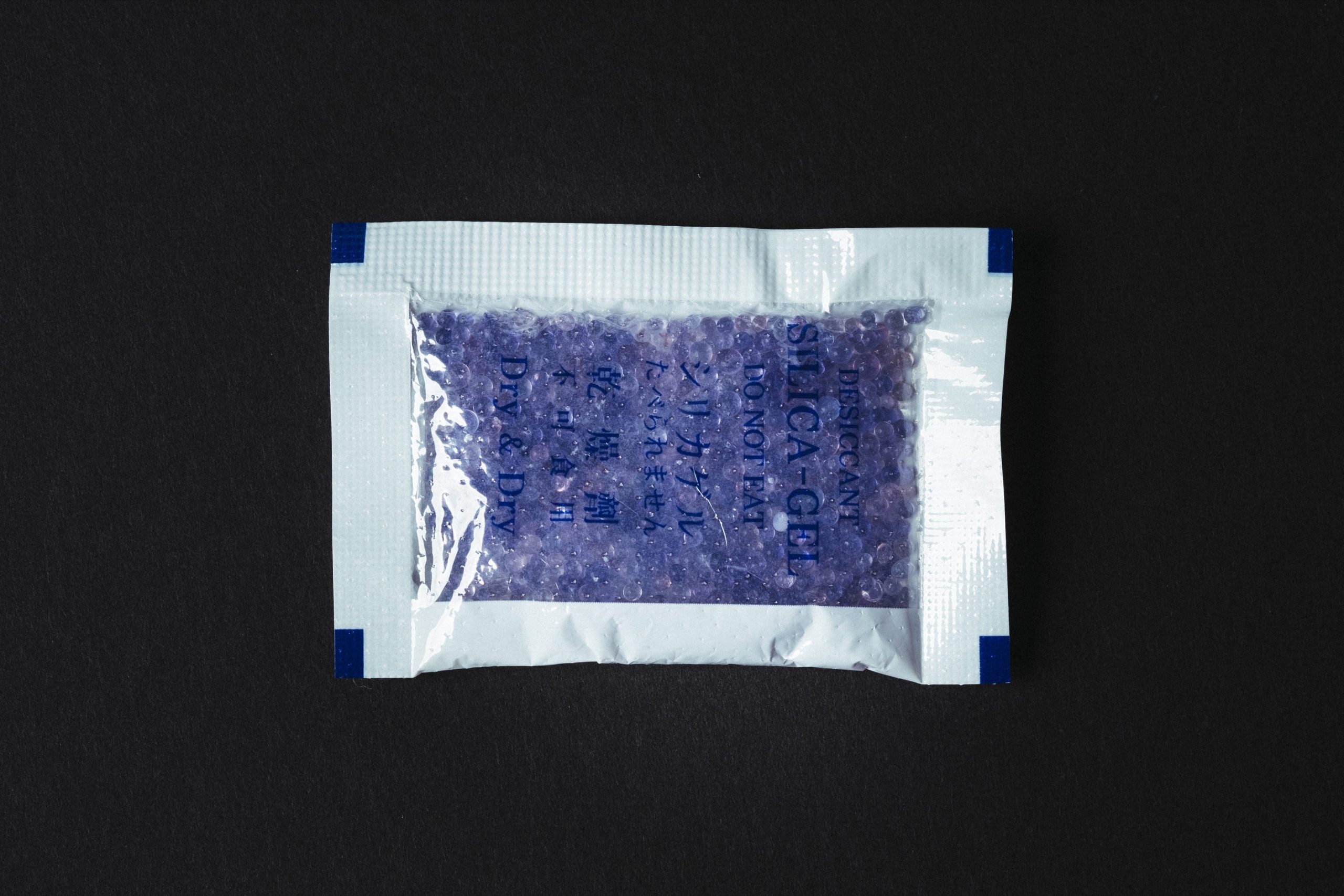
Silica Gel Packet
Silica Gel Packets

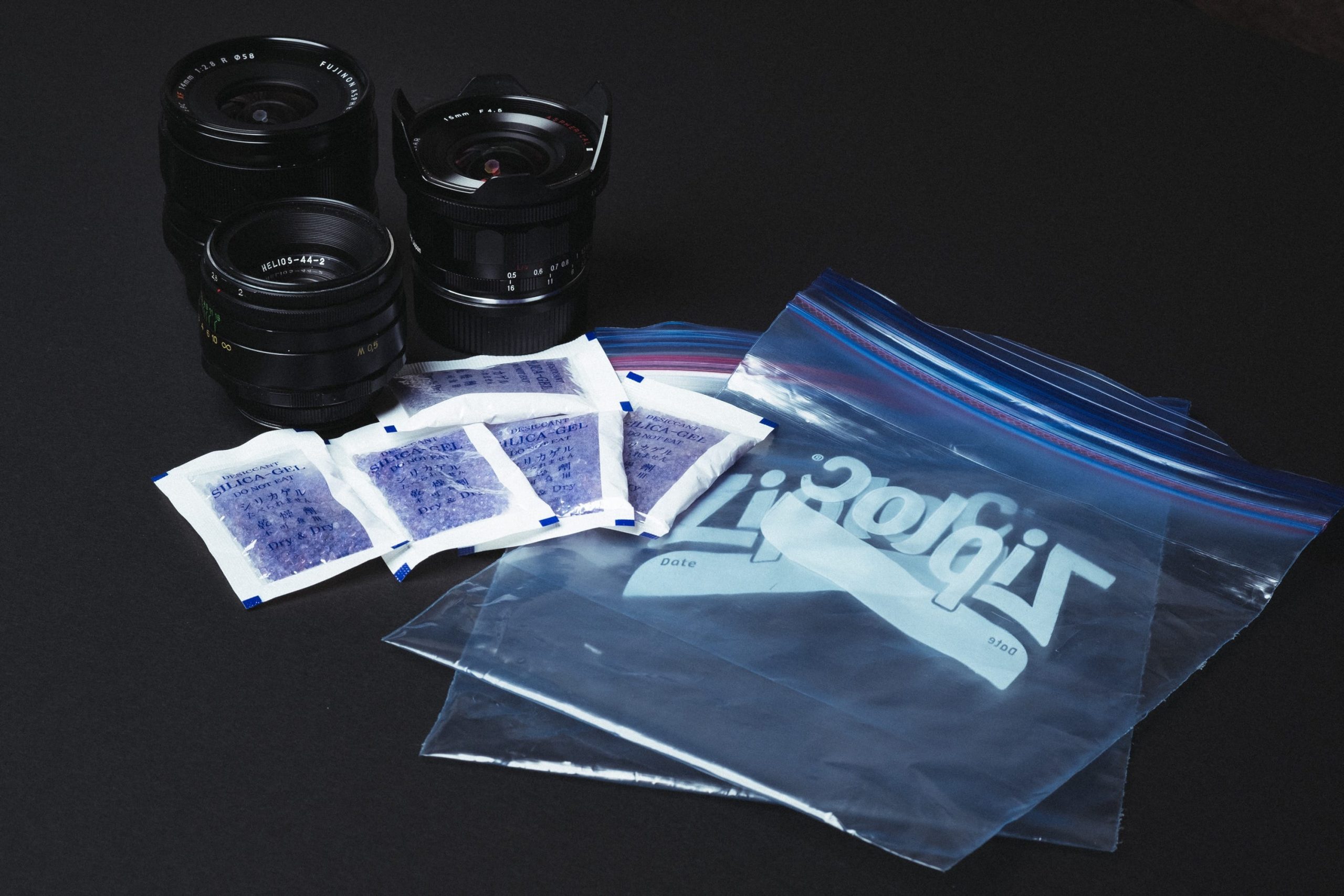
To protect your lenses from humidity with silica gel, you first need to find an airtight container. I’ve found Ziploc bags work great.

When you’re not using your lenses, or even if you’ve been out in the rain or snow, store your lenses in Ziploc bags with a few freshly charged bead packets and they will pull any moisture out of the air and hopefully out of your lenses. This will starve that fungus from the moisture it needs to thrive. Simple right?

How To Recharge Silica Gel

To recharge Silica gel packets there are a few techniques and whatever you end up buying will often have the best instructions for you to follow. You can bake them in the oven on low heat for a few hours, 200- 250 degrees Fahrenheit is fine, you can also microwave them on defrost for about 10 minutes. Or, my favorite if you’re traveling, a hairdryer. Just lay the beads on a paper towel and blast them at close range with a hairdryer on full power. It maybe takes 10 minutes. Be careful though, when microwaving or using the hairdryer, the beads get very hot.

Did you know, some beads have cancer-causing chemicals in them?

The beads I have are a bluish-purple color and they contain Chlorine Cobalt, a cancer-causing agent if ingested. There are other food-grade gels that don’t have this chemical and I recommend those if you have kids or pets. They are usually orange, or sometimes you’ll find all white beads with a few purple beads mixed in as color indicators. These are much safer for your health and probably better if you’re going to be handling them regularly.

The purple beads are totally fine as long as you don’t mix them with food and keep them away from your pets or kids. I also wash my hands well after handling them.
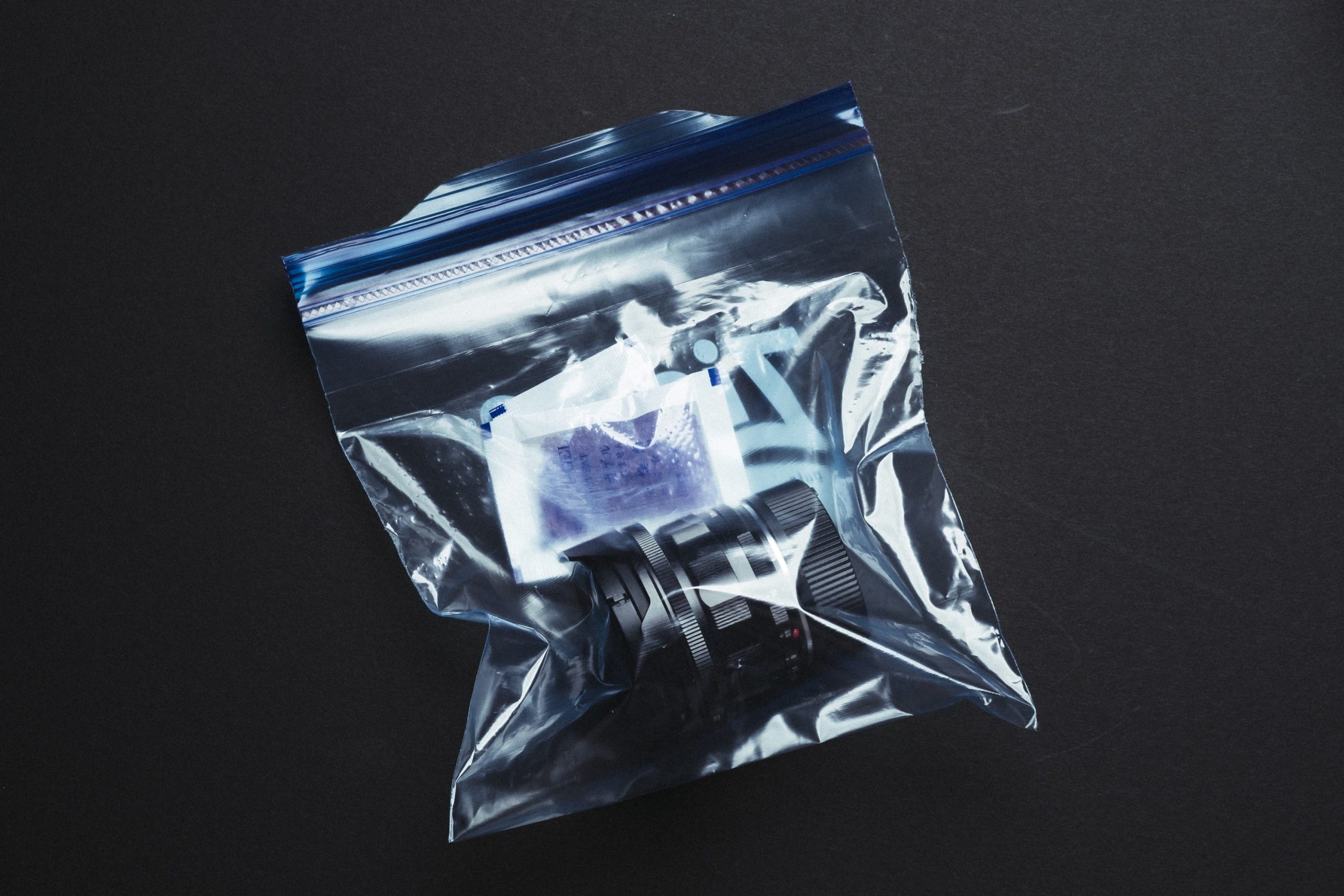
Silica Gel and a Ziploc bag
Silica Gel Packets

Method #2 – Silica Gel Beads + Pelican Style Case
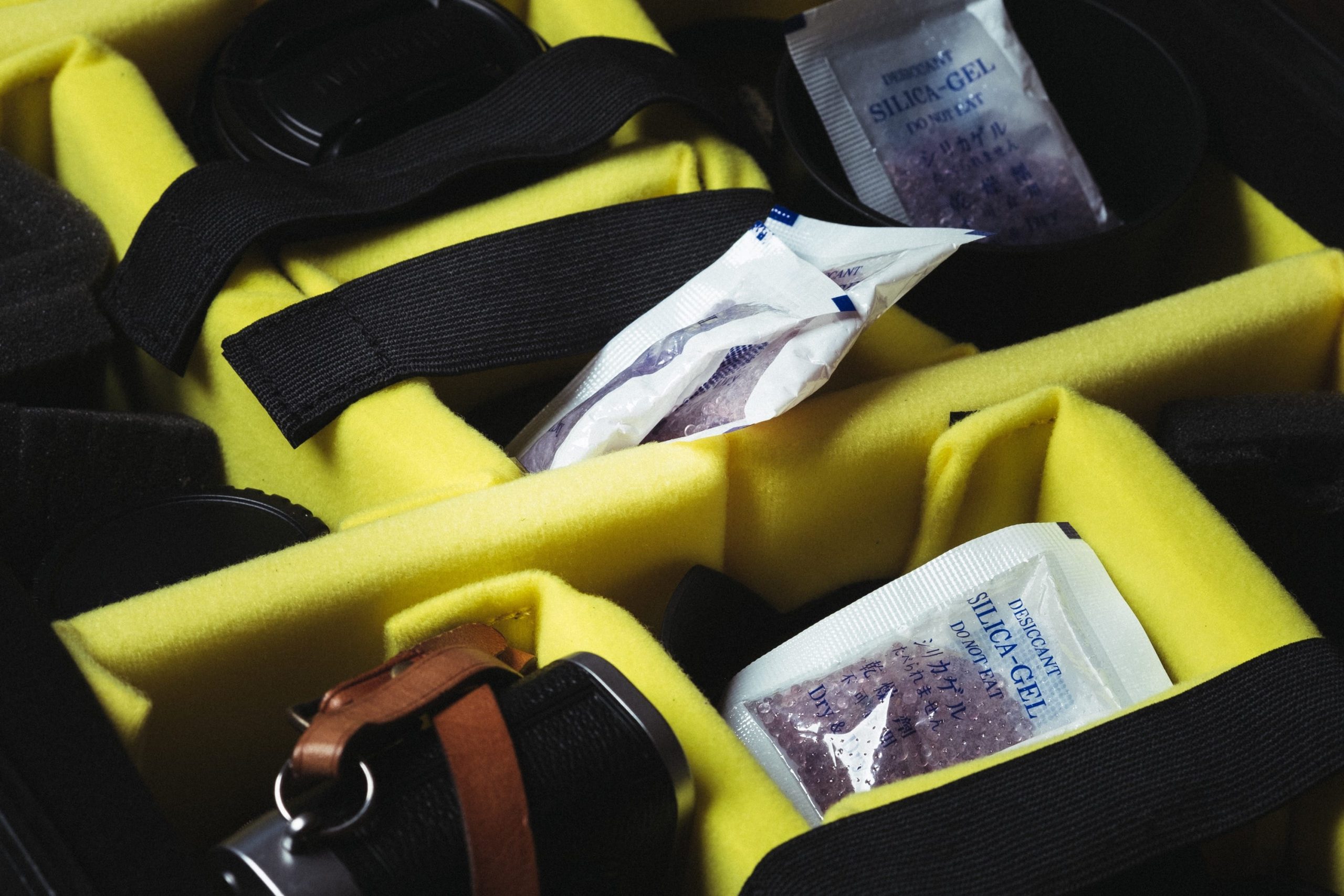
Pelican Case
Silica Gel Packets

I also store my lenses in Pelican cases, but any case will work as long as it’s somewhat airtight. You can get the cheap style of the Pelican cases at Costco or Amazon and they’ll also do the trick.

With the Pelican style cases, you can pack your lenses and camera gear, then throw in a handful of the Silica Gel packets and you’ll be good to go for a while, I would say at least a month in an extremely humid climate if you’re opening and closing your case every few days. It takes about six hours for the beads to pull in the moisture and you’ll see them slowly change color letting you know when it’s time for a recharge.

The other trick is to buy Silica bead canisters, like these.

Hydrosorbent Silica Gel Canister 40 Grams – Amazon

LockDown Silica Gel 750 Grams – Amazon

Method #3 – Electronic Dry Cabinet

This is a fairly expensive option but also very effective if you live in humid climates. I haven’t tried the Ruggard Electronic Dry Cabinet yet, but I found them the other day randomly on BHphoto and thought they deserved a mention. They are humidity-controlled storage lockers for camera equipment. I’ll likely grab one of these when I move back to the USA and do a proper review then. They are a little expensive, but there is no maintenance and no risk of cancer, they just need power.

Ruggard Electronic Dry Cabinet – BHPhoto

Protect Your Lenses From Humidity | Final Thoughts

Not everyone needs to worry about protecting their gear from humidity since a good half of the United States is very dry, especially in places like Colorado. But if you live on the coast or in the South, even if you travel to a more humid area or shoot frequently in the rain, you should really start thinking about taking a few precautions so that your gear can last. Silica gel is a great and inexpensive way of keeping your gear protected from moisture and it’s fairly low maintenance. Much better than the old bag of rice trick.


0
0
0
0
0
Alik Griffin

A professional video editor, and photographer with a Bachelors in Film studies from UCSD. Based in Los Angeles, I have created commercials, trailers, and other video content for various clients and platforms since 2005. I also love to write about my passions and share my insights on my blog.

Related Topics
  • Photography Tips
Previous Article
7Artisans 35mm f1.2
  • Blog
  • Lens Reviews
  • Reviews

7Artisans 35mm f1.2 Review & Sample Photos

  • Alik Griffin
  • April 15, 2024
View Post
Next Article
  • Blog

A Crazy Storm & My Current Landscape Workflow

  • Alik Griffin
  • July 8, 2018
View Post

Subscribe

Subscribe now to our newsletter

You May Also Like
Pure Cinema
View Post
  • Blog
  • Featured
  • Lens Reviews
  • Reviews

Viltrox TCL-X100VI Review | A Budget-Friendly 50mm Upgrade

  • Alik Griffin
  • February 21, 2026
  • No comments
Thypoch Simera 75mm f1.4 Review
View Post
  • Blog
  • Featured
  • Lens Reviews

Thypoch Simera 75mm f1.4 Review & Sample Photos

  • Alik Griffin
  • February 18, 2026
  • No comments
Kakurajima View
View Post
  • Blog
  • Featured
  • Lens Reviews

Viltrox WCL-X100VI Review | A Budget-Friendly 28mm Upgrade

  • Alik Griffin
  • February 17, 2026
  • 2 comments
Sony A7V Announcement
View Post
  • Blog
  • What's New

Sony A7V – They’re Back In The Game

  • Alik Griffin
  • December 30, 2025
  • 4 comments

Leave a Reply Cancel reply

Your email address will not be published. Required fields are marked *

San Clemente Sunset

Join The Newsletter

Featured
  • TTArtisan 23mm f1.8 Product Shots
    TTArtisan AF 23mm f1.8 Lens Review & Sample Photos
    • 3 comments
  • How To Edit Photos To Look Like Film
    • 4 comments
  • Kakurajima View
    Viltrox WCL-X100VI Review | A Budget-Friendly 28mm Upgrade
    • 2 comments
  • Nikon Z 40mm f2 Review | The New Compact King
    • 26 comments
  • Zeiss Planar 50mm f2 on the Leica M11
    Zeiss Planar 50mm f2 Review & Sample Photos
    • 5 comments
  • Nikon Z 26mm f2.8 Review – A Little Miracle
    • 24 comments
  • Kalina Flower FIeld
    Nikon Z 50mm f1.4 Review & Sample Photos
    • 24 comments
  • Viltrox 9mm f2.8 Air Review
    Viltrox 9mm f2.8 AIR Review & Sample Photos
    • 2 comments

Subscribe

Subscribe now to our newsletter

Privacy Policy | Licensing | About Me | Contact

Copyright © Alik Griffin Inc. 2025

Input your search keywords and press Enter.