
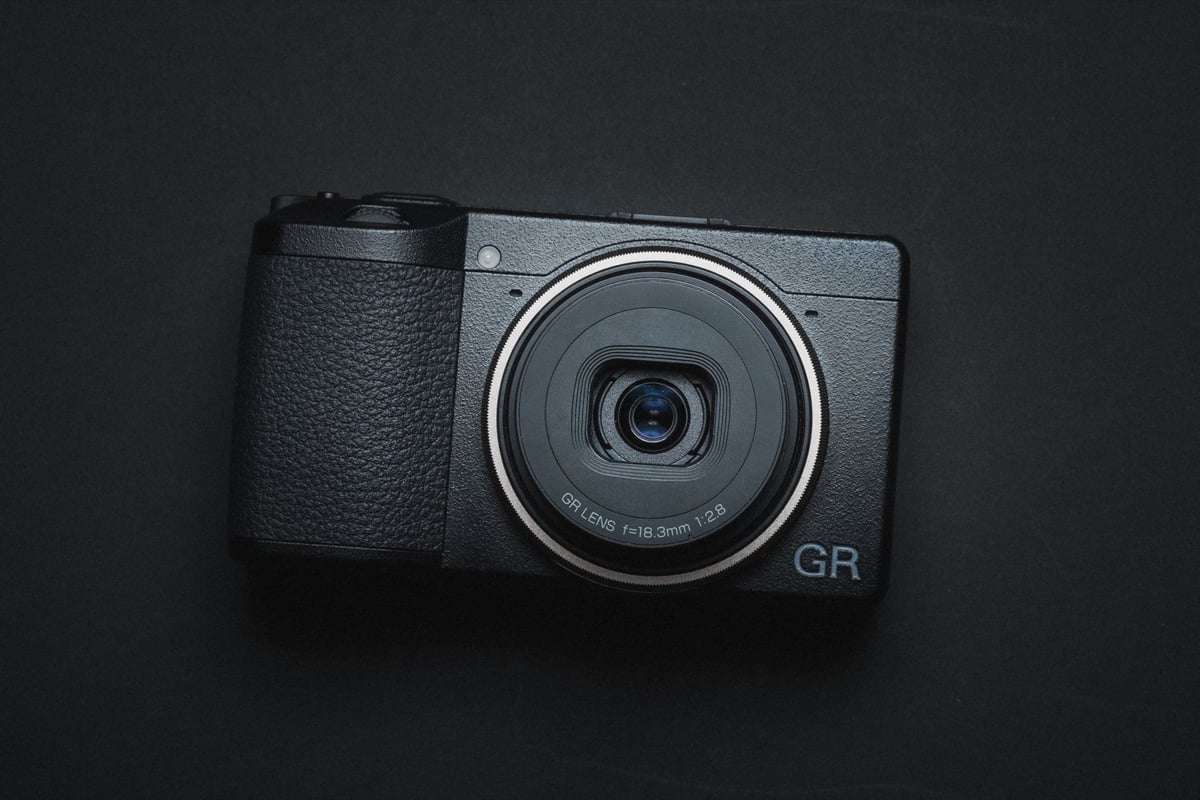
The Ricoh GR III is the purest street photography tool on the market. It’s designed to disappear in your hand, but that pocketable design comes with a few trade-offs—namely, battery life and sensor dust.
My approach to accessorizing the GR series is “Minimalism First.” You don’t want to bulk up a camera meant to be small, but you do need to address its quirks. Below is the refined kit I use to keep my GR III ready for any decisive moment without losing its pocketable soul.
Ricoh GR III Accessories | The Basics
Because the GR III is meant to be tossed into a pocket or a small bag, the LCD is prone to micro-scratches.
-
Anti-Glare vs. Crystal Clear: I usually recommend Glass for protection, but the Anti-Glare Expert Shield is a secret weapon for this specific camera. Since there is no EVF, you are 100% dependent on that screen. On a bright afternoon, the anti-glare coating makes the difference between seeing your composition and just seeing your own reflection. If you’re shooting more at night, then you’ll be fine with one of the 9H Glass screen protectors.
Expert Shield Screen Protector
They have a few options from Anti-Glare to Crystal Clear to Glass. I usually like glass. The Anti-Glare is great too if you’re shooting a lot on sunny days, but it will reduce the display quality. Anti-Glare is a great option for the GR III, as you often need to use your LCD screen in direct sunlight on bright days. |

Powering the Beast: Why One Battery is Never Enough
Let’s be honest: the Ricoh GR III eats batteries for breakfast. Because the body is so slim, the DB-110 battery is tiny; this is probably the best reason to upgrade to the Ricoh GRIV if you can. If you’re out for a full day of shooting in a city, a single battery won’t last until lunch.
-
The “Cyclical” Trick: I’ve found that third-party batteries like Wasabi are excellent value, but they require a “break-in” period. I recommend cycling them (full charge to full depletion) five times before trusting them on a trip.
-
Pro Tip: Since the GR III supports USB-C charging, I often skip the wall charger and just top off the camera inside my bag using a small power bank between locations.
Official Ricoh GR III Battery DB-110These are the official batteries of the Ricoh GR III and GR IIIx. The official batteries usually last the longest and perform most reliably. Since the GRI likes to eat batteries, it might not be a bad idea to have a few of these. |

Wasabi Ricoh GR III / GR IIIx BatteriesAvailable At: Amazon Among third-party battery brands, Wasabi stands out as one of the best. They offer these great little charging kits with two batteries at an incredible price. I’ve found that with these third-party batteries, it’s usually a good idea to cycle them (fully charge and discharge) about 5 times. This way, you get the best performance. |
Best Ricoh GR III Memory Cards
I’ve tested the most popular memory cards in the GR III, and you can learn everything you need to know in my guide.
GR III Lens & Body Accessories
An interesting feature of the GR III is its support for a wide-angle lens converter. It can also take UV filters.
The GRIII lens does retract, so you might not necessarily need a UV filter. I try not to use UV filters unless necessary. They diminish some of the cool looks you can get from lens flares when you have a curved front element. Regardless of whether you use a Tiffen Black Pro Mist filter or a Moment Cinebloom filter, you’ll want to set up the UV filter adapter.
Ricoh GR III GW-4 Wide Angle Converter
Capture even broader scenes with the optional wide-angle lens converter, perfect for expansive landscapes or architectural details. The wide-angle converter gives you a 21mm equivalent focal length. On the front housing around the lens, there is a removable ring. Behind it are some CPU contacts that allow the camera to communicate with this lens, but you still need the adapter. I’ve listed both. |
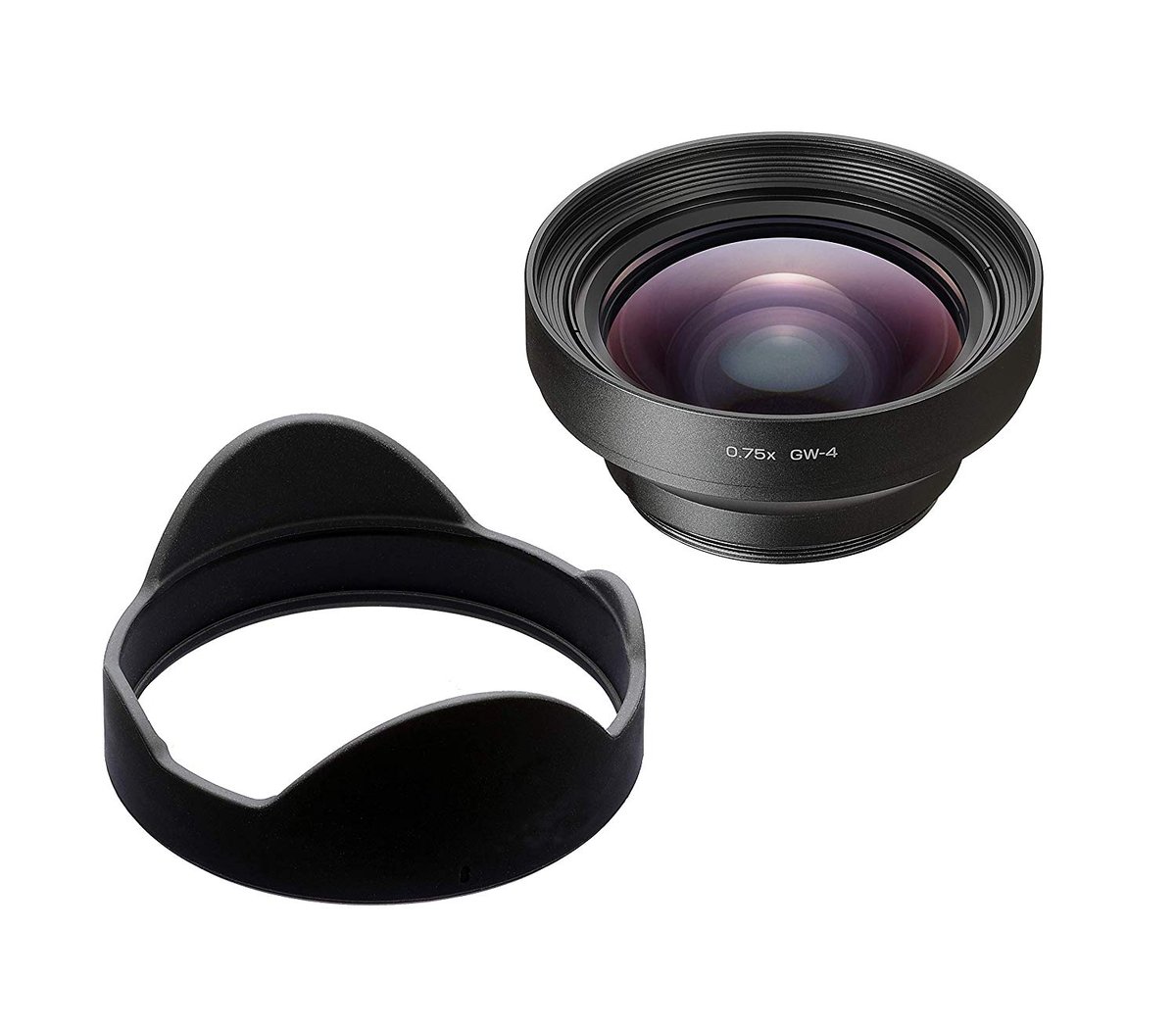
While the GR III’s lens retracts, some prefer UV filters for added protection. However, they can slightly reduce sharpness and soften lens flares, which can impact creative expression.
For the GR IIIx, there will be a GT-2 Teleconversion lens that gives a 75mm equivalent field of view.
The Sensor Dust Solution: To Filter or Not?
Unlike my Fujifilm X100V, the Ricoh GR III has an extending lens barrel that can act as a vacuum, drawing in dust. Over time, this dust can settle on the sensor—a nightmare for a camera without interchangeable lenses.
-
The Stealth Approach: The JJC UV Filter uses a semi-permanent adhesive to seal the lens front. It’s the only way to truly “dust-proof” the camera while keeping it pocketable.
-
The Creative Approach: If you want to use a Black Pro Mist or ND filters, the NiSi Filter Adapter is the way to go. It feels more “pro,” though it does sacrifice that legendary pocketability.
JJC Ricoh GR III UV Filter KitAvailable At: Amazon If you like using UV filters on this camera, you can get a nice one from JJC. It uses sticky tape to mount to the front of the lens. |
Nisi GR III Filter Adapter
This NISI adapter connects to the GR III lens via a bayonet mount. To attach the adapter, you must first remove the ring cap from the camera body. You can find the instructions on how to do that in the user manual. |

Shooting with External Viewfinders: The “Film” Experience
Coming from a film background, I often find that using the LCD screen disconnects me from the scene. Adding an external optical viewfinder (OVF) like the GV-1 or GV-2 transforms the GR III into a miniature rangefinder.
-
The Trade-off: Remember that these are “dumb” viewfinders—they don’t show your focus points or exposure. I use them primarily for framing in bright sunlight when the LCD is washed out.
-
Pro Tip: If you use the GV-2, it keeps the profile much lower for street photography. It’s perfect for “zone focusing”—set your aperture to f/8, your distance to 2 meters, and just frame through the glass. It’s the fastest way to shoot.
Ricoh GV-2 External Mini ViewfinderUsers who prefer a compact and lightweight solution for the standard 28mm lens. Features: 28mm frame lines that match the standard field of view of the GR III lens. For shooters who have no interest in the 21mm wide-angle adapter, this viewfinder has only 28mm frame lines. This will not be useful for the Ricoh GR IIIx. |

Ricoh GR IIIx Viewfinder
The Ricoh GR IIIx has its own EVF for the 40mm equivalent lens with 1:1 shooting frame marks.
GV-3 External Viewfinder
The Ricoh GV-3 External Viewfinder is an optional accessory designed specifically for the Ricoh GR IIIx camera. It offers several benefits to photographers who prefer using a viewfinder. Key FeaturesThe high-precision optical viewfinder provides a bright and clear view of your scene, even in bright sunlight. This can be especially helpful when composing your shots or when the rear LCD screen is difficult to see. 40mm Frame Coverage: The viewfinder features frame lines that match the 40mm equivalent field of view of the GR IIIx lens, aiding in accurate composition. |

Why Use a Half-Case on the GR III
The Ricoh GR III is almost too small for some hands. While I love the portability, the grip can feel a bit cramped during a long day of shooting.
-
The Gariz Experience: I’ve used Gariz cases on several systems, and for the Ricoh, it’s about more than just protection. The aluminum base adds just enough height so my pinky finger has a place to rest, making the camera feel much more secure without adding significant bulk.
-
A Note on “Genuine Leather”: You’ll see many cheap cases labeled “Genuine Leather.” In the industry, that often refers to a lower tier of bonded leather. If you want the kit to age with a real patina, look toward the Kaza or Luigi options. It completely changes the tactile experience of the camera.
Gariz Leather Half Case GR IIIAvailable At: Amazon I’ve used several Gariz cases over the years on different cameras. They make some nice gear, and their cases do a great job of adding additional grip and protection. This case features an aluminum base that adds height to the camera’s body, which is particularly beneficial for users with larger hands. It also comes in brown. |
Soft Case For GR III
There is an official soft case for the Ricoh GR III sold by Ricoh. Like the Gariz case above, it is made of genuine leather. What is genuine leather? It’s the same thing as a hot dog. All the leftover leather pieces are pressed into leather sheets. Sometimes it can mean just not top grain or full grain as well. |

Street Lighting: The “Off-Camera” Secret
One of the coolest ways to use the GR III is with the FlashQ Q20II. Because the camera is so light, you can hold the camera in your right hand and the flash in your left.
This allows you to create dramatic, angled lighting for street portraits that looks like it came from a studio, not a pocket camera. It’s a technique I’ve used to give my street work a more “filmic” look, leaning into that high-contrast Ricoh aesthetic.
LightPix Lab Flash Q Q20IIThe FlashQ Q20II from LightPix Labs is an ultra-compact flash that weighs a mere 4 ounces and fits snugly in your palm, making it the perfect companion for street photography, travel, or minimalist setups. On the GRIII, what a lot of people do is hold this flash in one hand, hold the camera in the other, and use it to trigger some angled lighting. Manual exposure control: 1/64 to full power adjustment. |

Camera Straps
It’s always tough recommending straps because there are so many now from so many different brands.
There are popular cotton straps, such as the VKO (Amazon) and Peak Design wrist straps (Amazon), which you probably already know about. I will list a few straps you may not have heard of that I like and think are pretty cool.
NOTE: The GRIII requires a strap that is compatible with its strap lugs. Be careful about this. It takes the compact strap types with threaded connections.
Gordy’s Camera Straps
This is a cool little leather company in the USA that uses high-quality leather to make a variety of straps, including wrist straps. Some are cool, and they age very well. Here is one of the straps I like on my old Sony. |
 Available At








Leave a Reply