
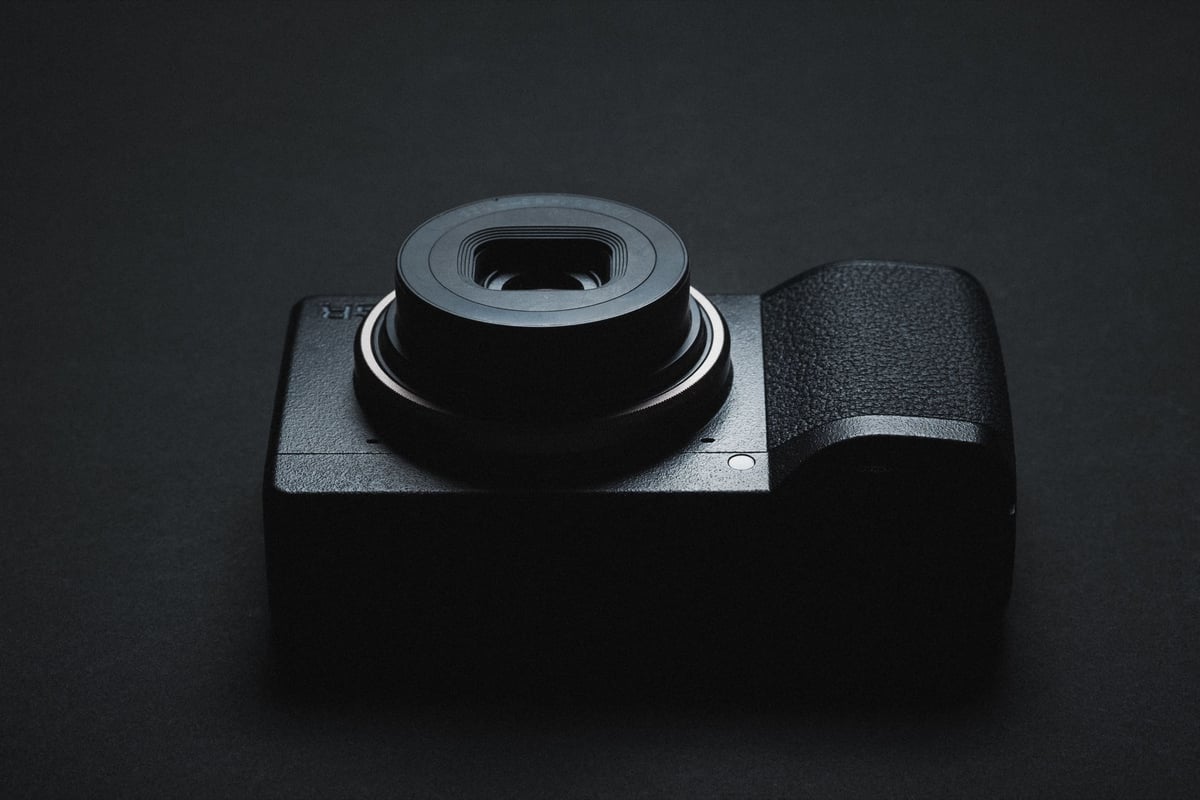
A speed test between all the most popular SD memory compared in the Ricoh GR III.
Use this guide to find the best memory cards for the Ricoh GR III.
Recommended Memory Cards
The GR III uses UHS-I technology, and that is all you need to buy. However, UHS-II cards often run faster, and they are shown to be about 6–8 MB/s faster on this camera. Still, it’s not like you’re shooting professional basketball for this camera and need the fastest cards. So save some money, just buy UHS-I.
Here is a nice mix of good price-performance cards. If you’re just casually shooting, which this camera is designed for, you don’t need the top-tier cards.
| Card Names | In-Camera Speeds | Order |
| Kingston Canvas React | 52.5 MB/s | Amazon |
| Delkin Advantage | 51.99MB/s | Amazon |
| SanDisk Extreme Pro | 48.40MB/s | Amazon |
| Sandisk Extreme | 42.66MB/s | Amazon |
Ricoh III Memory Card Speed Chart
To get these in-camera speeds, I shot a series of continuous bursts and timed how much data was captured against how long it took to clear the buffer.
UHS-II cards record a little faster than UHS-I cards just because of the better technology in the UHS-II cards. Still, since the Ricoh GRIII does not have UHS-II tech, I would only buy UHS-II cards if you need fast speeds when transferring from your card to your computer. In that case, I recommend either the Sony M or the Sony E card.
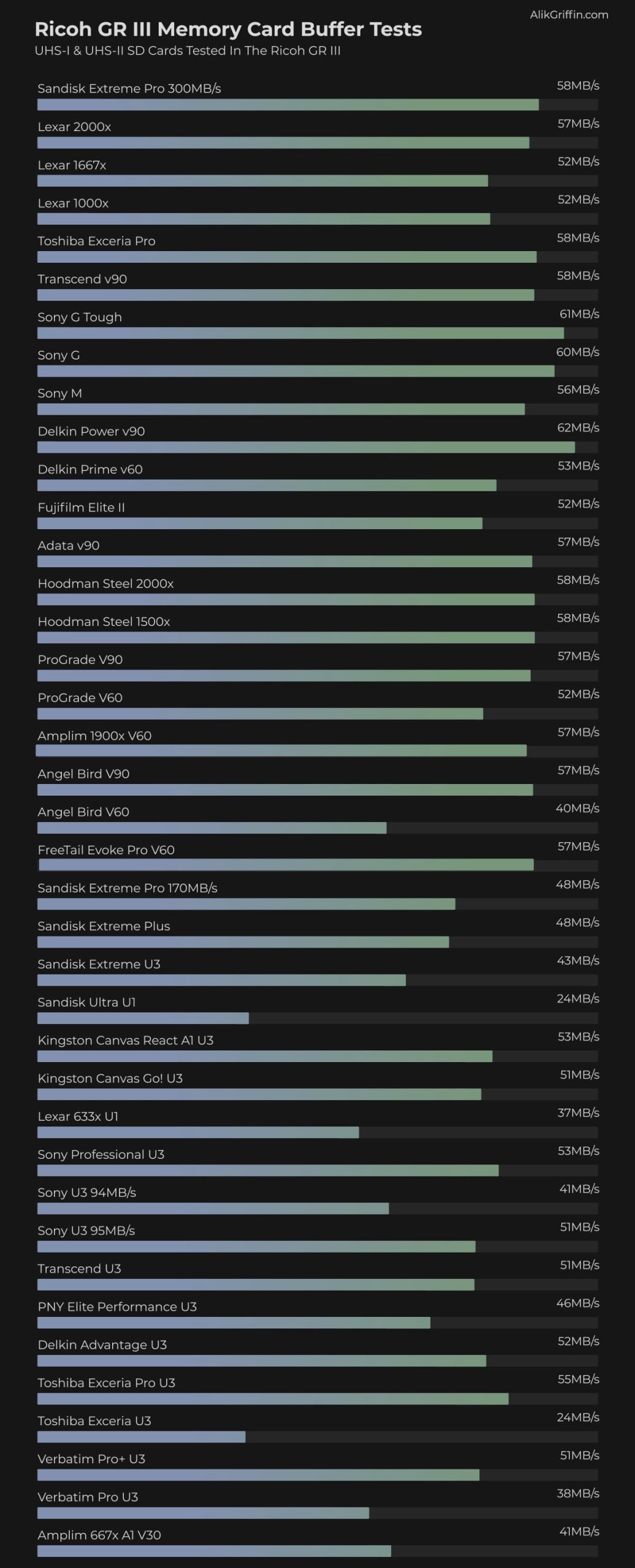
Full Speed Results — All 40 Cards Tested
All 40 cards tested in-camera, ranked by write speed. The GR III has a UHS-I slot, so UHS-II cards run in compatibility mode — but many still edge ahead of the best UHS-I cards because their internal controller is faster. Note: Toshiba Exceria Pro was the previous top UHS-I result here but Toshiba has exited the memory card market. Kingston Canvas React is the current top UHS-I pick.
UHS-I Cards
| Card | GR III Speed |
| Kingston Canvas React | 52.5 MB/s |
| Delkin Advantage v30 | 52.0 MB/s |
| Transcend U3 | 49.2 MB/s |
| Sandisk Extreme Pro 170 | 47.9 MB/s |
| Sandisk Extreme Plus | 46.7 MB/s |
| Kingston Canvas Go! | 44.7 MB/s |
| PNY U3 | 43.2 MB/s |
| Sandisk Extreme | 42.7 MB/s |
| Lexar 633x | 36.5 MB/s |
| Sandisk Ultra | 24.0 MB/s |
The Sandisk Ultra at 24 MB/s is noticeably slow for this camera — buffer clearing takes more than twice as long compared to a Kingston or Delkin. Avoid it here if you have a faster option.
UHS-II Cards (Running in UHS-I Compatibility Mode)
| Card | GR III Speed |
| Delkin Power V90 | 61.3 MB/s |
| Sony Tough V90 | 60.9 MB/s |
| Sony G | 59.8 MB/s |
| Lexar 2000x | 56.0 MB/s |
| Transcend V90 | 55.6 MB/s |
| Hoodman Steel 2000x | 54.8 MB/s |
| AngelBird V90 | 53.8 MB/s |
| ProGrade V90 | 53.5 MB/s |
| Sandisk Extreme Pro 300 | 50.5 MB/s |
| Sony M | 47.8 MB/s |
What the Speed Numbers Mean
The MB/s figure for each card is the sustained write speed measured across the full burst sequence — from the first frame through the last frame written to card after the buffer drains. A higher number means the camera recovers faster between bursts.
For street photography, the gap between the best UHS-II cards (Delkin Power at 61.3 MB/s) and a solid UHS-I card (Kingston Canvas React at 52.5 MB/s) is small enough that it won’t change how you shoot. The Sandisk Ultra at 24 MB/s is a different story — it runs at less than half the speed of the top cards, meaning noticeably slower recovery. Get a solid UHS-I card and spend the rest on a spare.
Ricoh GRIII Camera Specs And Buffer Questions
| Sensor: 24.2MP APS-C CMOS Sensor Processor: GR Engine 6 SD Cards Slot: Single Slot UHS-I Continuous Burst: 4fps Video: HD 1920×1080 How Big Is The Buffer? About 400MB How Many Shots To Fill Buffer? 20 What Size Are The Raw Files: 30MB How Long To Clear Buffer? 5:04 5second 4 frames. |
Ricoh GR III – Amazon / Adorama / BHphoto
Also see, the accessories for the Ricoh GR III
How To Avoid Counterfeit Cards
Counterfeit cards are a real problem. The simplest way to avoid having one is to fill the card and ensure it gets close to its rated size without dying.
Don’t buy cards from auction websites, and stick with trusted sellers.
SD Memory Cards Ricoh GR III Bottom Line
The Ricoh GR III is not really designed for bleeding-edge performance. It only shoots 4fps (which is just about perfect for street photography), and it only has a 400MB/s buffer. All you really need is a basic UHS-I memory card. Kingston Canvas React and Delkin Advantage are the current top UHS-I picks, with Sandisk Extreme Pro close behind. Toshiba was previously the fastest card tested here, but the brand has since exited the memory card market. Any solid UHS-I card from Kingston, Delkin, or Sandisk is more than adequate for a camera with this spec set.








Leave a Reply