

I used to think megapixels and dynamic range were all that mattered. Still, now, after going through a few different camera bodies over the years, I’ve really come to learn that it’s the physical camera itself that matters. It is not just the specs or the pixel depth of the sensor resolution but the way the camera feels in your hand, the experience of shooting itself. I’ve learned that I enjoy the actual physical process of taking photos, and the Fuji X100T is absolutely perfect for this.
With a few flaws, of course 🙂
So, I wanted to do a review that was different from all the other reviews on the Internet done by bloggers who have no idea what this camera really is. Yes, this camera has autofocus, 16 megapixels, and an OVF / EVF! Okay, that’s out of the way. . .
Let’s get into this review! It’s a real review that taught me a ton about this camera and will hopefully teach you a few things.
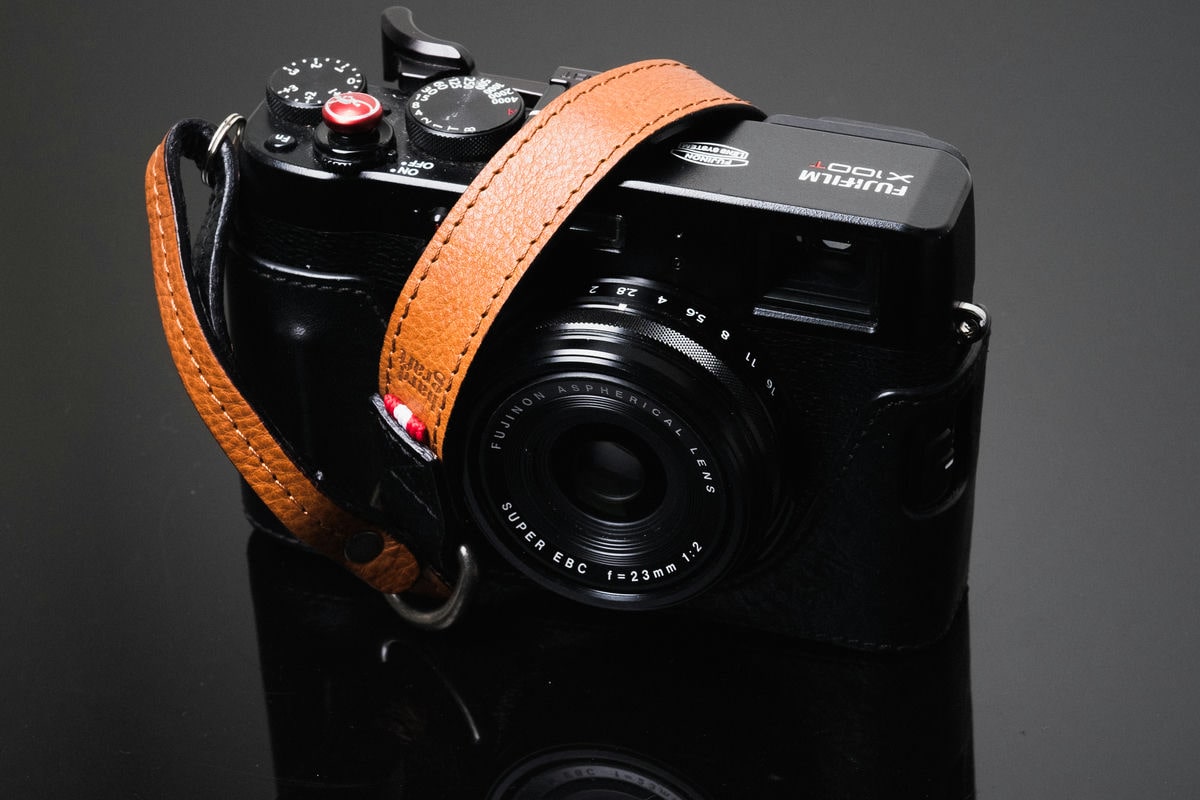
What I Love About The Fuji X100T
I think the most fitting place to start is with what I love about the camera and some cool things it does.
Fuji X100T Build Quality
As you know from the X100 and X100s, the build quality of the Fuji X100T is just as good. If you have them side-by-side, it’s very easy to get them confused. Also, if you’re doing some construction on your house and forgot a hammer, you could probably use one of these cameras if you really wanted to. That’s how solid they feel.
The build quality was actually one of the major selling features for me. I’ve been shooting a lot with the Sony A7r over this past year. I love the camera, and it’s only slightly larger than the Fuji X100T, but it lacks that Fuji build quality. The camera is literally falling apart and failing on me mechanically. I’ve already had it repaired once. I travel a lot, so my philosophy was to get the Fuji X100T as a beater camera that I could take everywhere. So far, it’s been perfect for that.
The Fuji X100T Lens + Full Review and Tests
The lens is great. Although it’s a 24mm lens, the APS-C sensor makes it comparable to a 35 mm full-frame lens. In my opinion, this is the perfect focal length for everyday use.

You can see here that the Bokeh looks nice, and the depth of field is great. I really couldn’t be happier with the image coming from the lens. And you can see why when I break down this lens with some detailed tests.
Fuji X100T Diffraction Tests & Finding The Sweet Spot
I usually use diffraction tests to help find the sweet spot. I just did full-stop increments for this test to get a general Idea. Because of the 16MP sensor, I had to shoot a little closer than usual to get the desired detail. This ended up creating something that I wasn’t expecting. It shows us how the lens performs at close distances through various apertures.

So before you freak out thinking this camera sucks at f2 and f2.8, you should know that a lens like this is not going to give you sharp images at a macro distance when wide open. I shot these at about 6 inches (15cm) from the dollar bill to get as much detail as possible at higher f-stops. A mirrorless camera like this will never give you a clear image wide open at a macro distance; even my Sony A7r produces terrible macro at shallow depths. It has to do with the physics of light. The closer something is to your lens, the shallower the depth of field. At 6″ and f/2, the depth of field is so shallow that very little, if anything at all, can be in focus. Please feel free to touch on this in the comments if you know the physics because I kind of just made that up.
100% scale at the center of the lens.
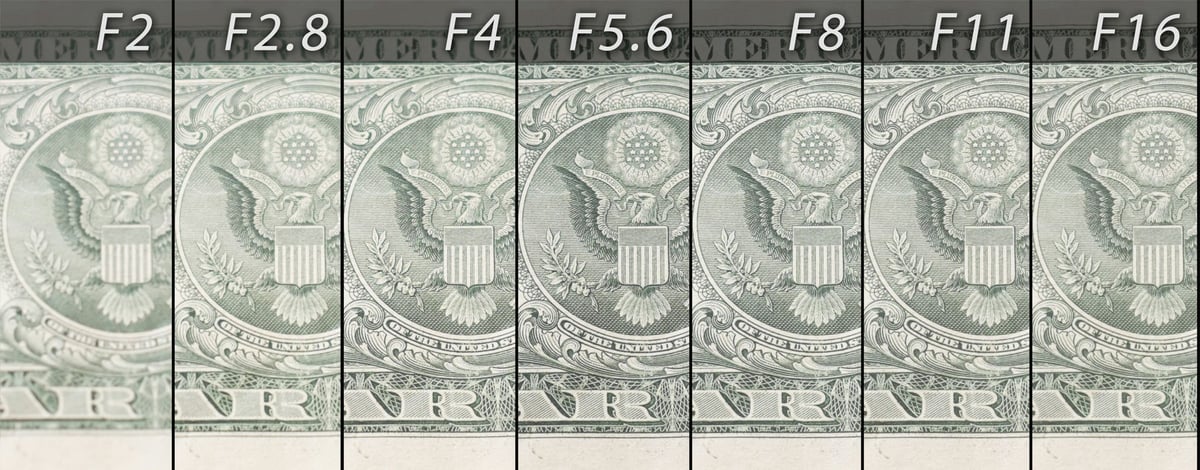
Click the image to see full size/quality.
It looks like the quality picks up at f/4. By f/5.6,, things look great. Diffraction starts to come into play around f/8 but is still totally usable to f/11. f/16 is looking a little soft.
To maximize your image quality, stick somewhere between f/4 and f/8 for the best results. Fuji recommends doing the same. However, shooting at f2 and f2.8 at further distances will also be okay. I created a distance chart at f/2 further below.
Fuji X100T Macro Corners Samples
100% scale on the top left corner.
Corner sharpness is excellent by f5.6, and contrast seems to improve as we go up. f/8-f/11 are the winners here.
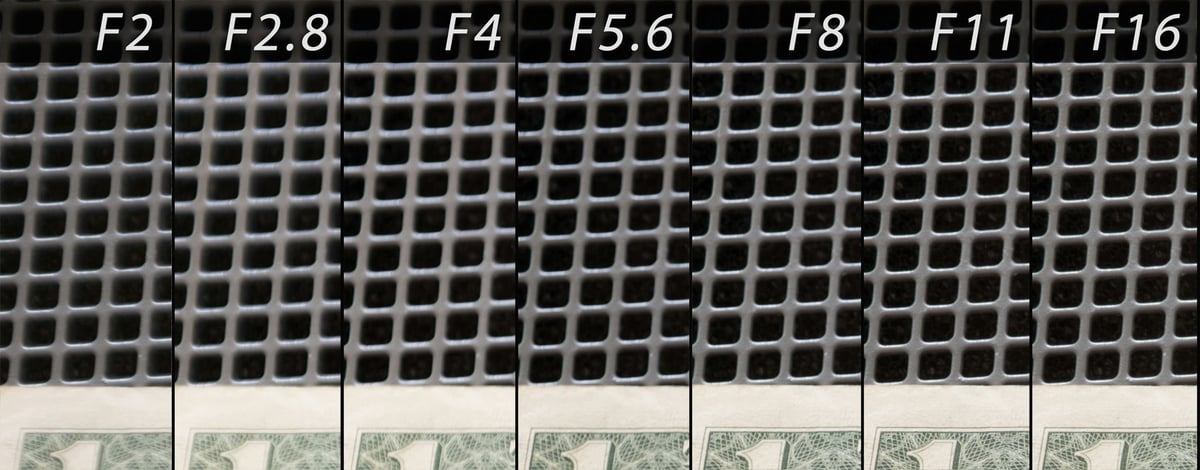
Click the image to see full size/quality.
Fuji X100T Macro Edges Samples
100% scale on the left edge.
From its looks, f5.6 looks really good because it is on the very edge of the lens. It’s not as sharp as 5.6 center but it’s definitely not bad.
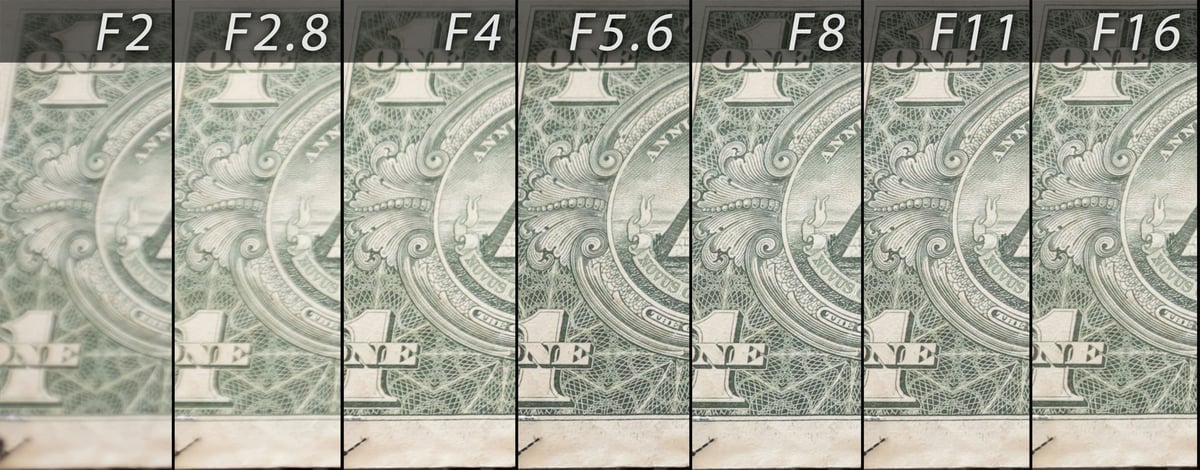
Click the image to see full size/quality.
Fuji X100T F2 Distance Tests
As mentioned above, an f/2 lens shot at a close distance will not give you sharp images. Fuji recommends shooting close distances at f4 with the X100T; you can see why this is the case. I’ve found that to shoot f2 and beyond, you should really be at a distance of 3 feet (91cm) or greater. I’ve made a chart illustrating this.
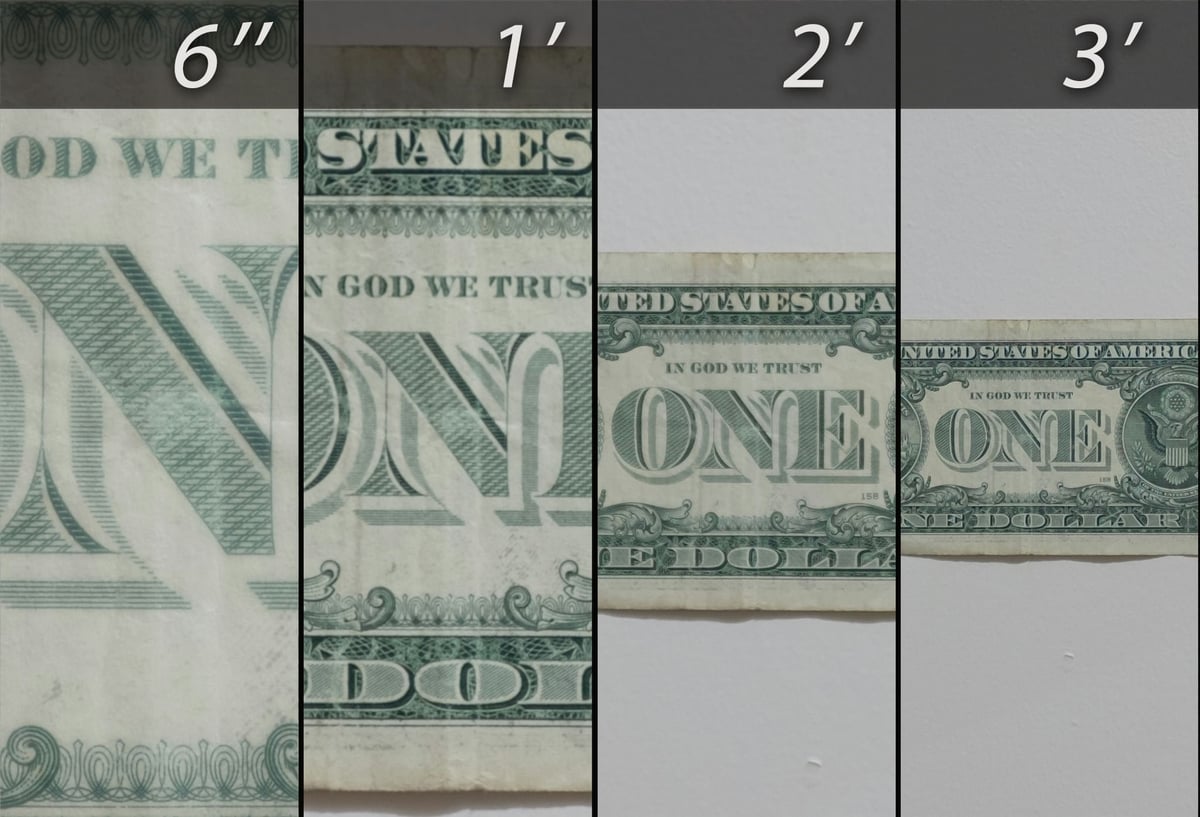
Click the image to see full size/quality.
6″ is very soft. Soft at 1′ as well. 2′ almost seems softer than 1′. By 3′, we have a usable image.
I shot these with manual focus, each shot with several takes where I varied the focus slightly. I chose the best, clearest images for this chart.
I’m in the United States for the rest of the world. 6” = 15cm, 1′ = 30cm, 2′ = 61cm, 3′ = 91cm.
Fuji X100T Vignetting Tests
Vignetting is nearly nonexistent on this lens, but note some color shifts along the edges. You’ll see this same pattern in your lens flares, too.

More Fuji X100T Love
Leaf Shutter & ND Filter
One of the biggest selling points of this lens is the leaf shutter built into it. This is rare for APS-C and Full-Frame camera lenses. It’s more typical in a medium-format lens, which has a very high price tag.
The advantage of a leaf shutter is that it is hushed and can give fantastic flash sync speeds at 1/1000 sec. This means you can use the camera’s built-in ND filter combined with the flash and get some fantastic fill light that can compete with the intense midday sun.

ND filter + flash -2/3, ISO 500, f/2, 1/1000sec
The built-in ND filter is of excellent quality and cuts down light 3 full stops. Combine this with your incredibly fast shutter speed and you can shoot some great wide-open street photography in the midday sun.
OVF / EVF Hybrid
The OVF / EVF hybrid is cool. Although I wish it were always just in OVF with the electronic overlay. I’m not in love with the quality of the EVF.
The picture in picture focusing window is really nice for manual focus. I wish the image it projected was a little larger, capable of being moved to the left side, and had slightly more magnification. It’s often hard for me to see it in the bottom right corner. Nonetheless, it is very useful.
Fuji X100T ISO Comparison Chart
Low-light ISO Test. This is a 100% scale of the RAW images. The only adjustments I’ve made are to remove Lightroom’s default sharpness and correct exposure since Camera Raw likes to shift the exposure around for some reason.
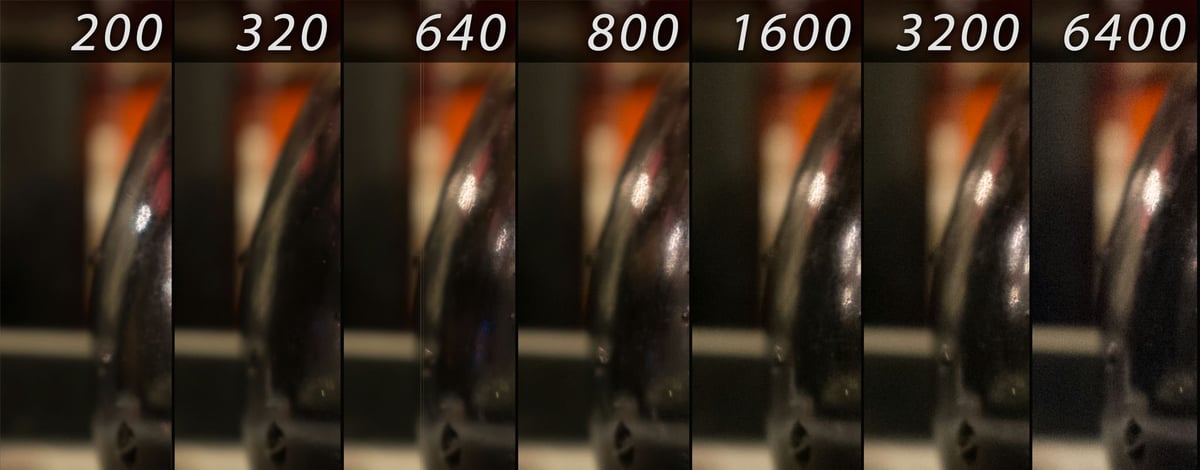
Click Image See Full Scale & Quality
What’s impressive is how little noise there is all around. Even at 3200, the noise is very low. At ISO 6400, you get a bit more noise and some color shifts, so it’s probably best not to go over 3200 unless necessary or if you’re shooting black and white. Although I still shoot at 6400 all the time.
AUTO ISO Settings
There are three programmable ISO settings where you can set your ISO and shutter limits. This is handy when you’re going to a low-light situation and want to limit your auto ISO.
I’ve set mine to ISO 1600 with a 1/60 shutter limit, ISO 3200 with a 1/60 shutter limit, and ISO 6400 with a 1/60 shutter limit. This way, if I’m shooting at night or go into a dark area, I can just switch the ISO setting, and it will limit itself to those settings. I’ll leave it at 1600 for midday stuff, and the ISO will usually bounce around from 200 to 800.

ISO 6400, f/2, 1/40sec
Fuji X100T JPEG & The In-Camera Raw Converter
I was comparing the RAW files to JPEG when I learned something really cool. The Fuji X100T makes some amazing JPEG images. Yes, you can shoot RAW and edit them in Lightroom to whatever you want, but the look of these JPEGs with the Fuji ‘film looks’ is amazing, and shooting JPEG is okay on this camera. Most people seem to prefer JPEG over RAW. Read my whole Fuji X100T RAW vs. JPEG post here to learn more.
I always shoot RAW+JPEG with this camera. For quick stuff to share with friends, I’ll just use the JPEG. Also, you can only send JPEGs to your phone using the Fuji App.
Accessories & Gear
I really love being able to customize my camera with all the different accessories and gear. You can get different soft shutters, thumb grips, cases, screen protectors & lens hood adapters. I’ve compiled a complete list of all the best accessories I’ve found for the Fuji X100T here.
Right now I’m still waiting on the thumb grip and a case to become available.
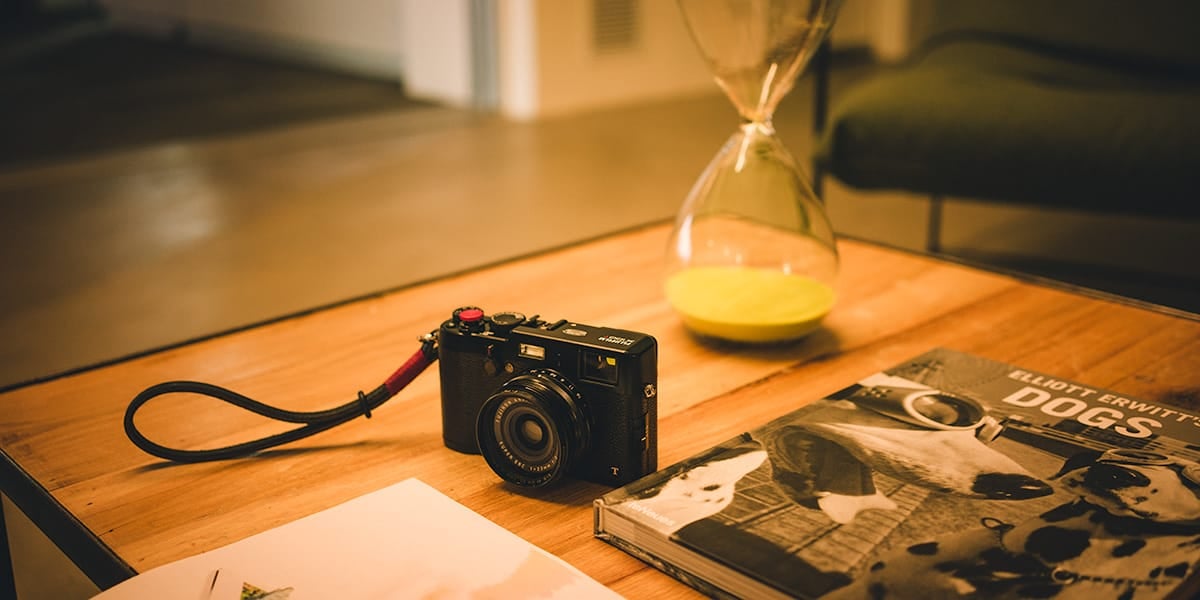
Fuji X100T Flaws
Although the camera is great, it does have a few flaws that I’m still trying to work out. Some are user errors, and some are simple tech specs. I’m new to this system, so it will take me a little more time to work out all these kinks and fully understand them. But I feel it’s important to include these flaws in the Fuji X100T review since knowing them is useful, so you can learn to avoid them when you’re out shooting.
Memory Buffer
One of the first areas of improvement this camera could have is its memory buffer. It’s not really a big deal for your average street photographer who shoots one shot at a time, but if you’re doing any bursting, HDR, or crazy intervalometer work, you may run into problems. Right now, I’m noticing I can shoot about 7-8 shots in a burst; then it slows down to the write speed capabilities of the SD cards, which means you need to buy the fastest card you can afford. See my complete list of SD cards I’ve purchased and tested here.
Auto Focus
The autofocus is absolutely awesome with this camera. It’s great in low light—actually amazing in low light—at least compared to my Sony A7r and Canon 5Dmkii. The Sony A7r’s autofocus is good and quick in daylight; however, I feel the Fuji beats it a little in low light—though I should do a side-by-side one of these days.
Autofocus on the Fuji X100T is also a bit snapper than on the Fuji X100s as well.
But there is a problem. . .
This could be a user error. I’ve noticed that autofocus has a little mind of its own sometimes. I’ll set the camera to point focus to the center, focus on someone in my foreground, then turn the camera to position them with the shutter button halfway pressed, and when I snap the photo, it changes my focus randomly. Sometimes in the background, sometimes on another person standing further back. I can’t figure out why or how this is happening, but it has caused me to use manual focus 100% of the time now – which is a good thing. Shooting manual on this camera is a lot of fun anyway, but it’s a shame the focus misses so much.
UPDATE: I found out this autofocus problem was caused by setting the focus point box to the smallest setting. Once I increased the focus box size back to the default, I stopped having problems with missed focus.
Standby Mode
The camera coming out of standby mode is very sluggish and it seems to sort of do weird things sometimes. I find it to be more energy efficient and faster to just turn the camera on and off between each use.
Dumb Things The Fuji X100T Does
Fuji seems to like to put dumb things in their cameras and slowly remove them through firmware. It was really bad with the X100, then the X100s fixed many things, and the X100T fixed even more. This camera is 95% perfect. Perhaps the X100U will be 100% perfect.
This camera has many annoying little quirks. It boggles my mind how this stuff got approved. I’ll list a few.
You can’t use the OVF when you’re in macro-focusing mode – This keeps throwing me off. I’ll be sitting there trying to switch my camera back to OVF mode and it just won’t do it, then I realize the macro focus is turned on and I have to turn it off.
I do understand this makes sense, but using an optical viewfinder close-up would be useless since what you’re shooting would be completely out of view. But sometimes, I’ll have macro focusing turned on and forget to turn it off.
Shooting Long Exposures – With the shutter set to auto and the aperture set to manual the longest you can shoot at 1/4″. You have to manually set it to go longer by setting the dial to 1 and then adjusting to get a shutter of 1″ to 1.5″. But then to go longer than 1.5″ you have to set the shutter to T which starts you at 2″ then adjust manually with the dial on the back.
However, if you set the aperture to A and the shutter to A, suddenly, the camera will shoot with an auto shutter of 2″ or more.
This is pretty dumb. Just saying.
Bracketing Exposures – You can only bracket to -+1EV. So, if you want to shoot HDR, you pretty much have to use the exposure compensation dial on the top. But if your exposures sit somewhere around 1/4″ and 2″, it’s going to be a massive pain in the ass because of the way the manual and auto shutter system works.
Flash won’t work in certain modes – I’ve noticed you can’t use flash when the camera is in silent mode or when the shutter is in MS+ES or ES. You can only use the flash when the camera is set to mechanical mode with silent mode turned off. In that case, the silent mode should be called stealth mode. Since it not only makes the camera silent but also turns off the flash and the focus assist beam. There is also no notification as to why you can’t use your Flash; you just have to know this.
This can put you in one of those bad situations you never want to be in as a photographer: You need to quickly use your flash for a certain shot, but then you realize it doesn’t work and have to scramble through your settings to figure out which setting is disabling the flash.
It would be nice if activating your Flash would override everything to make Flash work instead of vice versa. Or at least have a force flash setting in the flash options.
Fuji X100T vs X100s: Is It Worth The Upgrade?

Many bloggers and reviewers say that you don’t need to upgrade if you already own the Fuji X100s. I personally 100% disagree with this and don’t know where they’re coming from when they say that. The Fuji X100T is so much more responsive and snappier, from navigating the menus to autofocus.
The Fuji X100 autofocus feels primitive compared to what the X100T can do. In low light, the X100s autofocus is borderline worthless; it’s constantly seeking and missing. All of that goes away with the X100T, and it feels probably about 3-4x faster.
Customization is better on the T, and the button layout is more intuitive and logical. It just feels like a better camera.
I also really love sending photos to my phone over wifi. I never thought I would use this feature until I had a kid. I almost never use my iPhone to take photos now because I always have my X100T around, and now that I can just send snapshots over to my phone for family to see, it’s really great.
I wrote a Fuji X100T vs. X100s comparison if you want to see more information on this.
Fuji X100T Camera & Lens Review Conclusions
Besides the very few really dumb things this camera does, I really love it. Like I said, it’s 95% perfect. I’ll continue to invest in the Fuji system for sure. I am finding it really hard to pick up my other cameras. There is nothing like the look and feel of a Fuji. The FujiX100T is the photographer’s camera, and I believe every serious photographer should have one.
Fuji X100T Sample Images
I’ll continue adding to these sample images and update this review as time passes. Like all my reviews, this one is evergreen, which means it’s always changing and growing.

ISO 320, f/2, 1/60sec

ISO 200, f/11, 1/210 sec – Classic Chrome

ISO 200, f/16, 0.5sec

ISO 1600, f/2, 1/60
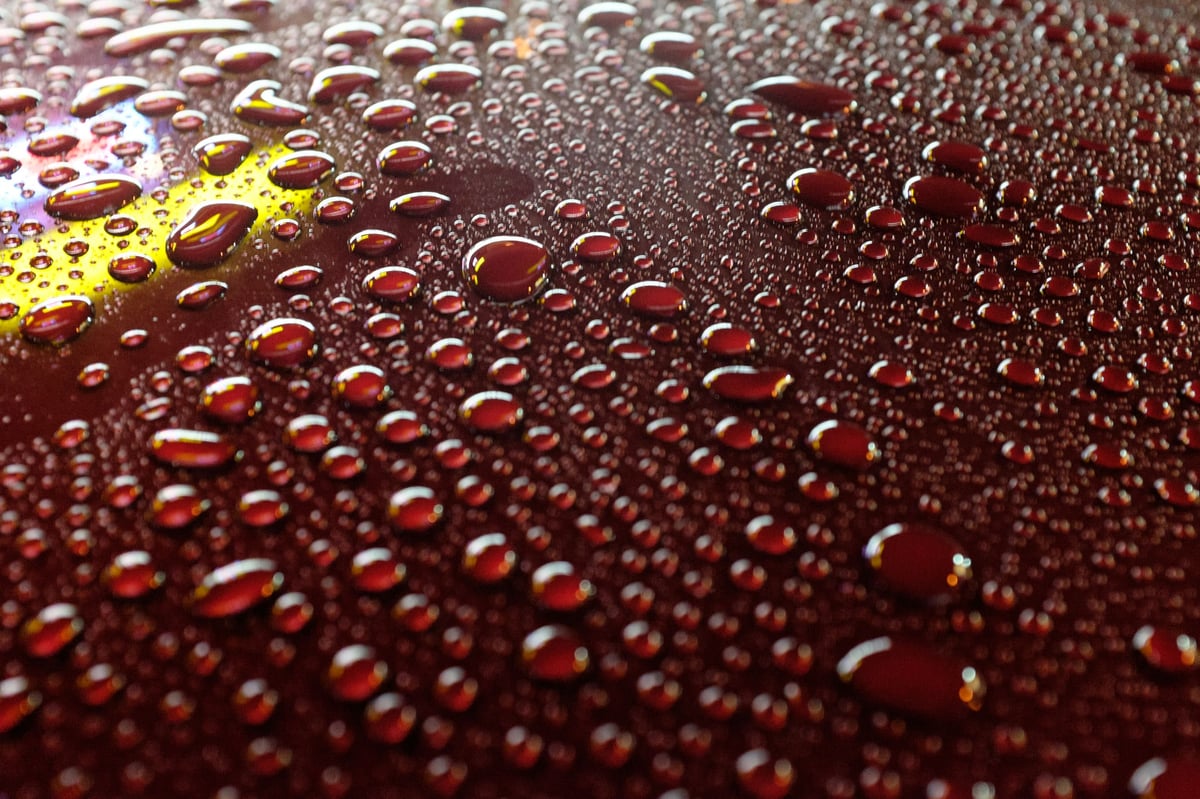
ISO 6400, f/4, 1/20

ISO 200, f9, 1/280sec

ISO 200, f9, 1/340sec








Leave a Reply to Roboto Cancel reply