
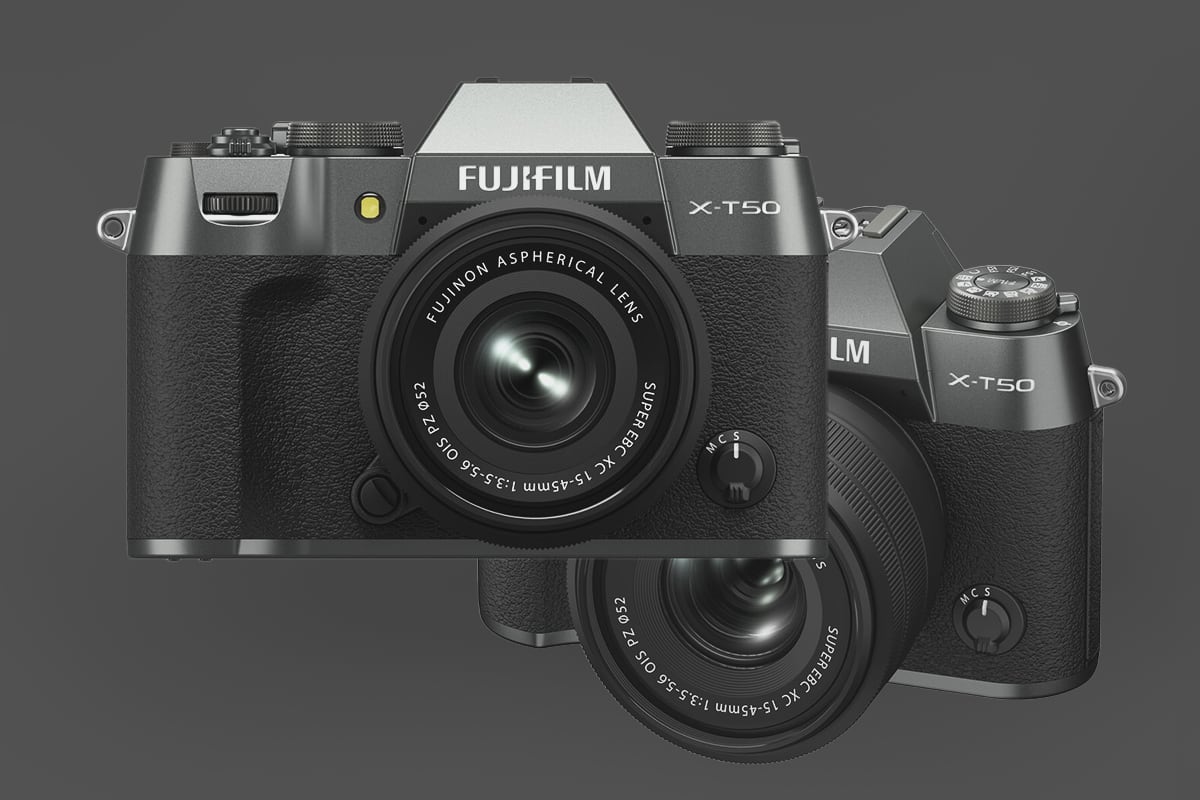
The X-T50 features a single UHS-II SD card slot, making UHS-II cards the go-to choice for optimal performance.
Here’s a curated list of the best SD memory cards for the Fujifilm X-T50, balancing speed, capacity, reliability, and value.
Recommended Memory Cards Fujifilm X-T50
Use V90 memory cards if you’re shooting a lot in continuous burst mode with RAW files.
Use v60 cards if your focus is videography or if you’re using many film-simulator modifications, which can bottleneck processor performance.
| Memory Cards | Speed Class | USB-C Write | USB-C Read | Links |
|---|---|---|---|---|
| SD UHS-II V90 | Hide | |||
| Lexar 2000x V90 32-256GB | UHS-II v90 | 228 | 256 | Amazon / B&H |
| PNY EliteX-Pro90 V90 64/128/256GB | UHS-II v90 | 276 | 293 | Amazon / B&H |
| Kingston Canvas React V90 32-256GB | UHS-II v90 | 274 | 292 | Amazon / B&H |
| Wise V90 Pro 128/256/512GB | UHS-II v90 | 256 | 275 | B&H |
| SD UHS-II V60 | Hide | |||
| Sandisk Extreme Pro v60 256/512/1TB | UHS-II v60 | 189 | 279 | Amazon / B&H |
| Lexar Silver Pro v60 | UHS-II v60 | 162 | 255 | Amazon |
| Sony E v60 256GB | UHS-II v60 | Amazon / B&H | ||
| PNY EliteX-Pro60 V60 256GB | UHS-II v60 | 183 | 280 | Amazon / B&H |
| Angel Bird V60 II 64-1TB | UHS-II v60 | 144 | 243 | Amazon / B&H |
If you want to use Tough cards, for example, the Sony Tough cards or the Lexar Armor cards, you should note that these cards are often a little thicker and in the Fujifilm cameras, where the memory card slot is next to the door, it can make it a little difficult to get the cards out.
What Cards Do You Need For Video?
The Fujifilm X-T50 shoots 4K or 6K video at up to 360 Mbps. In normal people’s terms, that translates to 45 MB/s. This is very different from the Fujifilm X-T5, which can shoot video at 720 Mbps, requires V90 cards, and is even better than the Fujifilm X-E5, which is limited to 200 Mbps.
With the Fujifilm X-T50, you can stream data at a steady 45MB/s rate using a V60 UHS-II SD card, which is capable of sustaining 60MB/s.
Another case for using only a v60 card instead of a v90 card is if you shoot with many film-simulator modifications.
Shooting Modified Film Simulators Will Slow Down Performance
If you’re shooting a lot with film simulators and like to use processor-heavy settings like grain, noise reduction and clarity, this will cause a processor bottleneck, and it will feel like your memory card is clearing the buffer very slowly.
If this is your workflow, you can save a significant amount of money by using only a v60 memory card.
Why Choose the Right SD Card for the X-T50?
The X-T50’s high-resolution sensor and video capabilities generate large files quickly. For example:
- Burst shooting at up to 20 fps (electronic shutter) can produce hundreds of megabytes per second.
- Video recording at 360 Mbps (e.g., 6.2K/30P) requires cards with a Video Speed Class of V60 or better.
- UHS-II cards offer faster write speeds than UHS-I, clearing the camera’s buffer faster during bursts and ensuring smooth video recording.
Best SD Cards Fujifilm X-T50 Conclusions
For most people using the Fujifilm X-T50, I think v60 will be sufficient for everything they want from the camera, and they will save a significant amount of money. Additionally, some V60 cards are still fast; for example, the SanDisk Extreme Pro V60 card can write at approximately 180MB/s.
However, for those who burst a lot, V90 cards will provide a much smoother experience.







Leave a Reply