
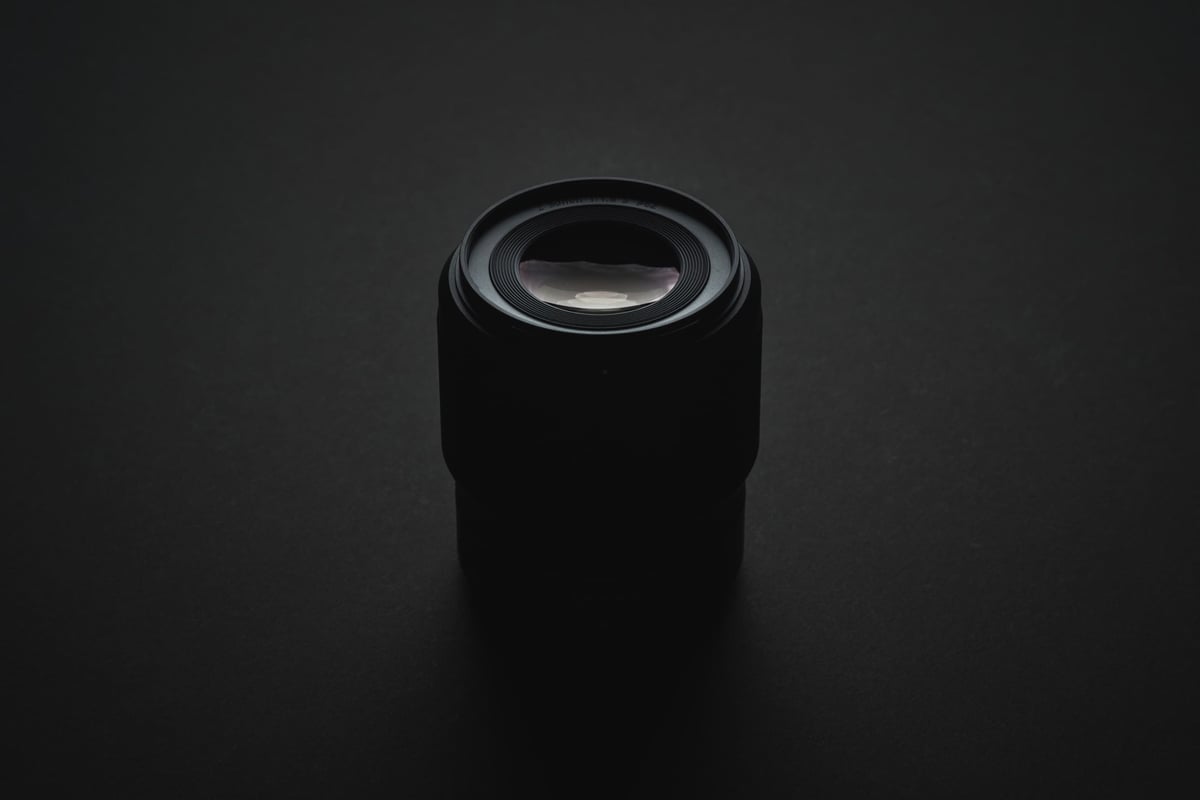
The Nikon 50mm f1.8 S was one of Nikon’s first lenses for the Z mount system. It has been designed to cater to the hybrid shooter who wants a single prime lens that can do anything: video, landscape, wedding, portrait, or street photography. While the f1.8 aperture isn’t exciting for many people, its versatility makes it a great place to start when building a new kit.
The lens is weather-sealed and has a silent stepping motor focusing system, with very little focus on breathing. It’s well-corrected, incredibly sharp, and manageable in size and weight.
From a utility standpoint, it is the best 50mm f1.8 lens ever made because it excels in any situation and is much less expensive than the competition.
Lens Specs
| Focal Length: 50mm Aperture: f1.8 – f16 Aperture Blade: 9 Rounded Optical Design: 12 elements in 9 groups Elements: 2 ED / 2 Aspherical Coatings: Nano Crystal & Super Integrated Coatings Autofocus: Stepping Motor Weather-Sealed: Yes Minimum Focus Distance: 1.31′ / 40 cm Filter Threads: 62mm Weight: 14.6 oz / 415 g |
Pros – Very sharp corner to corner, no focus breathing, great bokeh, superb rendering, great color, excellent contrast, silent, smooth focusing, fast autofocus, weather-sealed, minimal distortion, minimal flaring, very little CA, nice uniform sun stars, great price, excellent build quality.
Cons – Minor vignetting at f1.8, higher element design, and lack of some the nicer micro-contrast or tonality we see from simpler optical formulas.
Nikon Z 50mm f1.8 S – Amazon / Adorama / BHphoto
Table of Contents

Nikon Z 50mm f1.8 | First Impressions & Opinions
The Nikon Z 50mm f1.8 S was the first lens I bought when I switched to the Nikon system, and it has become my most used lens by far. However, I now use the Nikon Z 50mm f1.4 a lot for the slightly more artistic, classic render, which I prefer for portrait photography. The Z 50mm f1.8 S has no beautiful imperfections that jump out at you, but it’s a solid performer and can handle anything; it’s also noticeably sharper than the f1.4 lens and has slightly better contrast.

There are a few cool things about the 50mm f1.8 lens.
First, with how it renders, it feels like it has a shallower depth of field than an f1.8 should. I think this is because of the flatter field curvature, so you get this 3D cutout effect where the center to corners is on a very even focal plane. The Nikon Z 35mm f1.8 S is great for this quality.
Many of our more classic 50mm or 35mm lenses, like the Nikon Z 35mm f1.4, have shallower depth in the center, which gets deeper towards the edges. You can see what I’m talking about in this comparison of Nikon Z 35mm f1.8 S vs Nikon Z 35mm f1.4. The Nikon Z 50mm f1.8 and f1.4 do not share as big of a dramatic difference as the two 35mm lenses, but I would still describe the f1.8 S lens with a more modern, clean, almost corporate look where, as the f1.4 lens has a more classic DSLR feel to its rendering.
Although the Nikon Z 50mm f1.8 is not a “character lens,” it has a unique modern rendering.
Second, the Z 50mm f1.8 is so sharp and resolves so much detail. The S lenses also use the ED elements and have Nano Crystal Coatings, so there are almost never any chromatic aberrations or flaring, and those Nano Crystal Coatings add just a little more punch and clarity to the overall image.


Regarding micro-contrast or 3D pop (I know this is a controversial topic), to my eye, the Nikon Z 50mm f1.8 S does not have quite as nice skin tones as some other lenses with simpler optical formulas; some say it’s due to the ED glass, maybe, since the f1.4 and f.18 lenses have the same number of elements.
The skin tones and colors never quite grip you the same way as the Nikon Z 50mm f1.4 or Nikon Z 40mm f2 do; just look at the samples in those reviews and compare them to the samples in this review. It’s close, but not the same. The skin tones, especially in the Nikon Z 50mm f1.4 samples, just look so rich the gradient between the highlights and shadows is so smooth.
Or look at the Nikon 85mm f1.8 Review; I’m using the same coloring techniques so you can compare the skin tones. It also has excellent micro-contrast; I even shot it on the same day with the same lighting as some of the samples in this review. Again, the skin tones look better on the 85mm, which has a simple optical formula and no ED elements.
I would rate the 50mm f1.8, maybe a 7/10 on micro-contrast or color tonality. It’s not amazing, but it’s not bad either. This is the lens’s only flaw.
Don’t get too caught up in this; I’m splitting hairs here. But if I were buying one lens strictly for portrait photography, I would pick the 85mm f1.8 or 50mm f1.4 over this lens because skin tones seem a little nicer. However, the 50mm f1.8 would be my go-to for anything else.

This image looks so clean with a cleaner preset. The focus is on the little girl, who is crisp and perfect.

The 50mm f1.8 is close to those other lenses with color rendering. It doesn’t have the full Nikon glow we see with zoom lenses, such as the 24-120mm F4 lens, which has very weak color tonality. But the great nano coatings mean we still have excellent global saturation, contrast, and fantastic detail—this lens is so sharp, and the bokeh is so clean.
Nikon Z 50mm f1.8 S Lens Review

With the Z mount, Nikon has approached modern lens design with a clean slate and a new philosophy – make great lenses that can be used in any situation. Video, portrait, landscape, or street. From what I can tell, they nailed it.
For me, f1.8 lenses are the perfect starting point for any type of photography. They’re good enough in low light and have a shallow enough depth of field portraits, but they’re never so shallow that it’s distracting.

Where does this lens sit in the grand scheme of things?
Nikon offers so many lenses now; we have many other choices in this range.
For the 40mm f2 for a more compact system, you can use the Nikon 85mm f1.8 if you’re interested in portrait photography. That lens is so sharp and has great bokeh. You can also get the Nikon 50mm f1.4, which has a more classic or artistic rendering style.


Images coming out of the 50mm f1.8 S are magical: bokeh, sharpness, focus falloff—everything just clicks together in a way that really shows Nikon’s experience with optics. I really like the even field curvature, so the out-of-focus background feels consistent across the frame.

Build Quality
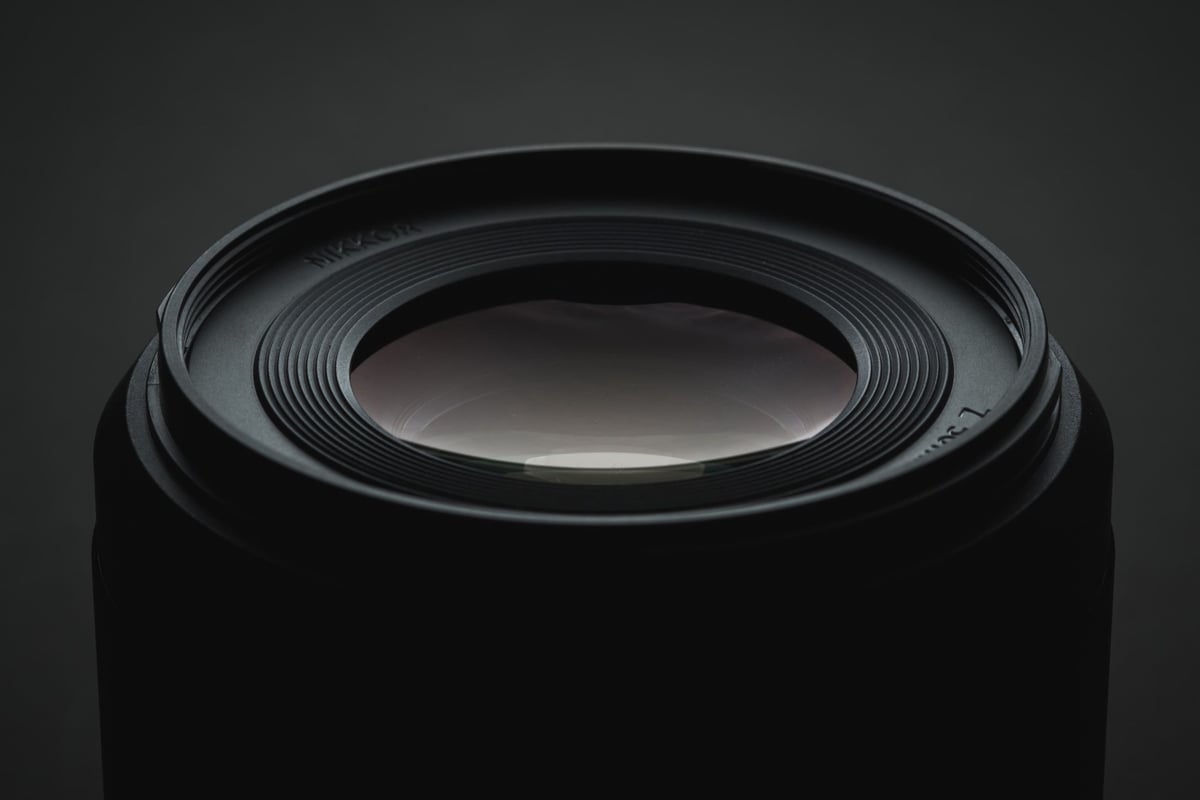
Nikon uses some plastic with its lenses and even its S lenses. The area around the mount and where the lens connects to the body are supported by metal, and obviously, it has a metal core. Plastic shielding is used near and around the focus ring, a common building technique. Go pick up a Sony GM lens or any Canon lens.
Plastic is used because it has different thermal properties. It handles impacts and scratches a little better than anodized metal, and it will absorb some shock if hit or banged. Plastic will expand and contract slower when facing temperature shifts and doesn’t hold heat like metal does. Heat can destroy a lens by causing hazing or the thinning of grease or, in extreme conditions, even cracking elements, especially those made from fluorite crystal, which this lens does not have.
Besides one little strip at the base and front of the lens, which is plastic, the rest is aluminum. About 90% of this lens is metal. The focus ring is also aluminum.
Of all the 50mm f1.8 lenses out there, this is the biggest and heaviest, but it’s not unmanageable. I’ve shot a ton of street photography with it, and if you remove the lens hood, the size becomes much more compact.
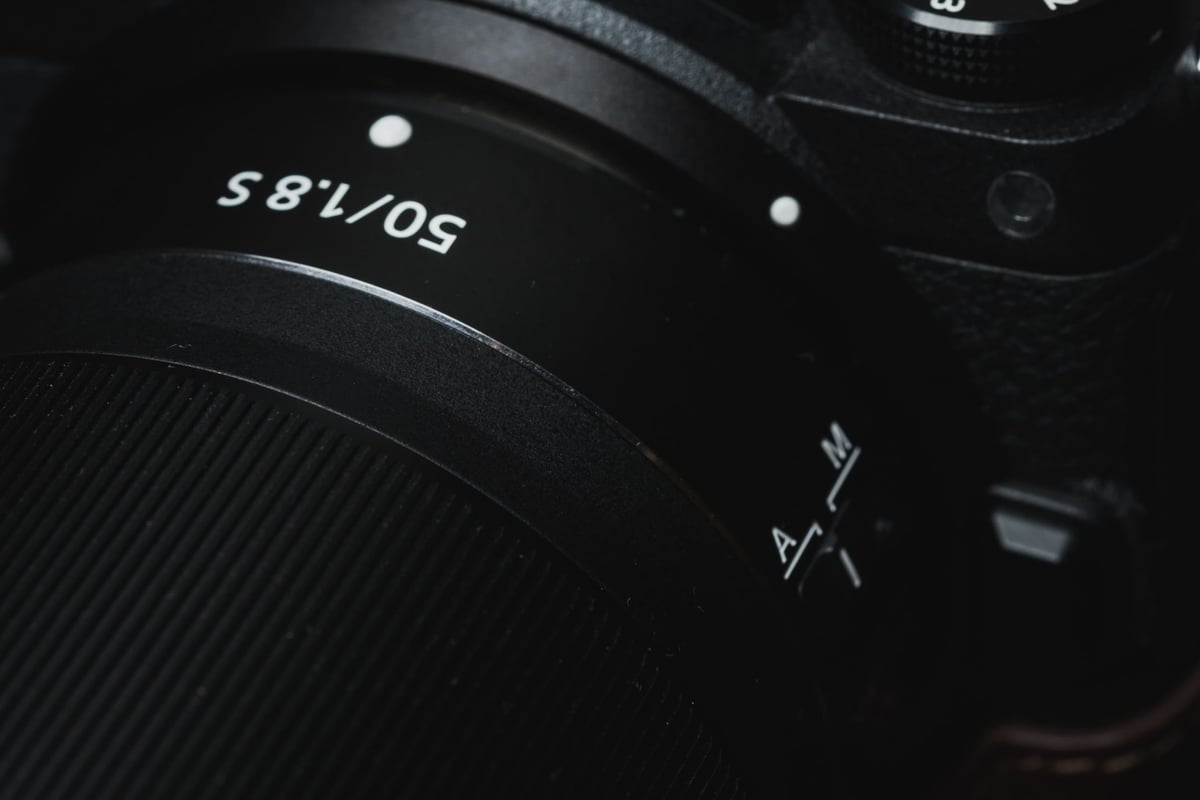
The lens has an AF / MF switch that you easily forget about. Sometimes, I hit that, and my lens is in manual focus mode, and I’m confused for a second and often forget that the switch is there.
The lens has an internal focus design, meaning no external moving parts exist.
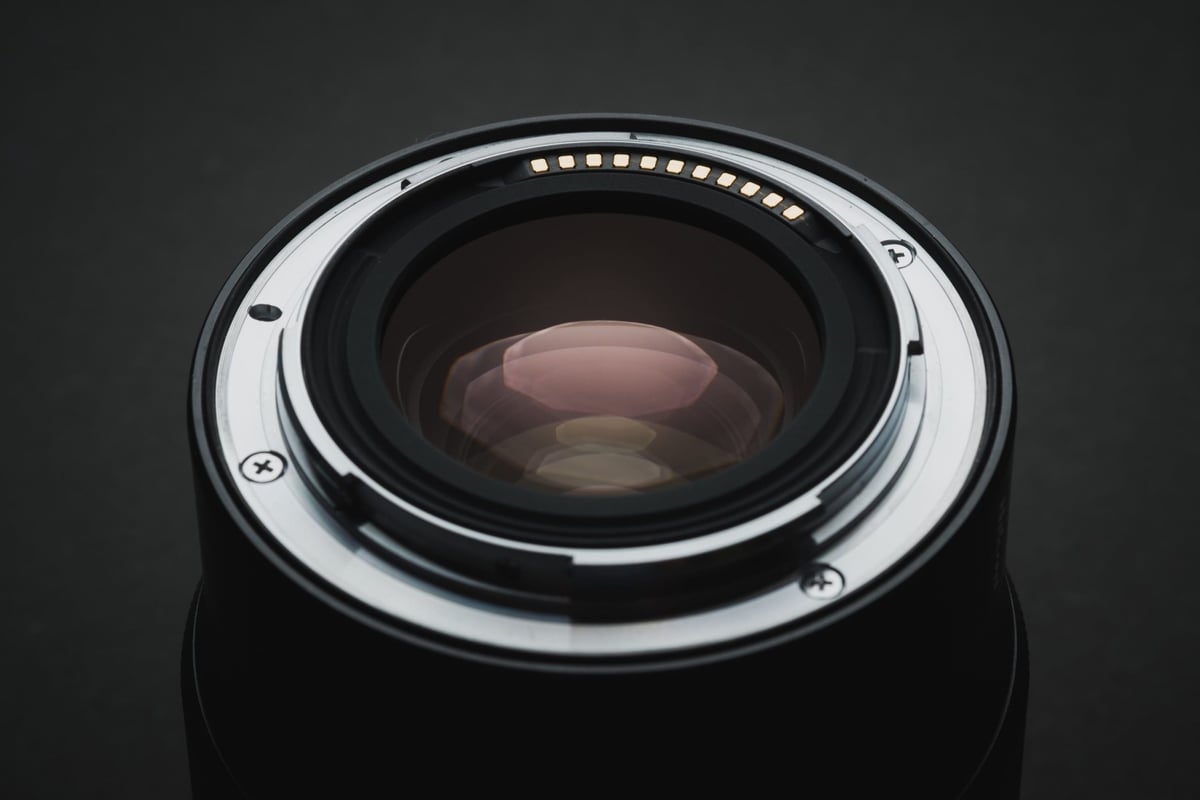
From the photo above, Nikon is taking advantage of every millimeter of that short flange distance. Notice the rear elements protrude slightly past the actual mount. This is one of the few full-frame mirrorless primes I’ve seen do this. APS-C mirrorless cameras, like many of the Fujinon lenses, have been doing this for years now, so it’s nice to see Nikon taking advantage of this here.
Also, this lens does have a rear element focus design.
The lens hood is made of plastic but is solid. It doesn’t rattle around and makes a nice, firm click when mounted.
The lens caps are also very well designed. Both the front and rear stay firmly on the lens. This makes me happy since I can’t tell you how many lenses I have where the rear lens cap can shake off.


One of the things I love the most about this lens is the weather sealing, which you can depend on. I’ve taken my system out several times in some crazy conditions without any issues whatsoever.
I’ve shot in typhoons and pouring rain during fire festivals, where ash is everywhere, and the lenses and camera had no issues later.

Technical Characteristics

On the technical side, this lens is incredible. It does everything you could want and need, and its sharpness is insane. This lens really sets the bar for performance for future f1.8 lenses.
Sharpness
Sharpness and detail are excellent on the Nikon 50mm f1.8. There is also very little loss of center sharpness when wide open.
Center Sharpness

Corner Sharpness
The corners look suitable for the most part. They’re not perfect, but they’re close. They clean up well with smaller apertures.
I don’t focus on the corners of these charts, so I can see how the field curvature affects the image. When there is field curvature, it usually clears up by about f5.6 or f8. This lens doesn’t have an issue with field curvature.

Edge Sharpness
Edge sharpness is also excellent.

Distortion
There is very little distortion. This is after I removed the baked lens profile correction with Iridient Developer.

Vignetting
Vignetting is this lens’s biggest weakness, but it’s still not bad at f1.8. This is after I removed the baked lens profile correction with Iridient Developer.

Flaring

Flaring is very well controlled with this lens.
Sun stars look like this –

Chromatic Aberrations
Chromatic Aberrations are well controlled. Stress testing shows some longitudinal purple and green fringing.

Technical Overview Final Thoughts
I’m now seeing a trend with Nikon Z lenses, where the designers seem to be allowing a little more vignetting. They must think it’s better to balance the lens in other ways and allow for a little more vignetting. Cameras today have such a good dynamic range, so cleaning up vignetting with lens profiles is not an issue like it was years ago.
Maybe this is good or bad, but it seems like Nikon is allowing for more easily fixable flaws with profile corrections or software in favor of correcting other issues or enhancing features that cannot easily be done in editing.

Optical lens design is a bit like rolling a character in D&D. You only get a limited number of attribute points that you can shift around based on size to assemble the perfect build. Experience is everything, so allowing the lens to have more vignetting in favor of maybe corner sharpness would be like rolling a character with a little less Str in favor of Int. Then cleaning up vignetting with software would be like maybe getting a +2 Str helm later. – Yes, I’m a nerd.
Art & Character

When reviewing lower-element lenses by Fujifilm, the art and character section usually discusses render depth, focus falloff, and micro-contrast.
While this lens has a smooth focus falloff, micro-contrast and tonal depth are weak for a prime.
It doesn’t have that tonal pop look with great micro-contrast, which you’ll never see in a 12-element lens.
Tonally, his lens produces slightly flatter highlights and slightly muddier shadows, giving the image more of that glossy high-element prime look.
Just so you’re not confused, there is a very nice 3D cutout effect from how well the focus falls off with the nearly buttery-smooth background. But this is a little different from what you would classically call the Zeiss pop or 3D pop, which comes from more tonal depth. So yes, there is a very good 3D look, but it lacks tonal pop. I hope that makes sense.
One look is not necessarily better than the other, depending on what you’re going for. I typically like lenses with more micro-contrast and 3D pop with the way they render tonally, but this is my most used lens, even though I have a lot of classic lenses.


You have to pick your battles.
Too few elements, and you’ll end up with the Sony 50mm f1.8, which has a very classic rendering but a lot of CA and other issues. But then, when there are too many elements, you’ll be in Sigma territory or Nikon Zoom lens territory with flat glowing highlights. 11 / 12 is very acceptable, especially if the focus is video, landscape, or portraits.
The trade-off overall final picture of the Nikon 50mm f1.8 is quite nice: a very rich and buttery smooth bokeh. It has fantastic subject separation, yet it still holds the image together very well, even at f1.8.
The highlights are a little flat, and it does have a little bit of that Nikon glow, but overall, it produces beautiful images.

Many lenses, especially classic lenses, can also perform poorly when shooting at their fastest apertures at far distances. Bokeh usually gets very busy or kind of nasty-looking with a lot of spherical aberrations. This lens does not. It’s very reliable in every situation. It even has a nice minimum focus distance of 1.31′. So that’s another very positive characteristic to be aware of.
Bokeh

Many of the samples in this review are shot at f1.8, but in this section, I wanted to show more of the characteristics you may not see in casual shots. I found a few situations that would usually bring out the worst in a lens so you could see the worst-case scenario.


Bokeh Balls
Really nice bokeh balls and some cat-eye along the extreme edges. No onion rings, no soap bubbles.


Color Rendering
Creating straight-out-of-camera raw files for Nikon is tough since their profiles carry over into Lightroom. And I’m always shooting with different profiles, so there is no real signature ‘straight-out-of-camera look.’
I switched everything to the Adobe Color profile in these samples.
SOOC Samples – Adobe Color
If you’re unfamiliar with Nikon, this should give you a good idea of what Nikon RAW colors look like. Compared to Sony or Fujifilm, Nikon’s colors feel slightly more organic, but it doesn’t push them quite as hard as Canon.


Contrast & Micro Contrast
As mentioned, this lens isn’t a micro-contrast or tonal pop beast, but the global contrast is still very good. Because of the f1.8 aperture, you get a nice field depth that shows great foreground-to-background separation.
Here are a few B&W samples.






Nikon 50mm f1.8 Review – Bottom Line

The Nikon 50mm f1.8 S has just blown me away, and I’m a little shocked about how many people have been overlooking the Nikon mirrorless system. Everyone always used to preach that photography was all about the lenses. But lately, it’s become all about which camera’s eye detection autofocus, which camera has the most card slots, or how many megapixels, but really, it is all about the lenses.
So, final thoughts: I would say this lens is a gem, a masterpiece. It’s amazing, and I never say that in my lens reviews! It really can do anything. It’s my most used lens, and I love it.
I’ve also reviewed the Nikon Z 80mm f1.8, which is incredibly fun but not quite as perfect as this one.

Nikon Z 50mm f1.8 S – Amazon / Adorama / BHphoto
Similar Articles
Complete List Of Nikon Z Mount Lenses
Nikon Z 50mm f1.8 S Sample Photos
For this NIKKOR Z 50mm f1.8 S lens review, I shot all the sample photos with the Nikon Z6 or Z8 and colored everything in Lightroom using my custom-made film presets.
All images are uploaded at half-res, and some are shamelessly cropped. I’ve also been using this lens a bit more with various diffusion filters and Lens prisms.











Leave a Reply