We use minimal analytics to improve the site. Is that okay?

Alik Griffin
San Clemente Sunset
Subscription Form
  • Reviews
    • Accessory Reviews
    • Calculators
      • Video Data Rate Calculator | Record Time Calculator
      • Diffraction Calculator
      • DoF Calculator | Lens Equivalent
      • Shutter Speed to Shutter Angle Calculator
    • Camera Reviews
    • Lens Reviews
    • Memory Cards Recommendations
      • Fastests SD Memory Cards
      • Fastest MicroSD Cards
      • Fastest CFExpress Type-B Card
      • Fastest CFExpress Type-A Cards
      • Best CFast Memory Card
    • List of Mics
      • Best Streaming & Podcast Mics
  • Camera Guides
    • List of all Blackmagic Cameras
    • List Of all Canon RF Cameras
    • List of all Fujifilm Cameras
    • List of all Nikon Z Cameras
    • List of all Panasonic Cameras
    • List Of all Sony E Cameras
  • List of Lenses
    • Canon RF Lenses
    • Fujifilm GFX Lenses
    • Fujifilm XF Lenses
    • L-Mount Lenses
    • Leica M Lenses
    • Micro Four Thirds Lenses
    • Nikon Z Lenses
    • PL Mount Cine Lenses
    • Sony E Lenses (FE and APS-C)
  • Store
  • My account
Alik Griffin
Alik Griffin
  • Reviews
    • Accessory Reviews
    • Calculators
      • Video Data Rate Calculator | Record Time Calculator
      • Diffraction Calculator
      • DoF Calculator | Lens Equivalent
      • Shutter Speed to Shutter Angle Calculator
    • Camera Reviews
    • Lens Reviews
    • Memory Cards Recommendations
      • Fastests SD Memory Cards
      • Fastest MicroSD Cards
      • Fastest CFExpress Type-B Card
      • Fastest CFExpress Type-A Cards
      • Best CFast Memory Card
    • List of Mics
      • Best Streaming & Podcast Mics
  • Camera Guides
    • List of all Blackmagic Cameras
    • List Of all Canon RF Cameras
    • List of all Fujifilm Cameras
    • List of all Nikon Z Cameras
    • List of all Panasonic Cameras
    • List Of all Sony E Cameras
  • List of Lenses
    • Canon RF Lenses
    • Fujifilm GFX Lenses
    • Fujifilm XF Lenses
    • L-Mount Lenses
    • Leica M Lenses
    • Micro Four Thirds Lenses
    • Nikon Z Lenses
    • PL Mount Cine Lenses
    • Sony E Lenses (FE and APS-C)
  • Store
  • My account
  • Pure Cinema
    Viltrox TCL-X100VI Review | A Budget-Friendly 50mm Upgrade
    • February 21, 2026
  • Thypoch Simera 75mm f1.4 Review
    Thypoch Simera 75mm f1.4 Review & Sample Photos
    • February 18, 2026
  • Kakurajima View
    Viltrox WCL-X100VI Review | A Budget-Friendly 28mm Upgrade
    • February 17, 2026
  • Viltrox 9mm f2.8 Air Review
    Viltrox 9mm f2.8 AIR Review & Sample Photos
    • February 18, 2026
  • Biker Bro
    Viltrox Spark Z3 Flash – Review & Sample Photos
    • February 16, 2026
  • Pure Cinema

    Viltrox TCL-X100VI Review | A Budget-Friendly 50mm Upgrade

    View Post
  • Thypoch Simera 75mm f1.4 Review

    Thypoch Simera 75mm f1.4 Review & Sample Photos

    View Post
  • Kakurajima View

    Viltrox WCL-X100VI Review | A Budget-Friendly 28mm Upgrade

    View Post
Trending Posts
  • Nikon Zf Official Announcement 1
    Nikon Zf – The Fujifilm Killer?
    • February 18, 2026
  • Kamlan 50mm f1.1 II Product Shot 2
    Kamlan 50mm f1.1 II Review & Sample Photos
    • January 18, 2025
  • 3
    Meike 35mm f1.7 Review & Sample Photos
    • February 5, 2026
0
Nikon Z 50mm f1.8 S Lens Review
  • Blog
  • Featured
  • Lens Reviews

Nikon Z 50mm f1.8 S Lens Review & Sample Photos

  • Alik Griffin
  • February 18, 2026
  • 59 comments

This website contains affiliate links. We will earn a small commission on purchases made through these links. Some of the links used in these articles will direct you to Amazon. As an Amazon Associate, I earn from qualifying purchases.

The Nikon 50mm f1.8 S was one of Nikon’s first lenses for the Z mount system. It has been designed to cater to the hybrid shooter who wants a single prime lens that can do anything: video, landscape, wedding, portrait, or street photography. While the f1.8 aperture isn’t exciting for many people, its versatility makes it a great place to start when building a new kit.

The lens is weather-sealed and has a silent stepping motor focusing system, with very little focus on breathing. It’s well-corrected, incredibly sharp, and manageable in size and weight.

From a utility standpoint, it is the best 50mm f1.8 lens ever made because it excels in any situation and is much less expensive than the competition.

Lens Specs

Focal Length: 50mm
Aperture: f1.8 – f16
Aperture Blade:
9 Rounded
Optical Design: 12 elements in 9 groups
Elements: 2 ED / 2 Aspherical
Coatings: Nano Crystal & Super Integrated Coatings
Autofocus: Stepping Motor
Weather-Sealed: Yes
Minimum Focus Distance: 1.31′ / 40 cm
Filter Threads: 62mm
Weight: 14.6 oz / 415 g

Pros – Very sharp corner to corner, no focus breathing, great bokeh, superb rendering, great color, excellent contrast, silent, smooth focusing, fast autofocus, weather-sealed, minimal distortion, minimal flaring, very little CA, nice uniform sun stars, great price, excellent build quality.

Cons – Minor vignetting at f1.8, higher element design, and lack of some the nicer micro-contrast or tonality we see from simpler optical formulas.

Nikon Z 50mm f1.8 S – Amazon / Adorama / BHphoto

Table Of Contents

  • Nikon Z 50mm f1.8 | First Impressions & Opinions
  • Nikon Z 50mm f1.8 S Lens Review
  • Build Quality
  • Technical Characteristics
    • Sharpness
    • Center Sharpness
    • Corner Sharpness
    • Edge Sharpness
    • Distortion
    • Vignetting
    • Flaring
    • Chromatic Aberrations
    • Technical Overview Final Thoughts
  • Art & Character
    • Bokeh
    • Bokeh Balls
    • Color Rendering
    • SOOC Samples – Adobe Color
    • Contrast & Micro Contrast
  • Nikon Z 50mm f1.8 S Sample Photos
Kalina At Starbucks
Nikon Z6 – ISO 200, f1.8, 1/60

Nikon Z 50mm f1.8 | First Impressions & Opinions

The Nikon Z 50mm f1.8 S was the first lens I bought when I switched to the Nikon system, and it has become my most used lens by far. However, I now use the Nikon Z 50mm f1.4 a lot for the slightly more artistic, classic render, which I prefer for portrait photography. The Z 50mm f1.8 S has no beautiful imperfections that jump out at you, but it’s a solid performer and can handle anything; it’s also noticeably sharper than the f1.4 lens and has slightly better contrast.

Kalina Posing
Nikon Z8 – ISO 64, f1.8, 1/2000

There are a few cool things about the 50mm f1.8 lens.

First, with how it renders, it feels like it has a shallower depth of field than an f1.8 should. I think this is because of the flatter field curvature, so you get this 3D cutout effect where the center to corners is on a very even focal plane. The Nikon Z 35mm f1.8 S is great for this quality.

Many of our more classic 50mm or 35mm lenses, like the Nikon Z 35mm f1.4, have shallower depth in the center, which gets deeper towards the edges. You can see what I’m talking about in this comparison of Nikon Z 35mm f1.8 S vs Nikon Z 35mm f1.4. The Nikon Z 50mm f1.8 and f1.4 do not share as big of a dramatic difference as the two 35mm lenses, but I would still describe the f1.8 S lens with a more modern, clean, almost corporate look where, as the f1.4 lens has a more classic DSLR feel to its rendering.

Although the Nikon Z 50mm f1.8 is not a “character lens,” it has a unique modern rendering.

Second, the Z 50mm f1.8 is so sharp and resolves so much detail. The S lenses also use the ED elements and have Nano Crystal Coatings, so there are almost never any chromatic aberrations or flaring, and those Nano Crystal Coatings add just a little more punch and clarity to the overall image.


Luka Pose
ISO 64, f1.8, 1/800
Luka Pose II
ISO 64, f1.8, 1/800

Regarding micro-contrast or 3D pop (I know this is a controversial topic), to my eye, the Nikon Z 50mm f1.8 S does not have quite as nice skin tones as some other lenses with simpler optical formulas; some say it’s due to the ED glass, maybe, since the f1.4 and f.18 lenses have the same number of elements.

The skin tones and colors never quite grip you the same way as the Nikon Z 50mm f1.4 or Nikon Z 40mm f2 do; just look at the samples in those reviews and compare them to the samples in this review. It’s close, but not the same. The skin tones, especially in the Nikon Z 50mm f1.4 samples, just look so rich the gradient between the highlights and shadows is so smooth.

Or look at the Nikon 85mm f1.8 Review; I’m using the same coloring techniques so you can compare the skin tones. It also has excellent micro-contrast; I even shot it on the same day with the same lighting as some of the samples in this review. Again, the skin tones look better on the 85mm, which has a simple optical formula and no ED elements.

I would rate the 50mm f1.8, maybe a 7/10 on micro-contrast or color tonality. It’s not amazing, but it’s not bad either. This is the lens’s only flaw.

Don’t get too caught up in this; I’m splitting hairs here. But if I were buying one lens strictly for portrait photography, I would pick the 85mm f1.8 or 50mm f1.4 over this lens because skin tones seem a little nicer. However, the 50mm f1.8 would be my go-to for anything else.

Kalina Chilling
ISO 64, f1.4. 1/640

This image looks so clean with a cleaner preset. The focus is on the little girl, who is crisp and perfect.

Nikon Z 50mm f1.8 Sample
Nikon Z8 – ISO 64, f1.8, 1/1600

The 50mm f1.8 is close to those other lenses with color rendering. It doesn’t have the full Nikon glow we see with zoom lenses, such as the 24-120mm F4 lens, which has very weak color tonality. But the great nano coatings mean we still have excellent global saturation, contrast, and fantastic detail—this lens is so sharp, and the bokeh is so clean.

Nikon Z 50mm f1.8 S Lens Review

street photo of Yanagawa boat man
Nikon Z6 – ISo 100, f2.8, 1/1000

With the Z mount, Nikon has approached modern lens design with a clean slate and a new philosophy – make great lenses that can be used in any situation. Video, portrait, landscape, or street. From what I can tell, they nailed it.

For me, f1.8 lenses are the perfect starting point for any type of photography. They’re good enough in low light and have a shallow enough depth of field portraits, but they’re never so shallow that it’s distracting.

Portrait of little girl
Nikon Z6 – ISO 100, f1.8, 1/2000

Where does this lens sit in the grand scheme of things?

Nikon offers so many lenses now; we have many other choices in this range.

For the 40mm f2 for a more compact system, you can use the Nikon 85mm f1.8 if you’re interested in portrait photography. That lens is so sharp and has great bokeh. You can also get the Nikon 50mm f1.4, which has a more classic or artistic rendering style.


Black and white photo of boy in front of fire
Nikon Z6 – ISO 5600, f1.8,, 1/125
boys holding torches
Nikon Z6 – ISO 5000, f1.8, 1125

Images coming out of the 50mm f1.8 S are magical: bokeh, sharpness, focus falloff—everything just clicks together in a way that really shows Nikon’s experience with optics. I really like the even field curvature, so the out-of-focus background feels consistent across the frame.

Portrait of baby at a beach.
Nikon Z6 – ISO 100, f1.8, 1/8000

Build Quality

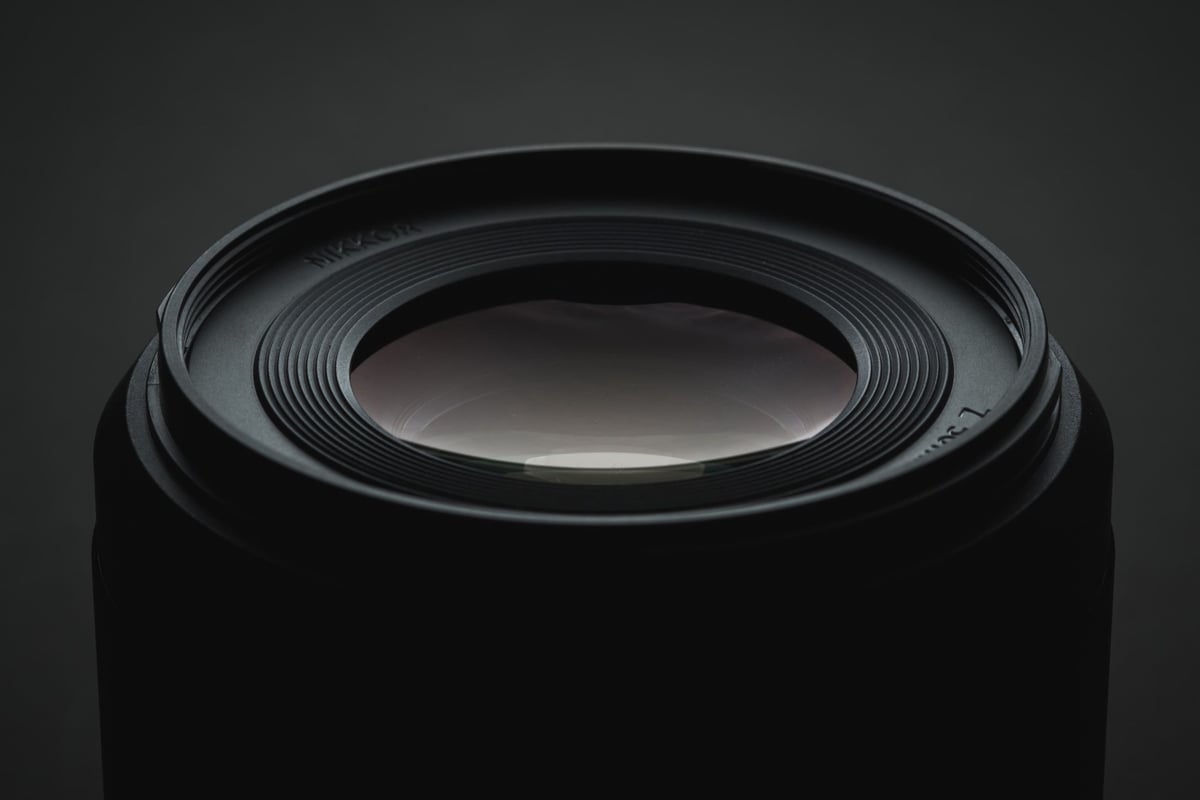
NIKKOR 50mm f1.8 S Front Element

Nikon uses some plastic with its lenses and even its S lenses. The area around the mount and where the lens connects to the body are supported by metal, and obviously, it has a metal core. Plastic shielding is used near and around the focus ring, a common building technique. Go pick up a Sony GM lens or any Canon lens.

Plastic is used because it has different thermal properties. It handles impacts and scratches a little better than anodized metal, and it will absorb some shock if hit or banged. Plastic will expand and contract slower when facing temperature shifts and doesn’t hold heat like metal does. Heat can destroy a lens by causing hazing or the thinning of grease or, in extreme conditions, even cracking elements, especially those made from fluorite crystal, which this lens does not have.

Besides one little strip at the base and front of the lens, which is plastic, the rest is aluminum. About 90% of this lens is metal. The focus ring is also aluminum.

Of all the 50mm f1.8 lenses out there, this is the biggest and heaviest, but it’s not unmanageable. I’ve shot a ton of street photography with it, and if you remove the lens hood, the size becomes much more compact.

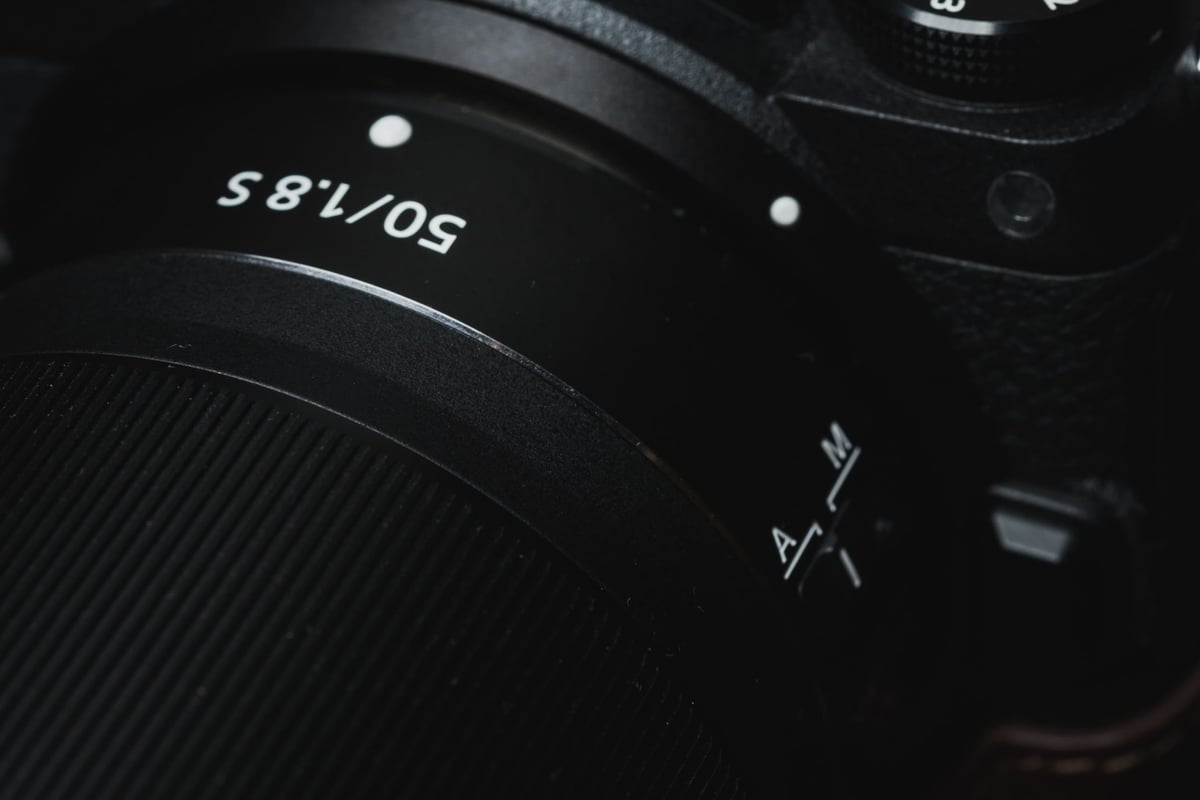
Nikon 50mm f1.8 S AF switch

The lens has an AF / MF switch that you easily forget about. Sometimes, I hit that, and my lens is in manual focus mode, and I’m confused for a second and often forget that the switch is there.

The lens has an internal focus design, meaning no external moving parts exist.

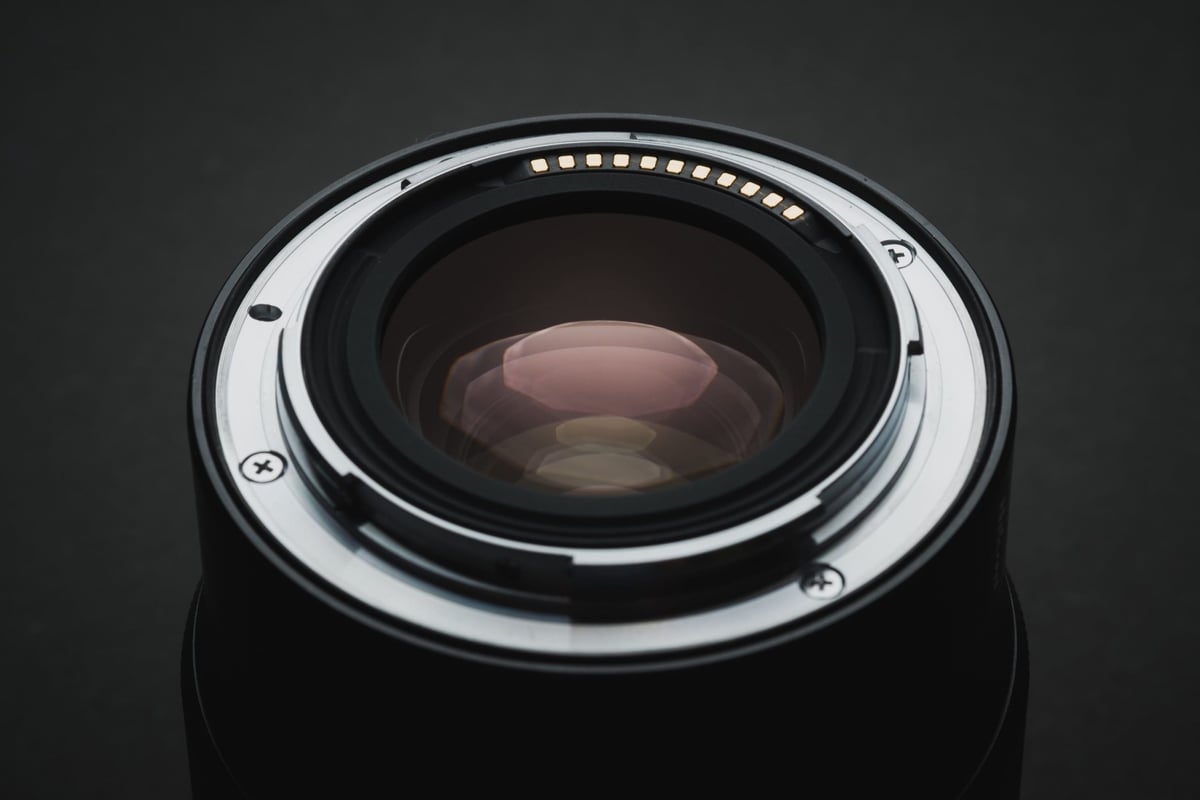
Nikon 50mm f1.8 S Rear Element

From the photo above, Nikon is taking advantage of every millimeter of that short flange distance. Notice the rear elements protrude slightly past the actual mount. This is one of the few full-frame mirrorless primes I’ve seen do this. APS-C mirrorless cameras, like many of the Fujinon lenses, have been doing this for years now, so it’s nice to see Nikon taking advantage of this here.

Also, this lens does have a rear element focus design.

The lens hood is made of plastic but is solid. It doesn’t rattle around and makes a nice, firm click when mounted.

The lens caps are also very well designed. Both the front and rear stay firmly on the lens. This makes me happy since I can’t tell you how many lenses I have where the rear lens cap can shake off.

Nikon 50mm f1.8 S Product Shot
Nikon 50mm f1.8 S Product Shot From Above
Nikon 50mm f1.8 S Product Shot Just the lens.
Nikon 50mm f1.8 S Product Shot Just the lens from above.

One of the things I love the most about this lens is the weather sealing, which you can depend on. I’ve taken my system out several times in some crazy conditions without any issues whatsoever.

I’ve shot in typhoons and pouring rain during fire festivals, where ash is everywhere, and the lenses and camera had no issues later.

Oniyo fire festival.
Nikon Z6 – ISo 100, f1.8, 1/2000

Technical Characteristics

Sakura
Nikon Z8 – ISO 64, f1.8, 1/3200

On the technical side, this lens is incredible. It does everything you could want and need, and its sharpness is insane. This lens really sets the bar for performance for future f1.8 lenses.

Sharpness

Sharpness and detail are excellent on the Nikon 50mm f1.8. There is also very little loss of center sharpness when wide open.

Center Sharpness

Nikon 50mm f1.8 S Center Sharpness

Corner Sharpness

The corners look suitable for the most part. They’re not perfect, but they’re close. They clean up well with smaller apertures.

I don’t focus on the corners of these charts, so I can see how the field curvature affects the image. When there is field curvature, it usually clears up by about f5.6 or f8. This lens doesn’t have an issue with field curvature.

Nikon 50mm f1.8 S Corner Sharpness

Edge Sharpness

Edge sharpness is also excellent.

Nikon 50mm f1.8 S Edge Sharpness

Distortion

There is very little distortion. This is after I removed the baked lens profile correction with Iridient Developer.

Nikon 50mm f1.8 S Distortion

Vignetting

Vignetting is this lens’s biggest weakness, but it’s still not bad at f1.8. This is after I removed the baked lens profile correction with Iridient Developer.

Nikon 50mm f1.8 S Vignetting

Flaring

Nikon Z 50mm f1.8 Flaring Sample
Nikon Z6 – ISO 100, f8, 1/200

Flaring is very well controlled with this lens.

Sun stars look like this –

Nikon 50mm f1.8 S Sun Stars
Nikon Z6 – ISO 450, f16, 1/125

Chromatic Aberrations

Chromatic Aberrations are well controlled. Stress testing shows some longitudinal purple and green fringing.

Nikon 50mm f1.8 S CA Sample

Technical Overview Final Thoughts

I’m now seeing a trend with Nikon Z lenses, where the designers seem to be allowing a little more vignetting. They must think it’s better to balance the lens in other ways and allow for a little more vignetting. Cameras today have such a good dynamic range, so cleaning up vignetting with lens profiles is not an issue like it was years ago.

Maybe this is good or bad, but it seems like Nikon is allowing for more easily fixable flaws with profile corrections or software in favor of correcting other issues or enhancing features that cannot easily be done in editing.

Slow Shutter at Oniyo Fire Festival, Event Photography.
Nikon Z6 – ISO 320, f1.8, 1/15

Optical lens design is a bit like rolling a character in D&D. You only get a limited number of attribute points that you can shift around based on size to assemble the perfect build. Experience is everything, so allowing the lens to have more vignetting in favor of maybe corner sharpness would be like rolling a character with a little less Str in favor of Int. Then cleaning up vignetting with software would be like maybe getting a +2 Str helm later. – Yes, I’m a nerd.

Art & Character

Posing In Field Of Sakura
Nikon Z8 – ISO 64, f1.8, 1/400

When reviewing lower-element lenses by Fujifilm, the art and character section usually discusses render depth, focus falloff, and micro-contrast.

While this lens has a smooth focus falloff, micro-contrast and tonal depth are weak for a prime.

It doesn’t have that tonal pop look with great micro-contrast, which you’ll never see in a 12-element lens.

Tonally, his lens produces slightly flatter highlights and slightly muddier shadows, giving the image more of that glossy high-element prime look.

Just so you’re not confused, there is a very nice 3D cutout effect from how well the focus falls off with the nearly buttery-smooth background. But this is a little different from what you would classically call the Zeiss pop or 3D pop, which comes from more tonal depth. So yes, there is a very good 3D look, but it lacks tonal pop. I hope that makes sense.

One look is not necessarily better than the other, depending on what you’re going for. I typically like lenses with more micro-contrast and 3D pop with the way they render tonally, but this is my most used lens, even though I have a lot of classic lenses.

Portrait Photo of little girl, lifestyle photography
Nikon Z6 – ISO 100, f1.8, 1/250
Portrait Photo of little girl, lifestyle photography
Nikon Z6 – ISO 100, f1.8, 1/500

You have to pick your battles.

Too few elements, and you’ll end up with the Sony 50mm f1.8, which has a very classic rendering but a lot of CA and other issues. But then, when there are too many elements, you’ll be in Sigma territory or Nikon Zoom lens territory with flat glowing highlights. 11 / 12 is very acceptable, especially if the focus is video, landscape, or portraits.

The trade-off overall final picture of the Nikon 50mm f1.8 is quite nice: a very rich and buttery smooth bokeh. It has fantastic subject separation, yet it still holds the image together very well, even at f1.8.

The highlights are a little flat, and it does have a little bit of that Nikon glow, but overall, it produces beautiful images.

Portrait of little girl.
Nikon Z6 – ISO 100, f1.8, 1/1600

Many lenses, especially classic lenses, can also perform poorly when shooting at their fastest apertures at far distances. Bokeh usually gets very busy or kind of nasty-looking with a lot of spherical aberrations. This lens does not. It’s very reliable in every situation. It even has a nice minimum focus distance of 1.31′. So that’s another very positive characteristic to be aware of.

Bokeh

Nikon 50mm f1.8 S Bokeh Sample
Nikon Z6 – ISO 220, f1.8, 1/100

Many of the samples in this review are shot at f1.8, but in this section, I wanted to show more of the characteristics you may not see in casual shots. I found a few situations that would usually bring out the worst in a lens so you could see the worst-case scenario.

Bokeh sample photo of flowers.
Nikon Z6 – ISO 100, f1.8, 1/4000
Bokeh sample photo of a little weed.
ISO 100, f1.8, 1/1600
Bokeh sample photo of a portrait of a little girl.
ISO 450, f1.8, 1/80
Bokeh sample photo of a bird.
ISO 100, f1.8, 1/2500
Bokeh sample photo of a solo flower.
ISO 100, f1.8, 1/4000
Bokeh sample photo of flowers.
ISO 100, f1.8, 1/1250
Bokeh sample photo, leaves with specular highlights.
ISO, f1.8, 1/4000

Bokeh Balls

Really nice bokeh balls and some cat-eye along the extreme edges. No onion rings, no soap bubbles.

Bokeh Ball Sample at f1.8
f1.8
Bokeh Ball Sample at f2
f2
Bokeh Ball Sample at f2.8
f2.8
Bokeh Ball Sample at f4
f4
Bokeh Ball Sample at f5.6
f5.6
Bokeh Ball Sample at f8
f8
Bokeh Ball Sample at f11
f11
Bokeh Ball Sample at f16
f16
Bokeh Ball Sample at f1.8
f1.8
Bokeh Ball Sample at f1.8
f1.8
Bokeh Ball Sample at f1.8
f1.8

Color Rendering

Creating straight-out-of-camera raw files for Nikon is tough since their profiles carry over into Lightroom. And I’m always shooting with different profiles, so there is no real signature ‘straight-out-of-camera look.’

I switched everything to the Adobe Color profile in these samples.

SOOC Samples – Adobe Color

If you’re unfamiliar with Nikon, this should give you a good idea of what Nikon RAW colors look like. Compared to Sony or Fujifilm, Nikon’s colors feel slightly more organic, but it doesn’t push them quite as hard as Canon.

Unedited photo of a flower.
Nikon Z6 – ISO 100, f1.8, 1/800
Unedited photo of cats.
ISO 100, f1.8, 1/500
Unedited photo of a field of flowers.
ISO 100, f1.8, 1/8000
Unedited photo of a field of a girl posing in a field of flowers.
ISO 100, f1.8, 1/8000
Unedited photo of a field of flowers.
ISO 100, f1.8, 1/8000
Unedited photo of hanging lanterns.
ISO 160, f1.8, 1/100

Contrast & Micro Contrast

As mentioned, this lens isn’t a micro-contrast or tonal pop beast, but the global contrast is still very good. Because of the f1.8 aperture, you get a nice field depth that shows great foreground-to-background separation.

Here are a few B&W samples.

black and white sample street photo.
Nikon Z6 – ISO 360, f1.8, 1/125
black and white sample photo.
Z6 – ISO 900, f1.8, 1/100
black and white sample photo from the Oniyo Fire Festival.
Z6 – ISO 100, f3.5, 1/15
black and white sample photo from the Oniyo Fire Festival.
Z6 – ISO 200, f1.8, 1/125
black and white sample photo from the Oniyo Fire Festival.
Z6 – ISo 720, f1.8, 1/125
black and white sample photo of a man praying with a torch.
Z6 – ISO 1000, f1.8, 1/125

Nikon 50mm f1.8 Review – Bottom Line

Japan Yamakasa Sample with Nikon 50mm f1.8 S
Z6 – ISO 100, f2.5, 1/2000

The Nikon 50mm f1.8 S has just blown me away, and I’m a little shocked about how many people have been overlooking the Nikon mirrorless system. Everyone always used to preach that photography was all about the lenses. But lately, it’s become all about which camera’s eye detection autofocus, which camera has the most card slots, or how many megapixels, but really, it is all about the lenses.


So, final thoughts: I would say this lens is a gem, a masterpiece. It’s amazing, and I never say that in my lens reviews! It really can do anything. It’s my most used lens, and I love it.

I’ve also reviewed the Nikon Z 80mm f1.8, which is incredibly fun but not quite as perfect as this one.

Nikon 50mm f1.8 S Lens Review
Z6 – ISO 100, f2.8, 1/800

Nikon Z 50mm f1.8 S – Amazon / Adorama / BHphoto

Similar Articles

Complete List Of Nikon Z Mount Lenses

Nikon Z 85mm f1.8 S Review

Nikon Z 35mm f1.8 S Review

Nikon Z 50mm f1.8 S Sample Photos

For this NIKKOR Z 50mm f1.8 S lens review, I shot all the sample photos with the Nikon Z6 or Z8 and colored everything in Lightroom using my custom-made film presets.

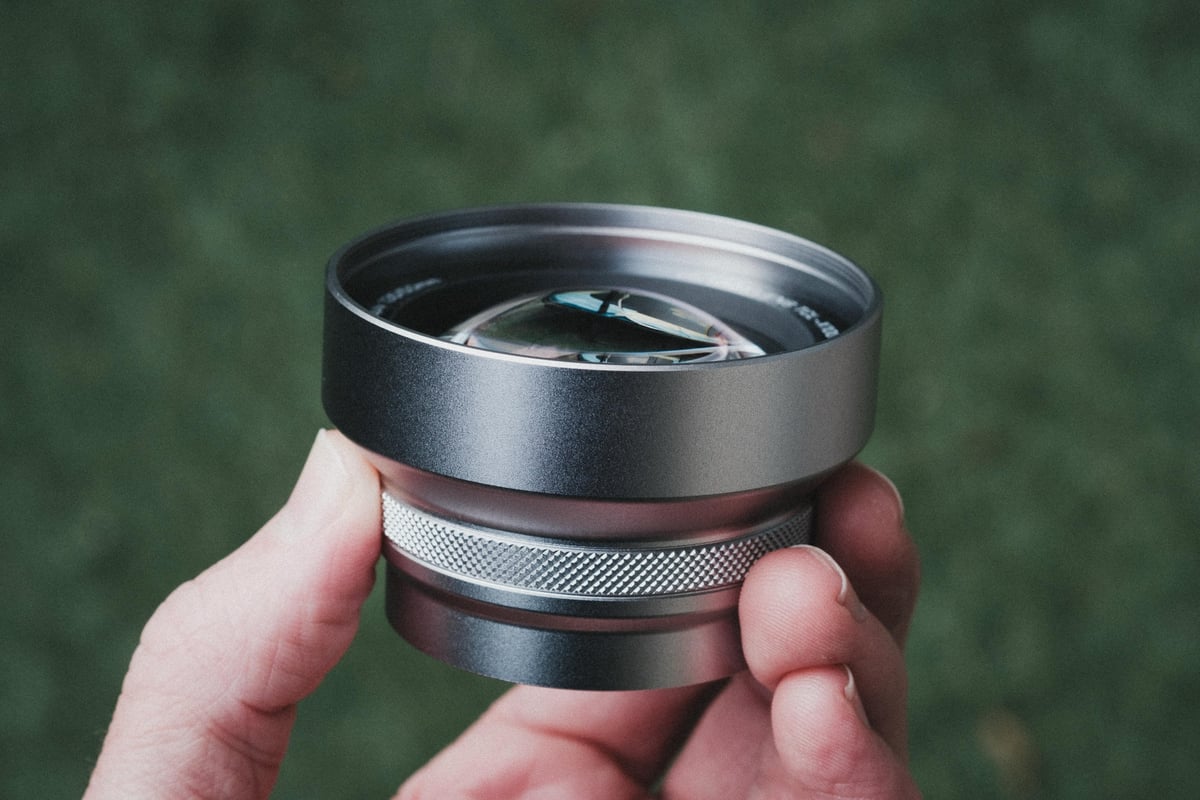
All images are uploaded at half-res, and some are shamelessly cropped. I’ve also been using this lens a bit more with various diffusion filters and Lens prisms.

Little Chan
Z8 – ISO 64, f1.8, 1/2000
Cherry Blossoms at f5.6
Z8 – ISO 125, f5.6, 1/250
Nikon Z 50mm f1.8 S Sample Lifestyle Photo
Z6 – ISO 100, f7.1, 1/200
Sample Lifestyle Photo
Z6 – ISO 100, f1.8, 1/2000
Z8 – ISO 2000, f1.8, 1/160
Z8 – ISO 900, f1.8, 1/160
Sample Lifestyle Photo
Z6 – ISO 100, f1.8, 1/1250
Z6 – ISO 160, f1.8, 1/8000
Nagasaki Nights
Z8 – ISO 2200, f1.8, 1/125
Nikon Z 50mm f1.8 S Sample with Nikon Z6
Z6 – ISO 400, f2.2, 1/125
Z6 – ISO 900, f2.5, 1/160
Tiffen Black Pro Mist Filter At Night. Streets Of Tenjin Japan
Z6 – ISO 2000, f2.5, 1/125
Z8 – ISO 720, f2, 1/200
Z6 – ISO 100, f2, 1/125
Sample Baby Photo
Z6 – ISO 100, f1.8, 1/100
Nikon Z 50mm f1.8 S Sample Street Photo
Z6 – ISO 100, f1.8, 1/1250
Japan Yamakasa Sample with with Nikon Z6
Z6 – ISO 100, f1.8, 1/2000
Japan Yamakasa Sample with Nikon Z6
Z6 – ISO 1600, f1.8, 1/100

Alik Griffin

A professional video editor, and photographer with a Bachelors in Film studies from UCSD. Based in Los Angeles, I have created commercials, trailers, and other video content for various clients and platforms since 2005. I also love to write about my passions and share my insights on my blog.

Related Topics
  • Lens Reviews
  • Nikon Z 50mm f1.8 S
  • Nikon Z6
  • Nikon Z7

Subscribe

Subscribe now to our newsletter

59 comments
  1. Pedro Silva says:
    July 27, 2019 at 7:47 am

    Hello again Alik! We finally got the review after reading your praise in the comments, thanks.

    I’m getting more and more interested in the Nikon Z system and tbh I don’t mind seeing Nikon struggling a bit for now because it will make them push even harder and also drives the prices down, which is good for everyone. Right now I’m using an XT3 + 10-24 + 35 f2 with plans to eventually get the 55-200 or 50-140 (depending on promos) and the Z system seems like the perfect “evolution” for someone that enjoys Fuji X, especially when Nikon seems to be doing something similar with their primes having the 1.8 and 1.2 for different budgets. Right now the price of the lenses I would want are getting so close to the XF ones (ie.: 50mm 1.8 for 350€ which is what I paid for my 35 f2). I’ll keep my XT3 for now since I really like it and give more time to the new FF mirrorless systems to mature.

    Reply
    1. Alik Griffin says:
      July 27, 2019 at 5:19 pm

      Thanks Pedro. Yeah that’s why I love the system, the f1.8 lenses are like what we got from Fujifilm but with all the modern design and tech thrown into them. I hope Fujifilm starts updating their f1.4 lenses after they finish their 33mm f1.

      Reply
      1. Pedro Silva says:
        July 31, 2019 at 10:28 am

        I know you have experience with the XF 35s and 23s so how would you compare those with the Z 35 and 50? I’m asking mainly to understand what benefits I could get for mostly the same price of my fuji gear. Here in EU I could eventualy swap my xt3 and 35f2 for a z6 and z 50 1.8 without spending much money so my main concern would be a replacement for the 10-24 since the 14-30 is a bit more expensive and has mixed reviews. Are you considering reviewing that lens?

        Btw I just noticed in your bio that you’ve worked in some GOW stuff and kudos to you from a longtime fan of the series.

        Reply
        1. Alik Griffin says:
          July 31, 2019 at 7:21 pm

          The f1.4 versions of the Fujifilm lenses were first generation Fujifilm lenses so they don’t have all the nice mechanical features we’re seeing from their f2 lenses or these Nikon S lenses. So the apertures are noisy when shooting video, no weather sealing, they focus breath a little, some a lot.

          But optically Fujifilm really goes for a more classic / organic look. The f1.4 lenses are not as “corrected” as these Nikon lenses but often look better in terms of tonal depth. Nicer gradations of shadows etc. The 35mm f1.4 has this type of field curvature too it as well that causes a very interesting focus falloff towards the center, that softens towards the edges. It’s a very interesting and unique lens and its look is one of a kind.

          The Nikon f1.8 lenses use more elements so they have a little bit more of a modern look to them. It’s not bad, most people probably don’t care.

          All the Fujifilm f2 lenses have all the mechanical updates to put them in line with the Nikon S lenses. Weather sealing, smooth silent focusing, silent aperture, super fast AF. Optically they are also very well corrected and very nice. Some of them actually have better image pop, or tonality than the f1.4 lenses, just by a hair.

          But with Nikon, you get everything that’s great with those f2 Fujifilm lenses, with f1.8 full frame lenses which have a depth more similar to f1.4 APS-C lenses. So they have me very interested. The only big disadvantage is they are much larger.

          Full frame also has a different and slightly better look as well.

          And thanks, I edited game trailers for a decade before moving to Japan. Did a ton of stuff for Gear stuff since Gears 2. Marcus, Dom, Baird and Cole are like my family. 🙂 Still warming up to the new cast, Kait is cool though. I only touched the latest game for a second last Jan when I was in LA to do some pitch work so I don’t know what’s going on anymore.

          I also did a ton of stuff for Destiny 2 and COD as well. So I kind of got moved off of GOW for COD for Black Ops 3 / Infinity War / WW2 and then got moved off those when Destiny 2 came around. Fun times, but sitting in a dark editing bay for 10 to sometime 15 hours a day every day any many weekends is not a good way to spend ones life. One day you walk outside and realize 10 years has gone.

          Now I’m trying to get more into the music side of trailers so I can still work from Japan.

          Reply
          1. Pedro Silva says:
            August 1, 2019 at 9:36 am

            But with Nikon, you get everything that’s great with those f2
            Fujifilm lenses, with f1.8 full frame lenses which have a depth more
            similar to f1.4 APS-C lenses. So they have me very interested. The only
            big disadvantage is they are much larger.

            Full frame also has a different and slightly better look as well.

            Yeah this idea that I could be getting more for approximately the same price is what really makes me wanna switch.

            Tbh I don’t understand why Fuji is investing so much money on the 33 1.0 instead of releasing updated versions of some of the older lenses.

            Will you be releasing reviews for the Z cameras and zooms?

          2. Alik Griffin says:
            August 1, 2019 at 5:31 pm

            The way I’ve been thinking of it is, the Fujifilm 56mm f1.2 equivalent to 85mm with a perceived aps-c depth of field equal to f1.8. That lens costs $999, has no weather sealing focuses slower, isn’t tuned for video, doesn’t have good close focus ability. The Nikon 85mm full frame lens is $800. You get so much more for $200 less.

            If I decide to go all in on the Nikon system I will start collecting their zooms. I would probably start with the 14-30, then the 70-200mm f4 when it comes out. I might not go 24-70mm if these primes all work out. But we’ll see. I’d probably have to sell all my old Canon stuff but for now I’m just trying to pick up their primes since those f1.8 to me are the most interesting lenses coming out today.

          3. Pedro Silva says:
            August 4, 2019 at 11:01 am

            The way I’ve been thinking of it is, the Fujifilm 56mm f1.2 equivalent
            to 85mm with a perceived aps-c depth of field equal to f1.8. That lens
            costs $999, has no weather sealing focuses slower, isn’t tuned for
            video, doesn’t have good close focus ability. The Nikon 85mm full frame
            lens is $800. You get so much more for $200 less.

            Yeah that’s my main issue with Fuji right now. Even though I really like the XT3 and the 10-24, I could get the A7RII (A7III costs just 250€ more) and the 16-35 f4 or the new 17-28 f2.8 for the same price and it keeps bugging me in the back of my head. I like the feeling of knowing I’m getting the best bang for my buck. Same for the XF primes and the Z ones.

          4. Alik Griffin says:
            August 5, 2019 at 5:45 pm

            I currently use the A7rIII and the 16-35mm f4 for most of my landscape stuff.
            I think for zoom lenses like that the Full Frame systems are the way to go just for that because price and everything isn’t much different now. The A7rIII with the 16-35 and the X-T3 with the 10-24 are also both basically the same size.

            But there are some other big advantages that come with X-T3 like those f2 lenses, those cheap third-party lenses, Fuji Color and Video features. I feel like you can get better quality when going compact with the Fujifilm system. Nobody makes good f2 or f2.8 lenses that can match the output, size and price of those Fujinon lenses.

            But it all depends all on what you’re going for. I personally couldn’t imagine not have my Fuji gear. 🙂 But for landscape photography there it definitely makes more sense to go with the biggest sensor you can get.

          5. Pedro Silva says:
            August 6, 2019 at 3:01 am

            First of all let me start by thanking you for always replying to everyone that comments in here. I don’t have access to your analytics data but the content on this site deserves a lot of recognition for not going for clickbait stuff and the typical internet hype that we find on most youtube channels and photography websites. I always look forward to your down to earth approach.

            Regarding my dilemma, I think I’ll hold on my Fuji gear for now, maybe get a cheap 50-230 in the meantime while the Nikon system develops and gets more and more lenses. I could easily sell everything now and go for a A7RII or A7III with the tamron zooms but doesn’t make much sense to do it and lose the Nikon Z ergonomics that I prefer and also the new Z 1.8 primes, since I fully expect Tamron to eventually port those lenses to the Z and RF mounts.

            So long term my goals is to have something like a Z6 or Z7 for my landscape and cityscape stuff, with the kit being a wide zoom plus a standard or telephoto zoom and a wide prime like a 20mm or 24 and a 50mm prime as well. Besides that, I’d like to pickup an used X100F for around 600 or even 500€ because I love the camera as a compact one to bring along everywhere. What do you think?

          6. Alik Griffin says:
            August 6, 2019 at 3:29 am

            Thanks, and yes, that’s a good plan. The Fujifilm X-T3 is still an amazing system. Probably the best most complete mirrorless camera out today.

            I think Tamron might be working on that code for lens communication with the Z bodies since they just updated firmware to their F lenses to work on the Z bodies with the adapter.

          7. Pedro Silva says:
            August 6, 2019 at 7:13 am

            I think Tamron might be working on that code for lens communication with
            the Z bodies since they just updated firmware to their F lenses to work
            on the Z bodies with the adapter.

            Yeah for me that just signals that they are starting to put more resources on bringing stuff to the RF and Z mounts so the zooms should eventually be on their way as well.

            Thanks a lot for your help. I’ll try to fight GAS now and stick to the plan 😀

          8. Alik Griffin says:
            August 1, 2019 at 5:31 pm

            The way I’ve been thinking of it is, the Fujifilm 56mm f1.2 equivalent to 85mm with a perceived aps-c depth of field equal to f1.8. That lens costs $999, has no weather sealing focuses slower, isn’t tuned for video, doesn’t have good close focus ability. The Nikon 85mm full frame lens is $800. You get so much more for $200 less.

            If I decide to go all in on the Nikon system I will start collecting their zooms. I would probably start with the 14-30, then the 70-200mm f4 when it comes out. I might not go 24-70mm if these primes all work out. But we’ll see. I’d probably have to sell all my old Canon stuff but for now I’m just trying to pick up their primes since those f1.8 to me are the most interesting lenses coming out today.

  2. zeist123 says:
    July 28, 2019 at 5:07 am

    Hi Alik,

    An avid reader of your blog. Any chance you will be doing a review of z6? ( waiting for the tech chart adapter review of yours! )

    Or comparison of z6/a7 and the eos r.

    Thanks!

    Reply
    1. Alik Griffin says:
      July 28, 2019 at 4:30 pm

      Yeah, I might do something like a big comparison very soon. Each camera is great at different things which is what I’ll try to go over. I’m not sure if I can do it in written form though, there is so much to talk about and compare. Maybe I’ll do a short writeup then a video.

      I might review the z6 soon. I look into that. But mainly I need more lenses besides adapting Sony lenses. I’m waiting for that 85mm. This way I can see if that eyelash af issue is a thing or not. I’m not really experiencing it any more than I was on my A7rIII with my 50mm f1.8. I also seriously might get that 14-30mm. I keep needing a lens wider than a 16mm for all waterfalls I’ve been shooting lately.

      Right now I have a new lens from Yasuhara I’m working on reviewing now, I might post first impressions of that tomorrow, then I can write some more Z6 and the info on the techart adapter.

      It’s summer time though and I’ve been out shooting almost every day, haven’t had too much time to write.

      I’m trying to do some videos now, experimenting with different things where I can just shoot some stuff and talk over it. This would be easier than writing and faster I think. I’m mildly dyslexic so writing these posts takes forever!

      Reply
      1. zeist123 says:
        July 28, 2019 at 10:33 pm

        Wow! Thank you for the write up.
        Appreciate all the effort going through all these trouble.
        I am, on the fence like many others on which system to choose from. ( first world problem)

        Currently using Sony( love/ hate relationship) love the dynamic range but hates the colour.
        BUT it’s the batis I find hard to let go off if I swap to Canon.
        Then,
        Nikon seems like a viable option with the adapter from techart. But still, the draw of the Canon color is still entising compared to Nikon.

        Do let us know if you will be doing videos! Will subscribe.

        Best regards,
        Yize

        Reply
        1. Alik Griffin says:
          July 28, 2019 at 11:05 pm

          I already started the writeup. It’s already 6,000 words.

          I would say with that techart adapter, you will have to keep in mind that lenses designed for the Sony FE sensor stack / micro lens design will not necessarily work perfectly with the Nikon system. I see a lot of third party lenses performing different between brands. Sometimes softer corners, sometimes more vignetting with Canon and Sony.

          Also, it seems like the techart adapter engages contrast detect autofocus a lot more than it should. While it’s great and fun, I don’t think It would be a great permanent solution for such high quality lenses, but maybe they work perfect who knows. I got it for a few SLR magic lenses and a few other crappy Sony lenses I have like the 50mm f1.8 and the Sony Zeiss 35mm f2.8.

          But I haven’t gotten into using it too much yet.

          Regarding switching from Sony. I’m a little in the same boat. Love hate. For me Nikon makes the most sense because of their lenses but I shoot street and landscape mostly and stuff with my kids. So I love good f1.8 lenses that are significantly cheaper than Batis but also faster and just as good in quality, maybe better. But that 14-30 f4 Nikon is looking good as well.

          If I was a wedding or portrait photographer I would want those f2 Canon zoom lenses. It seems like the obvious choice. I don’t think I would want to lug around all that heavy and expensive glass for landscape though. The nicer screens on the Canon and Nikon is a little bit game changing. Once you get use to them it’s really hard to go back, and Sony did not upgrade their screen on the A7rIV so I’m torn.

          I don’t want to have to wait 2 years to see if Sony decides to improve their screens or not with the next camera.

          And the Canon dynamic range is totally fine. I don’t feel like it’s any worst than the Sony A7rIII. They seem the same really. I bracket when I need it though.

          Deciding a camera should really will depend on how you shoot because Canon, Nikon and Sony all have a different path they’re taking with lens design right now. So you should probably just pick the brand that is going in the direction you need.

          Canon is going ultra pro f1.2 primes and f2 zooms.

          Nikon is focusing on landscape and maybe video shooters or just the average joe, nice f1.8 lenses and great zoom lenses.

          Sony is building out the pro sports lenses right. But a lot of the current lenses are hit and miss and you need to be a little bit careful what you buy and they are expensive.

          Reply
  3. Sean Higgins says:
    July 29, 2019 at 9:03 am

    Hi Alik!

    Just to add a voice to the choir: You’re right. This lens just kills. There are other lenses that do specific things better–my old Contax G lenses have much better microcontrast and tonal depth–but for an all-around 50mm that you can leave on your camera and forget about it, I don’t think it gets much better than this. This 50mm 1.8 is just the most masterful balancing act.

    Reply
    1. Alik Griffin says:
      July 29, 2019 at 8:49 pm

      Thanks Sean, I’m glad that point came across. Because yeah, like an Otus or something might be sharper, but it doesn’t do everything else this lens does.

      Reply
  4. Alexander Munoz says:
    July 30, 2019 at 5:21 am

    Great shots and review as always! I like the Yamakasa shots you got on that day. Man butts 4 life.

    Reply
    1. Alik Griffin says:
      July 30, 2019 at 5:34 pm

      Thanks Alex. The 50mm seemed just about right for the event. I think the 24-70mm f2.8 would be nice after the sun comes out. I’ll be downtown today btw.

      Reply
  5. spencerh says:
    July 30, 2019 at 8:52 pm

    Glad im not the only one who can appreciate the balance a line of 1.8 primes brings. I hope they make a line of 2.8’s as well, but based on the reaction these brought on they probably wont. The z is such an interesting system, I look forward to your 35 review.

    Reply
    1. Alik Griffin says:
      July 31, 2019 at 3:56 am

      I would think they would have to make some sort of pancake or shorter lens right? Like an awesome 40mm f2.8.

      Reply
  6. David B says:
    July 30, 2019 at 10:02 pm

    Yes 50mm 1.8 z is an amazing lens. It is also the fastest focusing lens on z platform. Z6 tracks with it great and video tracking is awesome. Rendering is sublime. Here is what Nikon dropped the ball. When they released z7, 50 was not available. 35/1.8 z is not in a same league speed wise and render wise. And all the reviewers wrote the reviews based on lenses that were there at the time. So all the reviews about autofocus problems etc all came there and nobody bothered to retest when 50 1.8z was released. Everyone was done with z system. (Reviewers). But that’s Nikon own problem. Nikon should have released the 50, it’s strongest lens immediately with z7. The system would have been accepted differently. Instead what we have is z6 grey are sold at same price as canon rp (actually I’ve seen cheaper) less
    Than a year after its release. The system sells poorly. Canon on the other hand released very interesting lenses immediately with 50 1.2 and 28-70/2 which are stellar. The bodies are shitty but they are selling anecdotally much better than Nikon z, if you notice you don’t see canon rf discounting either R or Rp like Nikon did with Z. Canons 85 rf 1.2 by all accounts is likely to be the best 85 ever. Not sure how Nikon z is going to fare at this point

    Reply
    1. Pedro Silva says:
      July 31, 2019 at 1:10 am

      Even though you present some valid arguments, I think current FF mirrorless camera sales are more complex than that and can’t be explained by one or two reasons. Yes canon has brought some nice lenses with the RF but every review I read there’s people complaining that they weren’t made for the RP or even the R.

      Reply
      1. Alik Griffin says:
        July 31, 2019 at 3:46 am

        Yeah you’re probably right.

        I’m actually a little surprised Canon hasn’t released a pro R body yet. I was fully expected one before now. Their strategy really made no sense, they released a bunch of consumer bodies with a bunch of pro top-tier lenses.

        Nikon at least released some nice bodies (lacking some pro features) with some really well made f1.8 lenses. Giving consumers a nice place to start. Now they are working towards more pro f1.2 lenses and supposedly a pro body on the way.

        Reply
        1. Pedro Silva says:
          July 31, 2019 at 4:15 am

          We would need sales numbers per camera and lens to understand if Canon’s approach was better received than Nikon’s one.

          Personally, for me it makes much more sense to release some mid level lenses first if you’re only releasing a “pro” camera later to go along with the 1.2 primes and 2.8 zooms.

          Reply
    2. Alik Griffin says:
      July 31, 2019 at 3:38 am

      This explains why it was nailing every shot when I was shooting some tough street situations.

      I actually made a pov video where I shooting a lot of these street photos in this review. I haven’t had a chance to finish the edit but it’s close.

      One cool thing about these lenses I forgot to mention is the smooth aperture control so when you change aperture while shooting video it’s a smoother transition rather than a flick like most lenses. I’m going to try to do some more tests with this see if it can actually rack aperture in tough video situations. That could be pretty huge for video shooters.

      From what I understand about the 35mm is it has the dual element rear focus system, or multi-focus system Nikon is calling it which is to help close focus and to help clean up that close focus softness or spherical aberrations. I imagine this slows down the focus a bit. The 50 does not have this, but the 85 will. So I bet the 85mm focus more like the 35mm.

      Reply
    3. osynlig fog says:
      August 2, 2019 at 12:17 am

      David I’m a little bit confused. The 24-70/4 autofocuses faster and more quietly than the 50mm. At least from what I can notice in my use. The weak point of the 50mm is indeed its af system when compared to the other S lenses. It doesn’t have the dual focus groups of the 35/1.8S or the new 85mm. The multi focus system makes the lens focus faster and more precisely.

      The 35mm is incredibly sharp. It’s perhaps not as magical as the 50mm but it’s very comparable. The 35 might be sharper in the centre. I don’t think your speculation of how Nikon may have dropped the ball holds water. That ball has everything to do with Internet hype engines and almost nothing to do with the Nikon Z lenses or cameras. Just as Alik very precisely outlined in the beginning.

      I think the 24-70/4 is almost as impressive as the 50mm. There is nothing like it on the market. The only lens I can think of that is similar is the Fujifilm 18-55 f2.8-4. But the Fuji zoom isn’t for a full frame camera, isn’t weather sealed or as smooth as the Nikkor.

      The 24-70/4S is the same size as the 1.8 primes when collapsed (no one comments on this) and weighs 500g. The 24-70/2.8S is about the same length as the photo-ready f4 zoom and weighs 800g.

      There seems to be coherent thought behind how the Nikkor S lenses form a system together.

      I remember reviewers saying they rather have a 24-120/4 like Canon and Sony. I sure don’t. Those lenses are very similar in size and weight to the 24-70/2.8S. I’d much rather go with the larger aperture lens. The 24-70/4S is meaningfully smaller and lighter.

      Reply
  7. Dominique Conan says:
    August 13, 2019 at 2:25 am

    Very interesting to have your opinion between Sony Zeiss 55mmf1.8 (more CA I guess, lighter, 7 elements) vs Nikon 50mmf1.8.

    Reply
    1. Alik Griffin says:
      August 13, 2019 at 5:27 am

      I’ve been using the Sony 50mm f1.8 more lately to see what the difference is like. So far I’m seeing a lot more CA. Totally different rendering. I need more time going back and forth before I could have a thorough comparison.

      Reply
  8. osynlig fog says:
    August 17, 2019 at 2:33 am

    Great review and lovely photographs. Thank you Alik.

    I love my 50/1.8S. It’s an incredible do everything lens. I sometimes make very large prints, 80-130 cm wide, and this lens has incredible properties to support that print size. But also it somehow has loads of character and I love how the pictures come alive.

    The sharpness is astounding.

    I think Nikon nailed it with these 1.8S primes. Leica just released a 50mm f2 prime for the SL mount which looks incredible. I really like those f2 SL primes. Also Zeiss Batis lenses. Nikon is doing something similar.

    Reply
  9. Yetsuh Frank says:
    August 23, 2019 at 12:38 pm

    Question from this neophyte who knows nothing about lens design. But how come this lens (and others like it) are so much bigger than a “pancake” manual focus 50mm 1.8 from 1980? Is it just the autofocus that requires all that additional volume? If there was one or two pancake lenses for the Z mount I would buy it all tomorrow. I’m in love with the size of the Z body but with the lenses it feels like a wash compared to a DSLR setup in terms of space savings.

    Reply
    1. Alik Griffin says:
      August 23, 2019 at 7:38 pm

      Lens design is a battle of compromises. The bigger the design usually the better the lens can be optically. You can do more with the arrangements of elements. Smaller lenses are really designed for compactness at the cost of optical quality. Small pancake lenses lenses usually have issues with vignetting, soft corners, etc. So making a big or small lens is a decision by the lens designers, “how big should we make this lens for the targeted user.” Then they work from there.

      They still make small AF lenses today, look at the Canon 40mm f2.8. A pancake lens that’s actually pretty good. And yes, I wish Nikon would release a pancake, they probably will eventually but right now it looks like they are filling out their pro lineup. I’ve been adapting the Sony 35mm f2.8 FE lens to the Z with acceptable results. Just the AF is a bit slower.

      Reply
      1. Yetsuh Frank says:
        August 26, 2019 at 7:12 am

        Thanks for the response. Yeah- was disappointed not to see something compact on the Z lens roadmap- but makes sense they are focusing on pro level gear. I’ll hold out hope that one of the better 3rd party outfits releases a Z mount pancake. Thanks again for this great review and for all your work generally. (Your roundups of the lenses available for different systems are fantastic.)

        Reply
  10. Cheese_pop says:
    August 24, 2019 at 3:58 am

    Canon eos r vs nikon z6 vs sony a7iii, which one do u recommended? Also whicc one have nice color rendering?

    Reply
    1. Alik Griffin says:
      August 24, 2019 at 4:06 pm

      That’s a really hard question. Depends on what lenses you need, if you need dual card slots, IBIS or a large high-res screen 🙂 Canon has the best color rendering though.

      Reply
      1. Cheese_pop says:
        August 24, 2019 at 10:32 pm

        For wildlife shooting

        Reply
        1. Alik Griffin says:
          August 25, 2019 at 6:08 pm

          The Sony is the only system of those three with native long lenses, otherwise you would have to adapt F or EF lenses with Canon and Nikon. But in that case the focus on the Sony and Nikon would likely outperform the Canon R. So Sony or Nikon probably until new cameras come out.

          Reply
  11. PeteK says:
    April 18, 2020 at 5:28 am

    Hi, and thanks for sharing your insights.

    Been reading several of your lens reviews, both loving your style of writing and you approach to lenses.

    I put notice to something you wrote here in this review:

    “Heat can destroy a lens by causing hazing or the thinning of grease, or in extreme conditions even cracking elements”

    I’m a Fuji shooter, and of course get concerned when reading something like this. Particularly when living in a Middle Eastern country with summer temperatures above 30 degrees, sometimes reaching above 40 degrees (celcius).

    Is this something you know can be a problem for Fujifilm’s metal lenses? I would hate to invest into a system, and then see the lenses being ruined by the heat here.

    Thanks again, stay well and healthy.

    Reply
    1. Alik Griffin says:
      April 19, 2020 at 11:42 am

      I haven’t seen this issue with Fujinon lenses and I shot a lot with them the last few years in Japan which gets crazy hot, or even here in LA which it gets 46-48 celsius in the summer. But some of my third-party lenses I have seen the grease melt and get on the aperture blades and somehow my x-pro2 sensor was completely spattered with oil last time I cleaned it. Took forever to get off. I’m not sure if the camera got grease on the shutter mech or if it was from a third-party lens.

      Anyway, you mainly want keep your lenses from just baking in the sun if you can. Using them normally in hot conditions is fine, but don’t leave them in the sun for long periods of time.

      A lot of the new cameras companies engineer the lenses in ways so the grease doesn’t create as much of a problem. I was talking to the owner of Kipon about this and he was explaining to me how he’s changed the design of the internal systems of the lenses a few times to keep the components more protected to give the lenses more longevity. His early designs had grease issues, the heat would thin the grease and it would get all over the aperture blades.

      I would assume Fujifilm and Nikon would have some type of grease that would have less issues with evaporation and thinning, but I doubt they are immune completely. I haven’t had any grease issues with my Fujinon lenses though other than the X-Pro2 sensor issue, but I now keep my lenses in a dry cabinet that keeps things pretty cool and dry.

      I also want to update. Most of the Nikon Z lens is actually metal too. Only a few strips along the barrel are plastic. The base and the front.

      Reply
      1. Alik Griffin says:
        April 19, 2020 at 11:52 am

        I also want to point out: I’m not sure even how much the new autofocus lenses even use grease either. It’s not like manual lenses. These new focus motors are set up in ways where they don’t need to sit in a bath of grease. Like the quad linear motors on the XF90mm sit on electro magnetic rails and I don’t think much lubricant if any is even used in that lens. So again I wouldn’t worry about it too much, but you still want to be careful because you never know what’s going on inside the lens.

        Reply
        1. PeteK says:
          April 24, 2020 at 3:08 am

          Appreciate it, Alik.

          I was wondering, since it’s not something you hear people complain about. But happy both that you mentioned it, and that you clarify it here. I learned something new 🙂

          Another question I hope you can/will help me with. You talk about micro contrast in lenses, and it make sense, but I’m not sure that I would see the difference, for example in a case where a person uses a shallow DoF with a wide aperture, and one where you use a lens with good micro contrast. Or maybe I would, but just am not aware of it.

          Can you show an example of a photo shot with a lens with good micro contrast, and one with a lens with bad micro contrast? If you have the time of course 🙂

          Thanks again, Alik. Keep up the great work with your blog, really enjoy it 🙂

          Reply
  12. Andre says:
    April 19, 2020 at 11:26 pm

    Any chance you will review the 35mm?

    Reply
    1. Alik Griffin says:
      April 21, 2020 at 12:32 pm

      I will eventually. This lockdown makes everything difficult.

      Reply
      1. Andre says:
        April 22, 2020 at 12:11 am

        Looking forward to it. I enjoy your thorough and well thought out reviews very much. They helped nudge me to getting the fantastic Z6. Hard to overstate how good it is. Looking at adding that 35mm S or going for the cheap and fun option and going for the 7Artisans 35mm 1.4- your quick thoughts?

        Reply
        1. Alik Griffin says:
          April 22, 2020 at 11:06 am

          Also look at the Yasuhara Anthy 35mm f1.8. It’s actually a good lens. I’m not sure how the 7Artisans will compare, although that f1.4 aperture might be fun.

          The Z 35mm S has my favorite look of the three lenses I own. It’s very good. It pretty much lives on my Nikon right now while on lockdown. AF is not as snappy as the 50mm f1.8 but still it’s very good.

          Reply
          1. Anh Pham Viet says:
            April 25, 2020 at 2:59 am

            This is funny. The Z 35mm gets trashed(lil bit hyperbold) by lots of reviewers while the z 50/85mm have a stellar reputation throughout. It is less sharp wide open, but at 2.8 it gets thesame insane sharpness, also visible fringing at contrasty scenes.
            But I somehow prefer the wide open look of the Z 35mm over its brothers.
            Looking forward to your perspective.

          2. Alik Griffin says:
            April 25, 2020 at 7:21 pm

            Yeah, I”m not really sure what there is to complain about the 35mm. It’s been great for me. I don’t check corner to corner sharpness that often but I haven’t seen any issues.

  13. KeithPhoto says:
    April 28, 2020 at 7:09 pm

    Nice review for the Nikon 50 F1.8 Z, but I don’t have it right now. May eventually get it, but have to get the Voigtlander 21m F1.4 first. I do have the Nikon 35 F1.8 Z and love it, beautiful rendering. Will wait for your review of the 35mm Z.
    Nikon used to make low elements lens in 90s and earlier. One of them I still own is the Nikon 105mm F2.0 AF-D lens (6 elements and 6 group) which absolutely beautiful in right situation. Otherwise, you got lots of CA.

    Reply
  14. Alex says:
    July 5, 2020 at 2:43 pm

    Hey Alik, thanks so much for sharing your thoughts on the lens. I was wondering, because I think you are also a Fuji shooter, why did you choose to go with the Z6 and not Z7 to get the resolution bump from the Fuji x-system?

    Reply
    1. Alik Griffin says:
      July 5, 2020 at 4:43 pm

      Several reasons. One is price. When I first bought the Z6 a year and a half ago, this was back when you couldn’t find a single piece of positivity regarding the Z6. Everyone hated the Z system, so I bought it as an experiment. I thought, “no way the Z6 is as bad as everyone says it is.” Turns out they were all wrong, it was just influencers parroting each other like always without doing their own research. But at the time I didn’t want to spend $3k+ to see if the system was any good.

      Second reason, I still shoot a lot with the A7rIII which is 42MP, and I also have an EOS R. So I wanted to build out the four systems so there wasn’t a lot of overlap so I could keep using them and know about them which is important for this blog and for future comparisons.

      Fujifilm is my family lifestyle / street cam, EOS R is my travel / adventure cam, A7rIII is my landscape cam and Nikon is my Event / Streets at night cam.

      I think I’ll eventually go down to just Fujifilm and Nikon though. But I’ll keep my EOS R to review the new f1.8 that come out, since they have a bit more character than these pristine Nikon Z lenses with more flaws of course. Might be fun for street photography.

      Third reason, I shoot a lot at night and the 24MP with its super clean output and slightly better AF makes more sense. You typically won’t see the resolution bump at high ISO between a Z6 and Z7 because of the lower photon coherency that comes with low light. I think it stops mattering at around ISO 800, minus the AA filter which does soften up the Z6 just a touch. Also, since this is more of my night street, adventure camera, I’m usually fighting motion blur which would only be more apparent on the Z7. So I wouldn’t be able to pull the resolution from the Z7 in most of the situations I shoot in.

      If I were to make Nikon my primary landscape system, I would opt for a Z7. But I haven’t made that leap yet. Or I might pick one up used just to help review the lenses. But I think everyone is reviewing the Nikon lenses with the Z7, it’s kind of cool seeing how they perform on a Z6 as well since a lot of these lenses offer more sharpness than the Z6 is even capable of pulling in. So Z6 shooters cam see of lens sharpness is even an important metric for them.

      Reply
  15. Whitney says:
    July 8, 2021 at 7:44 pm

    I ran into your post while looking into the Nikon Z system and this lens. You’ve had the most helpful review so far and I never knew it was called “micro contrast” until now, but I’m all about that 3d look! Thanks for your review, it helped me make a few gear decisions!

    Reply
  16. Amanda Cook says:
    October 12, 2022 at 5:38 pm

    Thank you so much for your detailed review! I stumbled across your website when trying to figure out to get this lens or the 85 mm f1.8.

    If you were to get pick between the 2, which one would you get?

    Reply
  17. Daniel says:
    June 7, 2023 at 12:52 am

    The Ricoh GRii over this any day. If you want to shoot boring images then use a huge camera like this on the street. If you want to shoot expressive images, be invisible and have something to take everywhere in your pocket to capture moments, the Ricoh is better. I come from the FujiGFX50R, best thing I did was to sell it and leave all that bulky BS behind. No need to huge MP count. Small point and shoots are the way forward. You lot are mugs who keep falling for all the marketing hype camera manufacturers keep putting out there.

    Reply
    1. CAT Productions says:
      January 21, 2024 at 7:10 pm

      Whatever you say, buddy!

      Reply
  18. Feng xia says:
    March 10, 2024 at 1:43 pm

    Beautiful pictures!!! This is an artist

    Reply
    1. Alik Griffin says:
      March 19, 2024 at 7:11 pm

      Thank you!

      Reply
  19. Sachin Vyas says:
    July 10, 2024 at 9:59 am

    Hey Alik, it’s very interesting review. Can you please explain this “ Usually, when reviewing lower element lenses by Fujifilm, the art and character section goes a bit more into render depth, focus falloff, and micro-contrast.” as I am Fujifilm user. I wish to switch to Nikon.

    Reply
  20. Daniel says:
    August 21, 2025 at 8:18 am

    Why are the sclera in some of your presets rendered a fairly saturated blue? It’s very noticeable and distracting in on one of the earlier pictures in this review of your daughter kneeling down in what looks like a wooded area? I have your presets and this has always bugged me.

    Reply

Leave a Reply to Alik Griffin Cancel reply

Your email address will not be published. Required fields are marked *


San Clemente Sunset

Join The Newsletter

Featured
  • Pure Cinema
    Viltrox TCL-X100VI Review | A Budget-Friendly 50mm Upgrade
    • No comments
  • How To Edit Photos To Look Like Film
    • 4 comments
  • Nikon Z 26mm f2.8 Review – A Little Miracle
    • 24 comments
  • Nikon Z 28mm f2.8 Review & Sample Photos
    • 18 comments
  • Mud Face
    Nikon Z 35mm f1.4 vs Nikon Z 35mm f1.8 S – Sample Images
    • 28 comments
  • Kalina Flower FIeld
    Nikon Z 50mm f1.4 Review & Sample Photos
    • 24 comments
  • Kalina Picking Sakura
    Nikon Z 85mm f1.8 S Review & Sample Photos
    • 20 comments
  • TTArtisan 27mm f2.8 AF Front of Lens
    TTArtisan AF 27mm f2.8 Review & Sample Photos
    • 5 comments

Subscribe

Subscribe now to our newsletter

Privacy Policy | Licensing | About Me | Contact

Copyright © Alik Griffin Inc. 2025

Input your search keywords and press Enter.