
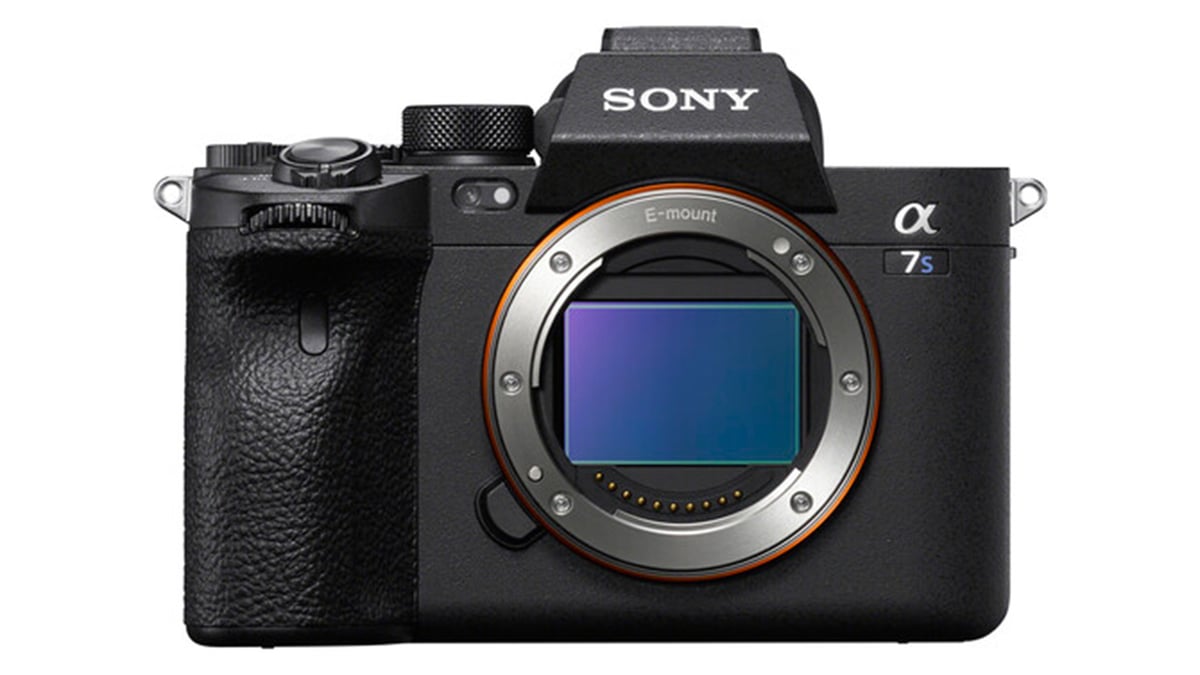
After the Sony A7SIII was released, we saw it as pretty jaw-dropping for the discerning videographer. Everything everyone has been asking for has been addressed.
Well . . . almost.
They’ve improved the bitrate, improved the frame rate, added 10-bit 4:2:2 internal, it has the newer body and ergonomics of the Sony A7rIV, dual SD and CFexpress type A card slots, incredible best-in-class EVF, improved the IBIS ( a little ), improved dynamic range with a new BSI sensor with faster readout speeds and a new menu screen redesign.
What more could you want?
For the average Joe, it seems to have everything, right? Well, except for a good 3.2″ screen with 2m-dot. Yes, they have stuck with the consumer-grade 3.0″ screen at 1.5m-dot. This blows my mind for a video-focused camera where the screen is so important on the fly.
Now The Buts . . .
I have a few issues with this camera, which all stem from the price.
The Price
The camera cost $3500 at launch. Yes, that’s expensive. This is edging dangerously closer to what actual prosumer video cameras are selling for, which offer more features and options like built-in ND filters and XLR support.
A serious cinematographer might be tempted to just make that jump to a pro camera for the improved image quality and on-camera features.
The image quality is still not up to pro standards for internal recording, as you would get from a Blackmagic, Red, or even a Canon C500 II or Sony FX9. Many of which offer 6k or even 8k and internal RAW. The new Blackmagic now even offers 12k.
And of course, for the videographer who shoots shorter clips, there is the Canon R5, which is only a few hundred dollars more but is a true hybrid system that is useful as a stills photography beast.
Another thing about the Sony A7sIII is that expensive CFexpress Type A cards are required for some recording modes. I’ve put up a full guide to Sony A7sIII memory cards here. It is a pretty complicated setup.
The Bitrate
You guys who read my blog know I always complain a lot about bitrate, and it looks like Sony is still limiting our bitrate on this one, likely to protect their cine cams.
It’s way better than where the previous cameras were, but if you want to shoot 4K at H.265, you can only get 280 Mbps. Mind you, this will likely give you a better-looking image than ProRes HQ, so I’m not complaining. But many other new cameras offer significantly better quality here, including the Canon R5.
Important Note: I do want to point out that the H.264 that Sony cameras use at a 600 Mbps compression rate will give about as good image quality as ProRes 422.
Will it be noticeable? I don’t know.
Don’t get me wrong, though: 280 Mbps is great, especially for the average Joe videographer who doesn’t want to buy a new 4 TB hard drive every other week. I dropped my video bitrate to around 200 Mbps on my X-T3 because it’s good enough for most situations. It’s a nice compromise between file size and performance.
But having a higher-end option for professional use would have been nice, especially for VFX work.
So, for a camera that’s aimed so hard at “filmmakers,” 280 Mbps, I think, is a weak offering for H.265.
There is a 16-bit RAW out, so if you were to get an external recorder that supports it (none currently exist), that would be a great image to pull from for pro shooters.
But again, the price, once you buy your external recording, your audio recorders, your shoulder rigs, cages, and your variable ND filters, you’re getting into a pretty expensive setup.
Granted a somewhat comparable prosumer video camera like the Sony FX9 was around $10k at launch and the Canon C500 II was $15k at launch. So the A7sIII has its place.
Here is another big BUT . . . or at least why I have no interest in this camera
I feel like the main draw of the A7S III is its low-light capabilities, which this series is known for, and now 4 K 120p at 280 Mbps. Two performance features that are seemingly now more common in the prosumer category, and Sony is making us pay a lot of money for them.
Plus, the 280 Mbps at 120p in 4K is quite low for a camera that touts itself as the most capable 4K shooter on the market.
4k 120fps on the Sony gives you 2.3Mbps per frame. Yeah, I know it doesn’t work exactly that way, but still, using that math, you can compare it to the Canon R5 4k 120p, which delivers 15.6 Mbps per frame. That will be a dramatically better image from the Canon, which costs only a few hundred more, but yeah, it overheats during long recordings.
The other thing is, and I know this camera is video-focused, but 12MP is very limited for stills, and you’re paying a lot of money for just low-light and 4k 120p.
I’m not dogging the camera; I think it’s incredible and perhaps the most capable 4K camera on the market. But today, there are many options out there that might be better for hybrid shooters, like the Fujifilm X-T4 or the Panasonic S1 or S1H (which offers more professional features such as zebra displays and anamorphic cropping). I think we will see many better cameras in this grouping coming very soon, like the Nikon Z6s and the Sony A7 IV.
The Sony A7sIII is very niche with that 12MP sensor. At this price point, I would’ve liked them to push the megapixel count for shooters who want to get more into advanced videography without sacrificing so much in the stills department. Also, adding 6K to be more competitive with the R5 would have been welcome, or otherwise, just make the camera cheaper as is.
Sony A7sIII Final Thoughts
There is a lot of hype around this camera, especially for Sony shooters. Sony did it! They finally figured out how to deliver high-quality video in a small package. I’m going to assume all their cameras going forward will share some of these specs. If they don’t, Nikon and Canon will eat them for breakfast.
And this leaves me with my grand thesis. Wait for the Sony A7IV. The A7S III is probably not worth it for most people because of its high price. I know if you shoot Sony, it’s very tempting to jump into this system right now, because this is the first time Sony has offered good video. But you’re mostly paying for that 4k120p.
If the A7IV has a 24MP sensor, it will likely do 6k to compete with the Panasonic S1H, and it will still have great 10-bit 4:2:2 4k60p, I would imagine. Plus, for me, 24MP is a great balance for still photography.
Just my two cents.
This camera breaks my brain. I know it is an elite 4K shooting powerhouse, but I can’t comprehend it at that price, especially with the A7IV looming, perhaps, early next year to deal with the Canon R6 and the Nikon Z6s.












Leave a Reply to Alik Griffin Cancel reply