

This website contains affiliate links. We will earn a small commission on purchases made through these links. Some of the links used in these articles will direct you to Amazon. As an Amazon Associate, I earn from qualifying purchases.
There has been a lot of interesting buzz around the Nikon Z6 III, because of its slightly lower dynamic range than some of the competition in this price range. This mostly comes from Nikon haters, the usual suspects, of course.
Ultimately, they are looking at this camera all wrong; it’s not a Sony A7IV competitor; it’s an A7sIII killer.
The Sony fanboys do this often. They misclassify Nikon cameras to make them look bad, comparing the Nikon Z8 to the Sony A7rV instead of the Sony A1, and now the Nikon Z6 III compared to the Sony A7IV while ignoring how it competes with the Sony A7sIII.
Nikon doesn’t build cameras to run a direct competition that chases what Sony is doing. Sony is not the main character as fanboys would believe. These camera companies are all a little different and have specific special use cases, and they all kind of do their own thing. Comparing them directly with other cameras is a little disingenuous.
So, I will do exactly that and compare the Nikon Z6III to the Sony A7sIII.
Sony A7sIII – B&H / Nikon Z6III – B&H
Nikon Z6III vs Sony A7sIII
Everyone has been asking for a Sony A7sIII with a higher megapixel sensor for stills. Technically, the Sony A7sIII uses a quad-bayer 48MP sensor, but it’s permanently binned down to 12MP. With the Nikon Z6 III at 24MP and its non-BSI but partly stacked CMOS sensor, we are getting almost like a hybrid between the Sony A7sIII and the Sony A7IV while remaining mostly video-centric.
Video is mostly where companies can continue to improve; for stills cameras, the tech is mostly finished. Just buy a Z7II or Z6II if your primary focus is photography. You’re not really getting anything more out of the new cameras other than improvements to the AF algos, which are not really game-changing anymore, just a luxury upgrade.
Nikon Z6III vs Sony A7sIII Dynamic Range
Now that the Nikon Z6 III is out on the market, we finally have enough stats, specs, and tests from Photons to photons and other sources to get a nice overall picture of what the Nikon engineers were aiming for with this camera.
While the Nikon Z6III does not compete with the Sony A7IV with dynamic range, it does a nice job competing with the Sony A7sIII, especially at around ISO 600.
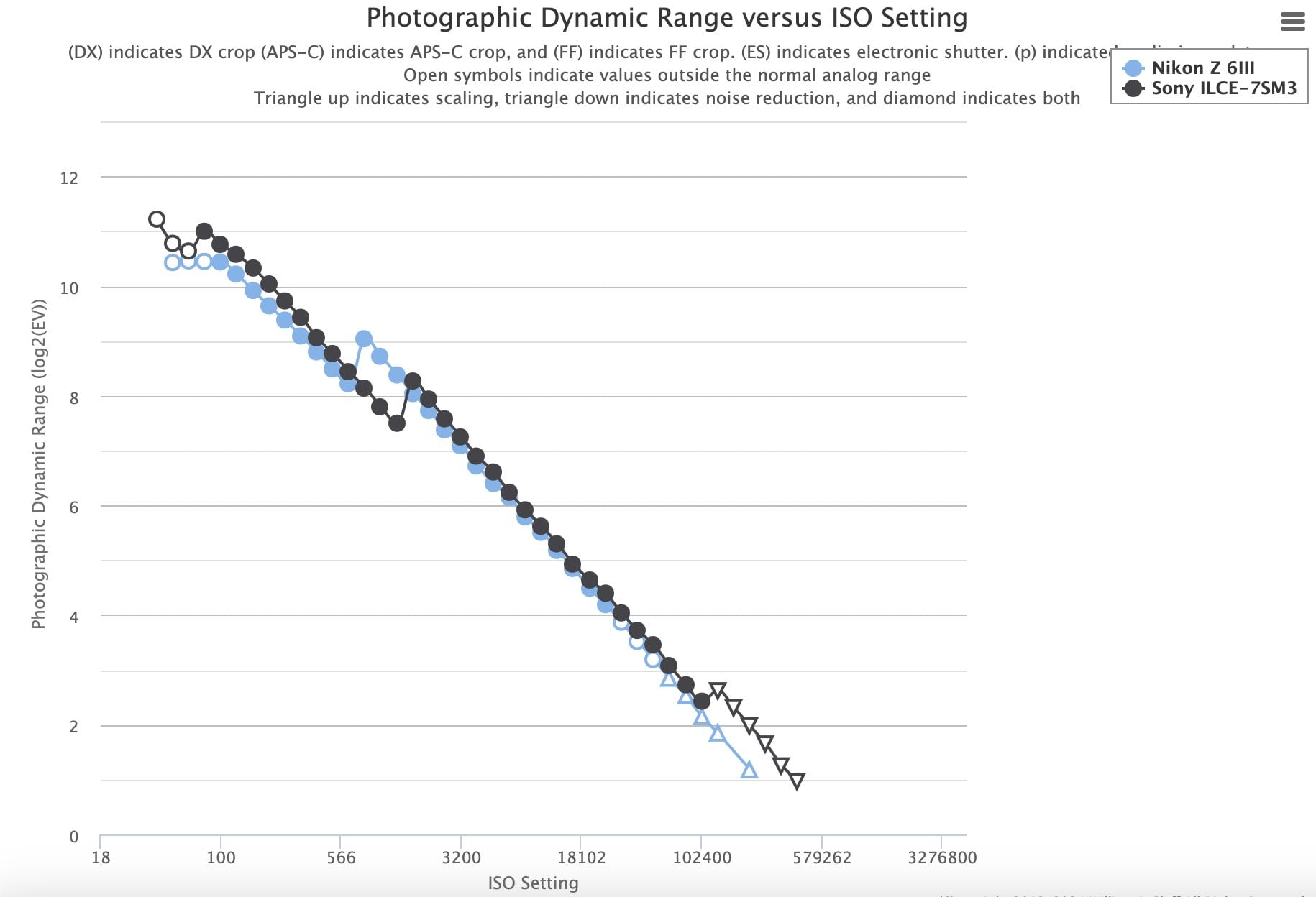
See it on PhotonstoPhotons.
Sensor Readout Speeds
Both cameras also have a sensor read-out speed of around 9ms, Sony will do 4k at around 8.8ms, and the Nikon Z6III does around 9.2ms, although the Nikon beats it at 4k120 at 6.13ms where the Sony A7sIII is 7.69ms.
Nikon also shoots 6k30 at 9.3ms, while Sony A7sIII is limited to 4k.
Nikonrumors recently reported on a project that tracks all the camera sensor speeds, so check that out for more details.
The Builds
Nikon usually completely smokes Sony bodies when it comes to the builds. However, Sony does have a few nice features, such as the digital hotshoe, which is great for their digital mics – It is Sony, after all; audio is their pedigree.
The Nikon Z6III has a 3.2″ 2.1-dot flip-out screen, whereas Sony still uses their kid’s toy Fisher Price 3.0″ 1.4m-dot flip-out screen.
The Nikon Z6III has a nice top display, which Sony does not have, but Sony beats it with the 9.4m-dot EVF. I never really understood why you need the best-in-class EVF (in terms of resolutions) on a video camera, but here it is. However, the Nikon Z6III has the brighter EVF at 5.7m-dot.
Sony cameras also often significantly reduce the resolution and brightness of their displays when actually recording, so those specs on paper are not often real-world specs.
Video Specs
The Nikon Z6 III shoots ProResHQ, ProRes RAW, and NRAW, as well as H.265 at 10-bit 4:2:0 internally.
Sony only offers H.265 at 4:2:2 and a nice H.264 All-I encoding, which should compete pretty closely with ProRes 422, but not HQ. However, it does include a 16-bit HDMI port; Nikon’s is only 10-bit I believe (although we don’t have official specs on that yet), so with Sony you can always pick up those other RAW codecs and ProRes by going out to a Ninja V recorder—which will set you back around $1000 just to get set up, on a camera that is already $1000 more.
Video Firmware
Where Sony still has Nikon defeated is with their video firmware. Their LOG curves are nicer, and they have many more options to customize everything video-related.
When Nikon starts working more closely with the RED engineers, this will likely bridge the gap a little, but for now, Nikon still needs some work.
I haven’t loved the look of Nikon NLOG. However, in pretty much everyone’s opinion, not just mine, their in-camera profiles (not LOG) and color science look a lot nicer than what Sony is doing.
CFexpress Type-A vs Type-B Cards
While the CFexpress Type-B cards are much cheaper and technically faster, I’ve been warming up to the idea that Sony’s Type-A cards were a better play, but only if the price continues to decrease. They are still significantly more expensive.
While CFexpress Type-B cards are technically faster, 4,000 MB/s with Type-B CF4.0 vs. 2,000 MB/s of Type-A, our cameras so far have only ever used the single bus lane. So, essentially, the Type-B cards perform the same as the Type-A cards in-camera, and Type-A cards are a lot smaller and the Type-A memory card slots take both SD and CF cards.
You can see this in play with my Sony A1 Memory Card Benchmarks vs the Nikon Z8 Memory Card Benchmarks. Both hit speeds of around 650-700MB/s.
So there you have it.
If the Sony A7sIII and A7IV had a baby, you would get a Nikon Z6III. Many Sony fanboys asked for this type of camera, but Nikon delivered.

While it doesn’t directly compete with the Sony A7IV or the A7sIII, the Nikon Z6 III is its own little beast with special characteristics unlike any other camera.
Why Still Buy A Sony A7sIII?
There are still many great reasons to consider the Sony ecosystem. If you’re an agency or even a studio and work a lot with photos, videography, or cinematography, Sony just makes sense. Or even a Canon. Nikon / Red / MRMC just isn’t quite there yet, and Nikon will probably take a few more years to Frankenstein that Chimera together.
Sony’s whole digital audio system, which is built into the A7sIII and found in these new Sony cameras, is also fantastic.
But, if you’re just an average enthusiast, the Nikon Z6III kind of makes more sense right now than a Sony A7sIII or Sony FX3. It’s also a lot less expensive. You get a camera that’s mostly better than the Sony A7sIII, less expensive, and can also shoot 24MP stills. It’s sort of the dream camera for the videocentric enthusiast.




15 comments
Of course it’s an A7SIII ‘killer’ when Sony most likely made the sensor primarily for their A7SIV coming later in a way that is a meaningful upgrade from the III 😉
Also it’s legit to compare mainly same priced and positioned cameras, like Z6 III to A7 IV – as is to other models too, neither is wrong.
And one could also argue stressing the brand new camera that is finally competitive in the given price range/segment like those other 2 are not nearing their life cycle after being ahead for some time, is quite fanboyish itself. Not to mention the Z6III most likely exists in this form because Sony delivered 😉
Yep, I imagine we’ll see an A7sIV soon, probably with ProRes and all the fun stuff as the A7sIII is 4 years old. But I would also say that the Z6 III seems a lot more aimed at being video-centric than the A7IV, so that has to be considered when comparing directly, which is not necessarily how people compare them.
Buy the Z6 III if you are more video-focused, and buy the A7IV if you are more photo-focused.
Hi Alik
You state, that the Z6 III can record H.265 10-bit in 4:2:2. I was already wondering, if that is really the case.
In the Z6 III online manual at https://onlinemanual.nikonimglib.com/z6III/en/video_file_types_42.html, 4:2:2 is only listed at the ProRes 422 HQ row.
For external recording though, 422 seems to available for H.265 (https://onlinemanual.nikonimglib.com/z6III/en/recorders_86.html). I’m a little bit confused.
You know, I saw some early reviewers mention it so I parroted it, I check the manual, which doesn’t specific and they haven’t released a tech manual yet.
However, I did see this on B&H page
“ProRes and H.265 10-Bit Recording
Internal recording is also supported with 10-bit color and 4:2:2 sampling in the ProRes 422 HQ codec and 4:2:0 sampling in the H.265 codec at 5.4K 30p and 5.4K 60p, respectively.”
So it’s looking like h.265 might again be only 4:2:0. However like everyone else B&H often messes up on their camera descriptions. I’ll revise the article until I know for sure.
Hey Alik! Any analysis on the Z6III supposedly having an inferior dynamic range as compared to the Z6?
From what I’ve gleaned it seems to not really be that big of a deal but some sites are really trying to make something of it.
Yes, the sensor is not the BSI sensor. So it’s like a partially stacked Nikon Z5 sensor. But ultimately, that’s why I posted this article. The DR is about the same as the Sony A7sIII, which everyone says is amazing.
I’ve never seen anyone complain about the Sony A7sIII’s DR, and at that second gain conversion, it’s actually better than the A7sIII. Plus, it has 24MP and 6k video, so it’s pretty impressive for what it can do. However, you’ll probably want to be a little bit extra careful when shooting landscape photography, and you’ll likely want to bracket a little more often since, at ISO 64-600, it does fall behind the latest BSI sensors.
Hey Alik, where did you get the information that the sensor is not a BSI sensor?
They always say BSI in their product descriptions and marketing material. Since they do not include BSI in the sensor description on any of the product pages, it’s safe to assume it’s not BSI.
By technical definition, a stacked sensor is a BSI sensor but with multiple backside layers instead of just one.
What’s clear about the design of the sensor is that in the imagery, Nikon shows bars above and below the image sensor, and that these bars are composed of multiple layers. This is likely the “stacked” portion and the sensor would be a “non-stacked” design. With that said, I cannot see the sensor achieving its recorded performance and read speeds while being FSI, so I have to guess that the primary image sensor must be BSI at a minimum.
Finally, I found this quote on the Verge:
“Instead of the circuit parts and pixel area both stretching the full corner-to-corner dimensions of the image sensor and sitting on top of each other, as in the more expensive Nikon Z9 or Nikon Z8, or not being stacked at all, as in the previous Nikon Z6 II, the Z6 III’s circuit parts are stacked as bars on the top and bottom of the pixel area.”
No idea how accurate it is but it might help to define what a partially stacked sensor is in this case.
Interesting, thanks David.
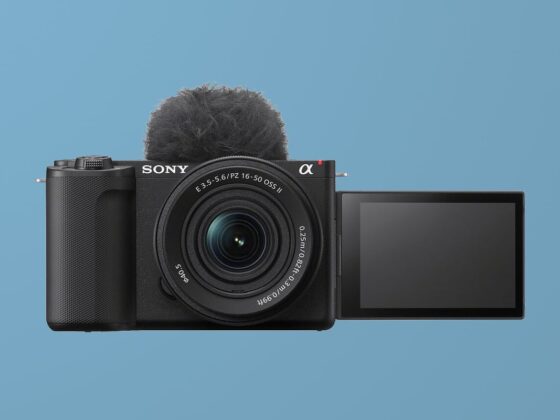
Next you should touch on the zve10 ii. Sony keeps making baffling decisions. It’s basically a Lumix s9 all over again. Ofc Sony fanboys gobble it up
But at least the ZVE 10-ii is only $1100. So, it’s a great option for an on-the-desk vlogging Youtuber camera, and it’s marketed that way with features designed specifically for that, like the background blur and the directional 3 capsule mic. It’s essentially a webcam on steroids.
The S9 tries to be a hybrid camera with no special features other than the LUT thing, so I guess you can stream with a LUT, if that even matters to anybody.
As an amateur with the Nikon Z6II, is the Z6III worth the upgrade? I take photos of family and friends, street art, and landscapes.
Probably not. Unless you feel like you need the new focus tracking features and more advanced video, but you’ll be trading some dynamic range for that, and when shooting landscapes, you want as much dynamic range as possible. The camera body is also a little bigger but feels perfect.
It’s a really cool camera, so it’s tempting. If you do jump into it, at least wait for a nice sale, but it is a bit more of a video-centric camera, so keep that in mind, and it will be a small step backward with landscape photography because of the non-BSI sensor.
I’ve sold my ZF and most of my Nikon stuff, but still have a couple of native Z mount lenses for sale that are pretty slow movers. I use and love a Fuji X100VI for stills, but I’m currently looking for a video centric camera to shoot narrative short films (solo or skeleton crew) and some short doc stuff. I think I’m leaning towards the S5IIx, mostly because of the solid video IBIS and anamorphic support (I have a Blazar Nero 1.5x adapter that I plan to use occasionally), but the Z6III and even the GH7 come up in my dreams while I meditate the purchase. Any recommendations? Thanks Alik!