

The A7R V is Sony’s 61MP resolution flagship, and at that resolution, card speed and capacity matter more than on lower-res bodies. Sony specs the buffer at 583 shots at 10fps with a CFexpress Type A card, which sounds like a lot until you realize it’s under a minute of continuous shooting, and a full day of serious stills work will burn through 256GB faster than you’d expect. Both slots accept CFexpress Type A and UHS-II SD cards, the same setup as the A7S III and FX3. At current pricing, CFexpress Type A is the right call: it clears the buffer much faster and costs about the same as a good V90 SD card.
Best Memory Cards for the Sony A7R V
Unlike the A7 IV or A7V, which top out around 310–325 MB/s with any CFexpress Type A card, the A7R V wrote CFxA cards at 600–695 MB/s in my tests, so the card you pick matters a bit more here.
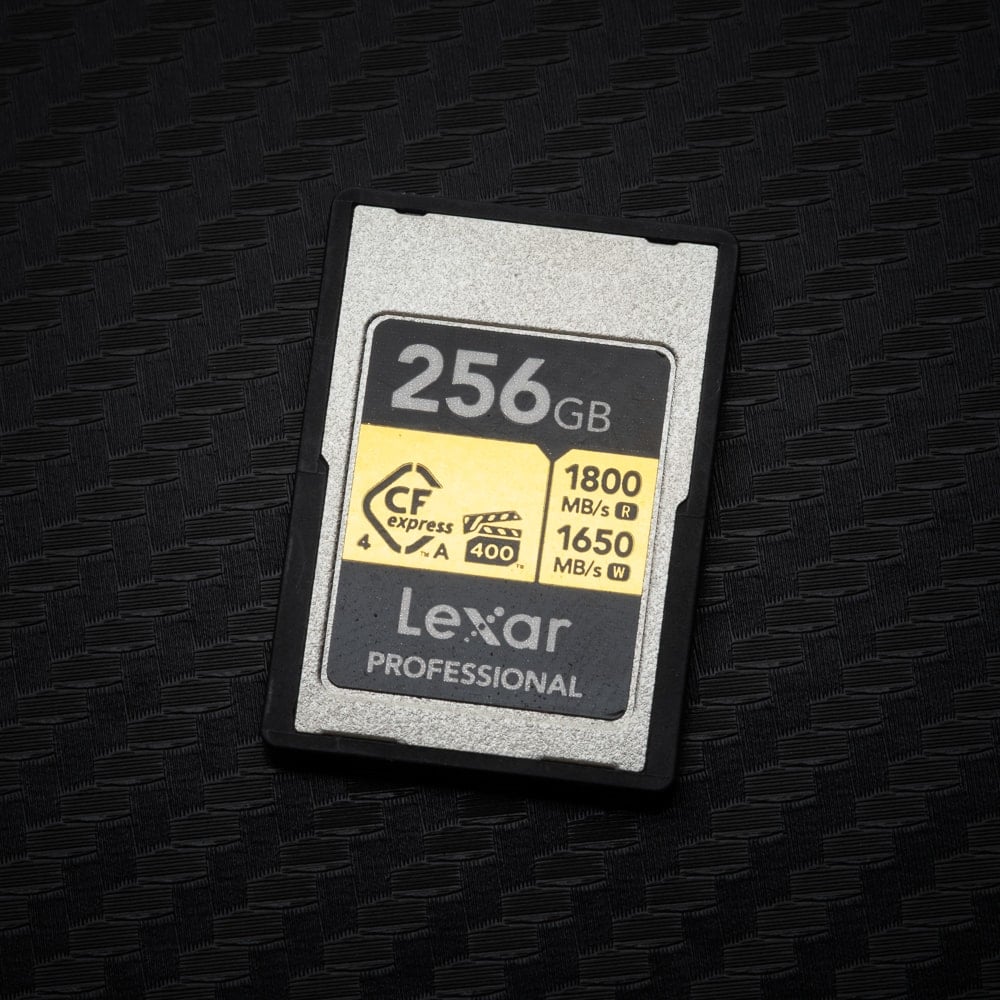 | Fastest tested: Lexar Gold CFexpress Type A. 695 MB/s, the fastest card I’ve tested in the A7R V. Since the A7R V writes CFexpress Type A cards faster than most Sony bodies, this is where a fast card actually pays off in long bursts. |
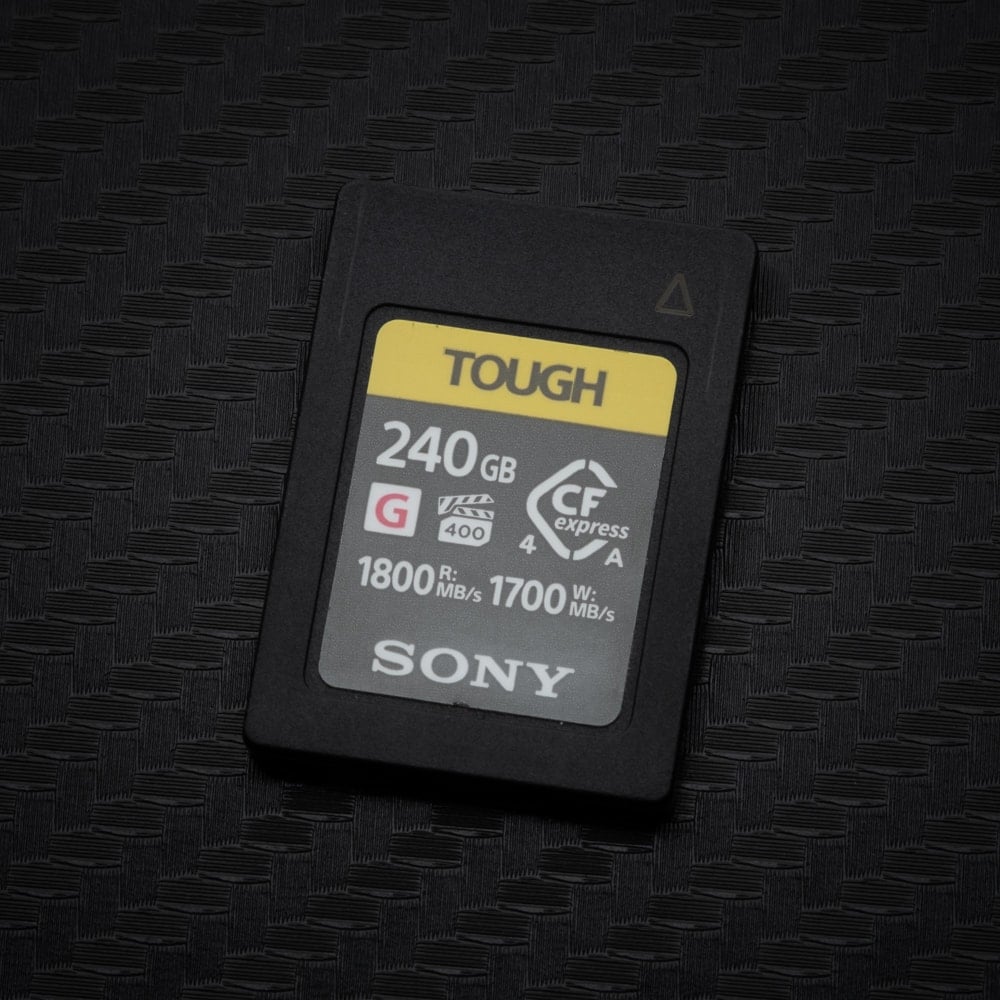 | Pro (warranty and durability): Delkin BLACK or Sony TOUGH G CF4.0. The Delkin BLACK 80GB hit 602 MB/s and the line carries a lifetime warranty. The previous-generation Sony TOUGH G hit 594 MB/s; the current CF4.0 version adds a 5-year warranty and an IP57 rating. |
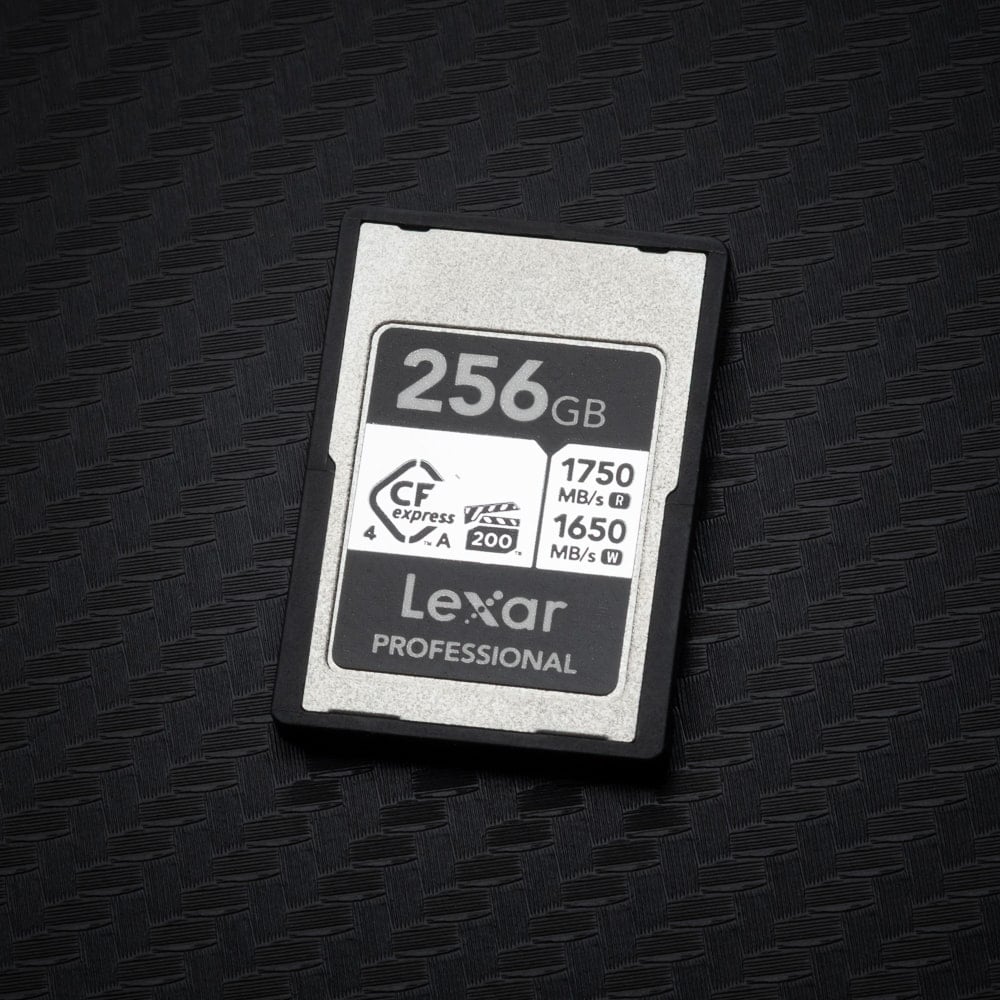 | Value: Lexar Professional SILVER CF4.0. I haven’t tested it in the A7R V yet. It’s the best value CFxA card in my other Sony tests, but since the A7R V writes faster than most bodies, the Lexar Gold is the safer pick if you shoot long bursts. |
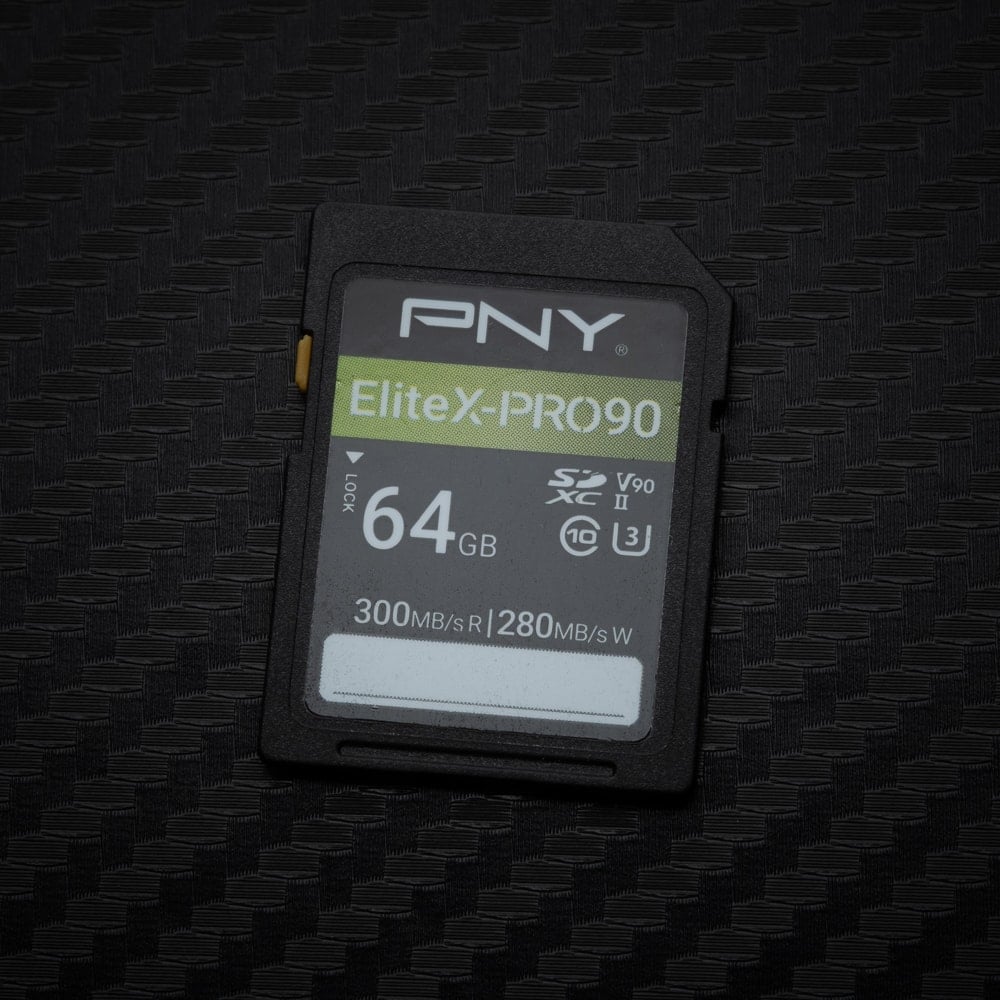 | Fastest SD card (V90): PNY EliteX-PRO90 or OWC Atlas Ultra V90. 228 MB/s and 225 MB/s in my A7R V tests, roughly a third of the fastest CFxA result. Good for Slot 2 backup or if you already own SD cards. |
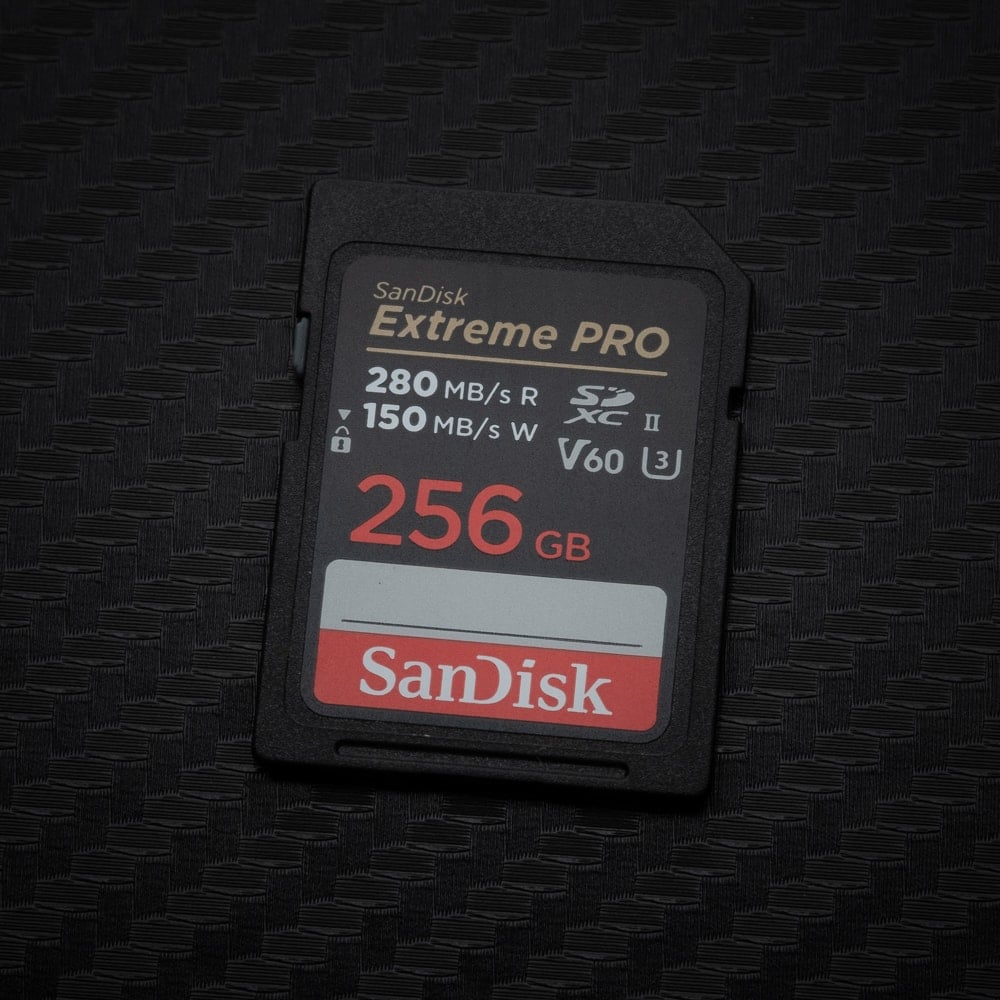 | Budget (stills and H.265): SanDisk Extreme PRO V60 256GB–1TB. 174 MB/s, the fastest V60 card in my A7R V tests. Fine for H.265 and S&Q in XAVC HS and XAVC S, but not for 600 Mbps All-Intra. Get 256GB or larger; the 64GB and 128GB versions only wrote about 96 MB/s in my other Sony tests. |
Video note: slow motion in XAVC S-I 4K requires a CFexpress Type A card. Sony doesn’t support SD cards for that mode.
CFexpress Type A or SD Cards: Which Should You Buy?
For most A7R V owners, CFexpress Type A. In my tests, CFxA cards wrote at 600–695 MB/s in this camera, while the fastest SD cards topped out around 228 MB/s, so CFxA clears a full buffer roughly three times faster. CFxA cards now cost about the same as good V90 SD cards, and both slots take them.
SD cards still have a place. V60 cards are fine for landscape and casual stills and for H.265 video, and a V90 card covers 600 Mbps All-Intra. The one mode SD cards can’t handle is slow motion in XAVC S-I 4K, which requires a CFexpress Type A card.
Sony A7R V Memory Card Benchmarks
I tested every card in-camera: I fill the buffer with a burst, then measure how much data the camera writes per second while the buffer clears. For reader benchmarks, see my SD card speed tests and CFexpress Type A speed tests.
CFexpress Type A Results
Every CFxA card wrote between 594 and 695 MB/s, with the Lexar Gold on top.

UHS-II SD Card Results
Most V90 cards landed between 210 and 228 MB/s. V60 cards ranged from about 70 MB/s up to 174 MB/s, so check the chart before buying a V60 card for burst shooting.

CFexpress vs. SD Cards Side by Side
This chart puts the top CFxA and SD cards together. The green bar is the sustained write speed I measured over USB; for the V90 cards, it shows the rated 90 MB/s minimum instead.

Which Cards You Need for Video
Camera bitrates are listed in megabits per second, so divide by 8 to get megabytes per second. 8K at 400 Mbps works out to 50 MB/s, which a V60 card (60 MB/s guaranteed minimum) covers. 600 Mbps All-Intra works out to 75 MB/s, which needs V90. The camera rejects cards that don’t meet the spec for the mode you pick.
Standard Recording

S&Q Slow Motion
In S&Q, the bitrate shown in the menu applies to the playback frame rate, not to what’s written during capture. Shoot 60fps for 30p, 25p, or 24p playback and the camera writes about twice the listed bitrate to the card, which is why Sony requires a CFexpress Type A card for slow motion in XAVC S-I 4K. For everything else in S&Q, Sony lists V60 SD cards or CFxA for XAVC HS and XAVC S, and V90 SD cards or CFxA for XAVC S-I HD.

Both charts are from Sony’s A7R V user manual.
Sony A7R V Specs That Affect Card Choice
| Sensor: 61MP Full-Frame, Exmor R BSI CMOS Processor: BIONZ XR & AI Image Processor Memory Card Slots: 2 UHS-II / 2 CFx A Continuous Shoot: 10fps RAW Est. Buffer Size: untested RAW Shots To Fill Buffer: 583 shots CFxA Max Memory Card Capacity: Unlimited Size 8k Datarate: H.265 400Mbps XAVC HS (50MB/s) 4k Datarate: H.265 200Mbps XAVC HS (25MB/s) / H.264 600Mbps XAVC S-I (75MB/s) |
Sony A7R V Memory Card FAQ
Do I need CFexpress Type A cards for the Sony A7R V?
Not strictly, but CFxA is now the better buy. V60 SD cards handle casual shooting and most H.265 recording without issue, and V90 SD cards or CFxA cover 600 Mbps All-Intra. Slow motion in XAVC S-I 4K requires CFxA specifically. Since CFxA cards like the Lexar SILVER now cost about the same as V90 SD cards, there’s no practical reason to choose V90 over CFxA for a new purchase.
How does 61MP affect card capacity planning?
Significantly. At 10fps with 61MP RAW files, you’ll fill 256GB much faster than you would on a 24MP body. For a full-day wildlife or sports session, 256GB per slot is a reasonable starting point. The buffer spec of 583 shots sounds large, but at 10fps continuous that’s under a minute of shooting before you hit the ceiling, so factor that in if you’re planning anything action-oriented.
What cards are required for S&Q recording on the A7R V?
It depends on the codec. Slow motion in XAVC S-I 4K (Record Frame Rate 30p/25p/24p with a 60fps/50fps capture frame rate) requires a CFexpress Type A card; Sony doesn’t support SD cards for that mode. S&Q in XAVC S-I HD needs V90 SD cards or CFxA, and S&Q in XAVC HS or XAVC S works on V60 SD cards (up to 250–280 Mbps written to the card). Check the mode you plan to use before buying cards.
Can I use V60 cards in the A7R V?
Yes, for most use cases. V60 UHS-II SD cards handle all H.265 recording and general stills without issue. It falls short at 600 Mbps All-Intra (75 MB/s) and S&Q in XAVC S-I, which needs V90 in HD and a CFexpress Type A card in 4K slow motion. S&Q in XAVC HS and XAVC S is fine on V60. If you’re primarily shooting stills or H.265 video, V60 is a legitimate, cost-effective option; just know where the ceiling is before you hit it in the field.
If you found this helpful, also check out my list of Sony A7R V accessories.





Thypoch Black Friday Sale 2026: Up to 33% Off Simera, Ksana, and Eureka Lenses
Thypoch Ksana 35mm f/2 ASPH Review – A Great Everyday Lens
Viltrox AF 75mm f1.8 EVO Review & Sample Photos
Thypoch Simera 28mm f1.4 Review & Sample Photos
Thypoch KSANA 21mm f3.5 Review & Sample Photos